How Much Do Tonneau Covers Cost: Key Facts and Helpful Guidance
One of the most common questions I hear from truck owners considering an upgrade is about the cost of a tonneau cover. It’s easy to get overwhelmed by the sheer variety on the market, from simple snap-on covers to sophisticated retractable models, and each comes with its own price tag. This wide range often leads to confusion, making it difficult to pinpoint an average or even a reasonable budget without diving deep into the specifics.
Many people assume all tonneau covers are relatively similar in price, or that a higher price always means better quality. While there’s often a correlation, it’s not always a direct one, and the “best” cover for one person might be entirely different for another. Understanding the factors that influence cost is key to making an informed decision that balances your needs, your budget, and the features you truly value.
My goal here is to demystify the pricing of these essential truck accessories. I’ll break down the different types of tonneau covers, explain what drives their cost, and provide a clear picture of what you can expect to pay for various options. By the end of this article, you’ll have a much clearer idea of how much do tonneau covers cost and how to choose one that offers the best value for your specific situation.
Understanding the Core Question
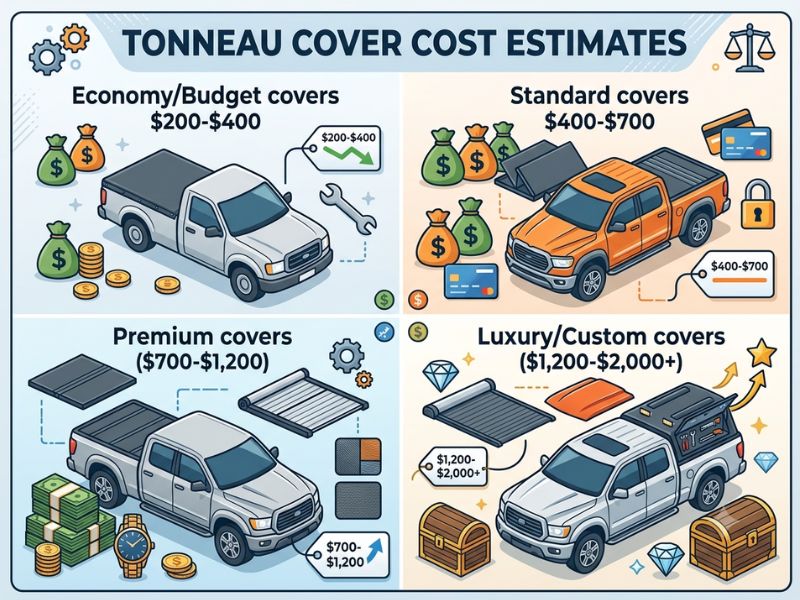
When I look at the market, the price range for tonneau covers is incredibly broad, typically spanning from about $200 on the very low end to over $3,000 for premium, feature-rich models. This wide spectrum isn’t arbitrary; it’s a direct reflection of the cover’s type, materials, features, brand reputation, and the complexity of its design and installation. It’s not just about covering your truck bed; it’s about how that cover performs, protects, and integrates with your lifestyle.
To give you a clearer perspective, I generally categorize tonneau covers into a few main types, each with its own typical price bracket. While there can be overlap, this framework helps set expectations:
- Soft Roll-Up Covers: Generally the most affordable, ranging from $200 to $500.
- Soft Tri-Fold Covers: A step up in convenience, usually priced between $250 and $600.
- Hard Tri-Fold Covers: Offering better security and durability, these typically fall between $600 and $1,200.
- Hard Folding Covers (Multi-Fold): Similar to tri-folds but with more panels, often $700 to $1,500.
- Retractable Covers: Premium options known for ease of use and sleek appearance, costing anywhere from $1,000 to $2,500, sometimes more.
- Hinged/One-Piece Covers: Often painted to match the truck, these can range from $800 to $2,000.
Keep in mind these are general ranges. Specific features, materials, and brand names can push prices higher or lower within each category. For instance, an entry-level hard tri-fold from a lesser-known brand might be closer to $500, while a premium model from a top brand with advanced locking mechanisms could easily exceed $1,200. My advice is always to consider these ranges as starting points for your research.
Factors That Influence Tonneau Cover Pricing
Several key elements contribute to the final price tag of a tonneau cover. Understanding these factors will empower you to make a more informed decision and avoid overspending on features you don’t need, or underspending on a cover that won’t meet your expectations.
Type of Tonneau Cover
The fundamental design of the cover is arguably the biggest determinant of its cost. As I outlined above, different types offer varying levels of security, convenience, and durability, which are reflected in their prices.
Soft Roll-Up Covers: These are the most basic and budget-friendly. They consist of a vinyl or fabric tarp that rolls up towards the cab, often secured with Velcro or snaps along the bed rails. Their low cost is due to simpler materials and less complex mechanisms. They offer good weather protection but minimal security against theft.
Soft Tri-Fold Covers: A step up from roll-ups, these covers feature a soft vinyl or fabric top stretched over an aluminum frame, which folds into three sections. They are quicker to open and close than roll-ups and offer slightly better aesthetics. The added framing and folding mechanism contribute to a slightly higher price.
Hard Tri-Fold Covers: These are a very popular choice, balancing security, durability, and convenience. They feature rigid panels (aluminum, fiberglass, or composite) that fold up. The hard panels provide much better security and weather resistance than soft covers. The robust materials and more complex hinge systems justify their higher price point.
Hard Folding Covers (Multi-Fold): Similar to hard tri-folds but with more panels, often four or five. This allows for a more compact folded position, sometimes even allowing the entire bed to be accessed without removing the cover. The increased number of panels and hinges, along with the robust construction, places them in a similar or slightly higher price bracket than tri-folds.
Retractable Covers: These are among the most premium options. They feature rigid slats (aluminum or polycarbonate) that retract into a canister located at the front of the truck bed. They offer excellent security, weather protection, and a very sleek, low-profile look. The complex spring-loaded or electric mechanisms, along with durable materials, account for their significantly higher cost.
Hinged/One-Piece Covers: Also known as “tonneau lids,” these are solid, single-piece covers that lift up on hinges, often with gas struts. They typically offer the best security and weather protection, and many can be painted to match the truck’s color for a seamless look. The large, rigid construction and custom finishes contribute to their higher price.
Materials and Construction Quality
The materials used in a tonneau cover directly impact its durability, weather resistance, security, and ultimately, its price. I always tell people to consider the environment their truck operates in and what kind of abuse the cover might take.
Vinyl/Fabric: Used primarily in soft roll-up and soft tri-fold covers. While affordable, the quality of the vinyl can vary greatly. Higher-grade vinyl or marine-grade fabric will be more resistant to UV rays, tears, and extreme temperatures, adding a bit to the cost.
Aluminum: A common material for hard folding and retractable covers. It’s lightweight, strong, and corrosion-resistant. Thicker gauge aluminum or special coatings (like powder-coating) will increase durability and price.
Fiberglass/Composite: Often found in hard folding and hinged covers. These materials offer excellent rigidity, dent resistance, and can be molded into aerodynamic shapes. Fiberglass covers often come painted, which adds to their cost.
Polycarbonate: Sometimes used in retractable covers, offering good impact resistance and lighter weight than aluminum, but can be more expensive.
Hardware: The quality of hinges, latches, clamps, and seals also plays a role. Stainless steel hardware, robust locking mechanisms, and high-quality rubber seals for weatherproofing will increase the overall cost but also improve longevity and performance.
Features and Technology
Beyond the basic function of covering the bed, many tonneau covers come with additional features that enhance convenience, security, or aesthetics. These add-ons naturally increase the price.
Locking Mechanisms: Basic covers might rely on the tailgate lock for security. More advanced covers include integrated locks, key fobs, or even electronic locking systems that sync with your truck’s central locking.
Drainage Systems: Effective drainage channels and tubes are crucial for keeping water out of the bed. Higher-end covers often have more sophisticated, integrated systems.
Lighting: Some covers include integrated LED lights for illuminating the truck bed, a convenient feature for night use.
Electric Operation: Retractable covers can be manually operated or electrically powered, often with a remote control. Electric models are significantly more expensive but offer unparalleled convenience.
Low-Profile Design: Many truck owners prefer a tonneau cover that sits flush with the bed rails for a sleek, factory-installed look. These designs often require more precise engineering and can cost more than covers that sit on top of the rails.
Integrated Accessories: Some covers are designed to work with specific truck bed accessories, like ladder racks or bed extenders, which might add to their complexity and cost.
Brand Reputation and Warranty
Just like with any product, brand name can influence the price. Established brands with a reputation for quality, innovation, and excellent customer service often command higher prices. They typically invest more in research and development, use higher-grade materials, and offer more comprehensive warranties.
A good warranty can provide peace of mind, covering defects in materials and workmanship for several years, or even for the lifetime of the product. While a longer warranty might mean a slightly higher initial cost, it can save you money in the long run if an issue arises.
Installation Costs (DIY vs. Professional)
The price you pay for the cover itself is only part of the equation. You also need to consider installation. Many tonneau covers, especially soft roll-ups and tri-folds, are designed for DIY installation and can be put on in under an hour with basic tools. If you’re comfortable doing it yourself, you save on labor costs.
However, more complex covers, such as retractable or hinged models, might require professional installation. This is especially true if drilling or electrical wiring is involved. Professional installation can add anywhere from $50 to $250 or more to the total cost, depending on the shop’s rates and the complexity of the job. I always recommend getting a quote for installation if you’re not planning to do it yourself.
Geographic Location and Retailer
Where you purchase your tonneau cover can also affect the price. Online retailers often have lower overheads and can offer more competitive pricing, sometimes including free shipping. However, local truck accessory shops might offer personalized service, expert advice, and professional installation services that online stores can’t match.
Prices can also vary slightly by region due to shipping costs, local taxes, and market demand. While these differences are usually minor, they can add up, especially for heavier, bulkier covers.
Detailed Cost Breakdown by Tonneau Cover Type
To give you a more concrete idea, I’ll break down the typical cost ranges for each major type of tonneau cover, along with what you can generally expect for that price.
Soft Roll-Up Tonneau Covers: $200 – $500
What they are: These covers feature a vinyl or fabric tarp that attaches to rails along the truck bed and rolls up towards the cab to open. They are typically secured with Velcro or snap fasteners.
Cost Factors: The primary factors here are the quality of the vinyl/fabric, the strength of the frame, and the simplicity of the latching mechanism. Entry-level models use thinner vinyl and basic clamps.
What to expect:
- Entry-level ($200-$300): Basic vinyl, simple Velcro or snap closure, often sits on top of the bed rails. Good for basic weather protection and concealing cargo. Brands like TruXedo Lo Pro QT (when on sale) or some less-known brands.
- Mid-range ($300-$400): Thicker, more durable vinyl or fabric, improved tension systems to keep the cover taut, and slightly better sealing. May offer a lower-profile design. Brands like Gator SR1, Lund Genesis Roll Up.
- Higher-end ($400-$500): Premium marine-grade fabric, advanced tension control, superior weather seals, and a very low-profile appearance. Better hardware and longer warranties. Brands like TruXedo TruXport, Access Original.
Pros: Most affordable, lightweight, easy DIY installation, full bed access when rolled up.
Cons: Least secure, can be susceptible to knife cuts, vinyl can fade or crack over time.
Soft Tri-Fold Tonneau Covers: $250 – $600
What they are: These covers have a soft vinyl or fabric top stretched over an aluminum frame that folds into three sections. They are quicker to open and close than roll-ups.
Cost Factors: The quality of the vinyl, the strength and design of the aluminum frame, and the ease of the clamping mechanism are key. More robust frames and better seals increase the price.
What to expect:
- Entry-level ($250-$400): Basic vinyl, lighter aluminum frame, simple clamps. Offers quick access and decent weather protection. Brands like Tyger Auto T3, Gator SFX Tri-Fold.
- Mid-range ($400-$500): Thicker, more durable vinyl, stronger frame, improved seals, and possibly a lower-profile design. Better resistance to wear and tear. Brands like Extang Trifecta 2.0.
- Higher-end ($500-$600): Premium fabric, robust frame, advanced sealing, and quick-release clamps for easy removal. May offer a slightly more refined look. Brands like BAKFlip G2 Soft Fold (though BAK is more known for hard folds).
Pros: Easy to install and remove, quick bed access, better aesthetics than roll-ups.
Cons: Limited security (can be cut), vinyl can degrade, not as durable as hard covers.
Hard Tri-Fold Tonneau Covers: $600 – $1,200
What they are: These are very popular, featuring rigid panels (aluminum, fiberglass, or composite) that fold into three sections. They offer a significant upgrade in security and durability.
Cost Factors: The material of the panels (aluminum is generally cheaper than fiberglass/composite), the thickness and quality of the panels, the design of the hinges and seals, and the locking mechanism all play a role.
What to expect:
- Entry-level ($600-$800): Aluminum panels, often with a powder-coated finish. Good basic security and weather protection. May sit slightly above the bed rails. Brands like Rough Country Hard Tri-Fold, Gator EFX Hard Fold.
- Mid-range ($800-$1,000): Thicker aluminum or composite panels, improved seals, flush-mount design for a sleeker look, and often better hinge systems. More robust locking mechanisms. Brands like BAKFlip MX4 (entry for this premium brand), Extang Solid Fold 2.0.
- Higher-end ($1,000-$1,200+): Aircraft-grade aluminum or premium composite panels, advanced weather sealing, integrated drainage, and often a very low-profile or flush design. May have additional features like prop rods or integrated cargo management. Brands like BAKFlip F1, RetraxONE MX (manual retractable, but some hard folds reach this price).
Pros: Excellent security, durable, good weather protection, relatively easy to install and remove, full bed access when folded upright.
Cons: Can obstruct rear window when fully open, panels can be heavy.
Hard Folding Covers (Multi-Fold): $700 – $1,500
What they are: Similar to hard tri-folds but with more panels (typically 4 or 5), allowing for a more compact folded position. Some can fold upright against the cab, providing nearly full bed access.
Cost Factors: The number of panels, the material (aluminum, composite), the complexity of the hinge system, and the quality of the seals and locking mechanisms. Covers that fold completely upright often have more sophisticated designs.
What to expect:
- Entry-level ($700-$900): Aluminum panels, 4-panel design. Offers more compact folding than a tri-fold. Good security. Brands like UnderCover Ultra Flex (entry for this premium brand).
- Mid-range ($900-$1,200): Thicker aluminum or composite panels, advanced hinge systems, and improved weather sealing. Often features a flush-mount design and better aesthetics. Brands like BAKFlip G2, RetraxONE XR (manual retractable, but some hard folds are here).
- Higher-end ($1,200-$1,500+): Premium materials, very low-profile design, advanced locking and sealing, and often the ability to fold completely upright against the cab without obstructing the rear window. May include integrated rail systems for accessories. Brands like BAKFlip F1, Pace Edwards UltraGroove.
Pros: Excellent security, durable, great weather protection, more compact folded position than tri-folds, often allows full bed access.
Cons: Can be heavy, more complex installation than soft covers.
Retractable Tonneau Covers: $1,000 – $2,500+
What they are: These covers feature rigid slats (aluminum or polycarbonate) that retract into a canister at the front of the truck bed. They offer a very sleek look and operate smoothly.
Cost Factors: The material of the slats (aluminum is common, polycarbonate is also used), the complexity of the retraction mechanism (manual vs. electric), the quality of the canister, and the sealing system. Electric models are significantly more expensive.
What to expect:
- Manual Retractable ($1,000-$1,800): Aluminum or polycarbonate slats, manual operation (spring-loaded or pull-strap). Good security and weather protection, very low-profile. Brands like RetraxONE MX, Pace Edwards Bedlocker (manual).
- Electric Retractable ($1,800-$2,500+): Often aluminum slats, operated by a motor with a remote control. Top-tier security, weather resistance, and convenience. Can include features like integrated lighting. Brands like RetraxPRO XR, Pace Edwards UltraGroove Electric.
Pros: Superior security, excellent weather protection, very sleek and low-profile, easy to operate, full bed access without removing the cover.
Cons: Most expensive option, canister takes up some bed space, more complex installation (especially electric models).
Hinged/One-Piece Tonneau Covers: $800 – $2,000
What they are: These are solid, single-piece covers that lift up on hinges, often with gas struts. They typically offer the best security and weather protection, and many can be painted to match the truck’s color.
Cost Factors: The material (fiberglass, ABS composite), whether it’s painted to match the truck (a significant cost adder), the quality of the hinges and gas struts, and the locking mechanism.
What to expect:
- Entry-level ($800-$1,200): ABS composite material, often unpainted (black textured finish). Good security and weather protection. Brands like UnderCover Classic.
- Mid-range ($1,200-$1,600): Fiberglass or higher-grade composite, often available painted in common truck colors. Improved fit and finish, better gas struts. Brands like A.R.E. LSII Series.
- Higher-end ($1,600-$2,000+): Premium fiberglass, custom-painted to perfectly match your truck’s exact color code. Very precise fit, advanced locking systems, and sometimes integrated lighting. Brands like Leer 700 Series.
Pros: Best security, superior weather protection, very clean and integrated look (especially when painted), often very durable.
Cons: Limited bed access (can only open from the rear), can be heavy to lift, takes up a lot of vertical space when open, not easily removable.
Additional Costs to Consider
Beyond the price of the tonneau cover itself, there are a few other expenses you might encounter:
Shipping Costs
Tonneau covers are large and can be heavy, especially hard models. While many online retailers offer free shipping, especially for higher-priced items, always double-check. If shipping isn’t free, it can add $50 to $200 or more to your total, depending on the size, weight, and your location.
Installation Fees
As I mentioned, professional installation can range from $50 to $250. This is a worthwhile investment if you’re not confident in your DIY skills, or if the cover is particularly complex (e.g., electric retractable covers that require wiring). A professional installation ensures the cover is properly sealed, aligned, and functioning correctly, which is crucial for weather protection and security.
Accessories and Upgrades
Some tonneau covers can be upgraded or accessorized. For example, some retractable covers offer integrated T-slot rails that allow you to mount racks for bikes, kayaks, or lumber. These accessories are sold separately and can add hundreds of dollars to your overall investment.
Maintenance and Replacement Parts
While not an immediate cost, consider the long-term maintenance. Soft covers might need occasional cleaning and UV protectant application. Seals on any cover can wear out over time and may need replacement, especially after several years of exposure to the elements. These parts are usually inexpensive but are a consideration for long-term ownership.
Making the Right Choice for Your Budget and Needs
With such a wide range of options and prices, how do you decide which tonneau cover is right for you? I always advise my customers to consider a few key questions:
1. What is Your Primary Goal for the Tonneau Cover?
Security: If protecting valuable tools or cargo from theft is your top priority, you’ll want a hard folding, retractable, or hinged cover. Soft covers offer minimal security.
Weather Protection: Most covers offer decent weather protection, but hard covers and high-quality retractable covers with robust sealing systems will perform best in heavy rain or snow.
Cargo Concealment: If you just want to keep items out of sight and don’t worry much about theft, a soft roll-up or tri-fold might suffice.
Aesthetics: If you want a sleek, integrated look, low-profile hard folding or retractable covers, especially those painted to match your truck, are ideal.
Full Bed Access: If you frequently haul large items that require the entire bed, consider a roll-up, soft tri-fold, or a hard folding/retractable cover that allows full access without removal. Hinged covers limit access.
2. How Often Will You Use It, and How Will You Operate It?
Frequent Access: If you’re constantly opening and closing the cover, an easy-to-operate soft tri-fold, hard tri-fold, or retractable cover will be more convenient than a roll-up or hinged cover.
Manual vs. Electric: For ultimate convenience and if budget allows, an electric retractable cover is effortless. Otherwise, manual options are perfectly functional.
Durability Needs: If your truck sees heavy use, off-roading, or is exposed to harsh elements, investing in a more durable hard cover made of aluminum or fiberglass will pay off in the long run.
3. What is Your Budget?
This is often the most practical constraint. I recommend setting a realistic budget range before you start shopping. Knowing your maximum spend will help you narrow down the types of covers and features you can realistically consider.
- Under $500: Primarily soft roll-ups and soft tri-folds. Good for basic protection and concealment.
- $500 – $1,000: Entry-level hard tri-folds and some mid-range soft covers. A good balance of security, durability, and affordability.
- $1,000 – $1,500: Mid-range to higher-end hard folding covers, manual retractable covers, and some hinged covers. Offers enhanced features, materials, and security.
- Over $1,500: Premium hard folding, high-end retractable (especially electric), and custom-painted hinged covers. These are for those who prioritize top-tier features, aesthetics, and convenience.
4. Consider Your Truck’s Specifics
Tonneau covers are truck-specific. Ensure the cover you choose is designed for your exact make, model, year, and bed length. Some covers are also designed to work with specific bed liners or rail systems, so double-check compatibility.
Common Mistakes to Avoid When Buying a Tonneau Cover
Based on my experience, here are a few pitfalls I often see people fall into:
Buying the Cheapest Option: While saving money is tempting, the cheapest covers often use lower-quality materials that degrade quickly, leading to leaks, fading, or premature failure. It’s often better to spend a little more for a cover that will last.
Overspending on Unnecessary Features: Don’t pay for features you won’t use. If you rarely open your cover, an electric retractable might be overkill. If you only haul gardening supplies, you might not need aircraft-grade aluminum.
Ignoring Installation Complexity: Some covers are genuinely easy to install. Others require more time, tools, or even a second person. Be realistic about your DIY capabilities or factor in professional installation costs.
Not Checking Compatibility: Always, always double-check that the cover is specifically designed for your truck. A cover for a Ford F-150 will not fit a Ram 1500, and even within the same model, bed lengths can vary.
Forgetting About Warranty: A good warranty is a sign of manufacturer confidence. Look for covers with at least a 3-year warranty, and ideally longer, especially for hard covers.
Not Reading Reviews: Product reviews from other truck owners can provide invaluable insights into real-world performance, durability, and customer service experiences. Look for patterns in feedback, both positive and negative.
Conclusion
Navigating the world of tonneau covers can seem daunting at first, given the vast array of types, features, and price points. However, by understanding the factors that influence cost and aligning them with your specific needs and budget, you can confidently choose the right cover for your truck. Whether you prioritize affordability, security, convenience, or a sleek aesthetic, there’s a tonneau cover out there that fits the bill. Ultimately, the answer to how much do tonneau covers cost depends entirely on what you’re looking for in terms of functionality and quality.