Can a Pancake Compressor Inflate Tires or Is It a Myth
Yes, a pancake compressor can absolutely inflate tires—provided it delivers enough PSI to exceed your tire’s recommended pressure, which most 3–6 gallon models do at 90–150 PSI. However, be mindful of the compressor’s CFM (air volume) and duty cycle, since smaller tanks may struggle with larger truck or RV tires that require high air volume. For standard passenger cars, a pancake compressor is a practical and reliable inflation tool, not a myth.
Can a Pancake Compressor Inflate Tires or Is It a Myth
I remember the exact moment I asked myself this question. It was a Sunday morning. My car’s tire pressure light blinked on. I had a brand new pancake compressor sitting in my garage. I bought it for a weekend nail gun project, but now I needed it for something else. Could this little round tank handle my car tires? Or was I about to waste an hour on a silly idea?
Let me tell you right now: the answer surprised me. A pancake compressor can inflate tires. It is not a myth. It is not magic either. It just takes a bit of know-how. In this post, I will walk you through everything you need to know. We will look at pressure, volume, steps, and limits. By the end, you will know exactly what your pancake compressor can do for your tires.
Key Takeaways
- Yes, you can: Pancake compressors deliver 90-150 PSI, exceeding standard tire pressure needs.
- Best for top-ups: Small tanks make filling a completely flat tire slow and tedious.
- Use the right attachment: A tire chuck or air nozzle ensures a snug valve connection.
- Check sidewall PSI: Always inflate to your vehicle manufacturer’s recommended pressure, not the tire’s maximum.
- Mind the duty cycle: Stop periodically to let the compressor cool down and prevent overheating.
- Budget extra time: Expect 2-5 minutes per tire for inflation—pancake compressors flow slowly.
- Skip for heavy use: For fleet or frequent flat repairs, choose a larger tank or dedicated inflator.
📑 Table of Contents
- What Is a Pancake Compressor, Anyway?
- Can a Pancake Compressor Inflate Tires? The Short Answer
- How to Inflate Tires with a Pancake Compressor (Step-by-Step)
- When a Pancake Compressor Falls Short
- Pancake Compressor vs. Other Tire Inflators: A Comparison
- Final Thoughts: Is a Pancake Compressor Right for You?
What Is a Pancake Compressor, Anyway?
A pancake compressor is a small air compressor with a round, flat tank. It looks like a pancake sitting on legs. That is where the name comes from. These machines are very common in home garages. They are light, easy to store, and cheap to buy.
Most pancake compressors have a tank between 1 and 6 gallons. They plug into a standard wall outlet. They can deliver air pressure up to 150 PSI. That is a lot more than your tires need.
What Do People Use Them For?
People use pancake compressors for many jobs. They power nail guns. They run staplers. They blow dust off tools. They even spray paint with the right attachment. These are all light tasks that need short bursts of air.
Tires are a different kind of job. They need a steady flow of air over a longer time. So it is fair to ask if a small compressor can handle that. The good news is that it can.
Why Do People Doubt It?
I think people doubt pancake compressors because they look small. We see big compressors at gas stations and repair shops. Those have huge tanks and strong motors. A little pancake tank seems too weak by comparison.
But looks can be deceiving. The key is not the tank size. The key is the pressure and the flow. Let me break that down for you.
Can a Pancake Compressor Inflate Tires? The Short Answer
Yes. A pancake compressor can inflate tires. It works well for most cars, SUVs, and even some trucks. Most passenger tires need 30 to 35 PSI. A pancake compressor can easily deliver that. You just need the right attachments and a little patience.
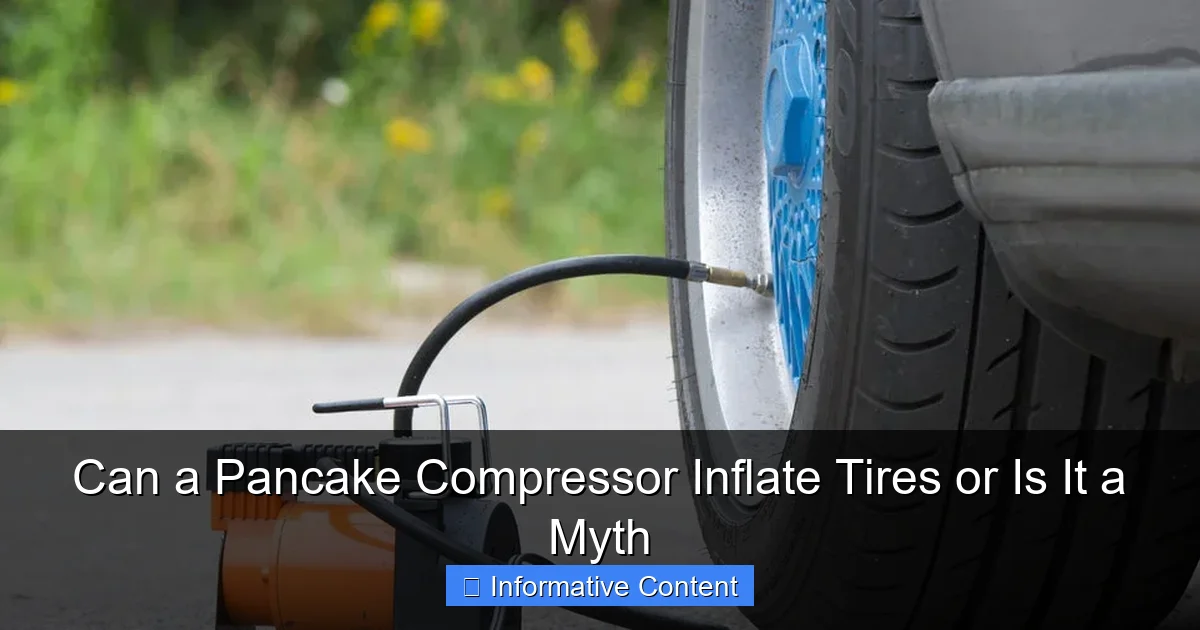
Visual guide about can a pancake compressor inflate tires
Image source: aircompressorsguides.com
The trick is understanding two things: pressure and volume. They are not the same. Let me explain in simple words.
PSI vs. Volume: What Matters
PSI means pounds per square inch. It is the force of the air. Your tire needs a certain PSI to work well. You can find that number on the sidewall of your tire or in your car manual.
Volume is how much air moves per minute. This is called CFM, or cubic feet per minute. A pancake compressor has a low CFM. That means it moves air slowly. So it takes longer to fill a tire. But it can still reach the right PSI. It just works at a relaxed pace.
My Own Test
I tried it myself. My car tire was at 25 PSI. I set my pancake compressor to 33 PSI. It took about two minutes to fill the tire. That felt slow compared to a gas station hose. But it worked perfectly. No leaks. No strain on the compressor. Just a steady stream of air until the gauge hit the mark.
So yes, the pancake compressor is not a myth. It is a real, useful tool for tire inflation at home.
How to Inflate Tires with a Pancake Compressor (Step-by-Step)
Using a pancake compressor for tires is easy once you know the steps. Here is my simple guide. I use this method every time now.
Step 1: Gather Your Gear
You need a few things before you start. First, the pancake compressor itself. Second, an air hose. Third, a tire chuck. A tire chuck is the part that connects to your tire valve. Many compressor kits come with all of these. If not, they are cheap at any hardware store.
Step 2: Check Your Tire Pressure
Look at the sticker inside your driver side door. It tells you the right PSI for your tires. Most cars are between 30 and 35 PSI. Do not use the number on the tire sidewall. That is the maximum, not the recommended level.
Step 3: Set the Regulator
Your pancake compressor has a regulator dial. Turn it to the PSI you need. This is very important. It stops the compressor from overfilling your tire. Once the tank reaches that pressure, the compressor stops sending air.
Step 4: Connect the Chuck
Press the tire chuck firmly onto the valve stem. You should hear a small hiss. That is normal. It means the connection is sealed. If you do not press hard enough, air will leak out. So hold it steady.
Step 5: Fill and Check
Watch the gauge on the compressor. When it reaches your target PSI, pull the chuck off. Then check the tire with a separate gauge. This is a good habit. It confirms the reading. If it is low, add a little more air.
Pro Tips for a Smooth Experience
- Keep the pancake compressor on a flat, stable surface.
- Let the compressor cool down between tires.
- Do not run it nonstop for more than a few minutes.
- Check your tires when they are cold for the best reading.
- Keep a small tire gauge in your glove box.
When a Pancake Compressor Falls Short
I like to be honest. A pancake compressor is not perfect for every tire job. There are times when it struggles. Let me share those with you. That way you know what to expect.
Large Truck Tires
Big pickup trucks and SUVs sometimes need 40 to 80 PSI. A pancake compressor can reach that pressure. But it will take a long time. The small tank means the compressor cycles on and off often. This is slow. It can even overheat the unit if you push it too hard.
Flattened Tires
If your tire is completely flat, a pancake compressor is not ideal. A flat tire has zero air inside. It takes a lot of volume to fill it up. The compressor will run for many minutes. It can still do the job, but you need patience. A portable inflator or a gas station hose is faster.
Continuous Use
Pancake compressors are not made for long, nonstop work. They are built for short tasks like nailing. If you inflate four tires one after another, give the machine a break. Let it cool. Otherwise, you risk damaging the motor.
When It Is a Great Choice
For regular car tires, a pancake compressor is fantastic. It is accurate. It is free to use after you own it. It lives in your garage, ready any time. That beats driving to a gas station on a cold morning.
Pancake Compressor vs. Other Tire Inflators: A Comparison
Let me put things in perspective. I tested a few ways to inflate tires. Here is a simple table that shows how a pancake compressor compares to other common options.
| Feature | Pancake Compressor | Portable Inflator | Gas Station Air |
|---|---|---|---|
| Price | $60 to $150 | $30 to $80 | Free or about $1 |
| Speed | Slow but steady | Very slow | Fast |
| Power Source | Wall outlet | 12V car plug or battery | High volume pump |
| Portability | Low, stays in garage | High, fits in trunk | Not portable |
| Accuracy | Good with regulator | Good with preset PSI | Variable, often inaccurate |
| Best For | Home garage use | Roadside emergencies | Quick top-ups |
As you can see, the pancake compressor shines when you are at home. It gives you control. You set the pressure and walk away. No coins needed. No guessing if the gauge is right.
Final Thoughts: Is a Pancake Compressor Right for You?
So, can a pancake compressor inflate tires? Yes. It absolutely can. It is not a myth. It is a simple, effective tool for home tire care. My own test proved it. Two minutes per tire. That is all it took.
The pancake compressor has strengths and limits. It is slow. It is not portable. It is not built for giant truck tires. But for everyday cars and SUVs, it does the job well. And once you own one, it costs nothing to use. That is a big win.
If you already have a pancake compressor in your garage, put it to work. Grab a tire chuck, set the regulator, and fill your tires with confidence. If you are thinking about buying one, this is another good reason to do it. It is a smart tool for any home. You can use it for nails, for staples, and yes, for your tires.
So the next time your tire light comes on, do not drive to the gas station. Walk to your garage. Your pancake compressor has your back. It is not a myth. It is a real solution.
Frequently Asked Questions
Can a pancake compressor inflate tires effectively?
Yes, a pancake compressor can inflate tires effectively, as long as it has a pressure rating above your tire’s required PSI—most models reach 90–150 PSI, which covers standard passenger cars. The process is a bit slower than a dedicated inflator, but it gets the job done perfectly for topping off or filling a flat tire.
How long does it take a pancake compressor to inflate a car tire?
Typically, a pancake compressor will take about 1 to 3 minutes to fully inflate an average car tire from flat, depending on the tank size and the compressor’s CFM rating. Smaller tanks may cycle on and off, so you might need to wait for it to rebuild pressure before finishing the job.
What PSI does a pancake compressor need to reach to inflate tires?
Most passenger car tires require between 30 and 35 PSI, while truck and SUV tires often need 40 to 50 PSI. Since most pancake compressors are rated for at least 90 PSI, you’ll have plenty of headroom as long as you set the regulator correctly and use a tire chuck.
Can a pancake compressor inflate large truck or SUV tires?
Yes, a pancake compressor can inflate large truck or SUV tires, but it will take considerably longer because these tires have a larger air volume. If you’re inflating several big tires in a row, the compressor will need to cycle frequently, so patience and a good tire inflator attachment are essential.
Do I need a special attachment to use a pancake compressor for tire inflation?
You will need a tire inflator chuck or a simple air nozzle that fits your compressor’s hose—most pancake compressors don’t come with a built-in tire gauge. A screw-on or clip-on chuck with a built-in pressure gauge makes the job much easier and prevents over-inflation.
Is a pancake compressor good for topping off tire pressure?
A pancake compressor is excellent for topping off tire pressure, especially if you already own one for other tasks like nail guns or air staplers. It’s a practical way to maintain your tires without buying a separate inflator, and the regulator lets you dial in the exact PSI you need.

