Can You Plug a Screw Hole in a Tire: Clear Answers and Key Facts
Yes, a screw hole may be repairable if it is small, in the tread, and the tire has not been driven flat. A professional should inspect and repair it from inside; sidewall damage usually requires replacement.
You notice a screw head in the tread after the tire-pressure warning appears, or you hear a faint hiss while parked outside a store. The immediate temptation is to pull it out, grab a plug kit, and get back on the road—but removing the screw can release the tire quickly and reveal damage you cannot see from the outside.
Whether can you plug a screw hole in a tire has a safe yes-or-no answer depends on more than the screw itself. The puncture’s location, size, angle, internal condition, remaining tread, and the distance driven with low pressure all matter. This guide explains the difference between an emergency rope plug and a proper internal repair, identifies situations where a tire should not be repaired, and shows what to do before and after inspection.
By the end, you should be able to decide whether to seek a repair immediately, use a temporary measure only to reach a shop, or replace the tire instead.
- ✓A small puncture in the central tread is often repairable, but the tire must be inspected internally.
- ✓A plug installed from the outside is generally a temporary emergency measure, not the preferred permanent repair.
- ✓Sidewall, shoulder, bead, or large puncture damage usually calls for tire replacement.
- ✓Do not drive on a tire that is visibly flat, losing pressure rapidly, or damaged inside from underinflation.
Can You Plug a Screw Hole in a Tire?
A screw hole can sometimes be repaired, but “plugging” is not automatically the same as safely repairing a tire. A proper repair normally involves removing the tire from the wheel, checking the inner liner and casing, and installing a combination plug-patch repair from the inside. The plug seals the puncture channel while the patch seals the inner liner.
A rope-style plug pushed into the tread from the outside can stop air loss long enough to reach a tire shop. It does not let anyone examine the inside of the tire, where flexing, heat, and low-pressure driving may have caused hidden separation or abrasion. For that reason, an external plug should not be treated as a permanent answer simply because the tire holds air afterward.

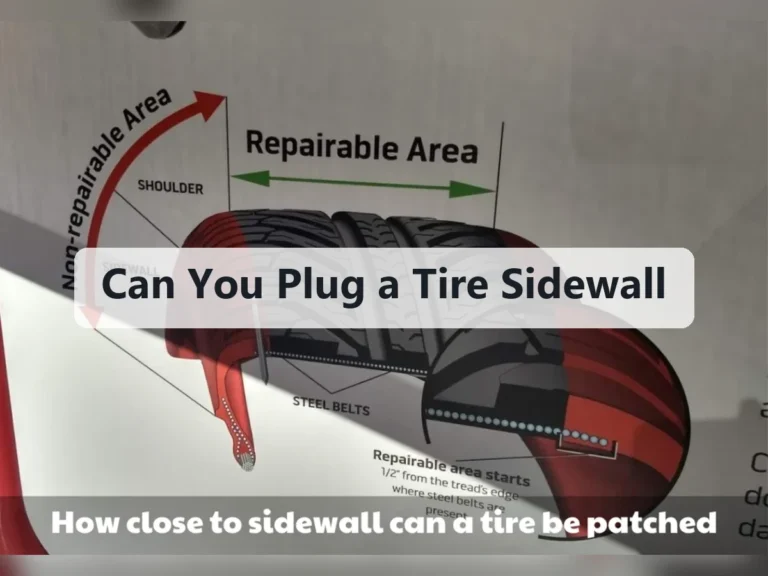
- Puncture location: The repairable area is generally the central tread, away from the shoulder and sidewall.
- Hole size: A small, clean puncture has a better outlook than a torn or enlarged hole.
- Pressure history: Driving while underinflated can damage the casing even when the original hole looks minor.
- Tire condition: Age, tread depth, prior repairs, bulges, cracks, and uneven wear affect the decision.
Where a Screw Hole Can—and Cannot—Be Repaired
The most important distinction is the puncture’s position. The center portion of the tread is designed to contact the road and generally has the strongest, thickest structure. A small puncture there may be suitable for a professional repair if the tire meets the other conditions.
The shoulder is the curved area where the tread transitions into the sidewall. It flexes heavily during cornering, so a repair in that zone is much less reliable. Damage in the sidewall or near the bead is not considered a normal puncture repair because those areas carry and stabilize the tire in ways a plug cannot restore.
- Center tread: Often the most favorable location for inspection and repair.
- Tread shoulder: Usually too close to the flexing edge for a dependable repair.
- Sidewall: Replacement is normally necessary, especially with a cut, bulge, or puncture.
- Bead area: Damage near the wheel rim can prevent a proper seal and requires close inspection.
Size and shape matter as well. A narrow screw may leave a relatively clean channel, while a large screw, nail, bolt, or torn object can stretch the rubber and damage the belts. A puncture that entered at an angle may create a longer internal path than its surface opening suggests.
Some tire manufacturers and repair standards use limits around a quarter inch for a repairable puncture, but the exact decision depends on the tire and the inspection. Do not enlarge a hole to make a plug fit, and do not assume a visible measurement is enough to approve the repair.
Why Internal Inspection Matters After a Puncture
When a tire loses pressure, its sidewalls flex more than intended. That heat and repeated bending can scuff the inner liner, wrinkle the casing, or damage the cords. The risk increases if the tire was driven for several miles, driven at highway speed, or operated while visibly low.
This is why asking can you plug a screw hole in a tire without mentioning pressure loss gives an incomplete answer. A tire can look normal on the outside and still have internal damage that makes a repair unsafe. Removing it from the wheel lets a technician inspect the inside for rubber dust, abrasion rings, exposed cords, or other signs of run-flat damage.

- Do not pull it casually: The screw may be blocking the leak, and removing it can cause rapid deflation.
- Check pressure first: Compare the reading with the vehicle door-jamb specification, not the maximum pressure molded on the tire.
- Limit driving: If pressure is low, use a spare, roadside service, or a nearby professional rather than continuing normally.
- Watch for warning signs: Vibration, pulling, bulging, burning odor, or repeated pressure loss calls for immediate attention.
External Tire Plugs Versus a Professional Repair
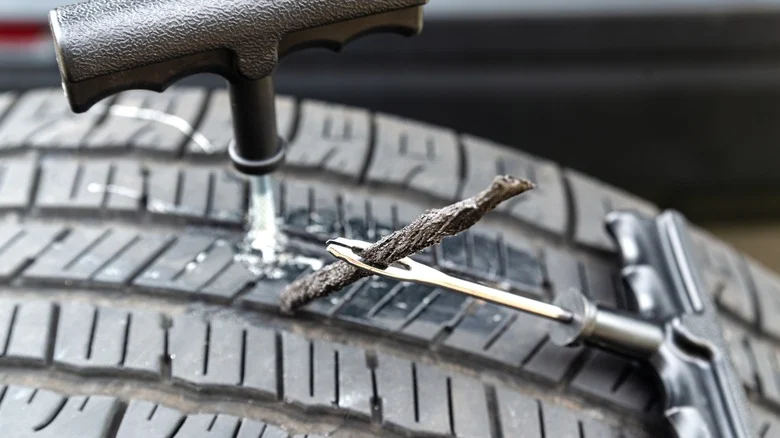
Most consumer puncture kits contain a rasp, insertion tool, rubber rope, and cement or lubricant. The basic process cleans the hole and forces sticky rubber into it from the outside. This can be useful as an emergency measure when a safe alternative is unavailable, but it cannot reveal internal damage or provide the same seal as a properly installed internal repair.
A professional repair typically starts with a pressure and visual check, followed by tire removal. The technician locates the puncture inside and outside, examines the casing, prepares the rubber, and installs a repair unit according to the tire and repair material requirements. The tire is then remounted, inflated, and checked for leaks and balance concerns.
This distinction matters when answering “can you plug a screw hole in a tire”.
When an outside plug may be appropriate
An external plug may help you move the vehicle a short distance to a repair facility when the puncture is in the tread and the tire can be kept at a safe pressure. It should be viewed as a temporary roadside solution, not permission to resume long trips, towing, high-speed driving, or extended daily use.
If you use a plug kit in an emergency, tell the tire shop exactly what happened, how far you drove, and whether the tire was low. That information helps determine whether the tire can still be inspected and repaired.
Why a plug alone may not be enough
A plug can seal the puncture channel while leaving the inner liner unsealed. Moisture may enter through the damaged area, and the plug can loosen or leak as the tire flexes. A plug that appears secure during a driveway check is not proof that the tire is suitable for continued service.
When Replacing the Tire Is the Better Choice
Some punctures should not be repaired, even if the tire is relatively new. A puncture in the sidewall or shoulder is the clearest example. A cut, split, bulge, exposed cord, or impact break also points toward replacement rather than plugging.
Replacement may also be the safer decision when the tire has multiple repairs close together, an oversized or irregular hole, severe uneven wear, very little tread remaining, or signs of internal damage. Tires that have been driven flat deserve particular caution because the casing may be compromised beyond what an external inspection can show.
- Damage outside the repair zone: Sidewall and shoulder punctures are not ordinary tread repairs.
- Visible structural damage: Bulges, exposed cords, deep cuts, or separations indicate a compromised tire.
- Repeated repairs: Closely spaced repairs can weaken the tread and complicate sealing.
- Severe wear or age: A repair may not make economic or safety sense when the tire is near replacement anyway.
If only one tire needs replacement, ask whether the difference in tread depth will affect the vehicle. Many all-wheel-drive systems are sensitive to tire circumference differences, and some vehicles require a particular replacement strategy. The owner’s manual or a qualified tire professional can help determine whether one tire, a pair, or a complete set is appropriate.
What to Do When You Find a Screw
Start by parking on a stable surface away from traffic. Do not remove the screw just to see how much air escapes. Look at the tire’s pressure, inspect the tread and sidewall for obvious damage, and check whether the tire is visibly flattened or sitting unevenly on the rim.
- Measure the pressure: Use a reliable gauge and compare the result with the recommended cold pressure on the driver’s door label.
- Decide whether it can move safely: A tire that is flat, rapidly leaking, or structurally damaged should not be driven.
- Arrange inspection: Contact a tire shop, roadside service, or use the vehicle’s spare according to the owner’s instructions.
- Describe the circumstances: Mention the screw’s location, pressure reading, warning-light status, and any distance driven while low.
- Recheck after service: Confirm the tire holds pressure and that the tire-pressure monitoring system has no unresolved warning.
Do not rely on tire sealant as a substitute for inspection. Some sealants are intended only for temporary use, may interfere with pressure sensors, and can make later repair work more difficult. Follow the product and vehicle instructions if a sealant is supplied with the car.
FAQ: Can You Plug a Screw Hole in a Tire?
Can I leave the screw in the tire overnight?
Leaving it in place may slow the leak, but it is not a repair. Check the pressure and arrange inspection as soon as possible; do not assume the tire will remain stable while parked or driven.
How long can I drive on a tire plug?
Use an external plug only to reach a repair facility when the tire is properly inflated and otherwise appears safe. Avoid treating it as a permanent repair or using it for long-distance, high-speed, or heavy-load driving without professional inspection.
Is a screw hole in the tread always repairable?
No. The hole must be in an appropriate tread area, within an acceptable size, and free from internal damage. Prior repairs, low-pressure driving, wear, and the tire’s overall condition can change the answer.
Can I plug a tire if the screw is near
A screw near the shoulder or sidewall is generally outside the normal repair area. Because those sections flex heavily and contribute to the tire’s structure, replacement is usually safer than plugging.
What if the tire went completely flat?
Do not drive on it unless the vehicle and tire are specifically designed for limited run-flat operation and the conditions match the manufacturer’s instructions. A completely flat conventional tire should be removed and inspected for internal damage before anyone considers repair.
Will a tire-pressure sensor affect the repair?
The sensor is mounted inside the wheel and can be damaged during tire removal or affected by some sealants. Tell the technician about the sensor and confirm that the pressure warning clears after the repair.
Can a tire be plugged twice?
Possibly, but it depends on the locations, spacing, repair type, and tire manufacturer guidance. Multiple repairs close together, overlapping damage, or a history of leaks may make replacement the better option.
Conclusion
So, can you plug a screw hole in a tire? Sometimes—but only a small puncture in a suitable tread area, with no evidence of internal or low-pressure damage, should be considered for repair. A professional internal plug-patch repair is preferable to relying on an outside rope plug, while shoulder, sidewall, structural, and run-flat damage generally means replacement.
Keep the screw in place until the tire can be assessed, measure the pressure, and avoid driving if the tire is flat or losing air quickly. The safest choice comes from an internal inspection rather than the appearance of the hole alone.
Check the tire pressure now, avoid pulling out the screw, and arrange a professional inspection before driving any farther than necessary.