Do Rain Guards Affect Gas Mileage — Effects and Warning Signs
Do rain guards affect gas mileage? Usually, only slightly. Properly fitted window deflectors create a small amount of aerodynamic drag, but the change is normally too minor to notice during everyday driving.
The harder part is identifying what is actually causing a mileage change. A loose visor, open window, roof accessory, tire-pressure problem, or recent change in driving conditions can have a greater effect than the guards themselves. This article explains how airflow, speed, installation quality, and driving habits influence the result, along with the warning signs that point to a problem rather than normal aerodynamic resistance.
You will learn when the effect is likely negligible, how to compare fuel economy fairly, which fitment issues deserve attention, and when removing the deflectors is a sensible test. By the end, you can decide whether the rain guards are worth keeping for ventilation and weather protection or whether they are contributing to an avoidable efficiency loss.
How Rain Guards Change Vehicle Aerodynamics
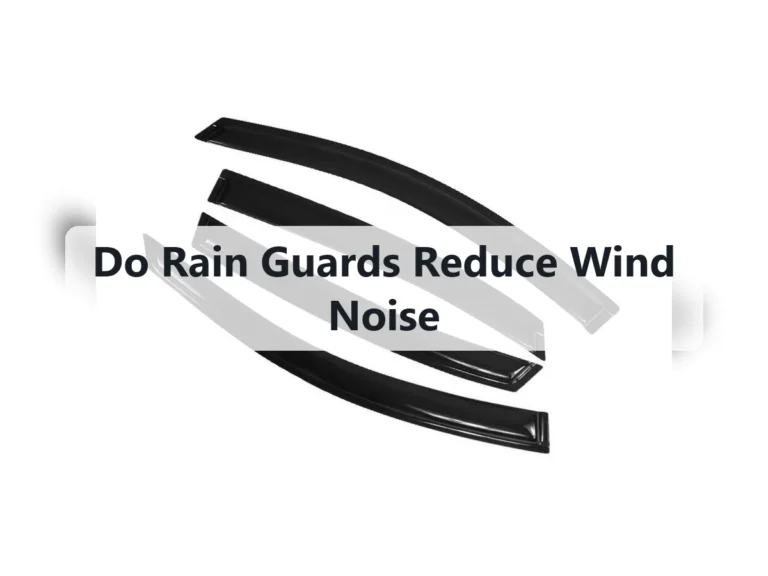
Rain guards, also called window visors or wind deflectors, sit along the upper edge of a vehicle’s side windows. Their purpose is to redirect airflow and allow the windows to open slightly during rain, but that added surface also changes the way air moves around the doors and side mirrors.
At highway speed, air pressure and turbulence become more important. A properly shaped deflector generally adds only a small amount of drag because it follows the window frame and is relatively narrow. It is not comparable to a large roof box, cargo basket, or incorrectly mounted accessory that presents a much larger surface to the wind.
Drag increases as vehicle speed rises, so any aerodynamic penalty is more likely to appear during extended freeway travel than in city driving. Even then, the effect is usually small because the vehicle’s tires, body shape, mirrors, grille, underbody, and driving speed have a much larger influence on the total energy required to move through the air.
The design and installation matter. Low-profile, vehicle-specific deflectors usually disturb airflow less than universal pieces that extend farther from the body. Tape-on and in-channel styles can both work well when correctly matched to the vehicle, but a poor fit can create extra turbulence, wind noise, and drag.
Do Rain Guards Affect Gas Mileage in Normal Driving?
For most drivers, the fuel-economy effect is minimal and difficult to separate from ordinary variation. A small aerodynamic change can exist without producing a clear difference at the pump, especially when trips vary in traffic, weather, terrain, payload, and speed.
Rain guards may affect gas mileage slightly, but the result depends on the vehicle and how it is driven. A small sedan traveling at steady highway speed may show a different response from a tall SUV, pickup, or crossover, yet neither vehicle is likely to experience a dramatic loss from correctly installed deflectors alone.
Highway speed is the main condition to watch. Air resistance rises rapidly as speed increases, which is why driving at 75 mph typically uses more fuel than driving at 65 mph even when the route and vehicle are unchanged. If the guards add any measurable drag, steady high-speed driving is where it is most likely to appear.
Driving with the windows partly open can have a larger aerodynamic effect than keeping them closed behind the deflectors. Open windows disturb the cabin’s airflow and can increase drag, especially at higher speeds. Therefore, a driver who installs rain guards and then leaves several windows open may see lower fuel economy because of the open windows, not necessarily because of the guards.
Fuel economy also changes with seasonal conditions. Cold temperatures, winter fuel blends, strong headwinds, wet roads, snow tires, air-conditioning use, and longer warm-up periods can all reduce miles per gallon. These influences can easily hide or imitate the small effect associated with a window visor.
When a Mileage Change May Point to a Fitment Problem
A noticeable change after installation deserves inspection, particularly if it occurs together with new wind noise or vibration. The deflectors should sit evenly, remain firmly attached, and follow the intended contour of the window frame without protruding, rubbing, or shifting.
Excessive wind noise is one of the clearest warning signs. A faint change in sound is normal, but loud whistling, humming, or flapping can indicate a gap, cracked piece, loose adhesive, incorrect clips, or interference with the glass. Those problems can also create more turbulence than the product’s intended design.
Check for these conditions before blaming the accessory for poor fuel economy:
- A visible gap between the deflector and the window channel or door frame
- Uneven spacing from one side of the vehicle to the other
- Loose tape, missing clips, cracked plastic, or lifting edges
- A window that catches, reverses, or struggles while closing
- Rubbing marks on the glass or rubber window seal
- Movement or vibration when the vehicle is driven in wind
- Whistling that begins only above a particular road speed
A guard that interferes with the window may also trigger an automatic anti-pinch system on vehicles equipped with power windows. Do not force the glass upward or ignore repeated reversals. Recheck the installation instructions, remove the part if necessary, and have the mechanism inspected if the problem continues.
Damage can develop over time even when the original installation was sound. Car washes, ice, road debris, extreme heat, and repeated window use may loosen an edge. A cracked or distorted deflector should be replaced rather than secured with an improvised fastener that could affect the glass or door seal.
This distinction matters when answering “do rain guards affect gas mileage”.
Other Factors That Usually Matter More
Before removing a rain guard, compare it with the more common causes of declining fuel economy. A change of only a few miles per gallon can result from several small differences adding together, while the window accessory remains almost irrelevant.
Tire pressure is an important first check. Underinflated tires increase rolling resistance and may reduce efficiency, while overinflation can affect handling, braking, and ride quality. Use the pressure listed on the vehicle’s doorjamb label rather than the maximum pressure molded into the tire sidewall.
Driving behavior often has a stronger effect than small exterior accessories. Frequent hard acceleration, high cruising speeds, heavy braking, extended idling, and remote-start warm-ups consume more fuel. Carrying unnecessary cargo or towing a trailer can also produce a much larger penalty than a slim window deflector.
Mechanical conditions should not be overlooked. A dragging brake, wheel-alignment problem, failing oxygen sensor, restricted air filter, malfunctioning thermostat, or check-engine fault can reduce efficiency. Symptoms such as pulling, vibration, unusual heat from a wheel, rough running, or an illuminated warning light require attention beyond an accessory inspection.
Weather and route changes can make comparisons unreliable. Headwinds, hills, stop-and-go traffic, rain, cold air, and short trips all change energy use. Even the fuel grade and the way a vehicle is refueled can introduce small differences between tank readings.
How to Test the Effect Fairly
The most useful test changes one variable at a time. Removing the guards for a single trip and seeing a different dashboard estimate does not prove much because traffic, wind, speed, and temperature may have changed at the same time.
Start by recording the vehicle’s current condition. Check tire pressures when the tires are cold, confirm that the guards are secure, note the odometer and fuel level, and inspect for warning lights or other maintenance issues. If the vehicle is carrying extra cargo, remove it or keep the load consistent throughout the comparison.
Use a repeatable route and driving pattern whenever possible. The strongest comparison uses similar weather, traffic, speed, tire pressure, payload, and fuel grade. Drive several tanks with the guards installed, then several tanks with them removed, rather than relying on one short trip.
Calculate fuel economy from fuel used and distance traveled instead of depending only on the dashboard display. Fill the tank using the same method each time, record the gallons added, and divide miles driven by gallons used. A log can reveal whether an apparent change is consistent or simply normal variation.
- Inspect and photograph the installation before making changes.
- Record tire pressure, route conditions, average speed, and payload.
- Measure fuel economy over multiple comparable tanks.
- Remove the guards without damaging the door seal or paint.
- Repeat the same type of driving and compare the results.
Do rain guards affect gas mileage enough to justify removing them? In most cases, a careful test is unlikely to show a meaningful difference. If the result is noticeable, inspect for a poor fit, excessive extension, damage, or another vehicle problem before assuming that the basic presence of the guards is responsible.
Benefits and Trade-Offs of Keeping Window Deflectors
Fuel economy is only one part of the decision. Rain guards can let occupants ventilate the cabin during light rain, reduce direct airflow into the vehicle, and provide shade along the upper portion of the window. They may also make it easier to leave the windows opened slightly when parked, although local security and weather concerns still apply.
The trade-off is modest aerodynamic drag, added exterior parts, possible wind noise, and the need for correct installation. Some drivers also dislike the appearance or find that certain designs interfere with automatic windows. These practical concerns may matter more than a barely measurable fuel difference.
Safety takes priority over efficiency. Do not keep a deflector that obstructs visibility, loosens at speed, interferes with window operation, or creates a sharp damaged edge. A small fuel saving is not worth compromising glass movement, weather sealing, or the driver’s ability to hear and control the vehicle.
If the product is removed, follow the appropriate removal method for its mounting style. Adhesive residue may require a suitable automotive-safe cleaner, while in-channel pieces should be taken out carefully to avoid bending the seal. After removal, confirm that each window closes normally and that no tape, clip, or fragment remains in the channel.
Frequently Asked Questions
Do rain guards affect gas mileage more at highway speeds?
Usually, any effect is more likely to appear at highway speeds. Aerodynamic drag increases with speed, but a correctly fitted guard still creates only a small change compared with speed, wind, tires, and vehicle load.
Can open windows reduce fuel economy more than rain guards?
Yes, partly open windows can disturb airflow more than slim deflectors. The effect depends on vehicle shape and speed, but closing the windows during steady highway travel is generally the more aerodynamic choice.
Will larger rain guards reduce fuel economy more?
A larger or more protruding design can create more turbulence. Size alone does not determine the result, because shape, angle, position, and how closely the part follows the body also matter.
Is wind noise proof that rain guards are hurting mileage?
No, but unusual wind noise is a reason to inspect the installation. Whistling or flapping may indicate a gap or loose edge that produces unnecessary turbulence, while a quiet, secure guard is less concerning.
How can fuel economy be tested after removing rain guards?
Compare multiple tanks under similar conditions. Keep tire pressure, route, speed, payload, fuel grade, and driving habits as consistent as possible, and calculate mileage from fuel added rather than one dashboard estimate.
Should rain guards be removed if fuel economy suddenly drops?
Inspect the guards, but check common causes first. Tire pressure, weather, traffic, driving speed, brake drag, maintenance faults, and cargo often explain a sudden decline more convincingly than a properly installed accessory.
Conclusion: A Small Effect With Clear Warning Signs
Do rain guards affect gas mileage? Yes, they can add a small amount of aerodynamic drag, especially at high speed, but properly fitted window deflectors rarely cause a dramatic fuel-economy loss. A sudden or obvious change should prompt an inspection for gaps, damage, window interference, tire-pressure issues, or other mechanical causes.
Keep the guards if their ventilation and weather benefits are useful and they remain secure, quiet, and clear of the glass. The practical next step is to inspect the fit, record several comparable fuel-economy measurements, and remove the accessory only if a controlled comparison or a safety problem gives you a convincing reason.