Are Tonneau Covers Waterproof: Key Facts and Helpful Explanations
Most tonneau covers are water-resistant, not completely waterproof. A well-fitted, properly installed cover can keep rain, snow, and road spray away from most cargo, but seams, hinges, corners, tailgates, drains, and damaged seals can still allow moisture inside.
A rushed purchase can cost more than the cover itself if wet tools, luggage, groceries, or electronics are left exposed. The result may be cargo damage, corrosion, mold, unpleasant odors, or a false sense of security during heavy rain and car washes. Weather protection also varies sharply between a soft roll-up cover, a hinged hard cover, a retractable design, and a premium sealed model.
This article explains what manufacturers mean by water-resistant and waterproof, why truck-bed covers leak, how to identify the source, and which designs usually provide the strongest protection. You will also learn how installation, truck compatibility, maintenance, tailgate position, snow, washing, and cargo choice affect real-world performance, so you can compare covers realistically and decide when additional protection or professional help is necessary.
What “waterproof” means for a tonneau cover
A tonneau cover is designed to shield the pickup bed from weather, debris, and unauthorized access, but “waterproof” does not have one universal meaning in the tonneau-cover market. Some products are engineered to block nearly all water under normal conditions, while others are intended mainly to deflect rain and reduce exposure.
Water-resistant generally means the material and construction slow or limit water penetration. A water-resistant cover may perform well during ordinary rain but allow moisture through a stitched seam, zipper, corner, or imperfect seal during prolonged storms.
Waterproof suggests a higher level of resistance, but it still does not guarantee a completely dry truck bed in every situation. Pickup beds have moving panels, gaps around the tailgate, drain paths, uneven surfaces, and manufacturer-specific shapes that make absolute sealing difficult.
Many covers use waterproof or water-resistant fabric, vinyl, aluminum, fiberglass-reinforced panels, rubber seals, or combinations of these materials. The overall result depends not just on the top material, but also on how the cover joins the rails, tailgate, bulkhead, hinges, clamps, and drainage system.
Can a tonneau cover keep the truck bed completely dry?
Usually, no. A quality cover can keep a truck bed very dry in normal weather, but complete dryness is not a reasonable expectation for every truck, cover, installation, or storm.
Rain does not always fall straight down. Wind can push water beneath the rear edge, into the front corners, or through small gaps between the cover and the bed rails. Water can also collect on a cover and enter through a weak seam or damaged seal after hours of exposure.
Even a cover marketed as waterproof may not seal the entire truck bed as tightly as a weatherproof storage box. The tailgate area is especially important because many pickups have a gap between the tailgate and bed sides, and the cover may rely on the truck’s original weather seals rather than closing that area independently.
A more useful question is whether the cover provides enough protection for the cargo you carry. A cover that keeps ordinary rain off work equipment may be suitable for one owner, while someone transporting photographic equipment, medical supplies, paper documents, or electronics may need sealed containers inside the bed as a second layer of protection.
Why tonneau covers leak water
Leaks usually come from a small number of predictable areas. Finding the leak source is easier when you inspect the cover as a system rather than assuming the top panel itself is defective.
Gaps around the tailgate can admit rain
The tailgate is one of the most common paths for water intrusion. When the tailgate is closed, the cover may overlap it, but that overlap does not always create a complete seal along the sides and lower corners.
Water running down the cover can travel toward the rear edge and follow the path of least resistance into the bed. Wind-driven spray from vehicles behind you can make this problem worse, particularly at highway speeds or on wet roads.
A tailgate seal can reduce this opening by filling the gap between the tailgate and the bed. However, a seal must match the truck’s shape and leave enough clearance for normal tailgate operation. An improperly positioned seal can compress unevenly, peel away, or interfere with latching.
Side rails may not be level or fully sealed
Most hard and soft tonneau covers attach to rails mounted along the bed sides. If a rail is loose, twisted, poorly aligned, or installed over debris, the cover may not compress its seal evenly.
Small gaps can be difficult to notice because water may enter at one point and travel along the rail before dripping somewhere else. A wet area near the tailgate does not always mean the rear edge is the original source.
Inspect the rails for visible separation, loose fasteners, crushed weather stripping, and areas where the seal does not touch the cover. The bed rail should be clean and reasonably flat before installation, and clamps should be tightened according to the product instructions rather than forced excessively.
Seams and stitching can let water through soft covers
Soft roll-up, folding, and snap-style covers commonly use vinyl or fabric with stitched seams. The main panel may repel water effectively, but needle holes and seam transitions can become entry points if the seam is not sealed or if the material has aged.
Repeated folding, rolling, stretching, and exposure to sunlight can weaken the fabric and its coatings. A cover may still look acceptable from above while its underside shows cracking, flaking, pinholes, or separated stitching.
Water-repellent treatments can help some fabrics shed water, but they cannot repair structural damage or restore a failed seam. Use only products that are compatible with the cover material, because unsuitable solvents or dressings can soften vinyl, stain fabric, or reduce adhesion.
Hinges, locks, and moving parts create weak points
Hard folding and retractable covers have joints or moving mechanisms that must operate while limiting water entry. These areas may use overlapping panels, rubber seals, brushes, or drainage channels rather than a single uninterrupted barrier.
Debris in a track can prevent a retractable cover from closing fully. A folded panel may also sit unevenly if its hinges are damaged or if cargo has pressed against it. Locks and latches can become misaligned after repeated use, leaving one section less tightly compressed than the others.
Cleaning the tracks and checking the alignment can solve minor problems, but bent hardware, torn seals, or cracked panels usually require replacement parts or professional adjustment.
Bed damage can prevent a proper seal
A tonneau cover cannot compensate for every dent, bend, or previous repair in the truck bed. A collision, overloaded cargo, drilled accessory, or rough removal of an old cover may distort the mounting surface.
Bedliner texture can also affect sealing. Heavy spray-in coatings, thick drop-in liners, caps, tie-downs, and bed rail accessories may change the height or shape of the surface where the cover must sit.
Before blaming the cover, check whether the bed rails are parallel and whether accessories are pressing against the seals. The correct solution may involve repositioning an accessory, adding an approved seal, or repairing the bed rather than replacing the entire cover.
How different tonneau-cover styles handle water
Cover style strongly influences weather performance, convenience, durability, and cost. No design is automatically perfect, but some construction types offer more consistent protection than others.
Soft roll-up covers offer practical rain protection
Soft roll-up covers are typically made from coated vinyl or fabric stretched over bows or support members. They are relatively light, easy to remove, and often less expensive than hard covers.
A properly tensioned soft roll-up cover can shed ordinary rain effectively. Its limitations usually appear at the seams, rear corners, side seals, and rolled or folded sections. If the cover becomes loose in cold weather or sags between supports, water can pool rather than drain away.
This style is often suitable for general weather protection when the truck is parked outdoors and the cargo is not exceptionally sensitive. It is less suitable when the cargo must remain dry through extended storms, frequent pressure washing, or severe wind without an interior backup.
Soft folding covers balance access and coverage
Soft tri-fold and multi-fold covers use several flexible sections that fold toward the cab or tailgate. They can offer good everyday protection and quick access to part of the bed.
The folding joints are the main consideration. Overlapping sections can resist water, but a poorly aligned panel, worn hook-and-loop attachment, or compressed seal may allow water through the fold. Cargo that pushes upward against a panel can also create a gap.
Check whether the cover can be used with the tailgate open or closed, and follow the manufacturer’s instructions for securing folded sections. An unsecured folded cover can catch wind and become a safety hazard.
Hard folding covers usually provide stronger weather resistance
Hard folding covers use rigid panels made from materials such as aluminum, fiberglass, composite, or reinforced plastic. Their solid surfaces generally resist punctures and sagging better than soft fabric.
They often include seals around the perimeter and between panels, which can improve water management. However, the seams between folding panels remain potential entry points, and rigid covers may still depend on the truck’s tailgate gap for a complete closure.
Hard panels can also crack, warp, or lose seal compression after impact, extreme loading, or repeated exposure to temperature changes. Inspect the underside and the panel joints if water appears after the cover has been folded or handled roughly.
One-piece hinged covers can provide consistent coverage
One-piece hinged covers have fewer panel joints than folding designs. When correctly fitted, their continuous surface and perimeter seal can provide strong resistance to rain and road spray.
The tradeoff is reduced access. The cover may need to be raised as one large panel, and some truck configurations require clearance behind the cab or the use of support struts. Cargo that sits too high can prevent full closure and damage the cover.
Hinged covers may also channel water toward the front or sides, where drains or seals must handle it. A clean, intact perimeter seal is essential for this design.
Retractable covers manage water through tracks and drains
Retractable covers roll or slide into a housing near the cab. Many use side tracks that collect water and direct it toward drain tubes, which can provide excellent weather management when the system is installed correctly.
The tracks must remain clear of leaves, dirt, ice, and cargo straps. If a drain tube is kinked, disconnected, blocked, or routed incorrectly, water can accumulate and overflow into the bed or behind the cab.
Retractable covers also contain more moving parts than simple soft covers. They can offer convenience and a clean appearance, but maintenance and installation quality matter greatly to water performance.
Snap and roll-up covers may have more exposed edges
Snap-style covers attach along the sides with snaps and may use bows to support the material. They can be economical, but the attachment points and tension must remain consistent to keep the edges closed.
Snap systems can become difficult to secure in cold temperatures because vinyl stiffens. Forcing snaps can damage them or stretch the cover, creating larger gaps later. If the cover no longer fits tightly, replacement may be more effective than repeated attempts to stretch it into place.
How to test a tonneau cover for leaks safely
A controlled water test can help locate a leak, but it should imitate rain rather than create pressure that the cover was never designed to withstand. Do not use a pressure washer to test sealing unless the product instructions specifically permit it.
- Remove or protect sensitive cargo. Keep electronics, paper, food, and valuables out of the bed during the test. Place dry paper towels or clean cardboard near likely leak paths so small drips are easier to see.
- Close and latch the cover normally. Do not press down on a panel or add temporary weight. Confirm that the tailgate, locks, folding sections, and clamps are in their normal operating positions.
- Use a gentle hose flow. Start at the cab and work toward the rear, then test each side and the tailgate area. Avoid directing the stream upward beneath seals or straight at seams from close range.
- Inspect the interior gradually. Look under the front edge, along the bed rails, around hinges, at the corners, and near the tailgate. Note the first wet location rather than only the lowest point where water collects.
- Dry the cover and correct one issue at a time. Clean debris, adjust a latch, or reposition a seal before repeating the test. Changing several things at once makes it difficult to know what solved the problem.
A hose test cannot predict every condition. Wind-driven rain, snowmelt, road spray, and water pooling overnight may expose weaknesses that a short test does not reveal, while a close hose stream can exaggerate a minor gap.
What to check before buying a water-resistant tonneau cover
The best cover for weather protection is the one that fits the specific truck and matches the cargo risk. Start with the truck’s exact bed length, body style, model year, and bed accessories.
Confirm the exact truck-bed fit
Pickup beds that appear similar can have different rail shapes, tailgate designs, stake-pocket locations, cab clearances, and factory accessories. A cover listed for the wrong generation or bed length may mount but fail to seal.
Measure the bed according to the manufacturer’s instructions rather than relying only on a nominal size such as “five-and-a-half-foot bed.” Verify whether the measurement applies to a standard bed, short bed, long bed, stepside configuration, or another variation.
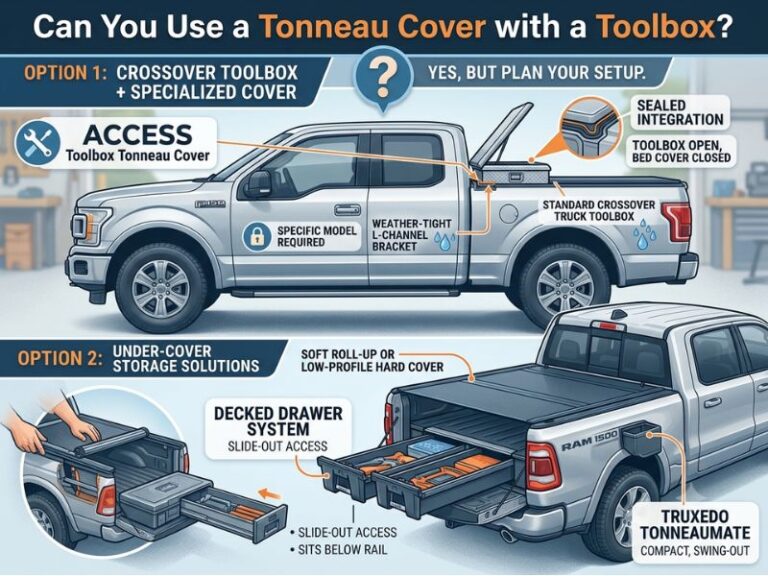
Check compatibility with bedliners, utility rails, toolboxes, ladder racks, tie-downs, bed caps, and factory cargo-management systems. Some covers require these accessories to be removed, modified, or positioned differently.
Look for a complete sealing system
A waterproof-looking top panel is not enough. Look for information about side seals, front bulkhead seals, tailgate sealing, inter-panel seals, drainage channels, and drain tubes.
Products that manage water through gutters and drains may perform better than designs that simply rely on overlapping edges. A drain system is only useful if it is easy to inspect, correctly routed, and compatible with the truck’s bed configuration.
Read the installation and care requirements before purchase. A cover that needs precise adjustments or routine track cleaning may be a good choice, but only if that maintenance fits the way you use the truck.
Match the cover to the cargo
For ordinary work gear, camping equipment, sports bags, and groceries, a well-installed cover plus sensible storage may provide sufficient protection. For highly sensitive items, use waterproof bins or sealed cases inside the truck bed even with a premium cover.
Do not place valuables directly against the bed floor or side walls if a storm could cause temporary pooling. Elevating cargo and using internal containers reduces the consequences of a small leak.
Consider security separately from water protection
A tonneau cover can discourage casual access, but weather resistance and theft resistance are different features. Soft covers may be easier to cut, while hard covers can still be defeated if the tailgate or cover locks are not secure.
If the cargo is valuable, evaluate the tailgate lock, cover latch, bed access, visibility, and the truck’s parking environment. A cover should not be treated as a vault simply because it looks solid or has a lock.
How installation affects waterproof performance
Installation quality can matter as much as material quality. Even an expensive cover may leak if the rails are misaligned, clamps are loose, seals are folded, or drain tubes are blocked.
Begin with clean, dry mounting surfaces. Remove dirt, old adhesive, and loose bedliner debris from areas where the seals must contact the truck, while avoiding aggressive scraping that could damage the finish.
Follow the stated sequence for positioning rails and clamps. Tightening one side completely before aligning the other can pull the system out of square. Many covers need equal spacing and gradual adjustment so the panel sits evenly across the bed.
Inspect the cover from several angles after installation. The gaps should appear consistent, the tailgate should open and close without interference, and the cover should not rub against the cab, bed caps, or cargo-management components.
Do not add household caulk or permanent adhesive as a first response to a leak. It may block a designed drainage path, make future repairs difficult, trap moisture against the truck, or void the product warranty. Use only approved seals and installation methods when possible.
Maintenance that helps prevent water intrusion
Routine care can preserve seals and keep drainage paths working. Maintenance will not make an incompatible or damaged cover waterproof, but it can prevent small problems from becoming major leaks.
- Remove leaves, dust, mud, and ice from rails, hinges, gutters, and drain openings.
- Wash the cover with mild soap and water using a soft cloth or sponge.
- Rinse away cleaning residue that could leave a film on seals or tracks.
- Inspect vinyl, fabric, stitching, hinges, latches, snaps, and panel joints for wear.
- Check that clamps and mounting hardware remain secure without overtightening them.
- Confirm that drain tubes are connected, open, and directed away from areas where water can collect.
- Keep heavy or sharp cargo from resting against the cover or its seals.
- Store a removed soft cover loosely and dry, following the product’s storage instructions.
Avoid abrasive brushes, petroleum-based chemicals, harsh solvents, and unapproved shine products. Some dressings make a surface look new while weakening its coating or leaving it slippery enough to affect how the cover stays in position.
Cold weather deserves extra attention. Frozen water can expand inside tracks and seals, while stiff vinyl can crack when rolled or snapped aggressively. Clear ice gently and allow material to warm before forcing moving parts.
How rain, snow, car washes, and wind affect a cover
Weather exposure is not uniform. A cover that handles light rain while parked may behave differently under highway spray, an overnight storm, or melting snow.
Heavy rain can overwhelm small drainage paths
During a long storm, water may pool on a sagging soft cover or accumulate in a channel faster than it can drain. Pooling adds weight and can stretch the material, which creates a cycle of deeper sagging and greater water retention.
Park on level ground when possible and remove standing water before opening the cover. Opening a cover with pooled water can dump a large amount of water into the bed or onto the person standing behind it.
Snow and ice can damage the cover
Snow should not be treated as harmless cargo. A heavy layer can stress bows, hinges, rails, clamps, and support struts, especially if it freezes and becomes difficult to remove.
Brush loose snow away with a suitable soft tool and avoid sharp scraping against vinyl or seals. Never assume that a closed cover is rated to support a person, equipment, or accumulated snow unless the manufacturer specifically states that it is.
Automatic car washes can create special risks
Some covers tolerate ordinary washing, while others should not be exposed to automated brushes, high-pressure jets, wax systems, or air dryers. The safest choice is to follow the cover’s care instructions and avoid directing pressurized water under the edges.
Before entering a wash, confirm that the cover is fully closed and latched. Remove or secure accessories that could catch brushes or airflow, and do not use a wash process that the cover manufacturer excludes.
Wind can lift or damage an unsecured cover
Wind can enter beneath a partially latched cover, an open tailgate, or a folded section. Once it lifts one edge, the force can bend hardware, tear fabric, or loosen clamps.
Never drive with a soft cover rolled up unless it is secured exactly as instructed. Do not drive with folded hard panels unsupported if the design does not allow that position, and stop if you hear flapping, rattling, or repeated contact with the cab.
How to diagnose a wet truck bed
Start by identifying when the water appears and where the cargo is wet. A bed that is damp only after driving in rain points toward road spray or wind pressure, while water after parking may indicate a top seam, seal, drain, or pooling issue.
Inspect the cover in this order:
- Look for tears, pinholes, cracked coatings, separated stitching, or distorted panels.
- Check the front edge near the cab and the bulkhead seal.
- Examine both side rails for loose clamps, dirt, gaps, and crushed weather stripping.
- Inspect folds, hinges, zippers, snaps, and the rear corners.
- Check the tailgate gap and the contact between the cover and tailgate.
- Follow drain channels and tubes for blockages, kinks, or disconnection.
- Inspect the bed itself for holes from accessories, damaged seams, or missing plugs.
Use dry paper towels to isolate the first point of contact during a gentle hose test. If the leak continues after cleaning and adjustment, document the location with photographs before contacting the seller, installer, or manufacturer.
A warranty may cover a defective component, but it may not cover damage from improper installation, misuse, unapproved modifications, normal wear, or an incompatible truck configuration. Keep the installation instructions and purchase information available.
When an extra waterproof layer is necessary
A tonneau cover should be viewed as the first weather barrier, not always the only one. Interior protection is especially important when the cargo would be expensive, dangerous, or unusable after getting wet.
Use sealed storage bins, dry bags, waterproof cases, or plastic totes for items such as cameras, computers, documents, clothing, food, and electrical equipment. Close containers carefully and avoid relying on a loose tarp that can collect water or shift during travel.
For tools and equipment, place absorbent or protective liners beneath containers and keep water-sensitive items off the bed floor. A small leak may spread across the floor before it becomes visible, particularly when the truck is parked on an incline.
Do not use a tonneau cover as a substitute for transporting hazardous materials safely. Chemical containers, fuel cans, compressed cylinders, and other regulated or dangerous cargo may require specific approved containers, ventilation, separation, and tie-down practices beyond ordinary weather protection.
Common misconceptions about waterproof tonneau covers
A waterproof material does not make the entire cover waterproof
Vinyl, aluminum, composite, and coated fabrics can resist water, but the cover also contains seams, attachments, openings, and moving joints. The weakest connection often determines how dry the bed remains.
A leak does not always mean the cover is defective
Incorrect fit, poor alignment, a blocked drain, a damaged tailgate seal, an accessory conflict, or a bent truck bed can cause water intrusion. Diagnose the complete installation before replacing the cover.
A hard cover is not automatically more watertight
Hard panels can resist punctures and sagging, but their hinges, locks, panel joints, and drainage channels still require proper sealing. A well-installed soft cover may outperform a poorly installed hard cover in ordinary rain.
Water resistance does not equal flood protection
A tonneau cover is not designed to keep a truck bed dry if the bed is submerged, exposed to standing water above the tailgate area, or subjected to severe flooding. Never rely on it to protect cargo in flood conditions.
Dry weather performance does not prove a perfect seal
A cover can look tight for months without experiencing the right combination of wind, rain direction, temperature, and water volume to reveal a weakness. Periodic inspection is worthwhile even when no leak has appeared.
How much should you spend for better weather protection?
Price alone does not determine whether a cover stays dry. More expensive products may offer stronger materials, better seals, drainage systems, improved hardware, or more precise fit, but installation and truck compatibility still control much of the result.
Lower-cost soft covers can be sensible when the main goal is keeping ordinary rain and sun off general cargo. They may need more frequent replacement if exposed to intense sunlight, repeated folding, harsh winters, or heavy use.
Midrange folding and hinged covers often offer a compromise between access, security, appearance, and weather resistance. Premium retractable and hard-panel systems may provide advanced drainage and convenience, but they also have more components that need adjustment and maintenance.
Include related costs when comparing options. A cover may require a tailgate seal, bulkhead seal, replacement clamps, installation, compatible rails, or interior cargo containers. A lower-priced cover that requires repeated repairs may cost more over its useful life than a better-fitting option.
When professional installation or repair makes sense
Professional help is worthwhile when the cover is expensive, the truck has a damaged bed, the installation requires drilling or modification, or the drainage system is difficult to access. An experienced installer can identify fit conflicts that are easy to miss during a quick home installation.
Seek repair or replacement when you find torn material, cracked panels, separated seams, broken latches, bent rails, deteriorated seals, or a drain system that cannot be restored. Continuing to use a damaged cover can expose cargo and allow water to remain against the truck bed.
Professional attention is also appropriate if the cover shifts while driving, interferes with the tailgate, blocks required lighting or visibility, or creates a risk of coming loose. Weather protection is secondary to secure operation and safe vehicle control.
Frequently asked questions about tonneau-cover waterproofing
Are tonneau covers waterproof in heavy rain?
Most tonneau covers resist heavy rain but cannot guarantee a completely dry bed. Wind-driven water, tailgate gaps, worn seals, pooled water, and blocked drains can still cause leaks, especially during long storms.
Are tonneau covers waterproof enough for electronics?
Do not rely on a tonneau cover alone for sensitive electronics. Keep computers, cameras, and other moisture-sensitive equipment in sealed cases or waterproof containers inside the bed, even when using a well-fitted hard cover.
Which tonneau cover is most water-resistant?
Well-fitted hard hinged, hard folding, and properly installed retractable covers often provide strong weather protection. The specific truck fit, seals, drainage design, installation, and maintenance matter more than the cover category by itself.
Why does my tonneau cover leak near the tailgate?
The tailgate gap and rear corner seals are common leak paths. Check the cover’s overlap, tailgate alignment, rear seals, bed rails, and any tailgate weather strip for dirt, damage, or uneven compression.
Can I make a tonneau cover more waterproof?
You can often improve water resistance by correcting fit, cleaning seals, clearing drains, and installing approved weather stripping. Do not seal over designed drainage paths or apply unapproved caulk, adhesive, or chemical treatments without checking the product instructions.
Can I use a pressure washer on a tonneau cover?
A pressure washer can force water beneath seals and damage materials. Use gentle water flow unless the manufacturer specifically permits pressure washing, and keep the nozzle away from edges, seams, hinges, tracks, and drain openings.
Does a truck-bed liner affect tonneau-cover waterproofing?
A bedliner can affect sealing if it changes the height or shape of the mounting surface. Thick coatings, drop-in liners, bed caps, and accessories may require special rails, spacers, or adjustments to maintain even seal contact.
Should I use a truck-bed cover with waterproof storage bins?
Yes, layered protection is the safest approach for valuable or sensitive cargo. The cover reduces direct exposure to weather, while sealed bins protect against the small amount of moisture that may enter through normal gaps or unexpected leaks.
Choose a tonneau cover for realistic weather protection
A tonneau cover can keep most truck-bed cargo substantially drier, but “waterproof” should be treated as a performance claim with limits rather than a promise of absolute dryness. The cover’s style, seals, drainage, installation, truck fit, maintenance, and weather conditions all affect the result.
Before buying or troubleshooting, verify the exact bed configuration, inspect the tailgate and rails, and identify whether the cargo needs a second waterproof barrier. If water continues to enter after cleaning and alignment checks, stop exposing sensitive cargo and have the cover or installation inspected.