
Can You Plug the Shoulder of a Tire: Clear Answers and Key Facts
No. A tire shoulder puncture should not be plugged because repairs near the tread edge can fail and cause a sudden loss of air.
A small nail in the center of a tire’s tread can sometimes be repaired, so it is understandable to wonder whether the same fix works closer to the sidewall. The shoulder is different, however. It is the rounded transition between the main tread and the sidewall, and it flexes heavily whenever the tire turns, carries weight, or rolls over an uneven surface.
That movement makes a plug or patch much less dependable there. This guide examines “can you plug the shoulder of a tire” and explains the details that matter in practice.
The exact location matters more than the size of the puncture. A screw that appears minor may be too close to the shoulder for a safe repair, while a similar puncture in the central tread may be repairable after an internal inspection. Driving on a tire with low pressure can also create hidden structural damage that is not visible from outside.
This guide examines “can you plug the shoulder of a tire” and explains the details that matter in practice.
This guide explains how to identify the shoulder, distinguish it from the repairable tread area, understand why shoulder plugs are risky, and decide what to do after a puncture. You will also learn which warning signs require immediate attention, when a tire shop may recommend replacement, and how to avoid turning a small leak into a dangerous tire failure.
- ✓The shoulder and sidewall are generally outside the accepted repair zone.
- ✓A plug alone is not a safe repair for a shoulder puncture.
- ✓Driving on a deflated or visibly damaged tire can make replacement unavoidable.
- ✓A tire professional should inspect the location, internal condition, and remaining tread.
Why Can You Plug the Shoulder
The short answer is no, but the reason deserves a closer look. Tire repairs are normally limited to the central portion of the tread, where the rubber is designed to contact the road with relatively little side-to-side flex. A proper repair typically involves removing the tire, inspecting the inside, and installing a combination repair unit that seals both the puncture channel and the inner liner.
The shoulder begins where the tread starts curving down toward the sidewall. There is no universally identical measurement for every tire, because tread patterns and profiles vary, but a puncture near the outer tread grooves or curved edge should be treated cautiously. If you cannot confidently identify the repair zone, have a tire shop make that decision.
- Puncture position: A hole near the curved outer tread or sidewall is generally not a repair candidate.
- Internal condition: Low-pressure driving may cause damage that cannot be judged from the outside.
- Tire construction: Run-flat, low-profile, and specialty tires may have additional inspection requirements.
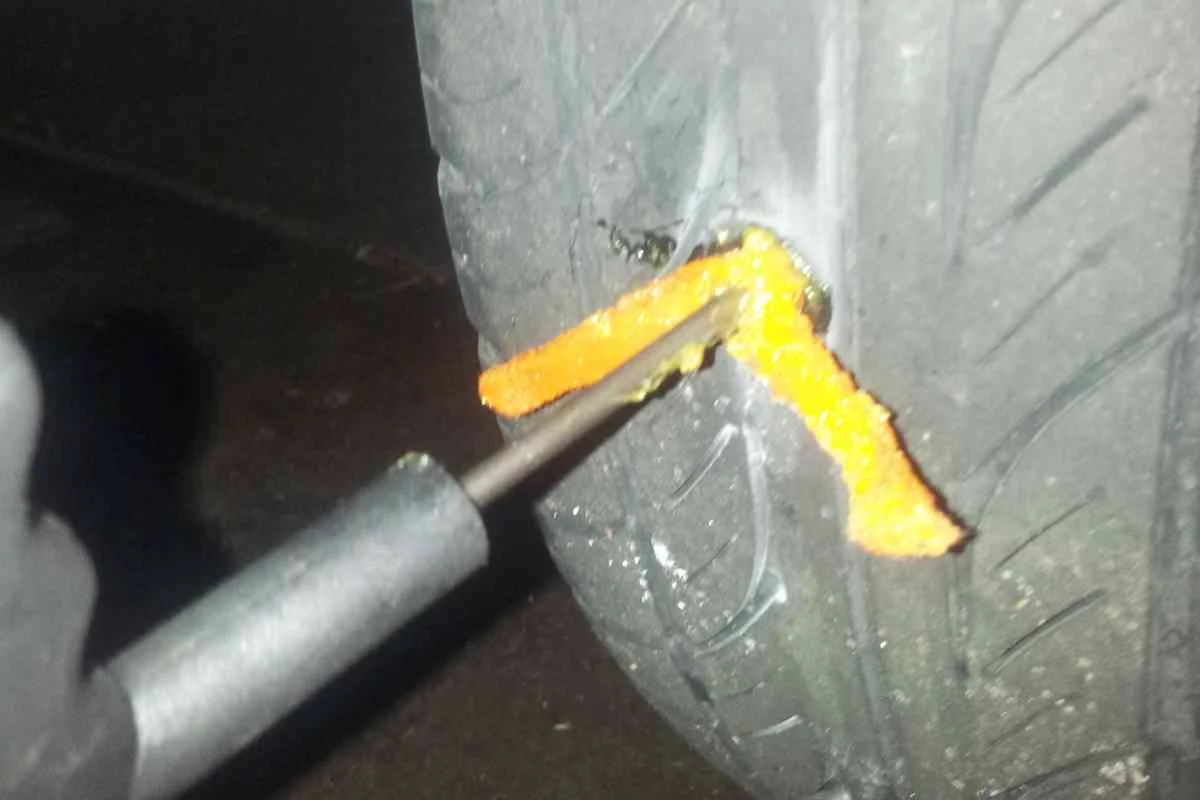
A rope plug inserted from the outside may stop air temporarily, but it does not prove that the tire is safe. It may leave the inner liner unsealed, fail to account for internal damage, or allow moisture to reach the steel belts. Those concerns are especially serious in the shoulder, where the tire bends and loads change constantly.
Why a Shoulder Plug Can Fail
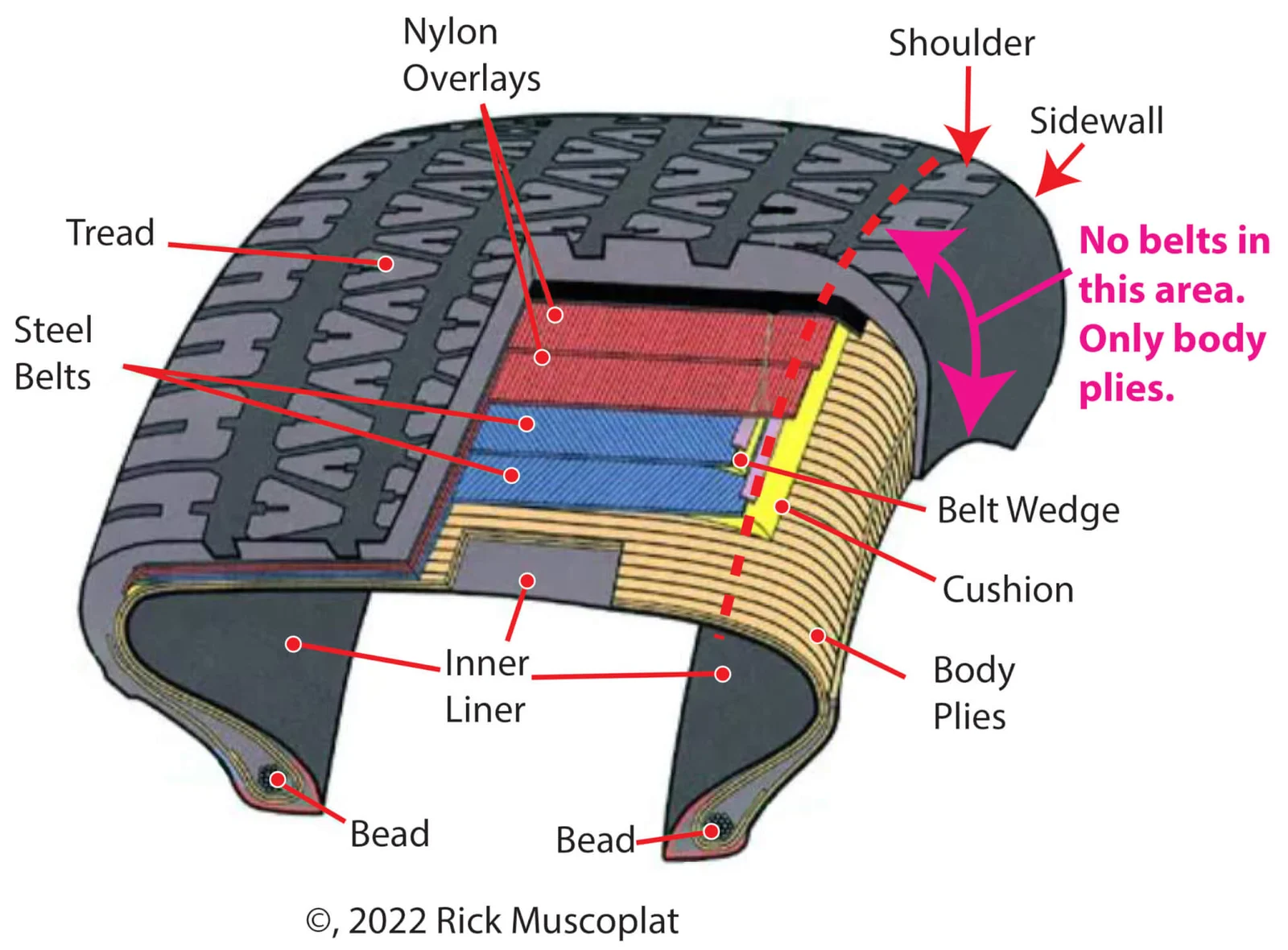
The shoulder experiences more flex than the center tread. As the vehicle corners, the shoulder helps maintain the contact patch and transfers steering forces into the road. A repair material placed in this high-movement area can be pulled, sheared, or worked loose over time.
Heat is another concern. Flexing generates heat inside a tire, and a damaged belt package can worsen that heat buildup. If a repair does not hold, the tire may lose pressure gradually or rapidly.
A slow leak can also encourage continued driving until the tire is severely underinflated.
- Movement matters: The shoulder bends more than the central tread during cornering and everyday driving.
- Pressure changes matter: Underinflation increases flex, heat, and stress around the damaged area.
- Visible size is misleading: A tiny puncture can affect internal belts or cords.
- External plugs are limited: A plug cannot replace a complete internal inspection.
Plug versus professional tire repair
A plug is a strip of rubber or similar material pushed into a puncture from the outside. It can be useful as an emergency measure for an appropriate tread puncture, but it is not the same as a permanent, approved tire repair. A proper repair generally uses a plug-and-patch combination installed from inside the tire after the tire has been removed from the wheel.
Even a combination repair cannot make an unsafe location safe. Repair standards commonly exclude the shoulder and sidewall because those sections flex too much and do not provide a stable area for a lasting seal. This distinction matters when answering “can you plug the shoulder of a tire”.
How to Tell Whether the Puncture Is in the Shoulder
Finding the puncture location is the first practical decision. Park on a level surface, set the parking brake, and look at the tire without putting your body in a position where a moving vehicle could reach you. If the tire is badly deflated, bulging, split, or separating, do not continue driving it for a closer inspection.
The main tread is the broad, flatter surface that normally contacts the road. It contains the longitudinal grooves and tread blocks across the middle of the tire. The shoulder is the rounded outer area where those blocks curve downward and the sidewall lettering begins nearby.
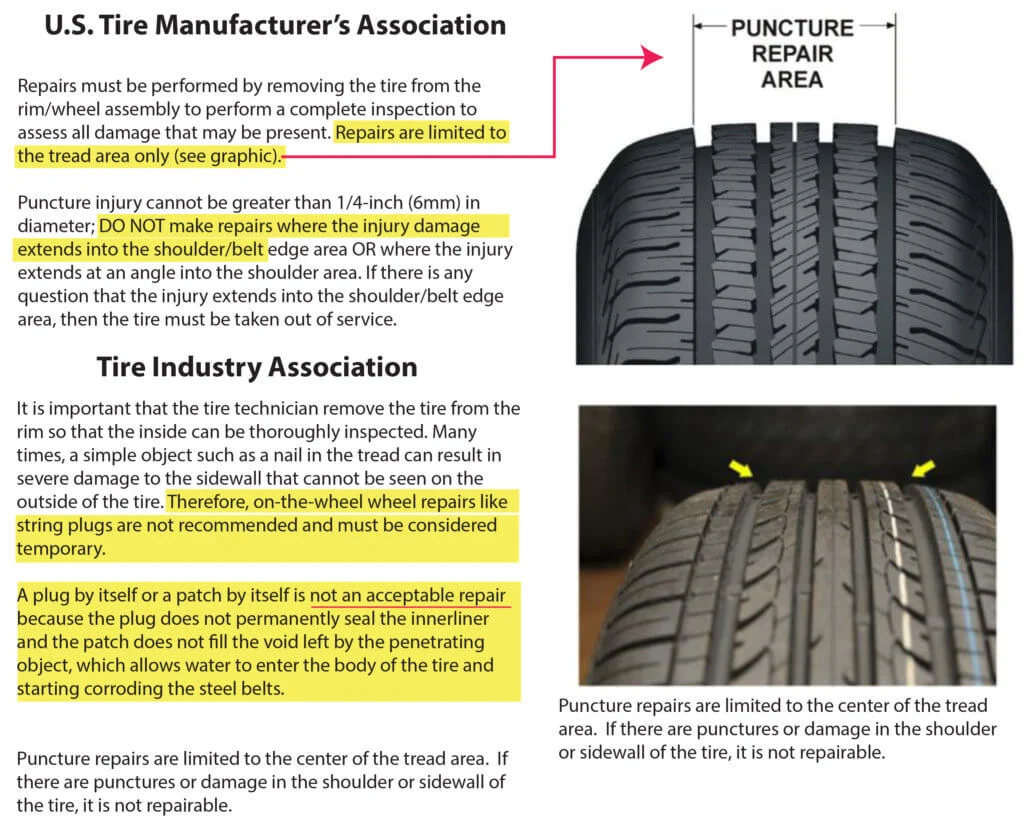
- Center tread: The flatter middle area is the only region that may qualify for a conventional repair.
- Outer tread: A puncture close to the edge of the tread pattern needs professional judgment.
- Shoulder or sidewall: Expect replacement rather than a plug or patch.
Use the tread grooves as a guide, not a guarantee
Some tires have wide shoulder blocks that make the repairable area look larger than it is. Others have unusual tread designs, reinforced shoulders, or little visible separation between tread and sidewall. Do not use a fixed visual guess based only on the distance from the sidewall.
A tire technician can mark the puncture, remove the tire, and check whether the injury lies within the accepted repair area. That inspection also reveals whether the object entered straight or at an angle and whether the inner liner or belt area was damaged.
What to Do After Finding a Shoulder Puncture
If the tire is losing air, stop driving as soon as it is safe. Continuing even a short distance on a tire with very low pressure can damage the sidewall and internal structure. If the tire is still holding pressure, avoid unnecessary driving and arrange an inspection rather than testing how long the plug might last.
Do not remove a nail or screw just to see what happens. The object may be slowing the leak, and removing it can cause a rapid loss of air. Instead, note its location and check the pressure with a reliable gauge if doing so is safe.
- Move away from traffic: Use a safe parking area, not a narrow shoulder whenever another location is reasonably available.
- Check for immediate danger: Look for a bulge, cut, exposed cords, separated tread, or a tire that is nearly flat.
- Use the correct backup: Install the spare according to the vehicle manual, or call roadside assistance.
- Request an inspection: Tell the shop that the puncture is near the shoulder and mention any distance driven while underinflated.
- Replace when required: Follow the technician’s recommendation if the injury is outside the repair zone or internal damage is present.
- Bulging rubber: A bubble can indicate separated or weakened internal cords.
- Exposed material: Visible steel or fabric means the tire’s protective layers are compromised.
- Rapid pressure loss: A tire that will not hold air should be treated as unsafe for normal travel.
Can You Plug the Shoulder of a Tire if
Small size does not make a shoulder puncture repairable. The important questions are where the injury is located, how the tire was driven afterward, and whether the internal structure remains sound. A pinhole in the wrong place can be more dangerous than a larger puncture in the center tread.
Keep these limitations in mind when considering “can you plug the shoulder of a tire”.
For example, a short screw in the outer tread block may look harmless because it has not created a large tear. Yet the shoulder can flex around the repair repeatedly. A plug may appear secure in the driveway and still loosen after highway heat, cornering, or repeated changes in tire pressure.
There are also injuries that are not simple punctures. A tire can have a cut, tear, impact break, belt separation, or sidewall abrasion. These conditions cannot be solved by filling a hole with rubber, even if the tire seems to hold air for a while.
- Size is secondary: Location and internal damage determine whether repair is possible.
- Air retention is not proof: A tire can hold pressure while still having dangerous structural damage.
- Highway use raises the stakes: Heat and speed place greater demands on a questionable repair.
When Replacement Is Usually the Safer Choice
Replacement is normally recommended when the puncture reaches the shoulder or sidewall, when the tire was driven flat, or when inspection finds belt or liner damage. It is also the usual answer for a large cut, an irregular tear, or a hole caused by an object that entered at a severe angle.
The replacement decision should consider more than the damaged tire. If the vehicle uses all-wheel drive, check the owner’s manual for requirements about matching tire diameter and tread depth. Replacing only one tire can sometimes create a mismatch, particularly when the other tires are significantly worn.
Questions to ask the tire shop
A clear explanation can help you make a confident decision without guessing. Ask whether the injury is in the central tread repair area, whether the tire was driven underinflated, and whether the inside shows scuffing or belt damage.
- Is the puncture in the tread, shoulder, or sidewall?
- Was the tire removed and inspected internally?
- Is there any evidence of run-flat damage or inner-liner abrasion?
- Do the vehicle’s drivetrain or tire-size requirements affect replacement choices?
A reputable shop should be able to explain why a repair is or is not suitable. Be cautious of advice based only on plugging the hole from outside without examining the tire’s interior.
FAQ: Shoulder Tire Puncture Repairs
Can you plug the shoulder of a tire
An outside plug may temporarily slow air loss, but it should not be treated as a safe repair for normal driving. The better emergency response is to use the spare or arrange roadside assistance and have the damaged tire professionally inspected.
Is a puncture near the shoulder always a replacement?
A true shoulder puncture is generally not repairable under standard tire-repair practices. If the injury only appears close to the edge but is actually in the approved central tread area, a technician may find it repairable after internal inspection.
Can a tire patch fix shoulder damage?
A patch alone does not make shoulder damage safe. The shoulder flexes heavily, and the injury may involve belts or cords. A tire professional will usually recommend replacement rather than applying a patch in that location.
What if the tire is not leaking?
A puncturing object can temporarily seal its own hole, so the absence of an obvious leak is not enough. Leave the object in place if possible, check the pressure, and schedule an inspection before driving normally.
Can I drive slowly to a tire shop?
Only drive if the tire is properly inflated, shows no bulge or structural damage, and the distance is short enough to be reasonable. If it is flat, rapidly losing air, or visibly damaged, use a spare or roadside service instead.
Does tire sealant solve a shoulder puncture?
Sealant may provide limited emergency assistance for some small punctures, but it does not restore damaged belts or make a shoulder injury permanently repairable. It can also affect later inspection and repair procedures, so tell the technician if you used it.
Conclusion
Can you plug the shoulder of a tire? In practical terms, no: the shoulder is a high-flex area outside the normal repair zone, and a plug can fail even when the hole looks small. Stop driving if pressure is low, avoid removing the puncturing object, and have the tire inspected internally.
If the injury is truly in the shoulder, replacement is usually the safest outcome. A qualified tire shop can also check for hidden damage and determine whether matching the other tires is necessary for your vehicle.
Use the spare or roadside assistance instead of plugging a shoulder puncture, then arrange a professional tire inspection before driving normally.


