How Close Can Tire Patches Be Together: Complete Guide and Tips
Tire repairs should not overlap or sit too close together; two repairs may be acceptable only when each is in a repairable area and the tire’s construction remains sound.
A tire can look perfectly normal from the outside while its internal condition tells a different story A repaired puncture may hold air yet a second plug or.
That is why the question of how close can tire patches be together is not answered by a single universal distance Repair location puncture size tire type damage.
- ✓Separate repairs are safest when they are fully within the central tread repair zone and do not overlap.
- ✓There is no reliable universal minimum distance for every tire; the tire maker’s repair policy and professional inspection control.
- ✓A patch cannot safely restore damage in a sidewall, shoulder, bead, or severely weakened internal structure.
- ✓Multiple repairs, run-flat driving, large punctures, and low tread can turn a seemingly small repair into a replacement decision.
How Close Can Tire Patches Be Together?
There is no single spacing number that makes every pair of tire patches safe A tire professional must.
As a practical rule repairs should be clearly separated fully contained within the manufacturer-approved tread repair area and installed using a proper internal patch-and-plug repair If one repair.

- Repair zone: Confirm that every puncture is in the central tread, not the shoulder or sidewall.
- Independent damage: Each injury must be inspected from inside and judged on its own size, angle, and condition.
- Clear separation: Repairs should not overlap, share damaged rubber, or leave a thin weakened bridge between them.
- Manufacturer policy: The tire brand’s repair limits take priority over general rules of thumb.
Many shops use a conservative approach because the tire is a stressed flexible pressure vessel The tread moves as it rolls and nearby punctures can create a larger.
The correct question is therefore not simply How many inches apart are the patches It is Are the.
Why spacing matters
A puncture interrupts the rubber and may damage steel belts textile cords or the inner liner A proper.
When two punctures are close the rubber between them may carry less load than an undamaged section The tire can also develop a larger flexible spot allowing the.
Why a fixed distance can mislead
Two repairs several inches apart may still be unsafe if they are both near the shoulder or if the tire was driven while severely underinflated Conversely two tiny.
Tire size, load rating, speed rating, construction, and intended use also change the risk. A heavily loaded truck, performance car, trailer, or run-flat tire may have stricter repair limitations than a standard passenger tire.
Where a Tire Can Be Repaired
Location is usually more important than the number of patches Most repairable punctures are limited to the central tread area where the tread is relatively flat and the.
A proper inspection requires removing the tire from the wheel Looking only at the outside can miss liner damage an elongated puncture channel exposed cords or evidence that.

- Central tread: A small, straight puncture here is the usual candidate for professional repair.
- Shoulder: Damage near the tread edge is exposed to greater flexing and is commonly nonrepairable.
- Sidewall: Sidewall punctures and cuts generally require tire replacement, not patching.
- Bead area: Damage where the tire seals against the wheel should not be treated as an ordinary tread repair.
The central tread area
The exact boundary varies by tire and repair policy but the central tread area is generally the portion covered by the main grooves and away from the shoulder.
A puncture should also be reasonably small and caused by an object that entered the tread rather than by a tear belt separation or impact break A clean.
The shoulder and sidewall
The shoulder flexes substantially as the tire rolls and turns A repair placed in this area may be pulled heated and distorted more aggressively than one in the.
The sidewall carries the vehicle s load while constantly bending It does not contain the same tread belt.
Repairs in different tread areas
Two repairs may be located in different parts of the central tread but that does not automatically make them acceptable The technician still needs to check whether one.
For example a nail hole near the center and a second hole several grooves away may be evaluated differently from two holes in the same narrow rib Repairs.
How Professional Tire Repair Is Evaluated
A safe repair is more than placing a rubber disk over a hole. The tire should be removed from the wheel, inspected inside and out, and assessed for puncture size, angle, internal damage, air-loss history, and previous repairs.
Industry repair practices commonly favor a combination repair that seals the puncture channel and covers the inner liner An external string plug alone may stop a leak temporarily.
- Inside-out inspection: Check the inner liner for abrasion, bulges, exposed cords, or heat damage.
- Puncture path: Determine whether the object entered straight or at an angle and whether the channel is enlarged.
- Previous work: Look for overlapping patches, failed plugs, sealant contamination, or repairs that are not centered.
- Service history: Ask whether the tire was driven flat, overloaded, or used while substantially underinflated.
What a technician looks for inside
The inner liner may show a dark ring, abrasion, wrinkling, or powdered rubber where the tire flexed while underinflated. These signs indicate that the casing may have suffered more damage than the puncture itself reveals.
The technician also checks whether a patch has bonded evenly and whether the repair has been placed over a clean properly prepared surface A patch edge that lifts. This distinction matters when answering “how close can tire patches be together”.
Puncture size and shape
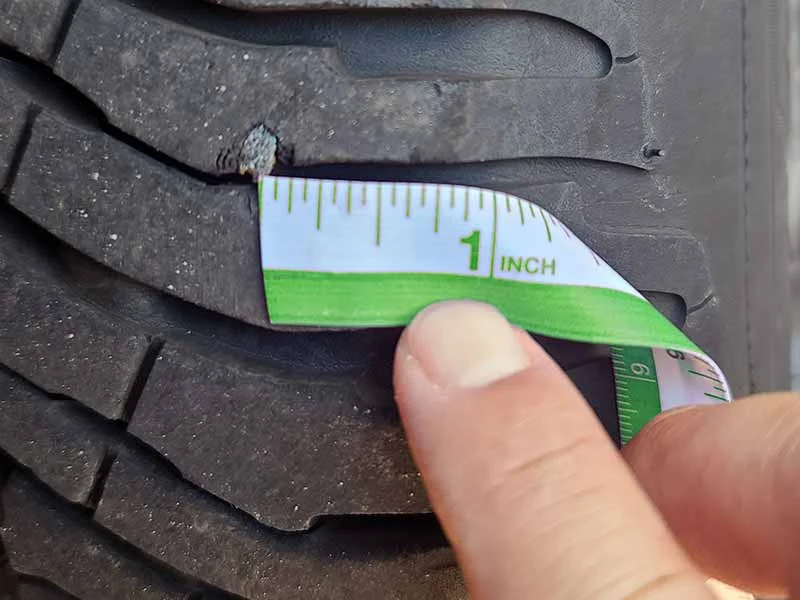
Small, clean punctures are generally easier to repair than large, irregular, or torn injuries. A screw can create a relatively neat channel, while a sharp object may cut cords or produce a slit that expands as the tire rolls.
Size limits vary by tire maker and repair standard so a shop should not approve a repair solely because the visible hole looks small The opening may have.
How existing repairs affect a new one
Existing repairs deserve careful scrutiny. A tire with one sound, well-separated repair may remain serviceable, while a tire with several patches, an old plug, and evidence of air loss may have too little margin for another repair.
If a new puncture is close to an old patch the technician must decide whether the original repair can remain intact during preparation for the new one Grinding.
When Multiple Tire Patches May Be Acceptable
Multiple repairs are not automatically disqualifying A tire may remain repairable when the injuries are small separated located in the approved tread area and free from signs of.
The tire’s age and remaining tread also matter. A casing that is already worn, weather-cracked, or close to its replacement limit may not be a sensible candidate for another repair even if the new puncture meets the basic location requirements.
- Sound casing: No bulges, separations, exposed cords, severe cracking, or heat-related damage are present.
- Proper locations: Each puncture is entirely within the approved repairable tread zone.
- Nonoverlapping repairs: The injuries and repair materials do not intersect or compromise the same rubber.
- Usable tire: Tread depth, age, and service history justify keeping the tire in use.
Separated punctures in the center tread
As an example imagine a passenger tire with one small nail puncture in a central tread rib and a second unrelated screw puncture farther across the tread If.
That example is not permission to apply a tape measure and approve the tire yourself The distance angle and surrounding tread structure must be judged together A shop.
When the tire has one previous repair
One previous repair does not necessarily end the tire’s service life. The earlier repair should be inspected for proper installation, air retention, edge lift, contamination, and proximity to the new injury.
If the old repair is an external plug without an internal inspection, the new visit is an opportunity to assess the entire tire. Adding another plug beside an unknown repair can hide a developing problem rather than solve it.
Commercial, high-load, and special-use tires
Fleet, commercial, trailer, performance, off-road, and run-flat tires may have additional restrictions. Their loads, operating temperatures, sidewall designs, or emergency-driving capabilities can make ordinary passenger-tire assumptions inappropriate.
For these tires, consult the manufacturer’s repair guidance and use a shop familiar with that category. A tire that carries heavy cargo or operates at high speed deserves a larger safety margin than a casual visual inspection can provide.
When Multiple Repairs Mean Replace the Tire
A replacement is the safer decision when the repairs overlap sit in the shoulder or sidewall involve a large or torn injury or are accompanied by internal damage.
Replacement can feel excessive when the tread still looks deep, but tread appearance is only one part of tire condition. A tire may retain visible grooves while its cords, inner liner, or bead area have been weakened.
- Overlapping damage: The new puncture is in the same repair area as an old patch or plug.
- Shoulder or sidewall injury: The damage reaches the curved tread edge, sidewall, or bead.
- Run-flat evidence: The inner liner shows abrasion, wrinkling, or heat from driving with little pressure.
- Structural symptoms: A bulge, vibration, irregular wear, separation, or exposed cord is present.
Overlapping or clustered punctures
Two punctures can effectively become one larger damaged zone when they are close enough that their repair materials overlap or the rubber between them is thin In that.
Clustered injuries can also indicate that the tire encountered a sharp object road debris or an impact that caused more hidden damage If several marks appear in a.
Driving underinflated or flat
Air pressure supports the tire and controls how much its sidewalls and tread flex. When pressure falls very low, the inner liner can rub against itself, generating heat and damaging the casing even if the tire is reinflated later.
A vehicle may travel farther on a flat tire than its driver realizes particularly at low speed If.
Age, wear, and visible deterioration
Older tires may develop weather checking, hardened rubber, or weakened bonding between components. Excessive wear reduces the remaining tread and can leave less material around a repair. A new patch does not reverse those conditions.
Replace rather than repair when you see sidewall cracking, a bulge, tread separation, exposed cords, or unusual vibration. These symptoms point beyond a simple puncture and should not be covered up with another patch. Keep these limitations in mind when considering “how close can tire patches be together”.
Patch, Plug, or Patch-Plug: What the Difference Means
People often use “patch” to describe any puncture repair, but the materials and installation methods are not identical. Understanding the difference helps you evaluate what a shop proposes and why an external repair may not be enough.
A plug fills the puncture channel while a patch covers the inner liner A combination repair uses a stem or plug to seal the channel and a patch.
- External plug: Fast and visible from the outside, but it does not provide a full internal inspection.
- Internal patch: Covers the liner but may not completely seal a puncture channel by itself.
- Combination repair: Addresses both the channel and liner when installed correctly.
- Sealant: May assist with temporary air retention but does not restore damaged cords or replace a proper repair.
Why an outside plug can hide the real issue
An external plug can stop air loss while leaving internal abrasion a bent belt or a puncture that is too large to repair It can also make it.
If a tire has been plugged from the outside, tell the shop before another repair is attempted. The plug may need to be removed or the tire may need replacement, depending on its location and condition.
Why repair quality affects spacing
A properly centered repair with a smooth, bonded patch edge occupies a different amount of functional area than a crooked, oversized, or poorly prepared repair. A defective old patch can make the surrounding region unsuitable for additional work.
For that reason, spacing should be considered between the actual damaged zones, not merely between visible patch centers. A patch may extend beyond the puncture, and the technician must account for the whole repair and any internal damage around it.
How to Check a Tire Before Approving Another Repair
You do not need to diagnose the casing yourself but you can collect useful information before authorizing work Ask where each injury is located whether the tire was.
A trustworthy explanation should connect the recommendation to observable conditions repair-zone location puncture size casing condition tire age tread and service history Be cautious of an answer based.
- “Is every injury in the approved repair area?” This separates central tread punctures from shoulder or sidewall damage.
- “Was the tire inspected from the inside?” This reveals whether hidden liner and cord damage was checked.
- “Do the repair areas overlap?” The answer should consider the full damage and repair material, not just hole centers.
- “What makes replacement safer?” A clear explanation helps you understand whether the issue is location, structure, age, or history.
Check pressure after repair
After a tire is repaired or replaced, confirm that it is inflated to the vehicle manufacturer’s recommended cold pressure. Do not use the maximum pressure molded into the sidewall as the normal target unless the vehicle documentation specifies it.
Check pressure again when the tires are cold after the vehicle has been parked. A slow leak, vibration, or recurring pressure loss requires prompt inspection rather than repeated inflation.
Monitor symptoms during use
Pay attention to steering pull, new vibration, thumping, uneven wear, or a change in handling. These symptoms can come from balance, alignment, suspension, or tire damage, so they should not be ignored after a repair.
If a repaired tire loses pressure quickly, develops a bulge, or becomes hot or visibly distorted, stop driving when safe and arrange an inspection. Continuing at speed can turn a repair concern into a sudden tire failure.
Common Mistakes With Closely Spaced Tire Repairs
Many poor repair decisions come from treating a tire puncture like a simple hole in a solid object A tire is a layered structure that flexes thousands of.
These mistakes are especially common when drivers focus on saving one tire without considering the cost of a failure, additional damage, or an unsuitable mismatch with the other tire on the axle.
- Measuring only hole centers: The full repair diameter and hidden damage matter more than a ruler measurement.
- Using a second plug blindly: An outside plug does not confirm that the casing is healthy.
- Ignoring the shoulder: A puncture near the edge may be nonrepairable even when it is small.
- Driving after pressure loss: Low-pressure operation can damage the tire beyond the original puncture.
Relying on appearance
A patch that looks smooth from the outside can still have poor internal bonding. Likewise, an old repair may look unchanged while its edges have begun to lift or the liner around it has deteriorated.
The appearance test is useful for spotting obvious problems, but it cannot replace dismounting and internal inspection when another repair is being considered.
Assuming all tires follow the same rule
Passenger tires, light-truck tires, run-flat tires, trailer tires, and specialty tires do not necessarily share the same repair limits. Load, construction, speed, and intended service change how much risk is acceptable.
Use general guidance only as a starting point. The tire manufacturer’s instructions and the judgment of a qualified repair professional should control the final decision.
FAQ: How Close Can Tire Patches Be Together?
Can two tire patches be next to each other?
They can sometimes both be acceptable if they are fully separated, in the central tread, and supported by a sound casing. If they touch, overlap, or leave only a narrow damaged bridge between them, replacement is usually the safer choice.
Is there a minimum distance between tire patches?
There is no universal distance that applies to every tire and repair method. Tire construction, puncture size, repair diameter, location, and the manufacturer’s policy all affect the decision.
Can a tire have three patches?
Possibly, but the number alone does not determine safety. Three properly separated repairs in a healthy, repairable tread area may be evaluated differently from three clustered injuries or a tire with prior plugs and internal damage.
What if one patch is near the tire shoulder?
A patch near the shoulder is commonly considered unsafe because that area flexes more than the center tread.
Can a tire be patched twice in the same spot?
Adding a second repair over or beside an existing repair is generally not a sound solution. The old repair may have altered the rubber and liner, and the combined repair area may not seal or flex reliably.
Is a plug safe if the patch is close to it?
A plug beside a patch should not be judged by appearance alone. The tire should be dismounted so the technician can determine whether the injuries overlap internally and whether the plug was installed correctly.
Should I replace both tires on an axle?
That depends on the vehicle’s drivetrain, tread-depth difference, tire type, and manufacturer guidance. On some vehicles, a large mismatch in tread diameter can stress driveline components, so ask a tire professional before replacing only one tire.
Conclusion
How close can tire patches be together Close repairs are acceptable only in limited circumstances each injury must be independently repairable fully within the approved central tread area.
Because no universal spacing number can account for every tire, have the tire removed and inspected internally before approving another repair. A short-term saving is not worth relying on a weakened casing at highway speed.
Ask a qualified tire shop to dismount the tire, inspect every existing repair and the inner liner, and explain whether the damage zones are genuinely separate before you drive on it.