How Big a Hole Can Be Plugged in a Tire: Detailed Guide and Facts
A tire puncture is generally repairable when it is no larger than 1/4 inch and lies within the tread, not the sidewall or shoulder.
That guideline is only the starting point. A small puncture can still be unsafe to repair if the tire was driven while flat, has internal damage, or sits too close to the sidewall. Conversely, a clean nail hole in the center tread may be a straightforward professional repair.
Imagine finding a screw in your tire before a long interstate trip: is its diameter the only fact that matters, or could its location and the tire’s condition change the answer? This guide explains how big a hole can be plugged in a tire, why a plug is not always the same as a proper repair, and which warning signs mean replacement is safer.
You will learn how to measure a puncture, distinguish the repairable tread area from the shoulder and sidewall, compare plugs with patch-plug repairs, and decide what to do before driving farther. The goal is a practical safety decision—not a promise that every small hole can be fixed.
- ✓A puncture up to about 1/4 inch in the central tread is commonly considered repairable.
- ✓Sidewall, shoulder, irregular, and oversized damage generally calls for tire replacement.
- ✓A plug inserted from the outside may stop air loss but is not the preferred permanent repair.
- ✓Internal damage, exposed cords, low tread, and previous repairs can make a small hole unsafe.
How Big a Hole Can Be Plugged in a Tire?
The commonly used maximum for a repairable puncture is 1/4 inch in diameter, or about 6 millimeters. This measurement applies to a clean, round penetration in the repairable portion of the tread. It is a guideline used by tire professionals, not permission to repair every hole that measures under that limit.
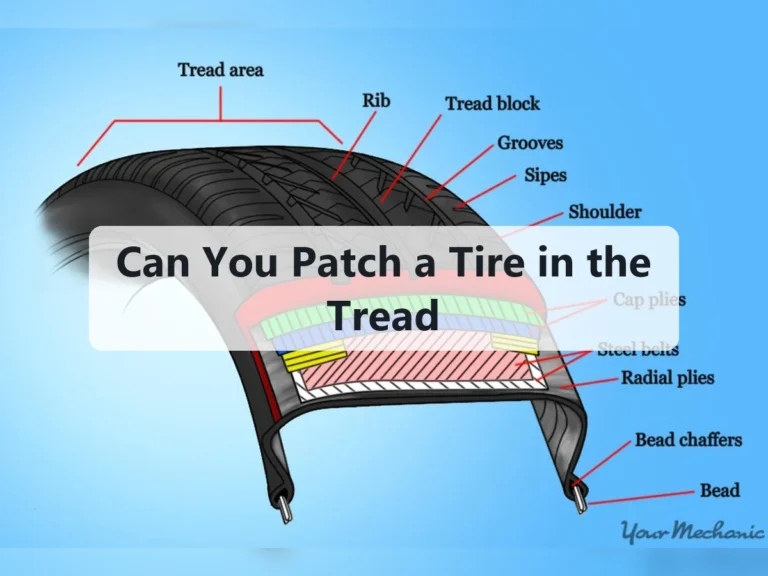
Location is just as important as size. A puncture should normally be in the central tread area, where the tread is thick and the tire’s internal structure is designed to contact the road. Damage in the shoulder or sidewall flexes more severely and cannot be safely restored with a conventional plug or patch.
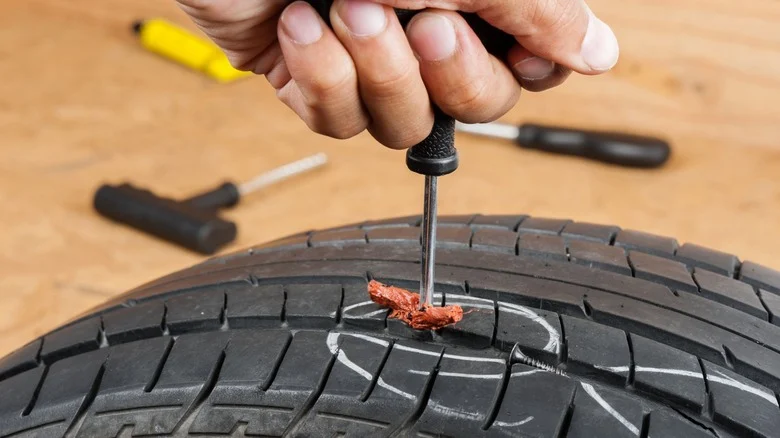
- Diameter: Keep a clean, round puncture at or below roughly 1/4 inch; larger damage needs professional evaluation and often replacement.
- Position: Look for damage in the central tread, away from the outer tread blocks, shoulder, and sidewall.
- Shape: A straight nail or screw penetration is more promising than a cut, tear, or irregular gouge.
- Internal condition: A tire that was driven underinflated may be damaged inside even when the visible hole is small.
Why the Puncture’s Location Matters More Than Its Size
A tire does not behave the same way across its entire surface. The center tread is relatively stable and thick, while the shoulder transitions toward the sidewall and experiences more bending. The sidewall flexes constantly to support the vehicle, absorb impacts, and maintain the tire’s shape.
That movement makes sidewall repairs unreliable. A plug may appear to seal the opening, but repeated flexing can loosen it or allow air to escape. A puncture near the shoulder can also compromise the area where tread belts and sidewall components work together.
For this reason, tire shops often use a “repairable area” rather than a simple distance from the visible edge. The exact boundary can vary by tire design, but damage close to the outer tread blocks should be assessed in person instead of judged with a ruler alone.
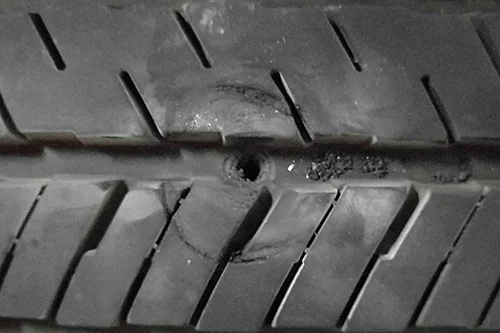
- Center tread: Usually the best location for a repair when all other conditions are favorable.
- Shoulder: The curved transition area is generally not considered safely repairable.
- Sidewall: Do not plug or patch a puncture here; replacement is normally required.
- Inner liner: A visible seal from the outside does not prove the internal structure is sound.
Plug, Patch, or Patch-Plug Repair?
A tire plug is a rubber or rubberized strip pushed into the puncture from the outside. It can be useful as a temporary measure, particularly when a puncture is discovered away from a repair facility. However, an external plug does not allow anyone to inspect the inside of the tire for abrasion, separation, or other damage.
A proper permanent repair typically involves removing the tire from the wheel, inspecting the interior, preparing the injury, and installing a combination patch-plug unit from the inside. The plug portion fills the puncture channel while the patch seals the inner liner. This method addresses both the path of the air leak and the surface around it.
A patch placed only on the inside may seal the liner but leave the puncture channel open to moisture and air movement. An outside-only plug may seal the channel without correcting hidden internal damage. The repair method should follow the tire maker’s guidance and the shop’s inspection of the actual injury.
This distinction matters when answering “how big a hole can be plugged in a tire”.
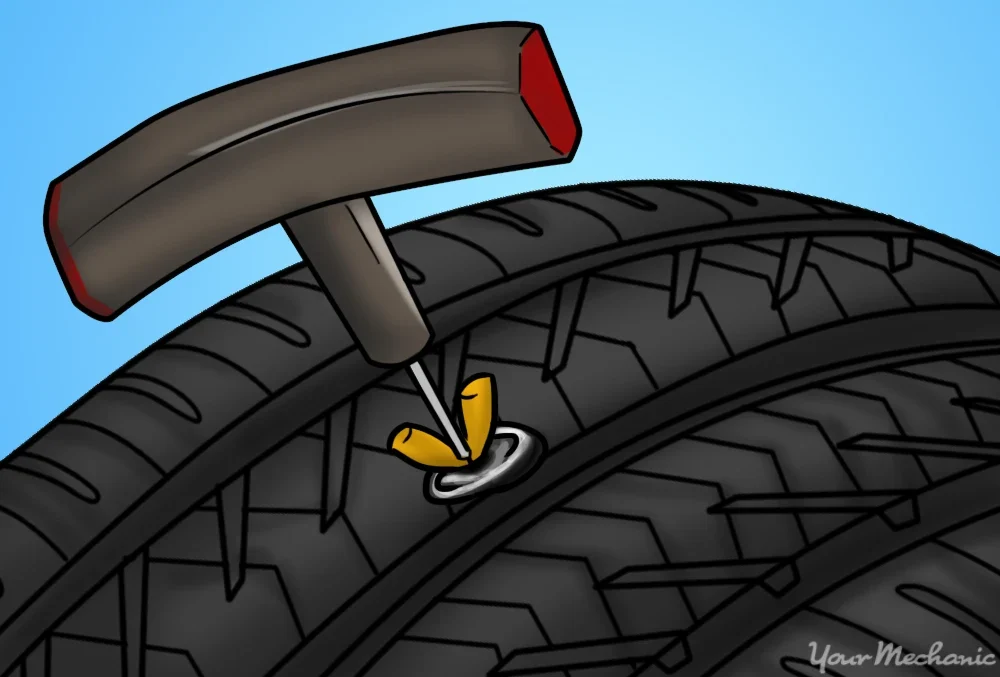
When an outside plug may be appropriate
An outside plug can help control a slow leak long enough to reach a tire shop, provided the tire is not visibly damaged and can be inflated safely. It should not be treated as proof that the tire is ready for extended highway use.
- Temporary purpose: Use a plug kit to reach professional help, not as an automatic permanent repair.
- Inspection first: The tire should be removed from the wheel before a permanent repair is approved.
- No sealant shortcut: Liquid tire sealants can complicate inspection and may not correct structural damage.
What Makes a Small Puncture Unsafe to Repair?
Hole size is only one part of the decision. A tire may be unsuitable for repair because of how the damage happened, how long it was driven afterward, or how much usable tread remains. These factors explain why a shop may reject a puncture that looks smaller than 1/4 inch.
Driving on a flat or severely underinflated tire can pinch the sidewall against the wheel. That creates heat and internal abrasion, sometimes producing damage that cannot be seen until the tire is removed. If the inner liner is scuffed, wrinkled, powdered, or torn, a plug cannot restore the tire’s strength.
Multiple repairs can also weaken the same area, especially when punctures overlap or sit too close together. A tire with exposed cords, bulges, tread separation, deep cuts, or uneven wear should not be kept in service merely because the current air leak is small.
- Air loss continues: A repaired tire that repeatedly loses pressure may have an incomplete seal or additional damage.
- Bulge or bubble: A raised area on the sidewall can indicate broken internal cords and requires replacement.
- Visible cords: Steel or textile strands showing through the tread or sidewall are a replacement warning.
- Heat or vibration: A hot tire, thumping sensation, or new vibration after a puncture needs prompt inspection.
- Low tread: A repair may not be worthwhile when the tire is near its wear indicators or has serious uneven wear.
How to Measure a Tire Puncture Carefully
Do not measure a leaking hole while the object is still embedded. Removing a nail or screw can turn a slow leak into a rapid one, and a puncture that looks small from the outside may have a larger channel inside. If the tire is losing pressure quickly, move the vehicle only as far as needed to reach a safe location or request roadside help.
If the tire is safely inflated and parked on a level surface, compare the visible injury with a ruler. Measure the widest part of the opening after the object is removed only when it is safe to do so. A shop can measure the actual puncture path more reliably after demounting the tire.
Never estimate repairability from the length of the nail or screw. A long fastener may enter at an angle, spread internal material, or damage a belt, while a short one may create a simple channel. The tire’s construction and the path of penetration matter.
Keep these limitations in mind when considering “how big a hole can be plugged in a tire”.
- Check pressure: Use a reliable gauge and compare the reading with the vehicle placard, usually found on the driver’s doorjamb.
- Identify the object: Note whether it is a nail, screw, bolt, cut, or missing chunk of rubber.
- Locate the injury: Separate the central tread from the shoulder and sidewall.
- Look for secondary damage: Check for bulges, cuts, exposed cords, rim damage, or signs of driving while flat.
- Get an internal inspection: Have a tire professional approve a permanent repair before normal driving.
Can You Drive on a Tire With a Plug?
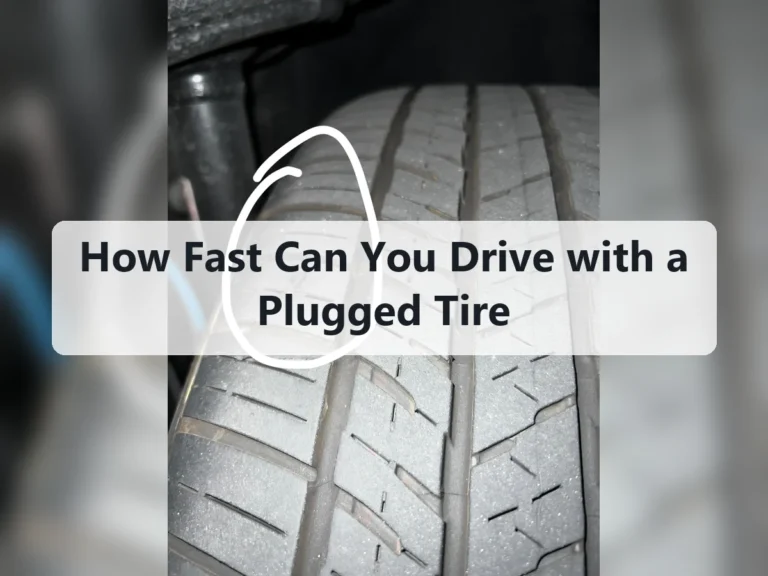
A properly inspected and professionally repaired tire can often return to normal service, but a temporary plug should be treated differently. If the plug is leaking, protruding excessively, pulling out, or surrounded by torn rubber, do not rely on it for a long trip.
Driving on a punctured or underinflated tire increases heat buildup and can cause rapid failure. A plug also does not correct a bent wheel, damaged valve stem, or second puncture. Check pressure before driving and stop if the vehicle begins pulling, vibrating, or making unusual noise.
If you must travel a short distance after an emergency plug, keep speed moderate, avoid heavy loads, and monitor pressure frequently. These precautions reduce risk but do not convert an external plug into a verified permanent repair.
- Safe enough to seek help: The tire holds pressure, has no sidewall damage, and the vehicle behaves normally.
- Stop driving: Pressure drops quickly, the tire is visibly deformed, cords show, or the wheel has been damaged.
- Highway trip: Do not begin one with an uninspected outside plug or a tire that needs repeated inflation.
Does Tire Type Change the Repair Decision?
Most passenger-car and light-truck tires follow the same basic principles, but construction and use can affect the final decision. Run-flat tires, high-performance tires, commercial tires, and tires with special acoustic or reinforced features may have specific inspection requirements.
Run-flat tires deserve extra caution because they may be driven for a limited distance after losing pressure. That capability does not guarantee that the tire escaped internal damage. A technician may need to follow the tire manufacturer’s instructions before approving any repair.
Age and wear matter as well. A puncture repair cannot compensate for dry cracking, severe weathering, repeated overheating, or tread that is already near the replacement point. When the tire’s overall condition is poor, replacing it is usually the more sensible choice.
FAQ: How Big a Hole Can Be Plugged in a Tire?
Is a 1/4-inch hole always repairable?
No. The 1/4-inch limit applies only when the puncture is in the central tread and the tire has no internal or related damage. Shoulder location, previous repairs, low tread, or driving while flat can make the tire unsafe to repair.
Can a tire with a 1/2-inch hole be plugged?
A hole that large is generally beyond the usual repair limit, particularly if the rubber is torn or the opening is irregular. Do not enlarge the puncture or attempt multiple plugs; have the tire inspected for replacement.
Can you plug a hole near the tire shoulder?
Usually not. The shoulder flexes heavily and lies outside the preferred repair area. A plug may not remain sealed there, so replacement is normally recommended.
Is a nail hole safer to repair than a screw
Neither is automatically safer. A straight, small penetration from either object may be repairable, while an angled screw, bent nail, or object that damaged the belts may not be. Location and internal condition matter more than the object’s name.
Can a tire be repaired twice?
Sometimes, if the repairs are separated, properly installed, and the tire remains in good condition. Overlapping injuries, too many repairs, or damage close to another repair can require replacement. A tire shop should inspect the entire tire before approving another repair.
Can you plug a tire without removing it
An outside plug can be installed without demounting the tire, but that approach does not reveal internal damage. For a permanent repair, the tire should generally be removed, inspected, and repaired from the inside with an appropriate patch-plug method.
What if the hole is smaller than 1/4 inch but
The puncture may be irregular, the plug may not be sealing, or another leak may exist at the valve, bead, wheel, or inner liner. Stop treating it as a simple hole and request a complete inspection.
Conclusion
The practical answer to how big a hole can be plugged in a tire is about 1/4 inch, but size alone never makes a repair safe. A small, clean puncture in the central tread may qualify for a professional patch-plug repair; sidewall or shoulder damage, internal abrasion, exposed cords, and poor tire condition usually mean replacement.
When in doubt, maintain safe pressure without driving farther than necessary and have the tire removed for inspection. That check can distinguish a reliable repair from a temporary seal that only hides a more serious problem.
Measure the puncture only as a preliminary check, then have a tire professional inspect its location and interior before you resume normal driving.