How to Clean and Protect Tonneau Cover: Step-by-Step Instructions
A tonneau cover is more than just an aesthetic upgrade for your truck; it’s a vital shield protecting your cargo from the elements and potential theft. However, neglecting its care can lead to a host of problems, from faded, cracked vinyl and brittle plastic to compromised waterproofing and a significantly shortened lifespan. Ignoring proper cleaning and protection can quickly degrade its appearance and functionality, turning a valuable accessory into an eyesore and a liability.
Without regular maintenance, dirt, grime, UV radiation, and environmental pollutants will relentlessly attack the cover’s materials. This isn’t just about superficial dirt; it’s about preventing irreversible damage that can lead to costly repairs or premature replacement. A well-maintained tonneau cover not only looks better but also performs its job more effectively, keeping your gear safe and dry.
I understand the importance of keeping your truck looking its best and your cargo secure. That’s why I’ve put together this comprehensive guide on how to clean and protect tonneau cover, designed to walk you through every step of the process. I’ll cover the tools and products you’ll need, specific techniques for different cover types, and crucial preventative measures to ensure your tonneau cover remains in pristine condition for years to come.
By following my detailed instructions, you’ll learn how to effectively remove stubborn contaminants, restore its original luster, and apply long-lasting protection against the harsh realities of daily use and exposure. This article will help you understand the nuances of tonneau cover care, ensuring you make informed decisions that extend the life and enhance the appearance of your investment.
Understanding Your Tonneau Cover Type
Before diving into the cleaning process, it’s essential to identify the type of tonneau cover you have, as different materials require specific care. Using the wrong products or techniques can cause damage, discoloration, or premature wear. Most tonneau covers fall into a few main categories:
Soft Tonneau Covers (Vinyl or Fabric)
- Vinyl: These are very common and often found on roll-up or snap-on covers. Vinyl is durable but susceptible to UV damage, which can lead to fading, cracking, and hardening over time. It can also develop mildew if not properly dried.
- Fabric (Twill/Canvas): Some soft covers, particularly premium roll-up or folding designs, use a fabric-like material, often a marine-grade canvas or twill. These materials are generally more resistant to fading but can trap dirt more easily and may require specific fabric cleaners to prevent staining and maintain water repellency.
Hard Tonneau Covers (Aluminum, Fiberglass, or ABS Plastic)
- Aluminum: Often found on retractable or some folding covers. Aluminum can be painted, powder-coated, or anodized. While robust, painted aluminum can scratch, and all finishes can dull over time from oxidation or environmental fallout.
- Fiberglass: Common for painted, one-piece, or some folding covers. Fiberglass is durable and can be painted to match your truck’s finish, making it susceptible to the same issues as automotive paint – swirl marks, oxidation, and UV damage.
- ABS Plastic: Used in some folding or hinged covers. ABS plastic is generally resistant to impacts but can fade and become brittle from UV exposure if not protected. Its surface can also scratch more easily than fiberglass or painted aluminum.
Hybrid Tonneau Covers
Some covers combine elements, such as a hard panel with a vinyl or fabric overlay. In these cases, you’ll need to identify the predominant surface material for cleaning purposes. For instance, a hard folding cover with a vinyl top surface should be treated primarily as a vinyl cover for its exterior cleaning.
Knowing your cover type will guide your choice of cleaning solutions and protective treatments, ensuring you use products that are safe and effective for the specific material.
Essential Tools and Products for Cleaning and Protecting Your Tonneau Cover
Having the right arsenal of tools and cleaning agents is crucial for achieving a thorough clean and long-lasting protection without causing damage. I always recommend gathering everything before you start to ensure a smooth process.
General Cleaning Supplies (Applicable to Most Covers)
- Mild Automotive Soap or pH-Neutral Car Wash: Avoid harsh household detergents, as they can strip away protective coatings, dry out vinyl, or damage painted surfaces. I prefer a dedicated car wash soap that is safe for all exterior finishes.
- Two-Bucket Method Setup: Two buckets – one for soapy water and one for clean rinse water – are essential to prevent transferring dirt back onto the cover, minimizing scratches.
- Soft Wash Mitts or Microfiber Towels: Use separate mitts for washing and rinsing. Microfiber is gentle yet effective at lifting dirt.
- Soft-Bristle Brush: For tougher grime or textured surfaces, a soft-bristle brush (like a detailing brush or an automotive wheel brush with soft bristles) can be helpful, especially for fabric covers or textured vinyl.
- Garden Hose with Spray Nozzle: For rinsing. A pressure washer can be used on a very low setting and from a safe distance, but I generally advise against it for soft covers due to the risk of damage.
- Clean Microfiber Drying Towels: Several high-quality, absorbent microfiber towels are necessary for drying to prevent water spots.
Specific Cleaning Products by Cover Type
- For Vinyl Tonneau Covers:
- Vinyl Cleaner/Restorer: These products are specifically formulated to clean vinyl without drying it out, often containing conditioners.
- UV Protectant for Vinyl: Crucial for preventing fading, cracking, and hardening. Look for products with UV blockers.
- Mildew Remover (if applicable): A diluted solution of white vinegar and water (1:1 ratio) or a dedicated vinyl mildew remover can be used for mildew spots.
- For Fabric Tonneau Covers:
- Fabric/Convertible Top Cleaner: These cleaners are designed to penetrate fabric fibers, lifting dirt without damaging the material or its water-repellent properties.
- Fabric Protectant/Water Repellent: Essential for restoring or enhancing the water repellency of fabric covers after cleaning.
- Stiff Bristle Brush (for deep cleaning): A slightly stiffer brush than for vinyl, but still not abrasive, can be used to work the cleaner into the fabric.
- For Hard Tonneau Covers (Aluminum, Fiberglass, ABS Plastic):
- Automotive Paint Cleaner (for painted surfaces): If your hard cover is painted, it can be treated much like your truck’s paint. A mild paint cleaner can remove embedded contaminants.
- Automotive Wax, Sealant, or Ceramic Coating: For painted or smooth finishes, these provide protection against UV, environmental fallout, and minor scratches.
- Plastic Restorer/Protectant (for ABS plastic): For unpainted ABS plastic, a dedicated plastic restorer with UV protection will help prevent fading and restore a like-new appearance.
- Rubbing Alcohol (for stubborn spots on hard covers): A small amount on a microfiber towel can remove tar or sap, but always test in an inconspicuous area first.
Optional but Recommended Tools
- Detailing Brushes: Small brushes are great for cleaning hinges, seals, and other intricate areas.
- Compressed Air or Blower: Useful for drying hard-to-reach crevices and seals.
- Applicator Pads: For applying protectants and dressings evenly.
By having these items on hand, you’ll be well-prepared for a comprehensive cleaning and protection regimen for your specific tonneau cover.
Step-by-Step Guide: How to Clean Your Tonneau Cover
This process outlines the general steps for cleaning most tonneau covers. I’ll provide specific considerations for different materials within each step.
Step 1: Prepare the Area and Pre-Rinse
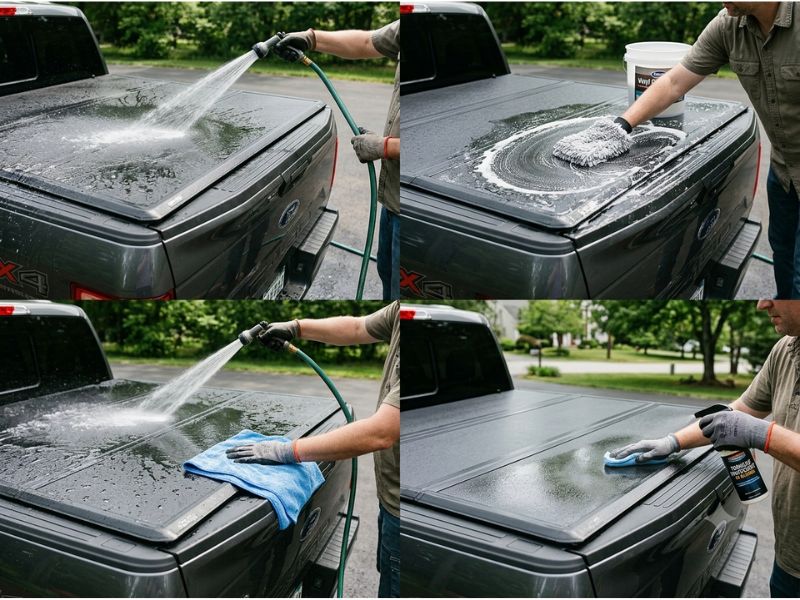
Choose a shaded area to work in, as direct sunlight can cause soap and cleaners to dry too quickly, leading to streaks or water spots. Ensure the cover is cool to the touch. Begin by thoroughly rinsing the entire tonneau cover with a garden hose. This initial rinse will remove loose dirt, dust, and debris, preventing it from scratching the surface during the washing phase. Pay attention to seams, hinges, and the underside edges where dirt tends to accumulate.
Step 2: Wash the Tonneau Cover
Using the two-bucket method, fill one bucket with your chosen mild automotive soap and warm water, creating a generous amount of suds. Fill the second bucket with clean water for rinsing your wash mitt. Dip a clean wash mitt into the soapy water and begin washing the tonneau cover in small sections, working from front to back or top to bottom. This systematic approach ensures you don’t miss any spots.
- For Vinyl Covers: Gently wipe the surface with the wash mitt. For stubborn spots or textured vinyl, a soft-bristle brush can be used with light pressure. Avoid scrubbing aggressively, as this can damage the vinyl.
- For Fabric Covers: Apply the dedicated fabric cleaner according to its instructions. Often, this involves spraying it onto the surface and allowing it to dwell for a few minutes. Use a moderately stiff brush (designed for fabric) to gently work the cleaner into the weave, lifting dirt.
- For Hard Covers (Painted, Fiberglass, ABS): Treat these much like your truck’s paint. Use the wash mitt with plenty of soapy water, wiping in straight lines or gentle circles. For painted covers, avoid excessive pressure to prevent swirl marks.
Regularly rinse your wash mitt in the clean water bucket to remove trapped dirt before re-dipping it into the soapy water. This is crucial for preventing scratches.
Step 3: Address Stubborn Stains and Mildew
After the initial wash, inspect the cover for any remaining stubborn stains, tar, sap, or mildew. Different materials require different approaches:
- For Vinyl Covers:
- Mildew: Mix equal parts white vinegar and water in a spray bottle. Spray directly onto the mildewed areas, let it sit for 5-10 minutes, then gently scrub with a soft brush and rinse thoroughly. Dedicated vinyl mildew removers are also effective.
- Stains: A dedicated vinyl cleaner/restorer can often lift remaining stains. For tar or sap, a small amount of rubbing alcohol on a microfiber towel can be used, but always test in an inconspicuous area first and rinse immediately.
- For Fabric Covers:
- Stains/Mildew: Use a specialized fabric spot cleaner or a stronger application of your fabric cleaner. Work it in with a fabric brush. For very tough stains, multiple applications might be needed.
- For Hard Covers:
- Tar/Sap: Automotive tar and bug remover products are safe for painted and hard plastic surfaces. Apply to a microfiber towel and gently wipe the spot.
- Water Spots: A diluted vinegar solution (1:1 with water) can often remove mineral deposits.
Always rinse the treated area thoroughly after addressing stains to remove any chemical residue.
Step 4: Rinse Thoroughly
Once you’ve washed and spot-treated the entire cover, rinse it completely with your garden hose. Start from the highest point and work your way down, ensuring all soap suds and cleaning product residues are completely removed. Residue left behind can attract dirt, leave streaks, or even damage the material over time. Pay extra attention to seams, hinges, and the edges where water and soap can collect.
Step 5: Dry the Tonneau Cover
Drying is a critical step to prevent water spots and mildew, especially on soft covers. Use clean, absorbent microfiber drying towels. Gently blot or wipe the surface until it’s completely dry. For soft covers, I often leave them open or partially open for a short period in the shade to air dry fully, especially in the creases and folds where moisture can linger. For hard covers, a leaf blower or compressed air can help dry crevices and seals quickly.
- For Vinyl and Fabric Covers: Ensure they are absolutely dry before applying any protectants or closing the cover for extended periods. Trapped moisture can lead to mildew growth.
- For Hard Covers: Dry thoroughly to prepare the surface for protection.
By following these steps carefully, you’ll have a clean, ready-to-protect tonneau cover.
Step-by-Step Guide: How to Protect Your Tonneau Cover
Once your tonneau cover is sparkling clean and completely dry, the next crucial step is to apply a protective treatment. This not only enhances its appearance but, more importantly, shields it from the elements, extending its life and maintaining its functionality.
Step 1: Choose the Right Protectant for Your Cover Type
Selecting the correct product is paramount. Using a vinyl protectant on a fabric cover, or vice-versa, will yield poor results and could even cause damage.
- For Vinyl Tonneau Covers:
- Look for a dedicated vinyl protectant or dressing that offers strong UV protection. These products typically contain conditioners that keep the vinyl supple, preventing it from drying out, cracking, and fading. Some are water-based, offering a natural finish, while others might be silicone-based for a higher sheen. I generally prefer water-based options for their non-greasy finish and better compatibility with most vinyls.
- For Fabric Tonneau Covers:
- You’ll need a fabric protectant or water repellent spray, often marketed for convertible tops or marine fabrics. These products restore or enhance the fabric’s water-shedding properties and provide UV protection. They typically don’t leave a glossy finish but rather maintain the fabric’s natural look and feel.
- For Hard Tonneau Covers (Painted, Fiberglass, ABS Plastic):
- Painted/Fiberglass: Treat these like your truck’s paint. Apply a high-quality automotive wax, sealant, or ceramic coating. Waxes offer a warm glow and good protection for a few months. Sealants provide more durable, longer-lasting protection (6-12 months). Ceramic coatings offer the most robust and long-term protection (1-5+ years) against UV, chemicals, and minor scratches, creating a hydrophobic surface.
- Unpainted ABS Plastic: Use a dedicated plastic restorer and protectant. These products penetrate the plastic to restore its color and provide UV protection, preventing future fading and chalkiness.
Step 2: Apply the Protectant Evenly
Read the product instructions carefully, as application methods can vary. Generally, the process involves applying a thin, even layer.
- For Vinyl Covers:
- Spray the vinyl protectant directly onto the cover or onto a clean foam applicator pad/microfiber towel. Work in small sections, wiping the product evenly across the surface. Ensure full coverage without over-saturating. If the product requires buffing, allow it to haze slightly, then buff off any excess with a separate clean, dry microfiber towel to achieve an even finish and prevent streaking.
- For Fabric Covers:
- Ensure the fabric is completely dry. Spray the fabric protectant evenly over the entire surface, holding the can/bottle at the recommended distance. Avoid over-saturating, which can lead to blotching. It’s often better to apply two thin coats rather than one thick one. Allow the first coat to dry completely (check product instructions for drying times, often several hours) before applying a second coat. Do not buff.
- For Hard Covers (Painted, Fiberglass):
- Wax/Sealant: Apply a thin, even layer using a foam applicator pad. Work in small sections, following the product’s instructions for curing time (often 10-20 minutes) before buffing off the residue with a clean microfiber towel.
- Ceramic Coating: This is a more advanced application. If you’re using a consumer-grade ceramic coating, follow the instructions precisely. This typically involves applying a few drops to an applicator block, wiping it onto a small section, allowing it to flash (a rainbow-like appearance), and then immediately buffing it off with a clean microfiber towel before it fully cures. I recommend watching video tutorials or consulting a professional if you’re new to ceramic coatings.
- For Unpainted ABS Plastic:
- Apply the plastic restorer onto a foam applicator pad or microfiber towel. Work it into the plastic surface in an even layer. Some products require buffing off excess, while others are designed to soak in and dry to a natural finish.
Step 3: Allow Proper Curing Time
This step is often overlooked but is critical for the protectant to bond properly and offer its full benefits. Avoid exposing the treated cover to rain, heavy dew, or washing for the time specified by the product manufacturer. This can range from a few hours for some dressings to 24-48 hours or more for sealants and ceramic coatings. If rain is expected, cover the truck or park it indoors.
Step 4: Maintain Regular Protection
Protection isn’t a one-time event. The frequency of reapplication depends on the product used, your local climate, and how often your truck is exposed to the elements. Waxes might need reapplication every 2-3 months, sealants every 6-12 months, and ceramic coatings can last for years. Vinyl and fabric protectants typically need reapplication every 1-3 months, especially after washing.
By diligently following these protection steps, you’ll ensure your tonneau cover remains resilient against UV rays, water, and environmental contaminants, preserving its appearance and extending its functional life.
Special Considerations for Different Tonneau Cover Components
While the main surface of your tonneau cover gets most of the attention, other components are equally important for its overall functionality and longevity. Neglecting these areas can lead to operational issues, leaks, and premature wear.
Cleaning and Lubricating Hinges and Latches (Hard Folding/Retractable Covers)
Hard folding and retractable covers rely on intricate hinge mechanisms and latching systems. These components can accumulate dirt, dust, and grime, leading to stiff operation, squeaks, or even failure.
- Clean: Use a detailing brush and a mild all-purpose cleaner (or your car wash soap solution) to clean around hinges, pivot points, and latch mechanisms. A blast of compressed air can help dislodge stubborn dirt. Wipe away any residue with a microfiber towel.
- Lubricate: Once clean and dry, apply a dry lubricant or a silicone-based spray lubricant to the moving parts. Avoid using greasy lubricants that can attract dirt. For retractable covers, some manufacturers recommend specific lubricants for the rails. Always check your tonneau cover’s manual for recommended products. Lubrication ensures smooth operation and prevents wear.
Caring for Seals and Gaskets (All Cover Types)
The rubber or vinyl seals and gaskets around the perimeter of your tonneau cover are crucial for keeping water out. Over time, these can dry out, crack, or become sticky, compromising their effectiveness.
- Clean: Wipe down all seals with a mild automotive cleaner or a dedicated rubber/vinyl cleaner. A detailing brush can help clean textured or grooved seals.
- Protect: After cleaning, apply a rubber and vinyl protectant or a silicone-based dressing that is safe for seals. This will keep them supple, prevent drying and cracking, and maintain their sealing properties. Avoid petroleum-based products, which can degrade rubber over time.
Maintaining the Underside of the Cover
The underside of your tonneau cover, while not always visible, can accumulate dirt, dust, and road grime, especially if you live in a dusty or off-road environment. This can also be a breeding ground for mildew if moisture gets trapped.
- Clean: Periodically, open or remove your tonneau cover (if easily done) to access the underside. Wash it with the same mild automotive soap and water you use for the top. Pay attention to any support structures or crossbars.
- Inspect: While cleaning the underside, inspect for any signs of damage, loose fasteners, or areas where water might be getting in. Address any issues promptly.
Cleaning Drain Tubes (Retractable and Some Folding Covers)
Many retractable and some folding tonneau covers incorporate drain tubes to channel water away from the truck bed. These can become clogged with leaves, dirt, or debris.
- Inspect: Regularly check the ends of your drain tubes to ensure they are clear.
- Clear: If clogged, use compressed air or a flexible brush (like a pipe cleaner) to clear any obstructions. Ensure water can flow freely through them.
By paying attention to these often-overlooked components, you’ll ensure your tonneau cover not only looks great but also functions perfectly, providing reliable protection for your truck bed.
Common Mistakes to Avoid When Cleaning and Protecting Your Tonneau Cover
While the process of cleaning and protecting a tonneau cover might seem straightforward, certain pitfalls can lead to damage, reduced lifespan, or unsatisfactory results. I’ve seen these mistakes made frequently, so here’s what to avoid:
1. Using Harsh Household Cleaners
Mistake: Reaching for dish soap, laundry detergent, or aggressive multi-surface cleaners.
Why it’s bad: These products are often formulated with strong degreasers and harsh chemicals that can strip away protective coatings, dry out vinyl or rubber, fade fabric, and even damage painted surfaces. They can leave residues that attract dirt or cause premature aging of the material.
My advice: Always use a pH-neutral automotive car wash soap or a cleaner specifically designed for your tonneau cover’s material (vinyl, fabric, or automotive paint-safe). These are formulated to be effective yet gentle.
2. Washing in Direct Sunlight or on a Hot Surface
Mistake: Cleaning your tonneau cover when it’s hot or under direct, intense sunlight.
Why it’s bad: Heat causes water and cleaning solutions to evaporate too quickly, leading to unsightly water spots, streaks, and dried-on soap residue. This makes the cleaning process much more difficult and less effective.
My advice: Always clean your tonneau cover in the shade or on a cool, overcast day. If you must work in the sun, work in very small sections and rinse immediately and thoroughly.
3. Using Abrasive Tools or Excessive Pressure
Mistake: Scrubbing with stiff brushes (like household scrub brushes), abrasive sponges, or applying too much pressure with a pressure washer.
Why it’s bad: Abrasive tools can scratch hard surfaces, scuff vinyl, damage fabric fibers, and remove protective coatings. High-pressure washing can delaminate vinyl, force water into seams, or damage delicate components like seals and hinges.
My advice: Stick to soft wash mitts, microfiber towels, and soft-bristle brushes specifically designed for automotive use. If using a pressure washer, keep the setting low (under 1200 PSI) and maintain a safe distance (at least 2-3 feet) from the cover, especially for soft materials.
4. Neglecting Thorough Rinsing
Mistake: Not rinsing all soap and cleaner residue off the cover.
Why it’s bad: Leftover soap residue can dry to a dull film, attract dust, and potentially damage the material over time. It can also interfere with the proper bonding of protectants.
My advice: Rinse the cover thoroughly from top to bottom, ensuring all suds and residues are completely washed away. Pay extra attention to seams and edges.
5. Not Drying Properly
Mistake: Allowing soft covers to air dry completely without assistance, or immediately closing a wet cover.
Why it’s bad: Air drying can lead to water spots, especially in areas with hard water. More critically, leaving soft vinyl or fabric covers damp can lead to mildew growth, which is unsightly and can be difficult to remove.
My advice: Use clean, absorbent microfiber towels to dry the cover. For soft covers, ensure they are completely dry before folding or rolling them up. If possible, let them air dry in the sun for a short period after towel drying to ensure all moisture is gone, but not so long that the sun bakes them.
6. Using Petroleum-Based Products on Vinyl or Rubber
Mistake: Applying tire shine or other petroleum-based dressings to vinyl covers or rubber seals.
Why it’s bad: While they might provide a temporary shine, petroleum-based products can actually dry out, crack, and degrade vinyl and rubber over time, leading to premature failure. They can also leave a greasy residue that attracts dust.
My advice: Always use dedicated vinyl protectants or rubber/seal conditioners that are water-based or silicone-based (specifically formulated for these materials). Look for products that explicitly state they are safe for tonneau covers or marine vinyl.
7. Skipping UV Protection
Mistake: Cleaning the cover but not applying any UV protectant.
Why it’s bad: UV radiation from the sun is one of the biggest enemies of tonneau covers. It causes fading, cracking, and material degradation, significantly shortening the cover’s lifespan.
My advice: Always follow up cleaning with a high-quality UV protectant appropriate for your cover’s material. This is arguably the most important step for long-term preservation.
By being mindful of these common mistakes, you can ensure your tonneau cover receives the best possible care, keeping it looking great and functioning flawlessly for years.
Maintaining Your Tonneau Cover Between Deep Cleans
While a thorough cleaning and protection regimen is essential, regular maintenance between these deeper sessions will significantly extend the life and appearance of your tonneau cover. Think of it as preventative care that minimizes the need for intensive cleaning.
Regular Wiping and Dusting
Frequency: Weekly or bi-weekly, depending on use and environment.
Method: A quick wipe-down with a clean, damp microfiber towel can remove surface dust, pollen, and light grime before it has a chance to bond to the cover. For hard covers, a quick detailer spray can be used with a microfiber towel to safely clean and add a bit of shine. For soft covers, a damp towel is usually sufficient. This simple step prevents dirt buildup that can become harder to remove later.
Promptly Address Spills and Contaminants
Frequency: Immediately as they occur.
Method: If you notice bird droppings, tree sap, bug splatters, or other contaminants, clean them off as soon as possible. The longer they sit, the harder they are to remove and the more likely they are to etch or stain the cover. Use a dedicated bug and tar remover for stubborn spots on hard covers, or a mild soap solution for soft covers. Always rinse the area thoroughly after cleaning.
Check and Clear Drain Tubes
Frequency: Monthly, especially during seasons with heavy foliage.
Method: For retractable or some folding covers with drain tubes, ensure they are clear of leaves, dirt, and debris. Clogged drain tubes can lead to water pooling in the cover’s rails or even leaking into the truck bed. A blast of compressed air or a flexible brush can help clear obstructions.
Inspect Seals and Hinges
Frequency: Monthly or during your regular wash routine.
Method: Visually inspect the rubber or vinyl seals around the perimeter of your cover for any signs of drying, cracking, or stickiness. If they look dry, apply a rubber and vinyl protectant. For hard folding or retractable covers, check the hinges and latch mechanisms for smooth operation. If they feel stiff or squeaky, clean them and apply a dry lubricant.
Reapply Protectant as Needed
Frequency: Based on product durability and environmental exposure.
Method: While a full deep clean and protection might be quarterly or semi-annually, you might need to reapply your UV protectant more frequently, especially on soft covers exposed to intense sun. If you notice water no longer beads effectively on your cover, it’s a good indicator that the protectant is wearing off and needs reapplication.
Winter Care Considerations
Frequency: Before and during winter months.
Method: In colder climates, road salt and de-icing chemicals can be particularly harsh. Rinse your tonneau cover regularly to remove these corrosive substances. Ensure soft covers are completely dry before prolonged exposure to freezing temperatures to prevent cracking or sticking. Avoid folding or rolling up soft covers when they are frozen, as this can cause damage.
By incorporating these simple maintenance habits into your routine, you’ll keep your tonneau cover in excellent condition, reducing the effort required for deep cleaning and ensuring it performs its protective duties effectively year-round.
Conclusion
A tonneau cover is a significant investment in your truck’s functionality and appearance, and its longevity directly correlates with the care you provide. By understanding your cover’s material, using the right products, and following a consistent cleaning and protection regimen, you can prevent common issues like fading, cracking, and leaks that often plague neglected covers. My detailed guide on how to clean and protect tonneau cover provides you with the knowledge and steps necessary to maintain your cover in pristine condition, ensuring it continues to look great and effectively safeguard your cargo for many years to come.