How to Fix a Leaking Tonneau Cover: Essential Information Guide
Many truck owners invest in a tonneau cover for its security and aesthetic benefits, often assuming that once installed, it offers an impenetrable barrier against the elements. While most covers are designed to be highly water-resistant, the reality is that even the best can develop leaks over time. These leaks aren’t just an annoyance; they can damage cargo, promote mold growth, and diminish the value of your truck bed.
The good news is that identifying and fixing a leak is often a straightforward process that doesn’t require professional help. Instead of immediately thinking about a costly replacement, understanding the common culprits behind water intrusion can save you time and money. My goal here is to guide you through a systematic approach to diagnose and resolve these issues.
This article will walk you through everything you need to know about how to fix a leaking tonneau cover, from identifying the source of the leak to implementing effective, lasting solutions. I’ll cover various types of tonneau covers and their specific vulnerabilities, ensuring you have the knowledge to tackle almost any leak you encounter.
Understanding Common Leak Points on Tonneau Covers
Before you can fix a leak, you need to find it. Leaks rarely occur in the middle of a panel; they almost always originate at connection points, seals, or areas where the cover interacts with the truck bed. Knowing where to look first can significantly speed up your diagnostic process.
The Front Bulkhead Seal
This is one of the most common areas for leaks, especially with new installations or after a cover has been removed and reinstalled. The front bulkhead seal is the strip of weatherstripping or foam that runs along the front edge of your truck bed, where the tonneau cover meets the cab. If this seal is not properly compressed, damaged, or misaligned, water can easily seep into the bed. I often find that gaps here are subtle and only become apparent during a heavy rain or direct water test.
Side Rails and Seals
The side rails of your tonneau cover are crucial for its structure and sealing. Leaks along the side rails can stem from several issues:
- Worn or Damaged Weatherstripping: Over time, the rubber or foam seals along the top of the side rails can degrade, crack, or flatten, losing their ability to create a watertight barrier against the cover panels.
- Improper Rail Installation: If the side rails are not clamped down securely or are not level, they can create small gaps where water can enter. This is particularly true for covers that use C-clamps or similar attachment methods.
- Drainage System Issues: Many tonneau covers, especially retractable and some folding types, incorporate a drainage system with tubes that direct water away from the bed. If these tubes are clogged, kinked, or disconnected, water can back up and overflow into the truck bed.
Rear Tailgate Area
The tailgate area is another frequent leak point. Even if your tonneau cover seals perfectly at the front and sides, water can still enter around the tailgate itself. This is because the factory tailgate often has gaps, particularly in the corners or along the bottom edge, that are not sealed by the tonneau cover’s design. Aftermarket tailgate seals are a common solution here, and I always recommend checking this area if other solutions fail.
Hinges and Seams (Folding and Retractable Covers)
For folding and retractable tonneau covers, hinges and panel seams are additional areas to inspect. These covers have multiple panels or slats that articulate, and the seals between these moving parts can wear out or become misaligned. I’ve seen instances where a small tear in a hinge seal on a folding cover allowed a surprising amount of water in.
Mounting Hardware and Bulkhead Caps
Less common, but still possible, are leaks through the mounting hardware itself, especially if holes were drilled for installation and not properly sealed. Similarly, if your truck has plastic bulkhead caps (rail caps) that sit on top of the metal bed rails, water can sometimes seep underneath these caps and into the bed, even if the tonneau cover’s seals appear intact on top of them. This is a trickier leak to diagnose, but worth considering if all other areas seem dry.
Tools and Materials You’ll Need
Before you begin your leak detection and repair mission, gather a few essential tools and materials. Having these on hand will make the process much smoother and prevent multiple trips to the hardware store.
- Water Source: A garden hose with a spray nozzle is indispensable. You’ll need to simulate rain to find the leaks.
- Flashlight or Work Light: Crucial for inspecting the truck bed from the inside, especially in dark areas or during daylight hours when the cover blocks out most light.
- Clean Rags or Towels: For drying surfaces and wiping away water during testing and repair.
- Rubbing Alcohol or Surface Cleaner: To clean surfaces before applying new seals or adhesives.
- Silicone Sealant (Marine Grade or RTV): Excellent for sealing small gaps, cracks, or around mounting hardware. Ensure it’s waterproof and flexible.
- Weatherstripping (various types):
- Foam Tape: Self-adhesive, closed-cell foam tape is ideal for bulkhead seals, filling small gaps, or adding extra compression. Look for automotive-grade options.
- Rubber Seals: D-shaped, P-shaped, or bulb seals can be used for more robust sealing along side rails or around the tailgate.
- Scissors or Utility Knife: For cutting weatherstripping and other materials.
- Screwdriver Set / Wrench Set: For tightening clamps, bolts, or adjusting components if necessary.
- Masking Tape (optional): Can be helpful for marking leak points or holding seals in place temporarily.
- Chalk or Powder (optional): For a dry leak test, as described below.
Step-by-Step Leak Detection Process
Finding the exact source of a leak can sometimes feel like detective work, but a systematic approach will yield the best results. I always recommend starting with a thorough visual inspection before moving on to water testing.
1. Visual Inspection (Dry Test)
Begin by opening your tonneau cover and carefully inspecting all seals, gaskets, and connection points. Look for:
- Cracks or Tears: Examine all rubber and foam seals for any signs of damage, especially at corners or where they meet other components.
- Compression Issues: Are the seals fully compressed when the cover is closed? Look for flattened or worn-out sections that no longer create a tight seal.
- Gaps: Check along the bulkhead, side rails, and tailgate for any visible gaps between the cover and the truck bed.
- Misalignment: Ensure the cover panels or rails are properly aligned and not shifted, which could create gaps.
- Drainage Tubes: If your cover has them, check that they are connected, clear of debris, and routed properly to drain water out of the bed.
- Mounting Hardware: Verify that all clamps, bolts, and screws are tight and secure.
For a more advanced dry test, you can use chalk or baby powder. Apply a thin layer of chalk or powder along the seals and edges of your truck bed. Close the tonneau cover firmly. When you open it, you should see an impression on the cover where it made contact with the chalk. Any areas without an impression indicate a lack of compression and a potential leak point.
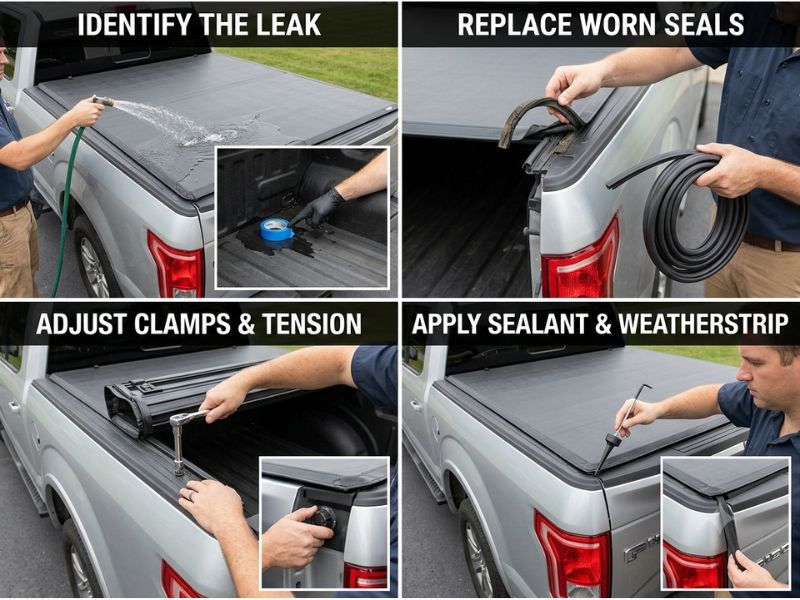
2. The Water Test (The Most Reliable Method)
This is the definitive way to find leaks. It’s best performed with two people: one inside the truck bed with a flashlight, and one outside with a hose.
- Prepare the Truck Bed: Clear out any cargo. If you have a bed liner, ensure it’s not obscuring any potential leak points. Get inside the truck bed and close the tailgate and tonneau cover. Use a flashlight to illuminate the interior.
- Systematic Spraying: Have your helper start spraying water over the tonneau cover, beginning at the front (bulkhead area) and slowly moving towards the back. Start with a gentle spray, then increase the pressure as you move along.
- Observe from Inside: From inside the bed, carefully watch for any drips, streams, or wet spots. Pay close attention to the bulkhead, side rails, corners, and the tailgate area.
- Identify and Mark: As soon as you see water entering, identify the exact spot. You can use a piece of masking tape on the outside of the cover or rail to mark the leak point. Communicate clearly with your helper.
- Isolate the Leak: Once you find a leak, stop spraying that area and move to another section to ensure there aren’t multiple leaks. It’s important to fix one leak at a time and then re-test.
- Check Drainage (if applicable): If your cover has drainage tubes, spray water directly into the drainage channels to ensure water flows out correctly and doesn’t back up.
I always advise patience during the water test. Don’t rush it. Sometimes a leak takes a few minutes to show itself, especially if it’s a slow seep. Work methodically from front to back, and then around the perimeter.
Common Leak Fixes and Solutions
Once you’ve identified the leak points, implementing the right solution is key. Here are the most common fixes for various leak scenarios.
Fixing Bulkhead Leaks
Leaks at the front bulkhead are often due to insufficient sealing or compression. Here’s what I recommend:
- Add or Replace Bulkhead Seal: If your truck bed didn’t come with a bulkhead seal, or if the existing one is old and flattened, install a new strip of closed-cell foam weatherstripping. Clean the surface thoroughly with rubbing alcohol before applying. Ensure it’s positioned to create a tight seal against the tonneau cover.
- Double Up Seals: For persistent leaks, sometimes adding a second layer of thin foam tape directly on top of the existing bulkhead seal can provide the extra compression needed.
- Silicone Sealant: For very small, pinpoint leaks at the bulkhead corners or where the bulkhead meets the side rails, a bead of marine-grade silicone sealant can be effective. Apply it sparingly and smooth it out.
Addressing Side Rail Leaks
Side rail leaks can be a bit more varied in their cause:
- Tighten Clamps/Mounting Hardware: First, ensure all clamps or bolts securing the side rails to the truck bed are tightened properly. Over-tightening can sometimes warp the rails, so be firm but don’t strip threads.
- Replace Worn Weatherstripping: If the rubber or foam seals along the top of the side rails are cracked, torn, or flattened, they need to be replaced. Measure the length and width of the old seal to get the correct replacement. Clean the rail surface thoroughly before applying new adhesive-backed weatherstripping.
- Adjust Rail Position: For some covers, the side rails can be slightly adjusted up or down. If your cover isn’t making good contact with the seals, try adjusting the rail height to achieve better compression. Consult your cover’s manual for specific adjustment procedures.
- Silicone Sealant for Gaps: Small gaps where the side rails meet the bulkhead or tailgate can be sealed with a thin bead of silicone.
Sealing the Tailgate Area
The tailgate is a common entry point for water, often requiring an aftermarket solution:
- Install a Tailgate Seal Kit: These kits typically consist of adhesive-backed rubber seals designed to fill the gaps around the perimeter of your tailgate, especially in the corners and along the bottom. I consider these almost mandatory for a truly dry bed. Follow the kit’s instructions carefully for proper placement and adhesion.
- Check Drain Holes: Ensure any factory drain holes in the bottom of the truck bed or tailgate area are clear and not allowing water to back up.
Repairing Hinges and Seams (Folding/Retractable Covers)
These covers have unique leak points:
- Silicone for Small Tears/Gaps: For minor tears in hinge seals or small gaps between panels, a flexible, waterproof silicone sealant can be a temporary or even permanent fix. Ensure the area is clean and dry before application.
- Replace Damaged Seals: If a hinge seal or panel gasket is significantly damaged, it may need to be replaced. Contact the tonneau cover manufacturer for replacement parts. This can be more involved, sometimes requiring partial disassembly of the cover.
- Lubricate Moving Parts: For retractable covers, ensure the tracks are clean and lubricated. Sometimes, friction can prevent panels from seating properly, leading to gaps.
Addressing Mounting Hardware and Bed Caps
These are less common but important to consider:
- Seal Mounting Holes: If you have drilled holes for your tonneau cover’s mounting hardware, ensure they are properly sealed with silicone or rubber washers.
- Seal Under Bed Caps: If water is seeping under your plastic bed rail caps, you might need to lift them slightly and apply a bead of silicone sealant along the top edge of the metal bed rail before reattaching the cap. This creates a barrier against water intrusion.
Preventative Maintenance for a Leak-Free Tonneau Cover
Once you’ve fixed your leaks, maintaining your tonneau cover is crucial to prevent future issues. A little preventative care goes a long way in keeping your truck bed dry.
Regular Cleaning and Inspection
I recommend a routine cleaning and inspection every few months, or more frequently if you live in an area with harsh weather conditions or extreme temperatures. This involves:
- Washing the Cover: Use mild soap and water to clean the surface of your tonneau cover. Dirt and grime can accumulate in seals and tracks, hindering their performance.
- Inspecting Seals: Visually check all rubber and foam seals for cracks, tears, hardening, or flattening. Pay close attention to the bulkhead, side rails, and tailgate seals.
- Checking Drainage (if applicable): Ensure drainage tubes are clear of debris (leaves, dirt, insects) and are properly routed. Flush them with water if necessary.
- Tightening Hardware: Periodically check and tighten all clamps, bolts, and mounting hardware. Vibrations from driving can loosen these over time.
Conditioning Rubber and Vinyl Seals
Just like tires, the rubber and vinyl components of your tonneau cover’s seals can dry out, crack, and lose their elasticity due to UV exposure and age. I strongly advise using a UV protectant and rubber conditioner specifically designed for automotive use.
- UV Protectant: Products like 303 Aerospace Protectant are excellent for vinyl covers and rubber seals. They help prevent fading, cracking, and hardening caused by sun exposure. Apply it regularly according to the product’s instructions.
- Rubber Conditioner: For the rubber seals, a dedicated rubber conditioner can help keep them pliable and prevent them from drying out. This ensures they maintain their ability to compress and create a watertight seal.
Proper Operation and Care
How you operate and care for your tonneau cover also impacts its longevity and leak-resistance:
- Close Firmly: Always ensure your tonneau cover is closed firmly and securely. For folding covers, make sure all latches engage properly. For retractable covers, ensure it’s fully closed and locked.
- Avoid Overloading: Don’t place excessive weight on top of your tonneau cover, as this can stress the panels and seals, potentially leading to warping or damage.
- Winter Care: In colder climates, ice and snow can freeze seals, making them brittle. Avoid forcing open a frozen cover. Use a de-icer designed for rubber or allow it to thaw naturally.
- Manufacturer Guidelines: Always refer to your tonneau cover’s owner’s manual for specific maintenance recommendations. Different types and brands of covers may have unique care requirements.
By incorporating these preventative measures into your routine, you can significantly extend the life of your tonneau cover and minimize the chances of dealing with future leaks.
When to Consider Professional Help or Replacement
While many tonneau cover leaks can be fixed with DIY methods, there are instances where professional intervention or even a full replacement might be the more practical or necessary course of action. Knowing when to call in the experts can save you frustration and further damage.
Persistent Leaks After DIY Attempts
If you’ve diligently followed all the leak detection and repair steps I’ve outlined, tried multiple solutions, and still can’t get your truck bed to stay dry, it might be time to seek professional help. Some leaks are simply harder to diagnose, or they might stem from a more complex issue that’s not immediately obvious. An experienced installer or automotive technician might have specialized tools or knowledge to pinpoint the problem.
Structural Damage to the Cover or Truck Bed
If your tonneau cover itself has significant structural damage, such as a cracked frame, warped panels, or irreparable damage to the tracks (for retractable covers), simple seal replacement won’t be enough. Similarly, if the truck bed rails are bent or damaged, preventing the cover from seating properly, that underlying issue needs to be addressed first. In these cases, a professional assessment is crucial.
Manufacturer Warranty
Before you spend a lot of money on repairs or a new cover, check your tonneau cover’s warranty. Many manufacturers offer warranties that cover defects in materials or workmanship for a certain period. If your cover is still under warranty and the leak is due to a manufacturing defect, you might be eligible for a free repair or replacement. I always recommend having your purchase receipt and model information handy when contacting the manufacturer.
Age and Overall Condition of the Cover
Every tonneau cover has a lifespan. If your cover is very old, showing significant signs of wear and tear, and developing multiple leaks, it might be more cost-effective in the long run to replace it rather than continually patching up old problems. Constant exposure to UV rays, extreme temperatures, and general use can degrade materials beyond simple repair. Consider the cumulative cost of repairs versus the investment in a new, more reliable cover.
Complex Retractable or Electric Covers
Retractable tonneau covers, especially electric ones, have more moving parts and intricate mechanisms. If a leak seems to be related to the internal workings, motor, or complex track system, it’s often best to consult with a specialist who understands these specific designs. Attempting to repair complex internal components without proper knowledge can lead to further damage.
Ultimately, the decision to seek professional help or replace your cover comes down to the severity of the leak, the extent of the damage, your comfort level with repairs, and the overall value proposition. Don’t hesitate to get a second opinion or quote from a reputable installer if you’re unsure.
Conclusion
A leaking tonneau cover can be a frustrating problem, but as I’ve detailed, it’s often one with a straightforward solution. By systematically inspecting common leak points, performing a thorough water test, and applying the appropriate sealing or replacement materials, you can restore your truck bed to a dry and secure state. Regular maintenance and proper care will also go a long way in preventing future leaks and extending the life of your cover. Remember, patience and attention to detail are your best tools when learning how to fix a leaking tonneau cover, ensuring your cargo stays protected from the elements for years to come.