What Is a Tonneau Cover: Meaning, Uses, and Practical Context
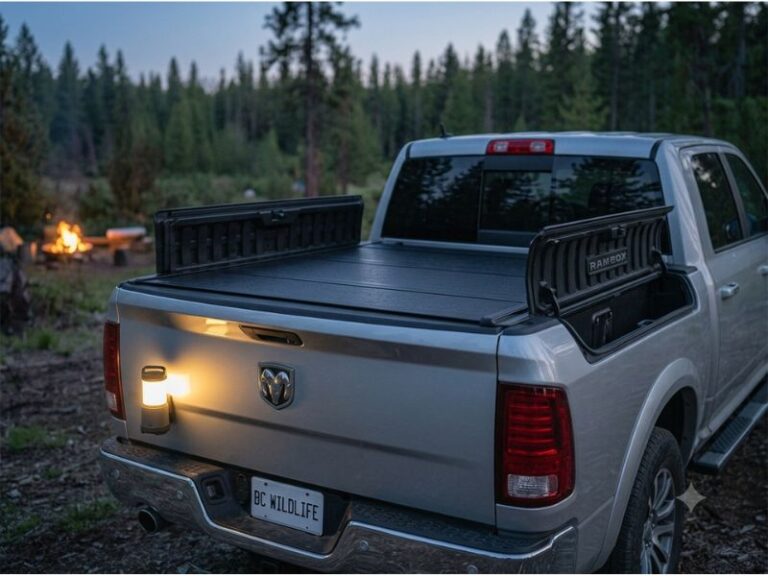
A tonneau cover is a protective cover fitted over a pickup truck’s bed. It helps shield cargo from weather, prying eyes, and shifting debris while changing how the truck bed can be used.
The name sounds specialized, but the object is straightforward: it is the bed cover you see stretching from behind the cab toward the tailgate. That simple description can be misleading, because a tonneau cover may be a soft roll-up sheet, a hinged hard panel, a folding system, a retractable cover, or a one-piece lid. The right meaning depends less on appearance than on how the cover opens, mounts, seals, and supports the owner’s routine.
Context matters because a cover designed for daily weather protection is not automatically suitable for heavy cargo, frequent access, or maximum security. This article explains the term, the main tonneau cover styles, why truck owners use them, how to match one to a specific pickup, and where common assumptions fail. You will also learn what to check before installation, how to maintain the cover, what it typically costs, and when a professional installation or a different truck-bed accessory makes more sense.
What a tonneau cover means in practical terms
A tonneau cover is a removable or semi-permanent enclosure for a pickup truck bed. It attaches to the bed rails or nearby mounting points and covers some or all of the open cargo area.
The word tonneau originally referred to the rear passenger or body area of certain vehicles, but in modern American truck use, “tonneau cover” almost always means a pickup-bed cover. It is also commonly called a truck bed cover.
Unlike a camper shell, a tonneau cover generally sits close to the bed rails and does not create a tall enclosed cabin. It preserves the truck’s open-bed function while adding a layer of protection. Depending on the design, the cover can fold, roll, retract, tilt, lift, or be removed when the full bed opening is needed.
A tonneau cover is not necessarily waterproof, theft-proof, load-bearing, or compatible with every truck accessory. Those qualities depend on the material, seals, mounting system, construction, and vehicle-specific fit.
Why pickup owners use tonneau covers
Most owners install a tonneau cover to protect cargo and make the truck bed more useful. The cover can reduce exposure to rain, snow, sun, leaves, and road spray while making items in the bed less visible.
Even when a cover is not completely weatherproof, it can substantially reduce the amount of water and debris reaching cargo. A cover also prevents loose items from being as easy to see from outside the vehicle, which may discourage casual theft.
A cover protects cargo from weather and road debris
An uncovered truck bed exposes cargo to direct precipitation and airflow. Rain can collect in boxes, road salt can coat tools, and dust can settle on furniture or equipment during highway travel.
Most tonneau covers create a roof-like barrier. Better-fitting designs use overlapping edges, compression seals, drainage channels, or adjustable tension to limit water entry. Still, seams, corners, tailgate gaps, and mounting points can leak, especially after aging or improper installation.
A cover improves privacy but does not guarantee security
A closed cover hides cargo from ordinary view, which is useful when shopping, traveling, or leaving equipment in the truck temporarily. A hard cover with a functioning tailgate lock may provide more resistance to opportunistic access than a thin fabric cover.
Privacy and security are different benefits. A soft cover can often be cut, and some truck tailgates can be opened independently of the cover. A determined thief may also target the entire truck or use tools to defeat the mounting hardware.
Valuable items should not remain unattended solely because a tonneau cover is closed.
A cover can improve everyday bed organization
With a cover installed, the truck bed becomes easier to treat as a defined storage area. Cargo is less exposed, smaller items are less likely to bounce out, and the visual clutter of an open bed is reduced.
Some covers also work with bed dividers, toolboxes, racks, and cargo management systems. Compatibility must be checked before purchase because rails, hinges, canisters, and brackets may occupy the same space needed by another accessory.
How the main tonneau cover styles differ
The major tonneau cover categories differ in opening method, security, cost, installation, and how much bed access they preserve. No single style is best for every truck owner.
Soft roll-up covers provide flexible, affordable access
A soft roll-up cover usually uses vinyl, fabric, or another flexible material stretched over bows or support rails. It rolls toward the cab and is commonly secured in the open position with straps or buckles.
This style is often lightweight, relatively affordable, and simple to remove. It can provide good rain and sun protection when properly adjusted, but it offers limited resistance to cutting and may not be appropriate when cargo security is a high priority.
Soft roll-up covers are useful for owners who frequently carry tall objects or need to open most of the bed. The rolled cover may still occupy some space behind the cab, and the material can loosen, shrink, or become brittle with age and temperature changes.
Soft folding covers balance access and low weight
A soft folding cover uses several flexible or semi-rigid sections that fold toward the cab. It generally opens faster than a roll-up cover and may provide more structured support across the bed.
Many designs allow partial opening, although the folded sections can block part of the rear window or need to be secured before driving. Soft folding construction improves convenience but does not offer the same cut resistance as a hard-panel system.
Hard folding covers add structure and moderate security
A hard folding tonneau cover uses rigid panels connected by hinges or flexible joints. The panels may be made from aluminum, fiberglass, composite material, or molded plastic.
Hard folding covers usually resist punctures and cutting better than soft covers. They can also support light, evenly distributed loads when the manufacturer specifically permits it, but a closed cover should not automatically be treated as a platform or cargo shelf.
The main compromise is bulk. Folded panels may stand upright near the cab, reduce rear-window visibility, or require additional straps and supports. Some models fold only two-thirds of the way, leaving the final section covering the front portion of the bed.
Retractable covers offer smooth operation and a low profile
A retractable tonneau cover moves along tracks and stores in a canister near the cab or at the front of the bed. It may use slats made from aluminum, composite material, or another rigid substance.
Retractable covers are convenient when frequent opening and closing matter. They often have a clean appearance and can be stopped at multiple positions, but the storage canister permanently uses some bed length. Track alignment, debris, and frozen moisture can also affect operation.
Some retractable systems are designed for stronger security than soft covers, while others prioritize light weight and appearance. The exact construction matters more than the word “retractable” alone.
One-piece hinged covers provide a streamlined enclosure
A one-piece hard cover lifts as a single panel, often with gas struts or other lift assistance. It offers a smooth exterior and can create a relatively tight seal around the bed.
This design can provide a polished appearance and strong weather protection when correctly fitted. Its limitation is access: the cover usually opens only from the rear, and carrying tall or oversized cargo may require removing the entire panel or choosing another cover style.
Snap-on covers are simple but less convenient
A snap-on tonneau cover attaches flexible material to snaps around the bed perimeter. It is generally lightweight and may be inexpensive, but installation and removal can take more effort than with a roll-up or folding design.
Snaps can become difficult to use in cold weather or after exposure to dirt. A snap cover may suit an owner who opens the bed infrequently and wants basic protection without a complex frame.
What a tonneau cover can and cannot do
A tonneau cover can reduce weather exposure, hide cargo, and make the bed more practical. It cannot turn an open pickup bed into a fully sealed, climate-controlled, or theft-proof compartment.
Manufacturers may describe a cover as water-resistant or weather-resistant rather than waterproof. Those terms matter because water can enter through the tailgate gap, corners, seams, drain paths, or areas where the bed and cover do not align perfectly.
Weather protection has practical limits
A well-installed cover can keep ordinary rain and road spray away from much of the bed. Heavy wind-driven rain, standing water, snow accumulation, pressure washing, and worn seals can exceed what the design was made to handle.
Water can also travel along the underside of a cover before dripping onto cargo. Sensitive equipment, paper records, electronics, and upholstered items should be placed in waterproof containers even when a cover is installed.
Security depends on the entire truck-bed system
The cover is only one part of cargo security. The tailgate, bed rails, latches, mounting clamps, and vehicle locks all influence how difficult the bed is to access.
A hard cover may slow unauthorized entry, but it does not replace a locked storage box for high-value tools or a controlled indoor storage location. Owners should also avoid leaving keys, personal documents, firearms, or expensive electronics in a truck bed without considering local laws, insurance requirements, and the actual security of the vehicle.
Load capacity varies by model and position
Some tonneau covers can carry a specified amount of evenly distributed weight; others should carry no weight at all. A cover’s appearance does not reveal its load rating.
Never sit, stand, stack cargo, or place lumber on the cover unless the product instructions specifically permit that use. Even a reinforced panel can fail if weight is concentrated at a hinge, latch, unsupported center, or edge.
How to choose a tonneau cover for a specific truck
The best cover is the one that fits the truck and matches the owner’s actual loading habits. Start with vehicle compatibility, then compare access, protection, storage, and installation requirements.
Confirm the truck’s exact bed measurements
Measure the bed according to the manufacturer’s fitting method rather than relying only on a nominal length such as 5.5, 6.5, or 8 feet. Bed dimensions can vary with model year, cab configuration, bed design, tailgate style, and factory or aftermarket equipment.
Check the year, make, model, cab, bed length, and whether the truck has a special bed liner or cargo system. A cover made for a similar-looking truck may not align with the rails or leave enough clearance for the tailgate.
Account for bed liners and factory features
Spray-in and drop-in bed liners can change the effective dimensions at the bed rails. Some mounting clamps fit around a liner; others require adjustments or a specific spacer.
Also check for factory utility tracks, side storage compartments, rails, bed steps, lighting, power outlets, and an adjustable or multi-position tailgate. These features may improve truck usability but can interfere with clamps or seals.
Choose an opening method that matches the workload
A driver who loads groceries, tools, or luggage often may prefer a quick roll-up or retractable cover. Someone who mostly carries covered cargo and values a clean exterior may prefer a one-piece hinged or hard folding design.
If tall items are common, confirm whether the cover can be fully removed and how long that process takes. A cover that technically permits full bed access may still be inconvenient if removal requires two people or storage space in the garage.
Compare soft and hard construction honestly
Soft covers are typically lighter, easier to handle, and less expensive. Hard covers generally provide greater structure, better cut resistance, and a more finished appearance, but they may cost more and add weight.
Neither construction automatically guarantees superior weather sealing. A well-installed soft cover can outperform a poorly aligned hard cover, while a premium hard cover can offer advantages that a basic fabric design cannot match.
Check compatibility with racks and toolboxes
Owners who carry kayaks, ladders, bicycles, lumber, or rooftop-style cargo should verify accessory compatibility before selecting a cover. Some systems work with crossbars or bed racks, while others require special rails or leave no usable mounting area.
Toolboxes are another common conflict. A toolbox that spans the front of the bed may block a canister, hinge, or folded section. A low-profile toolbox and a compatible cover can solve the problem, but the combination must be designed to work together.
What installation involves and when professional help makes sense
Many tonneau covers install with clamps, rails, brackets, and hand tools rather than drilling. Professional installation becomes more valuable when the cover has complex tracks, electrical components, custom bed modifications, or difficult alignment requirements.
Read the instructions before tightening anything. The sequence matters because rails that are clamped too early or unevenly can create gaps, latch problems, and excessive tension on the cover.
Typical installation steps
- Clean the contact surfaces. Remove dirt, loose liner material, and residue from the bed rails so clamps and seals sit evenly.
- Position the rails or brackets. Align them with the bed and confirm that the tailgate can open and close without interference.
- Install the cover loosely. Keep fasteners adjustable until the panels, hinges, or tracks are centered and square.
- Check tension and gaps. The cover should not be twisted, sagging excessively, or forced into place.
- Tighten the hardware gradually. Alternate sides and follow the product’s torque or tightening guidance.
- Test every position. Open, close, fold, roll, latch, and secure the cover before driving.
- Inspect after a short drive. Vibration can reveal loose clamps, shifting rails, or new gaps that were not obvious while parked.
Do not drill into the truck bed unless the instructions call for it and the mounting location is understood. Drilling in the wrong place can damage wiring, weaken a panel, create corrosion points, or interfere with future accessories.
Professional installation is useful in specific situations
Consider professional help if the cover includes powered operation, an integrated lock, unusual rails, a specialized bed liner, or a rack system. Assistance is also sensible when the cover is heavy or must be aligned by two people.
Professional installation does not eliminate the need for inspection. The owner should still understand how to release the cover, secure it while open, clear drainage paths, and recognize signs of a loose mounting point.
How to maintain a tonneau cover
Routine cleaning and inspection extend the useful life of a tonneau cover. Maintenance is especially important for covers exposed to road salt, dust, intense sunlight, or frequent folding.
Clean the cover with appropriate products
Rinse away loose grit before wiping the cover. Abrasive dirt trapped under a cloth can scratch hard panels or wear the finish on flexible material.
Use a mild automotive cleaner that is suitable for the cover’s material, then rinse and dry it according to the product instructions. Avoid harsh solvents, aggressive brushes, and unapproved protectants that can soften vinyl, leave a slippery film, or damage seals.
Keep tracks, hinges, and drainage areas clear
Retractable covers depend on clean tracks, while folding and hinged covers rely on moving joints that can collect grit. Remove leaves, mud, and ice before forcing the mechanism.
Drain tubes and channels should remain open. A blocked drain can send water into the bed or allow moisture to remain around hardware, increasing the chance of corrosion.
Inspect hardware and seals regularly
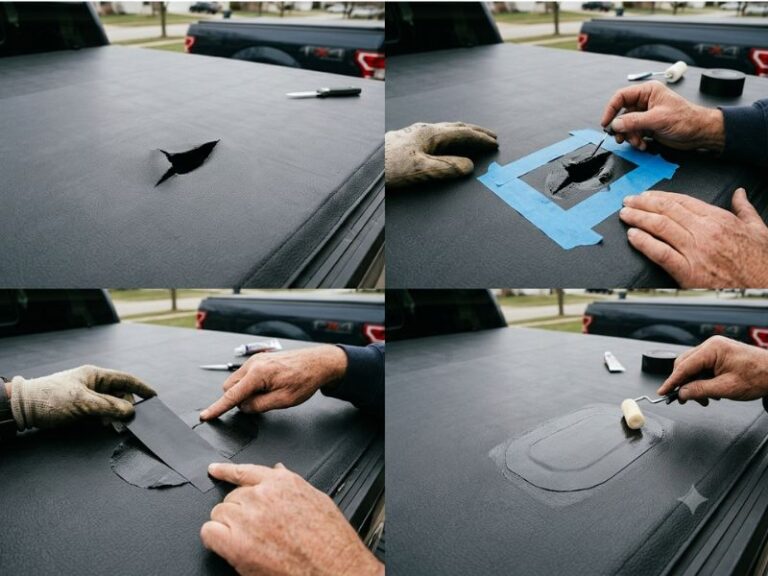
Look for loose clamps, cracked corners, torn fabric, missing fasteners, flattened seals, and panels that no longer sit level. A small alignment problem can become a leak or a cover failure after repeated highway vibration.
Do not over-tighten clamps in an attempt to stop a leak. Excessive force can deform the bed rail, damage the cover frame, or make later adjustment difficult.
Use the cover correctly in cold weather
Cold temperatures can make vinyl stiff and snaps difficult to engage. Forcing a frozen cover can tear material or break a fastener.
Clear snow and ice without scraping aggressively across the surface. If a retractable or folding cover is frozen in place, allow it to thaw rather than applying sudden force to the latch or rails.
Common tonneau cover problems and what they indicate
Most cover problems involve water leaks, poor alignment, difficult operation, or material deterioration. The symptom often points to a simple adjustment, but persistent problems may require replacement parts or professional inspection.
Water appears near the tailgate
A tailgate gap is a frequent entry point because the bed and tailgate are not always sealed as one continuous surface. Check the rear seal, corner seals, tailgate alignment, and drainage path before assuming the entire cover has failed.
Test with a gentle flow of water rather than a high-pressure spray. Pressure washing can force water past seals in a way that ordinary rain would not.
The cover sags or flaps while driving
Sagging may result from loose tension, missing support bows, stretched material, incorrect rail spacing, or long-term exposure to heat. Flapping can damage the cover and create noise, so it should not be ignored.
Stop and inspect the cover if it begins moving excessively at highway speed. A loose panel or clamp can become a road hazard or damage the truck bed.
The cover will not latch or close evenly
An uneven latch usually indicates misaligned rails, shifted clamps, debris in the track, or a cover installed under incorrect tension. Do not force the latch because the locking mechanism may bend or break.
Open the cover, clean the contact areas, and compare both sides for equal spacing. If the truck bed itself is damaged or the cover has warped, adjustment may not solve the issue.
The material fades, cracks, or shrinks
Flexible materials naturally age under ultraviolet exposure, temperature changes, and repeated handling. Fading alone may be cosmetic, but cracking, brittleness, and exposed stitching can reduce weather protection.
Material protectants may help when approved for that cover, but they cannot restore structural strength. Replacement is safer when the material can no longer remain secured at speed.
How much a tonneau cover costs
Tonneau cover prices vary widely by construction, truck fit, brand, materials, security features, and installation complexity. A basic soft cover usually costs less than a rigid retractable or premium one-piece system.
Budgeting should include more than the advertised cover price. Possible additional costs include installation, replacement clamps, bed-rail adapters, compatible toolboxes, seals, locks, and repairs caused by an incorrect fit.
Lower-cost covers emphasize basic protection
Entry-level soft roll-up, snap-on, and simple folding covers can provide useful protection without a large investment. They are often a sensible choice for occasional cargo, moderate weather exposure, and owners who value low weight.
The tradeoffs may include less refined hardware, weaker security, more visible fasteners, limited adjustment, or shorter material life. A low initial price is less attractive if the cover needs frequent replacement.
Midrange covers add convenience and structure
Midrange hard folding, improved soft folding, and selected retractable covers often provide better latching, stronger frames, and more consistent fit. They may be suitable for daily driving and regular cargo use.
At this level, compare warranty terms, replacement-part availability, bed-access design, and compatibility with accessories rather than focusing only on appearance.
Premium covers prioritize finish and integrated features
Premium covers may use rigid slats, refined sealing systems, powered operation, integrated locks, or specialized materials. They can offer a clean appearance and convenient operation, but a higher price does not make the cover invulnerable or universally waterproof.
Before paying for advanced features, decide whether they solve a problem that actually occurs in the truck. A complex cover can be poor value if the owner rarely uses the bed or often carries oversized cargo.
Misconceptions about tonneau covers
Several popular claims about truck-bed covers are too broad to be reliable. The correct answer usually depends on the cover’s design and the way it is installed.
“Every tonneau cover is waterproof” is incorrect
Most covers are intended to resist normal weather, not create a watertight chamber. Seams, tailgate gaps, drainage channels, and installation tolerances can all allow some moisture inside.
“A cover always improves fuel economy” is not guaranteed
Some owners report changes in fuel use after installing a cover, but results vary with vehicle shape, speed, cover design, weight, driving conditions, and cargo. The cover should be selected for protection and utility rather than assuming a guaranteed fuel-saving return.
“A hard cover makes the bed theft-proof” is false
Hard construction can make unauthorized access more difficult, but it does not eliminate vulnerabilities. The tailgate and locks still matter, and tools or determined attempts can defeat many systems.
“The same cover fits every truck bed” is false
Tonneau covers are usually vehicle-specific or offered in carefully defined fit categories. Bed length, cab style, rail shape, tailgate design, liners, and factory accessories can all affect compatibility.
“A closed cover can support any cargo” is unsafe
Only covers with a stated load rating should carry weight, and even then the rating may apply only under specific conditions. A cover is not automatically a work surface, step, seat, or roof rack.
When a tonneau cover is not the best choice
A tonneau cover may not suit a driver who routinely carries tall cargo, needs interior lighting and side access, or wants a fully enclosed and lockable compartment. A camper shell, service body, bed box, or cargo management system may better match those needs.
Frequent commercial users should consider how quickly cargo must be loaded, whether workers need access from multiple sides, and how much weather protection the contents require. A cover that looks ideal for a personal truck may slow down a work routine.
A soft cover may also be a poor choice when valuable tools remain in the truck overnight. In that situation, a secure lockbox attached to the truck can provide a more appropriate layer of protection, although no mobile storage system should be treated as a substitute for sound security practices.
Frequently asked questions about what is a tonneau cover
What is a tonneau cover used for?
A tonneau cover is used to shield pickup-bed cargo and reduce its visibility. It can help limit exposure to rain, sun, dust, and road spray while making the bed look more organized. The level of weather protection and security depends on the cover design and installation.
Is a tonneau cover the same as a truck bed cover?
Yes, “truck bed cover” is the common plain-language name for a tonneau cover. In the United States, both terms generally describe a cover fitted over a pickup’s cargo bed, although products differ substantially in construction and operation.
Are tonneau covers waterproof?
Most tonneau covers are weather-resistant rather than completely waterproof. Seals and drainage features can reduce water entry, but heavy rain, wind-driven spray, tailgate gaps, worn material, or incorrect installation may still let moisture reach the bed.
Can a tonneau cover prevent theft?
A tonneau cover can improve privacy and slow casual access, but it cannot guarantee theft prevention. Hard covers and integrated locks may offer more resistance than soft covers, yet the tailgate, mounting system, and vehicle locks remain important security points.
Can I drive with a tonneau cover partially open?
Only drive with a cover partially open when the design specifically allows it and the cover is securely restrained. A loose folded or rolled section can obstruct visibility, flap in the wind, damage the material, or detach at speed.
Can I carry large items with a tonneau cover installed?
Many covers can be fully opened or removed for oversized cargo, but the method varies by model. Check how much time removal takes, where the cover can be stored, and whether driving with the cover removed requires any hardware to be secured.
Do tonneau covers fit trucks with bed liners?
Many covers fit trucks with bed liners, but the liner can affect clearance and clamp placement. A spray-in or drop-in liner may require a particular mounting method, spacer, or adjustment, so verify the product’s fit instructions before purchase.
Can I install a tonneau cover myself?
Many clamp-on covers are suitable for careful do-it-yourself installation. More complex retractable, powered, drilled, or accessory-integrated systems may benefit from professional installation, especially when correct alignment and sealing are difficult to achieve.
Choosing the right tonneau cover for practical use
A tonneau cover is best understood as a pickup-bed access and protection system, not simply a decorative lid. Its value comes from matching the cover’s opening method, material, security level, weather performance, and accessory compatibility to the way the truck is used.
Before buying, confirm the exact truck and bed fit, decide how often the bed must be opened, and treat claims about waterproofing, fuel economy, load support, and theft protection cautiously. The next practical step is to compare a few compatible styles against your real cargo routine, then inspect the installation and seals regularly once the cover is fitted.