Is a Patched Tire as Good as New: Clear Answers and Key Facts
No, a patched tire is not exactly as good as new, but a properly inspected and professionally repaired tire can be safe and reliable.
A tire repair changes the answer from a simple yes-or-no question into a question of where the damage occurred how large it is and how the tire was.
That distinction matters because a tire has more than an outer rubber surface Its inner liner belts cords bead and sidewall all work together to contain air and. This guide examines “is a patched tire as good as new” and explains the details that matter in practice.
In this guide you will learn when a repair is reasonable why an internal patch differs from a plug-only repair how durability compares with a replacement tire and.
- ✓A properly repaired small tread puncture can be safe, but it is not literally equivalent to an unused tire.
- ✓A professional repair normally requires removing the tire, inspecting the inside, and using a combination repair rather than an external plug alone.
- ✓Sidewall, shoulder, bead, large, overlapping, or internally damaged punctures generally call for replacement.
- ✓Age, tread condition, air loss, vibration, and the quality of the repair matter as much as the visible puncture.
What determines whether a patched tire is still
The most important factor is not the word “patched”; it is the condition and location of the tire damage. A repair can restore the air seal through a small tread puncture, but it cannot reliably rebuild every part of a tire’s structure after severe flexing, separation, or sidewall injury.
For that reason, a reputable technician should inspect the tire both outside and inside. The inspection looks for exposed cords, cuts, bulges, liner damage, belt separation, evidence of driving while flat, and other problems that may not be visible before the tire is removed from the wheel.

- Puncture location: The repairable area is generally the central tread, away from the shoulder and sidewall.
- Damage size: A small, clean puncture is more favorable than a large tear, elongated hole, or irregular cut.
- Internal condition: Abrasion, wrinkles, or powdered rubber inside the tire can indicate that it was driven underinflated.
- Repair method: A permanent internal repair should seal the puncture channel and prevent air from reaching the tire’s structure.
Why location matters so much
The tread is designed to contact the road and resist repeated wear The sidewall by contrast flexes constantly to absorb impacts and help the tire support the vehicle.
Even if a sidewall repair holds air initially, the surrounding cords may be damaged. A patch cannot restore the original strength of cords that have been cut, separated, or overheated. That is why a tire with sidewall damage is typically replaced instead of repaired.
What “properly repaired” usually means
A professional permanent repair generally involves removing the tire from the wheel locating the puncture from the inside preparing the area and installing a repair that seals both.
An external string plug inserted from outside may stop a leak temporarily but it does not provide the same inspection or internal sealing process A patch placed only.
Is a patched tire as good as new in safety and performance?
A correctly repaired tire can perform normally for a long time but as good as new is too strong a description A new tire has no puncture history.
When people ask is a patched tire as good as new they may mean several different things Will it hold air Will it handle normally Will it last.
- Air retention: A sound repair can restore the seal, but a slow leak may remain if the puncture or wheel is also damaged.
- Handling: Normal handling is possible when the tire is structurally healthy and correctly inflated.
- Remaining life: The repair does not add tread or reverse age-related rubber deterioration.
- Risk history: The tire has experienced an event that a brand-new tire has not, especially if it was driven with low pressure.
When performance may feel unchanged
If the puncture was small, the tire was repaired promptly, and the casing suffered no internal damage, you may notice no difference in everyday driving. Correct inflation, proper wheel installation, and balanced rotation help the repaired tire work with the rest of the vehicle’s tires.
That does not mean the repair is invisible under every condition. A tire that has lost substantial air may develop internal heat damage before the driver realizes there is a problem. Similarly, a hard impact that caused the puncture may have bent the wheel or damaged another tire component.
Why a repair does not restore “new” status
Tires age from time, heat, sunlight, ozone exposure, loading, and use. Tread depth also declines with mileage. A patch repairs a specific puncture; it does not restore the original tread depth, replace aged rubber, or renew the tire’s internal materials.
There is also a practical difference between a repaired tire and an unused tire when a vehicle is equipped with all-wheel drive or has strict tire-matching requirements Significant.
Which punctures can usually be repaired?
The best candidates are small punctures in the central tread, caused by a nail, screw, or similar object, where the tire was not driven for an extended distance while underinflated. The tread should have enough remaining life, and the damage should not overlap another repair or extend into the shoulder.
A technician must make the final determination after removing the tire. Looking at the object from the outside cannot reveal whether the inner liner has been scraped, whether cords were cut, or whether the puncture channel is larger than it appears.

- Central tread: The puncture is located in the main tread area rather than the outer shoulder or sidewall.
- Clean entry: The object created a relatively straight puncture instead of a long slice or torn opening.
- No run-flat evidence: The inner liner does not show heavy abrasion, wrinkles, or heat damage from low pressure.
- Usable tread: The tire is not already near its replacement point from wear, age, cracking, or other defects.
Small nail and screw punctures
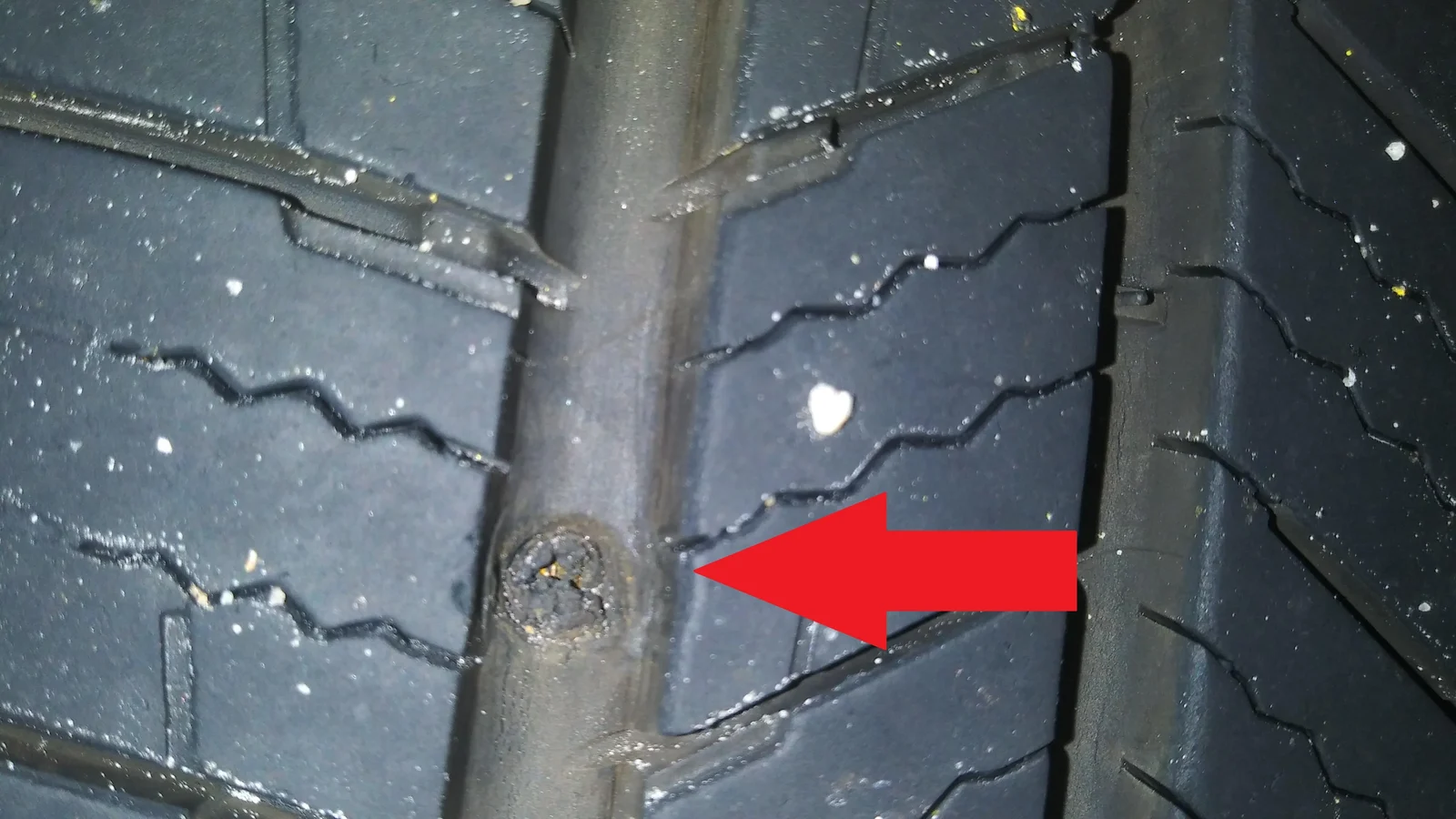
A nail or screw that enters straight through the central tread is often the most straightforward repair scenario. The object should not be removed casually if the tire is losing air quickly; driving on it can turn a manageable puncture into a damaged casing.
After repair, the tire should be inflated to the vehicle manufacturer’s recommended cold pressure, not simply the maximum pressure printed on the sidewall. The pressure listed on the vehicle placard or in the owner’s manual is the normal reference for that vehicle.
Slow leaks and multiple punctures
A slow leak deserves inspection even when the tire never appears flat. Air loss may come from a puncture, valve stem, bead seal, wheel corrosion, or a crack in the wheel itself. Replacing or repairing the wrong component will not solve the problem.
Multiple repairs may reduce confidence in the tire, particularly when punctures are close together, overlap, or involve different areas of the tread. A technician may recommend replacement when the remaining rubber between repairs is too limited or the casing’s condition is uncertain.
When the tire should not be repaired
Replacement is generally the safer choice for a sidewall puncture, shoulder damage, a large hole, a cut, a tear, exposed cords, a bulge, or evidence of belt separation. Damage caused by a pothole or curb may also extend beyond the visible puncture and require a more complete inspection.
A tire that has been driven while flat or severely underinflated may be unsafe even if it can be reinflated. The sidewall can flex against itself, generating heat and damaging the inner structure. In that situation, an external plug or surface patch does not address the underlying weakness.
Patch, plug, or plug-patch: what is the difference?
These terms are often used loosely, which can make a repair sound more substantial than it is. The key difference is whether the puncture channel and the inner liner are both sealed after the tire has been inspected from the inside.
A plug fills the puncture path. A patch covers the inside of the liner. A combination repair uses both functions in one repair unit or approved system.
The exact product is less important than using a suitable repair procedure for the tire and damage. This distinction matters when answering “is a patched tire as good as new”.
- External plug: Convenient for temporary roadside assistance, but it does not replace a complete internal inspection.
- Internal patch: Seals the liner, but a patch alone may not seal the puncture channel properly.
- Combination repair: Designed to seal the puncture path and inner liner when installed correctly.
- Improvised sealant: May complicate inspection or create additional service issues, depending on the product and tire.
Why plug-only repairs can be misleading
An outside plug can appear successful because the tire stops losing air. However, the technician may not know whether the object damaged internal cords or whether the puncture is too large for that repair. Moisture can also travel through an unsealed puncture path toward the belt area.
This does not mean every plug fails. It means a plug inserted from outside should not automatically be treated as the same thing as a professionally completed permanent repair. Ask what repair was performed and whether the tire was removed and inspected.
Why patch-only repairs are not always enough
A patch placed against the inner liner can cover the visible opening, but the puncture channel may remain open inside the tire. A proper repair must address the path through the tread rather than merely covering its exit point.
Preparation also matters. The inner liner must be clean and properly prepared for the repair material, and the tire must be inspected for damage that makes repair inappropriate. Poor preparation, contamination, or an unsuitable repair size can lead to air loss later.
How long can a professionally repaired tire last?
There is no universal number of miles or months that applies to every repaired tire. Longevity depends on the tire’s age, tread depth, construction, operating temperature, load, inflation, road conditions, and the quality and location of the repair.
A sound repair may last for the rest of the tire’s usable service life, but that statement assumes the tire was eligible for repair and did not suffer hidden damage. It should not be interpreted as a guarantee or as permission to ignore future leaks, vibration, or visible changes.
- Inflation: Correct pressure reduces heat buildup and flexing that can stress the repair and casing.
- Load and speed: Heavy loads, towing, and sustained high speeds increase operating demands.
- Road environment: Potholes, rough pavement, curbs, and extreme heat can create new damage.
- Tire age: Aging rubber may become the limiting factor even when the repair remains sealed.
What causes a repaired tire to fail early?
Repeated underinflation is one of the most important preventable causes. Low pressure increases sidewall flexing and heat, which can damage the casing and place additional stress on the repaired area. A tire can lose pressure gradually without producing an obvious visual warning.
Another cause is a repair installed without fully identifying the damage. If a puncture is close to the shoulder, if the hole is irregular, or if the tire was driven while flat, the repair may be treating only the most visible symptom.
How to monitor it after repair
Check pressure with a reliable gauge when the tires are cold and compare the reading with the vehicle’s recommended pressure. Do not rely solely on appearance, because a radial tire can look adequately inflated while being significantly low.
Pay attention to a recurring pressure warning, a new vibration, pulling, thumping, unusual noise, or a bulge near the repair. Stop driving and arrange an inspection if the tire loses air again or if its behavior changes.
What should you inspect before accepting a repair?
Before leaving the tire shop, ask what caused the leak, where the damage was located, and what repair method was used. You should also know whether the tire was removed from the wheel and inspected internally. Clear answers help distinguish a complete repair from a quick external plug.
It is also useful to confirm that the tire was reinflated, checked for leaks, and installed correctly. If the tire was removed, the wheel and valve area should be considered as possible sources of air loss as well.
- Was the inside inspected? This helps identify hidden damage from low pressure or impact.
- Where is the repair? Confirm that it is in an acceptable tread area and not extending into the shoulder.
- Was the tire tested for leaks? The repair and valve area should both hold air after installation.
- What should I monitor? Ask about pressure checks, unusual symptoms, and any limits specific to the repair.
Check the tire’s overall condition
A repair decision should include more than the puncture Look for uneven tread wear cracking between tread blocks or in the sidewall bulges exposed cords and tread depth that is approaching replacement A tire in poor overall condition may not be worth repairing even if the.
Check the manufacturing date if the tire is older, especially when buying a used vehicle or replacing one tire in a set. Age does not automatically make every tire unsafe, but it is an important part of the service-life decision and should be considered with condition and use.
Confirm the repair is not hiding a pressure problem
After the repair, measure pressure over the next several checks rather than assuming the job is complete because the warning light stays off. A tire that repeatedly loses air needs a prompt reinspection.
The valve stem, valve core, wheel rim, and bead seal can leak independently of the tread puncture. If pressure drops, ask the technician to test the entire assembly instead of simply adding air or reinstalling another plug.
How does a patched tire affect vehicle handling?
A properly repaired tire should not create a noticeable pull, shake, or change in steering feel. If those symptoms appear after the repair, the cause may be incorrect pressure, an unbalanced wheel, a bent rim, uneven wear, internal tire damage, or a separate suspension problem.
Handling also depends on how the repaired tire matches the other tires. Replacing one worn tire with a new tire can create a tread-depth difference, while installing a repaired tire alongside tires with different construction or severe wear may affect the vehicle’s balance and traction.
- Vibration: A new shake at low or high speed deserves an inspection rather than continued testing on the highway.
- Pulling: Pulling may indicate pressure differences, alignment issues, tire damage, or a mismatch.
- Noise: Thumping or rhythmic noise can signal a bulge, separation, or wheel problem.
- Traction: Different tread conditions can affect wet-road grip even when the repair itself is holding air.
All-wheel-drive and four-wheel-drive considerations
Some all-wheel-drive systems are sensitive to differences in tire circumference. A single tire with substantially more tread than the others may rotate at a different rate, potentially placing extra demand on the drivetrain. The allowable difference varies by vehicle, so the owner’s manual or manufacturer guidance should be followed.
This does not mean a repaired tire is automatically unsuitable for an all-wheel-drive vehicle. It means the repair decision should include tread matching and the vehicle’s specific requirements rather than focusing only on whether the puncture can be sealed.
Frequently asked questions
Is a patched tire as good as new for highway driving?
Not literally. A professionally repaired, structurally sound tread puncture can be suitable for highway use, but the tire must be correctly repaired, properly inflated, and free of hidden damage.
Can a tire patch last the life of the tire?
It can, when the puncture is repairable and the repair is installed correctly. The tire may still need replacement later because of tread wear, age, cracking, impact damage, or another defect.
Is a plug or patch safer?
A complete internal repair that seals both the puncture channel and inner liner is generally more dependable than an external plug alone. The technician’s inspection and the repair’s location matter more than the casual label used for the repair.
Can a sidewall puncture be patched?
A sidewall puncture is generally not considered safely repairable because the sidewall flexes heavily and may have structural cord damage. Replacement is normally the safer option, even if the hole appears small.
Can I drive immediately after a tire is patched?
Ask the technician when the repair is ready for service because repair materials and procedures can differ. Before driving, confirm that the tire is inflated to the vehicle’s recommended pressure and that there is no visible leak or abnormal behavior.
Why is my patched tire losing air?
The repair may be incomplete or damaged, but the leak could also come from the valve stem, bead, wheel, or another puncture. Have the entire tire-and-wheel assembly tested rather than repeatedly adding air.
Should I replace a tire instead of patching it?
Replacement is the better choice when damage reaches the sidewall or shoulder, the hole is large or irregular, the tire was driven flat, cords are exposed, the casing is damaged, or the tire is already worn or aged. A repairable puncture in an otherwise healthy tire may not require replacement.
Conclusion
A repaired tire can be safe and dependable, but is a patched tire as good as new? No—the repair does not reverse wear, age, or any internal stress the tire experienced. It can, however, restore useful service when the puncture is small, centrally located, and professionally repaired after an internal inspection.
Do not judge the tire by the patch alone. Consider the damage location, repair method, air pressure, tread condition, age, vehicle requirements, and any symptoms that appear afterward. When there is sidewall damage, repeated air loss, vibration, or evidence of driving underinflated, replacement and professional evaluation are safer than taking chances.
Have any repaired tire rechecked if it loses pressure, vibrates, or shows new damage—and replace it when the casing or sidewall cannot be confidently verified as sound.