Can You Use a Tonneau Cover with a Toolbox: Explained Clearly
For many truck owners, the bed of their vehicle is a versatile workspace and storage area. The desire to maximize its utility often leads to a common dilemma: how to best secure tools and equipment while also protecting the entire bed from the elements. This is where the combination of a toolbox and a tonneau cover comes into play, a pairing that, while seemingly straightforward, involves a nuanced understanding of compatibility and design. The question “can you use a tonneau cover with a toolbox” becomes clearer once the surrounding conditions and practical details are considered.
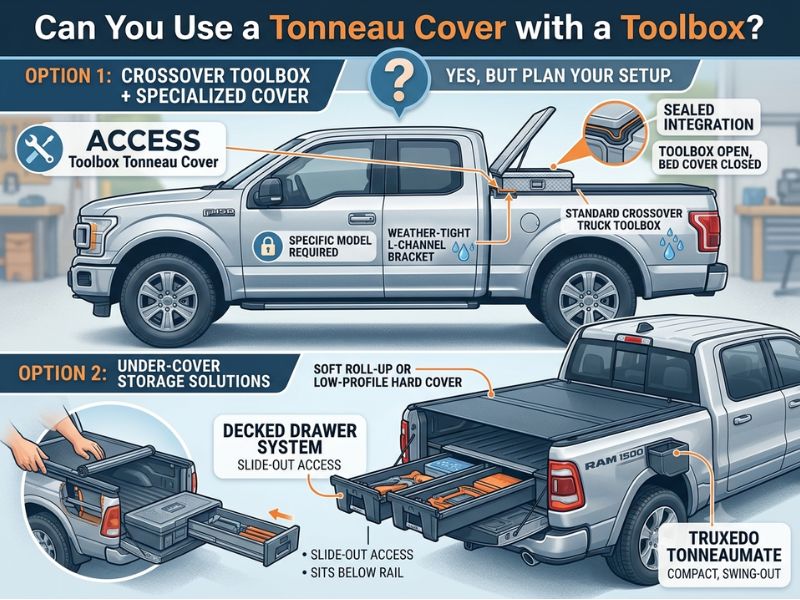
The good news is that, yes, it is absolutely possible to use a tonneau cover with a toolbox. However, achieving a seamless and functional integration isn’t as simple as just picking any cover and any box. The success of this setup hinges on selecting the right types of each product, understanding their respective designs, and sometimes, making minor adjustments to ensure everything fits and operates as intended.
My aim in this article is to demystify this combination, explaining the various types of tonneau covers and toolboxes, and detailing how they can or cannot coexist. I’ll guide you through the critical factors to consider, helping you make an informed decision that enhances your truck’s functionality without compromising security or weather protection. By the end, you’ll have a clear picture of what works, what doesn’t, and what to look for when outfitting your truck.
Understanding the Compatibility
The fundamental question of can you use a tonneau cover with a toolbox boils down to how each accessory interacts with the truck bed rails and the space available. A standard, full-size cross-bed toolbox typically sits on the bed rails, extending a few inches above them and occupying a portion of the bed length near the cab. Tonneau covers, on the other hand, are designed to cover the entire bed opening, usually attaching to or sitting just inside the bed rails.
The challenge arises when the toolbox obstructs the path or mounting points of the tonneau cover. For a successful pairing, the tonneau cover must either clear the toolbox, mount independently of the toolbox’s footprint, or be specifically designed to work in conjunction with a toolbox. This often means looking for specialized products or specific configurations.
Types of Tonneau Covers and Their Toolbox Compatibility
Not all tonneau covers are created equal when it comes to toolbox integration. Their design dictates their compatibility:
1. Roll-Up Tonneau Covers
- Soft Roll-Up: These covers typically mount inside the bed rails and roll up towards the cab when opened. Many soft roll-up covers, especially those with a low-profile design, can be compatible with toolboxes if the toolbox does not extend too far over the bed rails or interfere with the cover’s mounting clamps. Some manufacturers offer specific models designed to clear standard toolboxes.
- Hard Roll-Up: Similar to soft roll-ups in operation, but with a more rigid construction (often aluminum slats covered in vinyl). Their compatibility is similar to soft roll-ups, often requiring careful measurement to ensure the rolled-up canister or mounting hardware doesn’t conflict with the toolbox.
2. Folding Tonneau Covers
- Soft Folding: These covers fold into two, three, or four sections. Like roll-ups, they generally mount inside the bed rails. Compatibility depends on the toolbox’s height and how far it extends into the bed. When folded, the sections stack towards the cab, and if the toolbox is too tall, it can prevent the cover from fully folding or lying flat.
- Hard Folding: Made from rigid panels (aluminum, fiberglass, or composite), these offer more security. Their folding mechanism often requires clearance at the front of the bed when stacked. Many hard folding covers are incompatible with standard, full-size toolboxes because the stacked panels would hit the toolbox. However, some specialized versions exist.
3. Retractable Tonneau Covers
- These covers retract into a canister located at the front of the truck bed, near the cab. This canister typically sits on or just inside the bed rails and occupies a significant amount of bed length. Standard retractable covers are generally incompatible with traditional cross-bed toolboxes because the toolbox would block the canister or the cover’s retraction path.
- Toolbox-Specific Retractable Covers: A few manufacturers offer retractable covers specifically designed to work with toolboxes. These usually feature a shorter canister that sits behind a standard toolbox, or they are designed to integrate with a specific brand’s toolbox.
4. Hinged/One-Piece Tonneau Covers
- These covers lift up from the rear, much like a car trunk. They typically sit on top of the bed rails. They are almost universally incompatible with cross-bed toolboxes because the toolbox would prevent the cover from closing or sealing properly. The cover would also need to clear the toolbox when opened, which is often not feasible.
Types of Toolboxes and Their Tonneau Cover Compatibility
Just as tonneau covers vary, so do toolboxes, and their design significantly impacts compatibility:
1. Cross-Bed Toolboxes (Crossover Toolboxes)
- These are the most common type, spanning the width of the truck bed and resting on the bed rails. They typically sit a few inches above the rails.
- Standard Profile: Most common, these sit noticeably above the bed rails. They are the most challenging to pair with many tonneau covers due to their height and rail-mounting.
- Low Profile: Designed to sit closer to the bed rails, often with the lid flush or just slightly above the rails. These offer better compatibility with certain tonneau covers, particularly those that mount inside the rails.
2. Chest Toolboxes
- These toolboxes sit on the floor of the truck bed and do not rest on the bed rails. They are typically shorter than the bed rails.
- High Compatibility: Chest toolboxes are generally highly compatible with almost any tonneau cover because they do not interfere with the cover’s mounting points or operation. The tonneau cover simply closes over them.
3. Side-Mount Toolboxes (Fender Well Toolboxes)
- These boxes mount along the side of the truck bed, often over the wheel wells, and do not span the entire width of the bed.
- High Compatibility: Similar to chest toolboxes, side-mount toolboxes typically do not interfere with tonneau cover operation, as they don’t occupy the critical space where most covers mount or operate.
4. In-Bed Toolboxes (Under-Rail Toolboxes)
- These are designed to sit entirely below the bed rails, often integrated into a drawer system or a custom storage solution.
- Excellent Compatibility: These offer the best compatibility with virtually any tonneau cover because they are completely out of the way of the cover’s mounting and operation.
Key Factors for Successful Integration
When trying to combine a tonneau cover and a toolbox, several critical factors must be carefully considered to ensure a functional and secure setup.
1. Toolbox Height and Width
- Height Above Bed Rails: This is perhaps the most crucial factor. A tonneau cover that mounts on top of the bed rails will directly conflict with a toolbox that also sits on the rails. Even covers that mount inside the rails need clearance for their operating mechanism (e.g., folded panels, rolled-up fabric, or a retraction canister). Low-profile toolboxes significantly improve compatibility.
- Width (Overhang): How far the toolbox lid or body extends over the bed rails can also be an issue. Some tonneau covers require a clean, flat surface on the inside or top of the bed rail for mounting.
2. Tonneau Cover Mounting Style
- Inside the Bed Rails: Many soft roll-up and folding covers mount with clamps that attach to the inside lip of the bed rails. This style often offers better compatibility with toolboxes, as the cover’s main structure is contained within the bed opening, reducing interference with a toolbox sitting on top of the rails. However, the toolbox still needs to be short enough not to obstruct the cover’s operation when opened.
- On Top of the Bed Rails: Covers that sit directly on top of the bed rails (e.g., some hard folding, hinged, or retractable covers) are generally incompatible with cross-bed toolboxes, as they occupy the same space.
3. Toolbox Position and Attachment
- Front of the Bed: Most cross-bed toolboxes are positioned against the front bulkhead of the truck bed. This is the area where retractable covers have their canister and where folding covers stack their panels.
- Mounting Hardware: How the toolbox is secured can also play a role. Some toolboxes use J-hooks that clamp to the bed rails, which might interfere with tonneau cover clamps if they need to occupy the same spot.
4. Water Management and Sealing
A primary benefit of a tonneau cover is weather protection. When combining it with a toolbox, ensuring a good seal becomes more complex. The toolbox itself might create gaps where water can enter, or the interface between the cover and the toolbox might not be perfectly sealed. Look for covers and toolboxes that offer good sealing solutions, and be prepared to add weatherstripping if necessary.
5. Security Considerations
Both accessories enhance security. A tonneau cover protects everything in the bed from prying eyes and opportunistic theft. A toolbox provides a dedicated, lockable space for tools. When combined, ensure that neither accessory compromises the security of the other. For instance, a cover that can be easily opened over a toolbox might expose the toolbox’s contents even if the toolbox itself is locked.
Specific Solutions for Integrating a Tonneau Cover with a Toolbox
Given the complexities, manufacturers have developed specific products and strategies to make this combination work. If you’re determined to have both, these are your best bets:
1. Toolbox Tonneau Covers (Toolbox Compatible Covers)
These are tonneau covers specifically designed with a cutout or a shorter length to accommodate a standard cross-bed toolbox. They typically:
- Stop Short: The cover’s rails and fabric/panels stop at the front edge of the toolbox, leaving the toolbox exposed but covering the rest of the bed.
- Custom Fit: They are often designed to fit snugly against the back of the toolbox, creating a relatively good seal.
- Common Types: You’ll most often find soft roll-up or soft folding versions of these, as their flexible nature makes them easier to adapt. Some hard folding covers also come in toolbox-compatible versions.
2. Low-Profile Toolboxes with Inside-Mount Tonneau Covers
This is a popular and often successful combination. A low-profile toolbox sits very close to the bed rails, minimizing its interference. An inside-mount tonneau cover (like many soft roll-ups or trifold covers) attaches to the inside of the bed rails. The key here is to ensure:
- The toolbox lid, when opened, does not interfere with the tonneau cover’s rails or clamps.
- The tonneau cover, when rolled or folded towards the cab, has enough clearance to sit on top of or in front of the toolbox without obstruction.
3. Retractable Covers Designed for Toolboxes
A few specialized retractable covers are engineered to work with toolboxes. These usually feature a smaller canister that fits behind the toolbox, or they are part of an integrated system where the toolbox and cover are designed to work together seamlessly. Brands like Pace Edwards and Truck Hero offer options in this category.
4. Chest Toolboxes or Side-Mount Toolboxes with Any Tonneau Cover
As mentioned earlier, if your primary need is secure tool storage within the bed, but you don’t require a cross-bed style, a chest toolbox or side-mount toolbox offers the most straightforward compatibility. Since these sit below the bed rails or along the sides, they generally don’t interfere with any type of tonneau cover.
5. Custom Fabrication or DIY Solutions
For those with specific needs or older truck models, custom solutions might be necessary. This could involve:
- Modifying a Toolbox: Raising a toolbox slightly with spacers to clear a cover’s rails, or cutting a notch in the toolbox to accommodate a specific cover component.
- Modifying a Tonneau Cover: Less common and often voids warranties, but some might attempt to shorten rails or adapt mounting hardware.
- Weatherstripping: Adding extra weatherstripping around the toolbox or where the cover meets the toolbox to improve the seal.
I always recommend starting with purpose-built solutions first, as they offer the best fit and performance without compromising warranties or safety.
Installation and Maintenance Tips
Once you’ve selected your compatible tonneau cover and toolbox, proper installation and ongoing maintenance are crucial for their longevity and functionality.
Installation Best Practices
- Read Instructions Carefully: This might seem obvious, but I cannot stress enough the importance of following the manufacturer’s installation guides for both the tonneau cover and the toolbox. They often contain specific measurements, torque settings, and sequence of steps critical for proper fit and function.
- Test Fit Before Finalizing: Before tightening everything down, do a preliminary test fit. Place the toolbox and then the tonneau cover components to ensure there’s adequate clearance and no interference. This allows you to make adjustments easily.
- Check for Level: Ensure both the toolbox and the tonneau cover rails are level. An unlevel installation can lead to poor sealing, difficulty in operation, and premature wear.
- Seal Gaps: Pay close attention to any gaps where the tonneau cover meets the toolbox or the truck bed. Use automotive-grade weatherstripping or silicone sealant in these areas to prevent water intrusion. Many tonneau covers come with their own sealing strips, but you might need extra for the toolbox interface.
- Secure Properly: Ensure both accessories are securely fastened. A loose toolbox can shift and damage the bed or the tonneau cover. A loose tonneau cover can flap in the wind, get damaged, or even detach.
Ongoing Maintenance
- Regular Cleaning: Keep both the tonneau cover and the toolbox clean. Dirt and debris can accumulate in the cover’s rails or hinges, affecting operation. For tonneau covers, use mild soap and water, avoiding harsh chemicals that can damage the material.
- Lubricate Moving Parts: For retractable or folding covers, periodically lubricate hinges, rollers, or tracks with a silicone-based lubricant as recommended by the manufacturer. This ensures smooth operation and prevents sticking.
- Check Fasteners: Periodically inspect all mounting bolts, clamps, and fasteners for tightness. Vibrations from driving can cause them to loosen over time.
- Inspect Seals: Check the weather seals around the tonneau cover and where it meets the toolbox. Replace any cracked, torn, or worn-out seals to maintain water resistance.
- Protect from UV: For soft tonneau covers, consider using a UV protectant spray to prevent fading and cracking from sun exposure.
By following these tips, you can ensure your combined tonneau cover and toolbox setup remains functional, secure, and protected for years to come.
Advantages and Disadvantages of Combining a Tonneau Cover and Toolbox
While the combination of a tonneau cover and a toolbox offers significant benefits, it’s also important to weigh the potential drawbacks before making a purchase.
Advantages
- Enhanced Security: Tools and equipment stored in a locked toolbox are much safer. When combined with a locking tonneau cover, the entire bed’s contents are secured, providing a robust two-layer security system.
- Improved Weather Protection: A tonneau cover protects the entire bed from rain, snow, and UV rays, keeping cargo dry and preventing sun damage. While toolboxes offer some protection, a cover adds an extra layer, especially for items stored outside the box.
- Organized Storage: A toolbox provides dedicated, organized storage for tools, preventing them from sliding around the bed. This keeps the rest of the bed clear for larger items.
- Fuel Efficiency: A tonneau cover can slightly improve fuel efficiency by reducing aerodynamic drag over the open truck bed. This benefit is retained even with a toolbox in place.
- Clean Aesthetics: A well-integrated tonneau cover can give your truck a cleaner, more streamlined look, while still providing the utility of a toolbox.
Disadvantages
- Compatibility Challenges: As discussed extensively, finding a tonneau cover and toolbox that work together seamlessly can be difficult and often limits your choices to specific models or types.
- Reduced Bed Space: A cross-bed toolbox, by its nature, occupies a portion of the truck bed length. Even with a tonneau cover, that space remains unusable for long items.
- Cost: Purchasing both a quality tonneau cover and a robust toolbox represents a significant investment. Specialized toolbox-compatible covers or integrated systems can be even more expensive.
- Potential for Leaks: The interface between a tonneau cover and a toolbox can be a weak point for water intrusion, requiring careful sealing and maintenance to prevent leaks.
- Access Limitations: Depending on the tonneau cover type, accessing the toolbox might require opening or rolling back the cover first, adding an extra step. Similarly, accessing items under the cover might be partially obstructed by the toolbox.
- Installation Complexity: Installing both items, especially when ensuring compatibility and proper sealing, can be more complex and time-consuming than installing either one individually.
For me, the advantages often outweigh the disadvantages, especially for truck owners who rely on their vehicle for work and need both secure tool storage and overall bed protection. The key is to manage the disadvantages by choosing the right products and ensuring a meticulous installation.
Making the Right Choice for Your Truck
Deciding on the best tonneau cover and toolbox combination for your truck involves a careful assessment of your specific needs, budget, and the type of truck you own. Here’s how I approach this decision-making process:
1. Define Your Primary Needs
- Tool Security: How critical is it to have your tools locked and out of sight? If paramount, a robust, lockable toolbox is essential.
- Bed Protection: Is protecting the entire bed from weather and theft a higher priority? This leans towards a full tonneau cover.
- Cargo Versatility: Do you frequently haul large items that require full bed access? This might influence the type of tonneau cover (e.g., roll-up or folding over retractable).
- Budget: What’s your comfortable spending limit for both accessories?
2. Assess Your Truck’s Specifics
- Bed Length: Shorter beds (e.g., 5.5 ft) have less room to spare for a cross-bed toolbox, making chest-style or side-mount boxes more appealing.
- Bed Rail Design: Some trucks have unique bed rail caps or utility track systems that can affect tonneau cover mounting.
- Existing Accessories: Do you already have a bed liner, bed extender, or other accessories that might interfere?
3. Research Compatible Products
- Start with Toolbox-Compatible Covers: If a cross-bed toolbox is a must, begin your search with tonneau covers explicitly advertised as “toolbox compatible” or “toolbox edition.”
- Consider Low-Profile Toolboxes: Pair these with inside-mount roll-up or trifold covers for a good balance of protection and access.
- Explore Chest or Side-Mount Boxes: If you want maximum tonneau cover flexibility, these toolbox types are almost universally compatible.
- Check Manufacturer Websites: Many tonneau cover and toolbox manufacturers have compatibility guides or fitment tools on their websites. Use these to narrow down options for your specific truck year, make, and model.
- Read Reviews: Look for reviews from other truck owners who have combined these accessories, especially for your specific truck model. They often highlight real-world fitment issues or successes.
4. Prioritize Features
- Security Level: Hard covers and heavy-duty toolboxes offer more security than soft covers and lighter toolboxes.
- Ease of Access: How quickly do you need to access your tools or the bed? Roll-up and trifold covers generally offer quicker access than retractable or hinged covers.
- Durability: Consider the materials and construction quality, especially if your truck sees heavy use or harsh weather.
- Aesthetics: Do you prefer a sleek, low-profile look or is functionality your absolute top priority?
By systematically working through these considerations, you can confidently select a tonneau cover and toolbox combination that perfectly suits your needs and enhances your truck’s utility.
Conclusion
The quest to combine a tonneau cover with a toolbox is a common and entirely achievable goal for many truck owners seeking to maximize their vehicle’s utility, security, and weather protection. While the answer to can you use a tonneau cover with a toolbox is a resounding yes, the success of this pairing hinges on careful planning and selection.
Understanding the different types of covers and toolboxes, along with their respective mounting styles and dimensions, is paramount. By prioritizing toolbox-compatible tonneau covers, opting for low-profile toolboxes, or considering chest and side-mount solutions, you can create a highly functional setup. I’ve found that with diligent research and a focus on proper installation, truck owners can enjoy the best of both worlds: secure, organized tool storage and a fully protected truck bed.