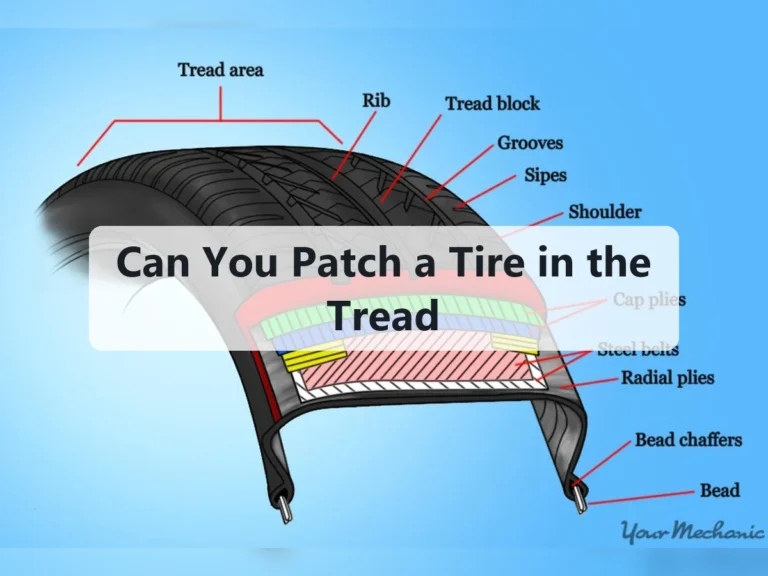
Can You Patch a Steer Tire on a Semi Truck: Explained Clearly
Yes, a steer tire can sometimes be professionally repaired, but only when the puncture is small, repairable, and outside the shoulder or sidewall.
Can you patch a steer tire on a semi truck is a more complicated question than the visible damage suggests A clean nail hole in the tread may.
That difference between appearance and actual condition is the key A proper technician must remove the tire inspect the inside measure the injury verify the tire s age.
This guide explains when a steer-axle tire may be repaired why some punctures require replacement how a combination patch-plug differs from a simple plug and what damage can.
- ✓A small puncture in the central tread may be repairable after the tire is removed and inspected internally.
- ✓Sidewall, shoulder, belt, bead, and large or irregular injuries generally require tire replacement.
- ✓A proper repair normally seals the puncture and reinforces it from inside; an exterior plug alone is not a permanent repair.
- ✓Driving even a short distance while severely underinflated can create internal damage that is not visible from outside.
- ✓Steer-axle position makes conservative inspection and compliance with fleet policy especially important.
Can You Patch a Steer Tire on a Semi Truck?
Yes a qualified tire professional may repair a steer tire when the injury is limited to the repairable tread area and the tire has no other safety defect.
In tire-service language patch can mean several different things A temporary roadside plug an internal patch and a combination unit that both fills and seals the injury are.

- Tread location: The safest repair candidates are usually small, clean punctures in the center portion of the tread.
- Permanent method: A proper repair seals the injury and closes the inner liner; an outside-only plug does not provide the same protection.
- Axle position: A steer tire carries steering forces, so many fleets apply stricter policies than the minimum repair guidance.
- Inspection first: The tire must be removed to check for liner damage, loosened cords, heat damage, or a second injury.
There is no universal answer based only on the word patch Some tire manufacturers allow repairs in defined tread areas and within specified injury limits Others may provide.
Why a steer tire deserves a conservative decision
A steer tire directly affects directional control, braking stability, and the driver’s ability to keep the tractor on course. A failure on a trailer tire may still be serious, but a failure on the steer axle can create an immediate control problem, especially at highway speed or during an evasive maneuver.
That does not mean every repaired steer tire is automatically unsafe It means the margin for uncertainty is small A shop may refuse an otherwise repairable puncture because.
Minimum repair guidance versus company policy
Federal commercial-vehicle rules, tire-industry practices, manufacturer instructions, and fleet policies do not always express the same level of caution. A repair can be technically possible yet rejected by a carrier, leasing company, insurer, or maintenance program.
Ask the shop to explain whether it is following the tire maker s instructions a recognized commercial tire repair procedure or a stricter fleet rule If the truck.
Which Steer-Tire Damage Can Be Repaired?
The best repair candidate is a single puncture in the tread s repairable zone It should be relatively small have clean edges and not extend into the shoulder.
The location matters because the tread flexes differently from the shoulder and sidewall The central tread area is designed to accept road contact and has a more suitable.

- Injury size: The technician should measure the puncture rather than estimate it from the visible hole.
- Injury path: A straight nail puncture is different from a cut, tear, or angled object that has damaged several layers.
- Repair zone: The puncture must be fully within the manufacturer-approved tread area, not partly in the shoulder.
- Casing condition: No repair should proceed if the inside shows abrasion, wrinkles, heat discoloration, exposed cords, or separation.
Small tread punctures
A small nail or screw puncture in the central tread is the common example of a potentially repairable injury The object may have made a relatively narrow path.
Even a small puncture can become more complicated if the object entered at an angle, enlarged the hole as it moved, or remained in the tire while the tire lost pressure. The technician should inspect the complete internal surface, not only the point where the object entered.
Multiple punctures and nearby injuries
Two separate repairs are not automatically disqualifying, but their spacing, size, location, and effect on the casing matter. Injuries that overlap or sit close together can weaken the same section of the tire, and a repair may not be appropriate even when each hole looks small by itself.
A tire with one properly repaired puncture and otherwise excellent condition is a different case from a casing with several plugs, previous patches, cuts, or signs of impact. Commercial tire technicians should evaluate the entire tire rather than treating each injury in isolation.
What usually cannot be repaired
Damage in the sidewall or shoulder is generally a replacement condition for a highway steer tire Those areas flex heavily and contribute to the tire s structural support. This distinction matters when answering “can you patch a steer tire on a semi truck”.
Large cuts irregular tears exposed cords bead damage bulges separations and injuries caused by road hazards that have removed rubber are also common reasons to reject a repair.
| Damage type | Typical decision | Why it matters |
|---|---|---|
| Small central tread puncture | May be repairable | Can often be sealed if the casing and repair zone are sound. |
| Shoulder or sidewall puncture | Usually replace | High flexing and structural damage make a permanent repair unreliable. |
| Large cut or irregular tear | Usually replace | Damage may extend beyond the visible opening into belts or cords. |
| Run-flat or severely underinflated operation | Inspect; often replace | Internal heat and abrasion may be hidden after the tire is reinflated. |
| Bulge, separation, or exposed cords | Replace | These indicate structural failure, not a simple air leak. |
How a Professional Semi-Tire Repair Works
A safe repair is more than inserting rubber into a hole. Commercial tire service begins with identifying the tire, recording its condition, and determining whether it can be safely removed and repaired. The tire is then demounted so the technician can inspect the inner liner and the full injury path.
If the casing passes inspection, the technician prepares the puncture according to the selected repair system. The area must be clean, dry, and properly shaped so the repair bonds and seals. The finished assembly is then inspected, inflated using safe procedures, and checked for leaks before it is returned to service.
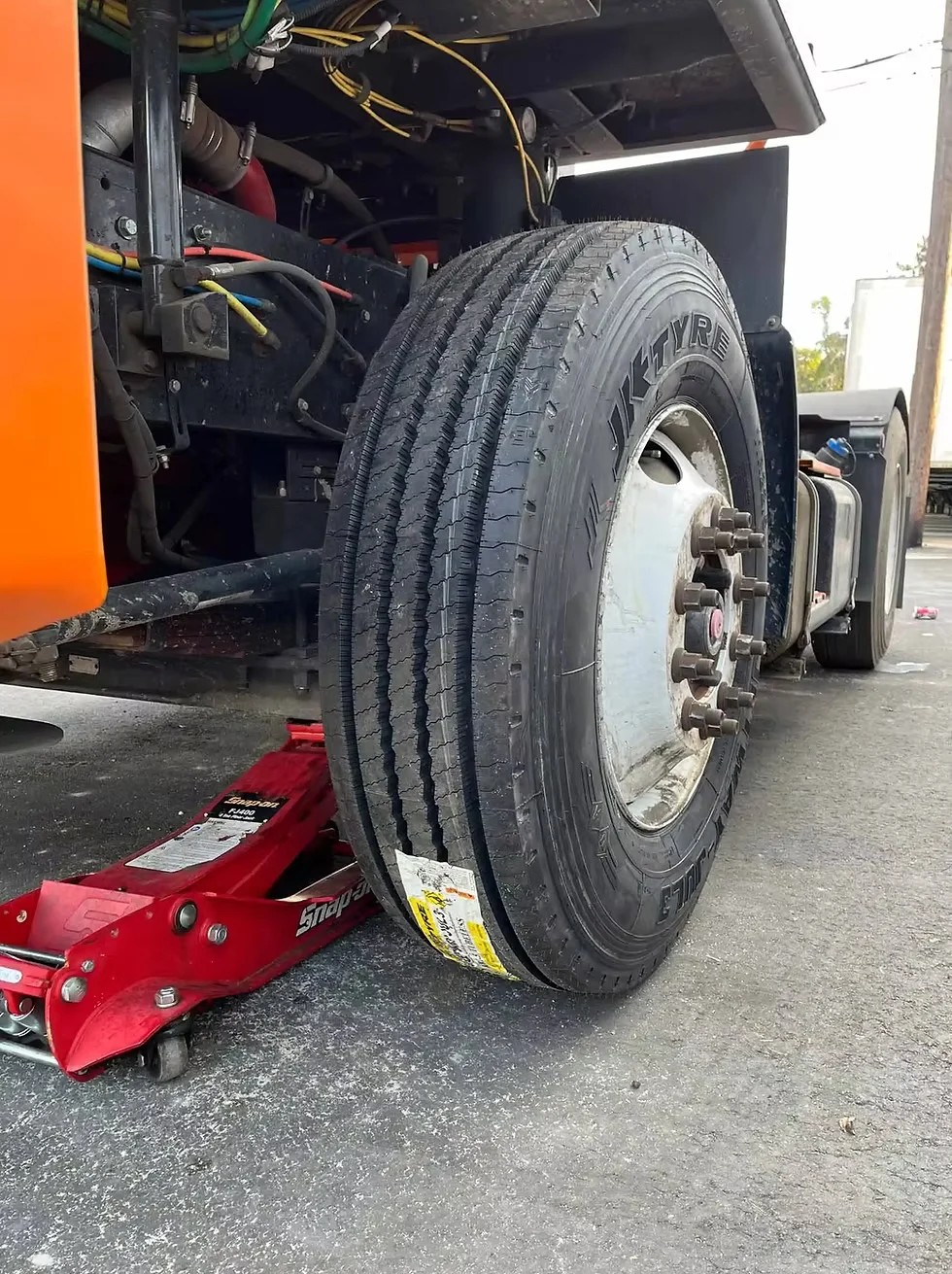
- Identify the tire: Confirm size, load range, construction, service history, and manufacturer repair limits.
- Remove and inspect: Look inside for run-flat damage, liner abrasion, belt separation, or a second puncture.
- Prepare the injury: Follow the repair system’s required cleaning, buffing, cementing, and installation process.
- Test before release: Reinflate safely, check the repair and valve area for leaks, and set pressure for the actual load.
Why an outside plug is not enough
An exterior plug can appear to solve the problem because it may stop the immediate leak However it does not let the technician inspect the inside repair inner-liner.
For that reason a plug inserted from the outside is generally considered a temporary measure if used at all rather than a complete permanent repair for a commercial.
Combination patch-plug repairs
A commonly accepted permanent repair concept uses one unit that fills the puncture channel while a patch seals the inner liner. The plug portion helps close the path through the tread, while the patch portion prevents air from migrating through the liner and reinforces the repaired area.
The exact product and installation method depend on the tire manufacturer and repair-system instructions. A technician should not substitute a passenger-car repair method or improvise materials because the tire is larger. Commercial truck tires have different construction, loads, and operating demands.
Inflation and final inspection
Inflation is a controlled shop operation, not a casual step. A technician should use appropriate restraining equipment and follow safe inflation practices for the tire and wheel assembly. After inflation, the repair area, bead, valve, and surrounding tread should be checked for leaks or distortion.
The correct operating pressure is determined by the tire’s load requirement, axle loading, tire maker’s data, and the vehicle or fleet operating plan. Overinflation and underinflation can both create problems, so the repair itself does not replace the need for a proper pressure check.
Why a Flat Steer Tire May Need Replacement Even With a Tiny Hole
The most important hidden risk is run-flat damage When a tire loses pressure the sidewalls and inner liner can rub against one another and generate heat The driver.
Inflating the tire again can make it look normal while leaving weakened cords, scuffed rubber, or heat-related deterioration inside. That is why a shop should not simply install a plug, add air, and send a commercial steer tire back onto the highway.
- Low-pressure travel: A tire driven while visibly soft or flat needs an internal inspection before any repair decision.
- Sidewall wrinkles: Creases or abrasions inside the sidewall can indicate that the casing flexed beyond safe limits.
- Heat evidence: Discoloration, rubber dust, or a cooked-looking liner can signal damaging friction.
- Unknown history: If nobody knows how far or how fast the tire was driven after the puncture, replacement may be the safer choice.
Appearance can be misleading
A tire can have good tread depth and no external bulge yet still be unsuitable for repair Internal damage often does not change the profile immediately Conversely a.
This is why visual inspection at the roadside is useful for identifying an emergency, but not for approving a permanent repair. It can tell you to slow down, stop, or call for service; it cannot replace demounting and internal examination.
Pressure-monitoring clues
Repeated pressure loss, a warm hub, an unusual pull, vibration, or a tire-pressure monitoring warning should be treated seriously. A tire that requires frequent inflation may have a leaking repair, valve problem, wheel issue, or additional puncture. Keep these limitations in mind when considering “can you patch a steer tire on a semi truck”.
Do not keep operating the truck while repeatedly adding air to a steer tire. Each trip at reduced pressure increases the chance of casing damage, and the original puncture may not be the only problem.
Repairing a Steer Tire Versus Replacing It
The financial appeal of repairing a commercial tire is understandable. A repair can preserve a valuable casing and avoid the cost and downtime of a replacement. However, the cheapest immediate option is not always the lowest-cost decision if the tire has questionable history, mismatched wear, or a high consequence of failure.
Replacement is often the better choice when the tire is near the end of its service life has irregular wear has already been repaired or does not match.
- Repair makes sense: The puncture is small, central, clean, and within the approved zone, with no internal or casing damage.
- Replacement makes sense: The injury involves the shoulder or sidewall, or the tire has separation, exposed cords, a bulge, or run-flat damage.
- Fleet rule controls: If the carrier prohibits repaired steer tires, install a compliant replacement rather than overriding policy.
- Match matters: Compare size, construction, load capacity, tread condition, and inflation requirements before replacing only one steer tire.
Replacing one tire on the steer axle
If only one tire is replaced the new tire should be compatible with the tire remaining on the opposite side Differences in size tread depth casing characteristics or.
A technician may recommend replacing both steer tires when the remaining tire is significantly worn, damaged, or difficult to match. That can cost more initially but may provide more predictable handling and simplify future maintenance.
Retread and casing considerations
A repair decision can also affect the casing’s future value. An approved repair may preserve a sound casing, while an improper repair can compromise it. If the tire is intended for a future retread program, the carrier may have specific rules about punctures, repairs, age, and casing condition.
That does not mean a tire should be repaired solely to protect future retread value. Safety and current serviceability come first. The casing must be suitable for its present steer-axle application before future reuse is considered.
What to Do When a Steer Tire Is Punctured on the Road
When a steer tire loses pressure control and roadside safety come before saving the tire Hold the steering wheel firmly reduce speed smoothly avoid abrupt braking or lane changes and move to a safe location if the truck can be controlled Activate hazard signals and stay clear of traffic while arranging.
Do not remove a nail or screw just to see whether the leak stops. The object may be limiting air loss, and removing it can make the tire deflate rapidly. Do not crawl beneath an improperly supported tractor or attempt to dismount a commercial tire beside traffic.
- Monitor the truck’s handling and bring it to a safe stopping area.
- Visually identify whether the tire is losing air, but do not approve it for continued travel based on appearance.
- Call qualified commercial roadside tire service and describe the tire position, size if known, and nature of the damage.
- Tell the technician whether the tire was driven while low, how far it traveled, and whether a pressure warning appeared.
- Have the tire repaired only after internal inspection, or have it replaced if the casing does not pass inspection.
- Continuing “just to the next exit”: A few additional miles on a soft steer tire can turn a repairable puncture into an internally damaged casing.
- Using a passenger-car kit: Temporary tools made for smaller tires are not a substitute for commercial tire service.
- Ignoring a slow leak: A tire that loses pressure overnight can become dangerously underinflated during the next trip.
How to Prevent Steer-Tire Repair Problems
Prevention starts with pressure control and regular inspection. Check cold inflation pressure with a reliable gauge at a practical interval, and use the pressure required for the axle load and tire application. A tire-pressure monitoring system can provide an early warning, but it should support—not replace—physical inspection.
Inspect the tread for nails screws cuts stones unusual wear and objects lodged between dual tires elsewhere on the truck Look for bulges localized depressions exposed cords or.
- Pressure: Check when the tires are cold and investigate repeated pressure loss instead of repeatedly adding air.
- Wear: Look for shoulder wear, cupping, feathering, and irregular patterns that may indicate alignment or suspension problems.
- Valve and wheel: A valve leak, damaged extension, wheel crack, or poor bead seal can imitate a puncture.
- Rotation and records: Follow the fleet’s inspection schedule and document repairs, replacements, and pressure concerns.
Proper alignment and suspension maintenance also reduce the stress placed on steer tires. Misalignment can scrub tread and create heat, while worn steering components can produce irregular wear that weakens the tire’s service margin.
Keep the tire’s service history available when seeking a repair. Knowing when the puncture occurred, whether pressure was lost, how far the truck traveled, and whether the tire has previous repairs gives the technician better information than the hole alone.
Frequently Asked Questions
Can a nail hole in a semi-truck steer tire be patched?
It may be repairable if the nail created a small puncture in the central tread and the casing has no internal damage. The tire must be removed and inspected before a permanent repair is approved.
Is it safe to plug a steer tire from the outside?
An outside plug may be a temporary roadside measure, but it is not the same as a complete permanent repair. It does not allow an internal inspection or seal and reinforce the tire in the same way as an approved internal repair.
Can a semi-truck steer tire be repaired if it was driven flat?
Possibly, but only after a careful internal inspection. Driving while flat or severely underinflated can create heat and abrasion damage that requires replacement even when the original puncture is small.
Can you patch a steer tire on a semi truck near the shoulder?
Shoulder injuries are generally not considered suitable for a permanent repair because that area flexes heavily and transitions into the sidewall. A commercial tire technician will commonly recommend replacement.
Can a sidewall puncture on a steer tire be repaired?
A sidewall puncture generally requires replacement rather than patching. A sidewall repair cannot reliably restore the structural strength needed for a steer-axle position.
How large of a puncture can be repaired?
The allowable injury size depends on the tire manufacturer, tire design, and repair system. Do not rely on a universal number; the technician should measure the injury and compare it with the applicable repair instructions.
Will a repaired steer tire pass a commercial inspection?
A properly repaired tire may comply with applicable requirements, but passing an inspection does not guarantee that a particular fleet, insurer, or employer permits repaired steer tires. The repair must be technically sound and the tire must remain free of other defects.
Should both steer tires be replaced at the same time?
Not always. One tire may be replaced when it can be properly matched to the other, but significant differences in wear, size, construction, or condition may lead the technician or fleet to recommend replacing both.
Conclusion
Can you patch a steer tire on a semi truck Sometimes yes but only after a qualified inspection confirms that the puncture is small properly located and free.
Do not judge the decision by the visible hole or by whether an exterior plug stops the leak. Steer tires are safety-critical, and the manufacturer’s instructions, commercial repair procedure, and fleet policy all matter. When the tire has lost substantial pressure, stop driving and have it inspected before choosing repair over replacement.
Have the tire removed and internally inspected by a qualified commercial tire technician before approving any patch or returning the steer axle to service.