Can a Tire Plug Cause a Blowout: What Happens and How to Respond
Yes, a tire plug can contribute to a blowout if it fails or was installed in an unsafe area, but many properly repaired punctures remain reliable.
If you are trying to decide whether a plugged tire is safe to drive, the small detail that matters most is not simply that a plug exists. You need to know where the puncture is, how large and straight it is, whether the tire was inspected internally, and whether the repair restored an airtight seal. A plug in the center of the tread is a very different situation from a plug near the shoulder or in the sidewall.
The risk also depends on tire condition and driving conditions. Underinflation, excessive heat, overloading, high speed, worn tread, and a second puncture can turn a marginal repair into a serious failure. In this guide, you will learn can a tire plug cause a blowout in practical terms, how plugs fail, which warning signs require immediate action, and how to decide between monitoring the repair, seeking a professional inspection, or replacing the tire.
- ✓A plug is not automatically dangerous, but an improper plug-only repair can leave internal damage undiscovered.
- ✓Repairs are generally limited to small punctures in the central tread area, away from the shoulder and sidewall.
- ✓Air loss, vibration, bulges, pulling, or a recurring warning light means the tire needs prompt inspection.
- ✓Correct pressure and a professional internal inspection greatly reduce the chance of repair-related failure.
How Can a Tire Plug Cause a Blowout?
A tire plug can contribute to a blowout when it does not seal the puncture, works loose, or hides damage that has already weakened the tire. The plug itself is usually not what suddenly explodes; the larger concern is continued air loss, heat buildup, or structural damage inside the tire.
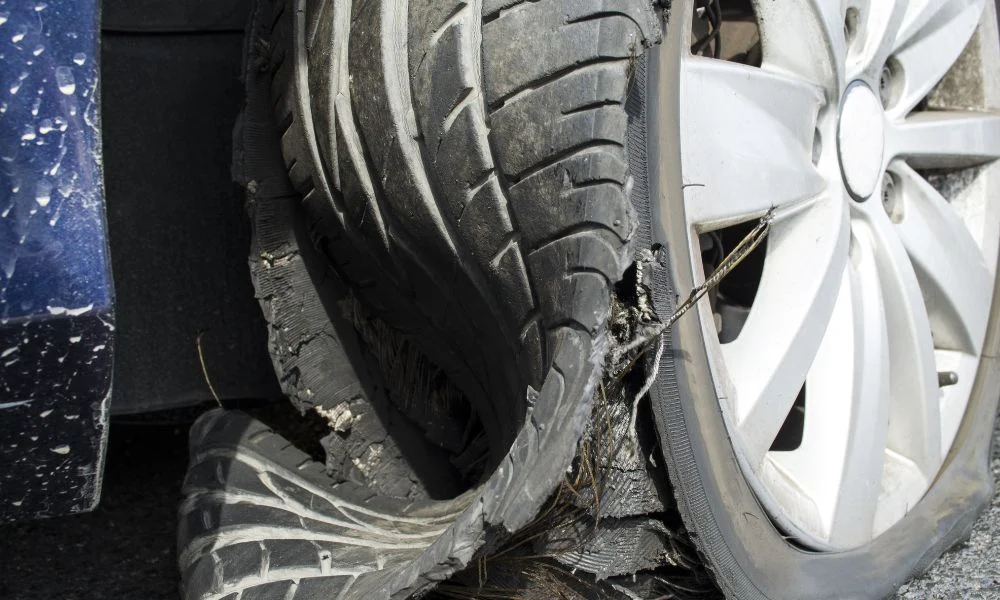
When a tire loses pressure, its sidewalls flex more than designed. That flexing creates heat and places additional stress on the cords and rubber. If the tire is driven far or fast while underinflated, the internal structure can separate, allowing a rapid loss of air that drivers may describe as a blowout.
A puncture can also damage the inner liner, belts, or casing even when the outside looks normal. A plug inserted from the outside cannot reveal all of that damage. This is why a proper repair usually involves removing the tire, inspecting it internally, and installing a combination repair unit—a plug with an inside patch—when the puncture qualifies.

- Air pressure: Compare the tire with the vehicle placard, usually found on the driver’s doorjamb, not the maximum pressure molded into the sidewall.
- Puncture location: A repairable hole is normally in the central tread, not the shoulder or sidewall.
- Repair stability: Pressure that repeatedly drops suggests leakage, hidden damage, or an unsuitable repair.
- Tire history: Driving while flat or severely underinflated can make replacement necessary even after a successful plug.
When Is a Plugged Tire More Likely to Fail?
The quality and location of the repair usually matter more than the word “plug.” A professionally inspected tire with a small, clean puncture in the tread has a much better outlook than a tire repaired quickly after being driven flat. The tire’s age, tread depth, previous repairs, and load also affect the decision.
Many tire repair standards restrict repairs to punctures no larger than about 1/4 inch, or 6 millimeters, in the tread’s repairable area. The exact limit can vary by tire maker and repair policy, so the technician should measure the damage rather than estimate it by eye.
Driving habits can expose a weak repair. Highway speeds, heavy cargo, towing, hot pavement, and long distances increase heat and stress. A tire that holds air during a short local trip may still become unsafe when loaded and driven for hours at interstate speed.

- Shoulder damage: Tread near the curved edge flexes heavily and is generally not considered a safe repair area.
- Sidewall damage: A sidewall plug is not a dependable structural repair; the tire normally needs replacement.
- Multiple repairs: Closely spaced punctures or overlapping repairs can weaken the tire and limit safe repair options.
- Run-flat driving: Operating with little or no pressure can create internal damage that is invisible from outside.
Plug-only repairs versus combination repairs
A rope-style plug installed from the outside can stop a leak temporarily, but it does not repair the inner liner. It may also fail to seal if the puncture channel is irregular, contaminated, or larger than the plug can properly fill. This distinction matters when answering “can a tire plug cause a blowout”.
A combination repair uses a stem that fills the puncture channel and a patch that seals the inner liner. The tire is removed for inspection, the injury is prepared correctly, and the repair is installed from the inside. That process does not make every damaged tire safe, but it addresses both the path of the leak and the inner liner.
Some shops may use a plug as a temporary measure when immediate replacement or full repair is not available. If so, treat it as a reason to arrange a prompt inspection—not as proof that the tire is ready for unrestricted high-speed driving.
Signs a Plugged Tire Needs Immediate Attention
Do not wait for a dramatic blowout to evaluate a questionable repair. A tire can provide several clues before it loses enough air to become unstable. Check the pressure with a reliable gauge when the tire is cold, and compare it with the vehicle manufacturer’s recommended setting.
A tire pressure monitoring system is helpful, but it is not a complete inspection tool. The warning light may appear only after pressure has fallen significantly, and it cannot detect every structural problem. If the vehicle feels different, stop in a safe location and look for a cause.
- Repeated pressure loss: Needing air again after a repair strongly suggests an active leak or tire damage.
- Bulge or blister: A raised area in the sidewall can indicate broken internal cords and calls for replacement.
- New vibration: Shaking after a puncture or repair may indicate imbalance, belt damage, or a deformed tire.
- Pulling or wandering: A pressure difference or tire problem can affect steering and handling.
- Hissing or visible movement: Air escaping around the repair should be treated as an urgent defect.
- Excessive heat or rubber odor: These can accompany severe underinflation and require stopping rather than continuing.
What to do if pressure is low
If the tire is only modestly below the recommended pressure and shows no visible damage, add air according to the vehicle placard and drive only as needed to reach a tire professional. Avoid high speeds, hard cornering, heavy loads, and unnecessary distance.
If the tire is visibly flat, has a bulge, is damaged on the sidewall, or loses air quickly, do not keep driving on it. Use a properly inflated spare if available, or request roadside assistance. Driving even a short distance on a flat tire can destroy a casing that might otherwise have been inspectable.
After a repair, ask the technician to verify the leak with a solution or immersion test and to check the tire’s internal condition. A simple visual glance at the plug is not enough to confirm that the repair is safe. Keep these limitations in mind when considering “can a tire plug cause a blowout”.
How to Decide Whether to Repair or Replace the Tire
The right decision comes from combining the injury’s location, size, angle, tire condition, and history. A small nail hole in the center of a healthy tire is not equivalent to a long cut at the shoulder, even if both currently hold air.
Replacement is generally the safer choice when the puncture is in the sidewall or shoulder, the hole is too large or irregular, the tire has been driven severely underinflated, or the internal belts and liner are damaged. Replacement may also be appropriate when tread is near its wear limit, the tire is aged or cracked, or several repairs are clustered together.
For an eligible tread puncture, a professional may recommend an internal inspection followed by a combination repair. Ask what type of repair was installed, whether the tire was removed from the wheel, and whether the repair area was tested for leaks. These questions help distinguish a complete repair from a quick temporary plug.
- Consider professional repair: Small central-tread puncture, stable pressure, no internal damage, and adequate remaining tread.
- Replace the tire: Sidewall or shoulder injury, bulge, exposed cords, severe underinflation, or damaged belts.
- Stop driving first: Rapid air loss, strong vibration, unusual heat, or handling changes after the repair.
- Check the whole axle: Confirm that replacement tires meet the vehicle’s size, type, load, and speed requirements.
How to monitor a repaired tire
For the first several trips, check pressure when the tire is cold and look for changes around the repair. Do not judge pressure by appearance alone; a tire can look normal while being substantially underinflated.
Keep the valve cap installed, avoid overloading the vehicle, and respond promptly to any new warning light or handling change. If pressure remains stable and the tire passes inspection, normal use may be appropriate, but the repair should still be remembered during future tire service.
FAQ: Can a Tire Plug Cause a Blowout?
Can a tire plug come out while driving?
Yes. A plug can loosen or fail to seal, particularly if the puncture is too large, the repair was installed poorly, or the tire flexes heavily. A failed plug may cause a slow leak or rapid pressure loss.
Is a tire plug safe for highway driving?
It depends on the tire’s condition and the repair method. A properly inspected and professionally repaired central-tread puncture may be suitable for highway use, while an uninspected plug-only repair should not be treated as automatically safe at high speed.
Can a plug cause a slow leak instead
Yes. Slow leakage is more common than an immediate blowout. Continuing to drive while gradually losing pressure can create heat and sidewall damage, which may eventually lead to a rapid failure.
Can you plug a tire more than once?
Sometimes a tire can have more than one properly spaced repair, but the injuries must be evaluated together. Repairs that are too close, overlap, or leave little sound tread between them can make replacement the safer option.
Is a sidewall plug ever safe?
A sidewall plug is not considered a dependable structural repair. The sidewall flexes constantly and supports the vehicle’s load, so damage there generally calls for replacing the tire rather than plugging it.
How long can you drive on a tire plug?
There is no universal time or mileage guarantee. A qualified repair can remain in service for the tire’s usable life, but an unsuitable or temporary plug may fail quickly. The repair’s location, method, and inspection matter more than a promised number of miles.
Should I replace a tire after driving on it flat?
Have it removed and inspected before deciding. Driving flat can pinch the sidewalls and damage the inner liner or cords. If the tire shows internal abrasion, creasing, or structural damage, plugging the original puncture will not make it safe.
Conclusion
So, can a tire plug cause a blowout? It can contribute to one when the puncture is in an unsafe area, the repair is incomplete, or the tire continues losing pressure and overheats. A small central-tread puncture in a healthy tire may be repairable, but only after the tire is properly inspected and sealed.
Check pressure now, avoid driving on a visibly damaged or rapidly leaking tire, and have any questionable plug evaluated by a tire professional before highway travel.
Use a tire gauge today; if pressure is falling or the repair is near the shoulder or sidewall, stop driving and arrange an inspection or replacement.