
Can You Patch a Tire with a Staple in It: Key Facts and Guidance
Usually, no. A tire with a staple may be repairable if the puncture is small and confined to the tread, but a professional must inspect it from inside first.
You notice a faint clicking sound as a tire rolls into your driveway, then spot a small staple head in the tread. The tire still looks inflated, so the situation seems harmless—until the pressure warning appears later or the tire feels soft the next morning.
A staple can create a slow leak but the visible metal does not tell you whether the tire s internal structure is intact Driving on a tire that. This guide examines “can you patch a tire with a staple in it” and explains the details that matter in practice.
This guide explains can you patch a tire with a staple in it when a tire shop may repair it why a plug alone is not the preferred.
- ✓A staple puncture may be repairable when it is small, centered in the tread, and has not caused internal or sidewall damage.
- ✓Do not judge the tire by the visible hole alone; an internal inspection is needed for a dependable repair decision.
- ✓A combination plug-and-patch repair from inside the tire is generally preferred over an exterior plug by itself.
- ✓Do not drive on a flat or badly underinflated tire, and do not repair a puncture in the sidewall or shoulder.
Can You Patch a Tire with a Staple in It?
Yes a tire shop may be able to repair a staple puncture but the answer depends on where the staple entered and what happened after the puncture A.
Patch can also mean several different things A tire technician may remove the tire inspect the inside prepare the injury and install a combination repair unit that seals.
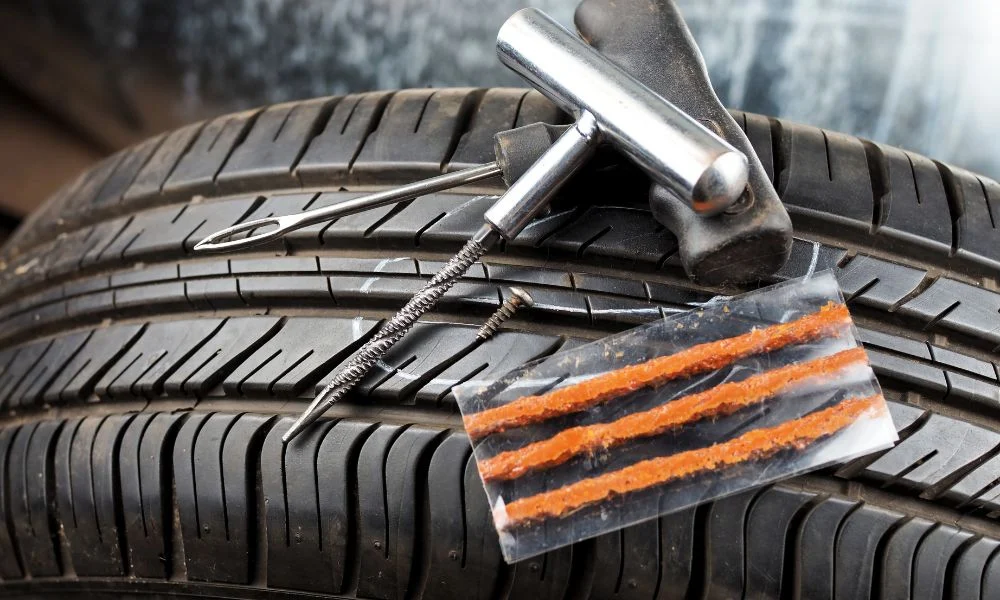
- Location controls the decision: The repairable zone is normally the central tread, away from the shoulder and sidewall.
- Pressure changes the risk: A tire that has been driven while underinflated may have hidden internal damage.
- Removal is not automatically safer: Pulling out the staple can release air quickly and make roadside handling more difficult.
If the tire is holding normal pressure and the staple is clearly in the middle of the tread you can usually drive only as far as needed for.
Why a Staple Can Cause More Trouble Than It Looks
A staple is narrow but its two legs can pierce the tread at slightly different points or remain partly embedded as the tire flexes Each rotation can work.
The tire s tread is only one part of the assembly Beneath it are belts rubber layers and an inner liner that holds air If the staple reaches.
Driving distance matters. A tire that was punctured and immediately parked may have a straightforward injury. The same tire, driven several miles while visibly low, may have heat-related damage inside even if the tread looks acceptable from the outside.
- Slow pressure loss: The tire repeatedly needs air over several hours or days.
- Rapid deflation: Air escapes audibly or the tire becomes soft soon after inflation.
- Running-flat symptoms: The sidewall shows scuffing, wrinkling, abrasions, or unusual bulges.
- Multiple marks: There is more than one puncture, a torn area, or damage near the shoulder.
How to tell whether the tire is losing air
Check pressure with a reliable gauge rather than relying on appearance. A tire can look normal while being meaningfully underinflated, especially on a vehicle with a relatively tall sidewall. Compare the reading with the vehicle manufacturer’s recommended cold pressure on the driver’s doorjamb label, not the maximum pressure molded into the tire.
If you add air and the pressure falls noticeably during a short observation period treat the tire as leaking A light application of soapy water around the staple.
When a Staple Puncture Is Usually Repairable
A professional repair is most plausible when the puncture is in the tread’s central repair area, the hole is small and reasonably straight, and the tire has not been driven while severely underinflated. The technician still needs to remove the tire from the wheel because the outside view cannot show all internal damage.
Repairability also depends on the tire s overall condition A worn tire with shallow tread cracking previous repairs exposed cords or uneven wear may not be a sensible.
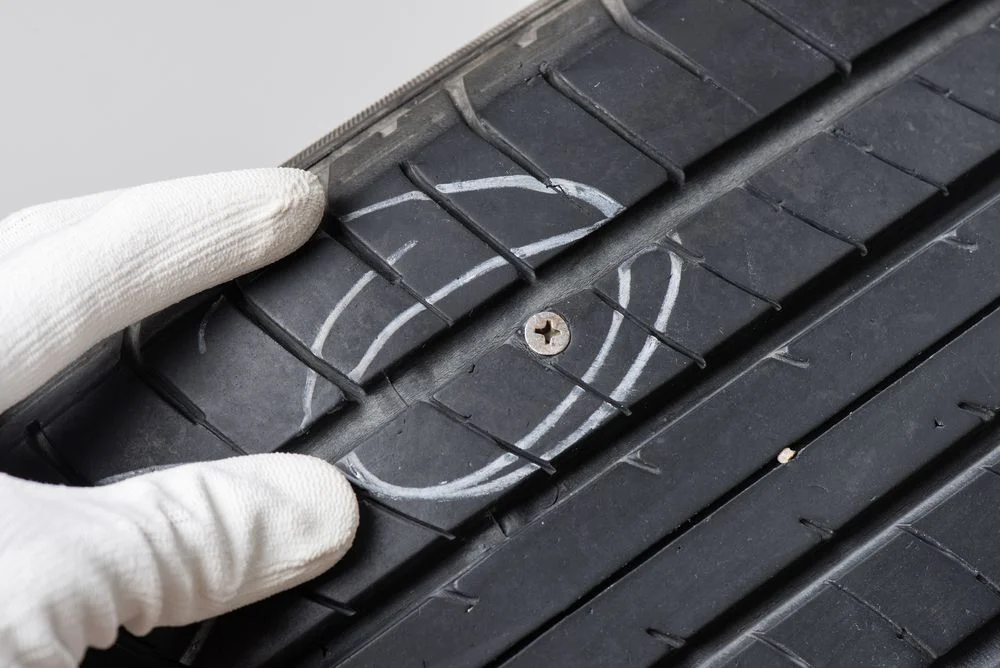
- Central tread: The puncture is well away from the shoulder transition and sidewall.
- Limited injury: The hole is small, clean, and not torn into a larger slit.
- Sound structure: No cords, belts, bubbles, separations, or inner-liner damage are visible during inspection.
- Healthy tire: Tread depth, age-related condition, and previous repair history remain acceptable.
A repair shop may use an industry repair zone as a guide but the exact boundary can vary with the tire design and the injury The shoulder is.
Why the inside inspection matters
The inner liner can show a circular abrasion, a stretched area, or a mark caused by driving with too little air. A technician can also check whether the staple damaged the steel belts or left debris in the puncture channel. Without removing the tire, those issues can remain hidden.
The technician may measure the injury after removing the object and preparing the channel. If the hole is too large, irregular, contaminated, or close to another repair, the tire may be rejected. A sound decision is based on the complete tire, not simply on whether a plug appears to stop the leak.
This distinction matters when answering “can you patch a tire with a staple in it”.
When You Should Not Repair the Tire
Some punctures should be treated as replacement situations rather than repair opportunities. The clearest example is damage to the sidewall. Sidewalls flex continuously and do not provide the same stable repair area as the tread, so a patch or plug there cannot reliably restore the tire’s load-carrying behavior.
The shoulder is also a concern. A hole that appears partly in the tread but sits close to the curved edge may move into the nonrepairable area once the tire is examined on the machine. If you cannot confidently locate the injury, let a technician make that determination.
- Sidewall damage: The staple is in the sidewall, or there is a bulge, cut, abrasion, or exposed cord.
- Shoulder puncture: The injury is near the tread edge or on the curved transition.
- Internal failure: The tire was driven flat or shows inner-liner, belt, or carcass damage.
- Severe wear: Tread is worn out, unevenly damaged, cracked, or affected by age-related deterioration.
- Complicated injury: The puncture is torn, oversized, contaminated, or too close to another repair.
Replacement may also be recommended when the tire has multiple punctures in a concentrated area, has already received an improper repair, or cannot be safely demounted and inspected because of other damage. A new tire is a cost, but an unreliable repair can create a much greater safety problem.
Why sidewall plugs and patches are not a safe workaround
Online repair kits sometimes suggest sealing nearly any hole from the outside. That approach does not change the mechanical demands placed on a sidewall. The sidewall’s repeated flexing can work a repair loose, allow air to escape, or mask damage that should have ended the tire’s service life.
Do not confuse a cosmetic sidewall scuff with a puncture. A shallow mark may be inspected and judged harmless, while a hole that reaches the air chamber or exposes structural material is a different problem. When in doubt, stop driving and have the tire evaluated.
Patch, Plug, or Combination Repair?
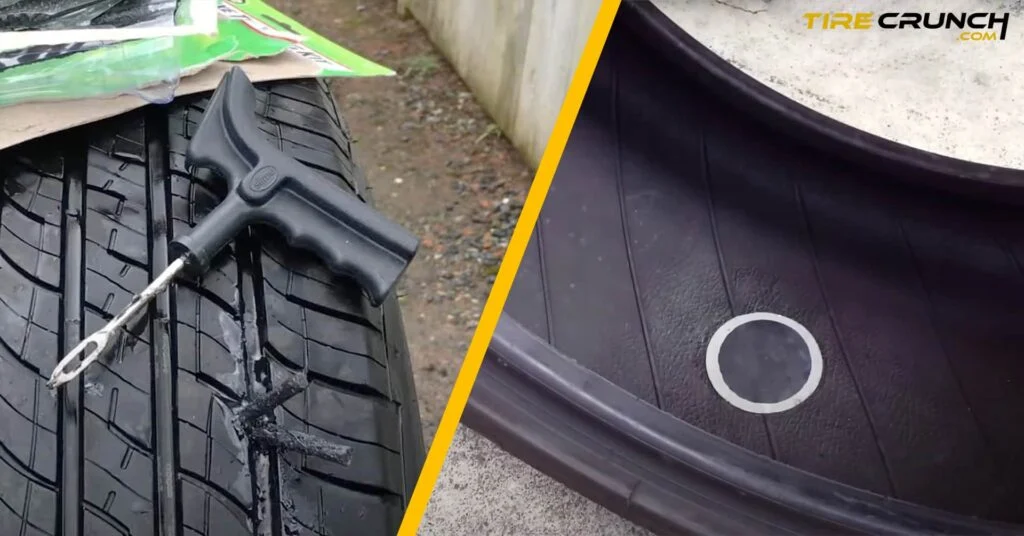
A patch is installed on the inside of the tire over the prepared inner-liner surface. It can seal the area around the hole, but a patch by itself may not fill the puncture channel. If the channel remains open, moisture and air can travel through it, and the repair may not be complete.
A plug fills the puncture channel usually from the outside It can stop air from escaping and may help you reach a repair facility but an exterior plug.
A combination repair, often called a plug-patch, includes a stem that fills the puncture and a patch that seals the inner surface. When the injury is eligible and the manufacturer’s repair procedures are followed, this method addresses both parts of the problem more thoroughly.
| Repair type | What it does | Main limitation |
|---|---|---|
| Exterior plug | Fills the puncture channel from the outside | Does not provide an internal inspection or inner-liner seal by itself |
| Interior patch | Covers the inner liner around the injury | May not seal the full puncture channel when used alone |
| Combination repair | Seals the liner and fills the channel | Only suitable when location and internal condition pass inspection |
- Use a plug only to manage an emergency: Arrange a proper inspection rather than treating an exterior repair as automatically permanent.
- Expect the tire to be demounted: A complete repair requires access to the inner liner.
- Follow the tire maker’s limits: Repair procedures, speed guidance, and restrictions can vary by tire type.
Do not stack repairs casually or place a patch over an old plug without professional evaluation. A technician must determine whether the previous repair can be removed, whether the injury is still structurally sound, and whether the tire has suffered damage from leakage or underinflation.
What to Do Before the Tire Is Inspected
Your immediate goal is to preserve the tire s condition and avoid a preventable loss of control Leave the staple in place unless it is falling out or the tire is already being handled by a professional Removing it at home may cause.
Park on a stable surface away from traffic when possible Inspect the tire without placing your hands near a suspected object and check for a visibly low sidewall.
- Check the location: Determine whether the staple is in the center tread, near the shoulder, or in the sidewall.
- Measure cold pressure: Use a gauge and compare the result with the doorjamb recommendation.
- Look for secondary damage: Check for bulges, cuts, exposed cords, sidewall scuffing, or tread separation.
- Choose safe transport: Use a spare, roadside assistance, or a mobile tire service if pressure is low or damage is questionable.
- Tell the technician what happened: Mention how far the vehicle was driven, whether the tire went flat, and whether it was inflated afterward.
- Never crawl under a vehicle supported only by a jack: Follow the vehicle’s lifting instructions and use proper support.
- Do not exceed the temporary spare’s limits: A compact spare is intended for limited speed and distance.
- Avoid flammable sealants near heat: Follow product instructions and disclose any sealant use to the tire shop.
Should you add air?
If the tire has a small, stable leak and no visible structural damage, adding air to the recommended cold pressure may allow a short trip directly to a tire facility. Recheck the pressure before leaving and stop if the tire becomes soft, pulls to one side, vibrates, or makes unusual sounds.
Do not keep topping off a tire for days while postponing inspection. Repeated low-pressure driving builds heat and can transform a repairable tread puncture into an unsafe tire. If the tire will not hold pressure long enough for a safe trip, use another transport option.
Keep these limitations in mind when considering “can you patch a tire with a staple in it”.
Can You Use a DIY Tire Plug Kit?
A plug kit can be useful in an emergency when a puncture leaves you stranded especially if the hole is in the central tread and the tire is.
DIY kits also require reaming and inserting tools into the tire. Done incorrectly, they can enlarge the hole, damage the inner liner, or push debris farther inside. A plug that appears secure can still leak at the puncture or fail to address damage caused by driving underinflated.
- Pulling first and planning later: Removing the staple before a safe repair option is available can leave the tire rapidly deflated.
- Plugging every location: A kit does not make shoulder or sidewall damage repairable.
- Skipping pressure checks: A plug is not proof that the tire is holding pressure reliably.
- Leaving the temporary repair indefinitely: Treat an emergency plug as a reason to arrange inspection, not as permission to ignore the tire.
If you use an emergency plug, drive cautiously and only as needed to reach a qualified tire professional. Tell the technician exactly what was done. The shop may remove the plug, inspect the injury, and install an approved internal repair—or recommend replacement if the puncture or tire condition is unsuitable.
How to Decide Whether Driving Is Safe
The safest choice depends on pressure and damage not on the staple s size A tire at the correct pressure with a small central-tread puncture is very different.
Consider the vehicle’s handling as well. Steering pull, vibration, thumping, a soft response in turns, or a tire-pressure warning that returns soon after inflation all indicate that continued driving deserves caution. Do not assume the absence of noise means the tire is safe.
- Normal pressure, central tread, no visible damage: Drive carefully and directly to a tire professional for inspection.
- Slow leak or pressure warning: Inflate only to the recommended pressure if safe, then seek prompt service and monitor the tire.
- Low or rapidly falling pressure: Do not drive normally; use a spare or roadside assistance.
- Sidewall, shoulder, bulge, or exposed cord: Treat the tire as unsafe to repair or drive until professionally assessed.
Weather and road conditions can raise the risk. Heat, heavy loads, high speeds, and long highway travel place more stress on a compromised tire. A trip to a nearby shop is not equivalent to continuing a long journey with an unresolved leak.
What if the staple is not leaking?
A staple can temporarily seal its own puncture, so no immediate hiss does not prove the tire is undamaged. The object may shift with tread wear, temperature changes, or road impact. Have it inspected before removing it or assuming the tire is fine.
Do not use the absence of a dashboard warning as the only test. Some vehicles monitor pressure indirectly, some warnings appear after a delay, and a small leak may take time to become noticeable. A manual pressure check and professional inspection are more dependable.
How Tire Repair Affects Maintenance and Safety
After an approved repair, check pressure regularly and pay attention to changes in handling. A repaired tire should be monitored like any other tire, but extra attention is sensible during the first days after service. A recurring pressure loss may indicate a problem with the repair, valve, wheel, or a second puncture.
Keep the tires properly inflated according to the vehicle label. Correct pressure supports handling, braking, tread life, and heat control. It also makes it easier to notice a slow leak before the tire is driven in a damaged state.
- Inspect monthly: Look for embedded objects, cracks, bulges, unusual wear, and low pressure.
- Check before long trips: Measure pressure when the tires are cold and inspect the tread visually.
- Track repairs: Note which tire was repaired and tell future technicians about the repair.
- Rotate as recommended: Even wear helps reveal alignment or suspension problems that can stress a repaired tire.
A repaired tire should not be treated as permanently immune to failure. If it develops a new bulge, vibration, repeated leak, or visible separation, stop using it and arrange another inspection. Repair history is one factor in the decision, but current condition remains the priority.
FAQ: Can You Patch a Tire with a Staple in It?
Can a tire shop patch a tire after removing a staple?
Often, yes, if the puncture is in the central tread and the tire has no internal or sidewall damage. The shop should demount the tire, inspect it, and choose an approved internal repair or replacement.
Should I pull the staple out of my tire?
Usually, leave it in place until the tire can be inspected. Removing it may release air quickly and can make the vehicle unsafe to drive, especially if you do not have a spare or compressor available.
Is an exterior plug enough for a staple puncture?
An exterior plug may be an emergency measure, but it is not the same as a complete internal repair. A professional should still inspect the tire and determine whether a combination plug-and-patch repair is appropriate.
Can I drive with a staple in my tire?
Only cautiously and directly to professional help if the tire is properly inflated, the injury is in the central tread, and there is no visible damage. Do not drive on a flat, rapidly leaking, or sidewall-damaged tire.
What if the staple is near the edge of the tread?
It may be in the shoulder or transition area, where repairs are generally not recommended. Have a technician identify the exact location rather than judging the boundary from the outside.
Can a staple puncture damage the tire belt?
Yes. The staple may reach or disturb the belt package, and driving while underinflated can add heat and structural damage. An internal inspection is needed to evaluate that risk.
Will tire sealant permanently fix a staple hole?
Sealant may temporarily reduce air loss in some situations, but it does not inspect or restore the tire’s internal structure. It can also complicate later service, so tell the tire professional if you used it.
Conclusion
So, can you patch a tire with a staple in it? Sometimes—but only when the puncture is small, located in the repairable tread area, and free of internal damage. A professional inspection is essential because the staple can hide belt or inner-liner problems, and driving on low pressure can change the repair decision.
Do not rely on a sidewall patch, an exterior plug, or a temporary sealant as a substitute for proper evaluation. If pressure is low or the tire shows shoulder, sidewall, or run-flat damage, use a spare or roadside service instead of driving to the shop.
Leave the staple in place, check the tire’s cold pressure, and arrange prompt professional inspection—using a spare or roadside assistance if the tire is low or damaged.


