How Many Times Can You Patch a Tire: Complete Guide and Facts
There is no universal maximum number of times a tire can be patched. A tire may be repaired more than once when every puncture is small, located in the repairable tread area, properly inspected from the inside, and separated from previous repairs; however, a tire with overlapping damage, a shoulder or sidewall injury, internal damage, or excessive wear should be replaced instead.
The easily missed detail is that “patched” does not always mean the same thing. A rope plug pushed into the outside of a tire is different from a permanent internal patch-plug repair, and the number of repairs matters less than their location, spacing, condition, and effect on the tire’s structure. A tire shop must remove the tire to see whether the puncture caused hidden liner, belt, or run-flat damage.
This guide explains how repair limits are determined, which punctures can be fixed, why some locations make a tire unsafe to repair, how multiple patches affect safety and maintenance, and when a plug is not an adequate solution. By the end, you will know what to inspect, what questions to ask a tire professional, and when replacing the tire is the responsible choice.
How many times can you patch a tire
You can sometimes patch a tire two or more times, but there is no safe number that applies to every tire. A professional evaluates the tire’s age, tread depth, construction, puncture size, puncture location, previous repairs, inflation history, and internal condition before deciding whether another repair is appropriate.
One properly performed repair in the central tread may leave a tire serviceable. Several repairs can also be acceptable if they are small, well separated, and within the tire manufacturer’s repair limits. Conversely, a single puncture may require replacement if it is in the sidewall, shoulder, bead area, or an area that has been driven while severely underinflated.
The central principle is repair suitability, not repair count. A tire does not automatically become unsafe because it has two patches, and it does not automatically remain safe because it has only one.
Why there is no universal patch limit
Tires differ in size, load rating, speed rating, construction, rubber compound, intended use, and manufacturer instructions. A passenger-car tire, a run-flat tire, a light-truck tire, and a high-performance tire may have different repair requirements even when the puncture looks similar.
Repair policies also vary by tire manufacturer and professional repair organization. Some manufacturers set a maximum number of repairs or restrict repairs to particular zones, while others focus more heavily on puncture size, spacing, and the condition of the casing. The shop should follow the applicable manufacturer guidance rather than rely on a generic number.
Why patch location matters more than the number of patches
The center portion of the tread is usually the most suitable repair area because it flexes less than the shoulder and is reinforced by the tread belts. The closer a puncture is to the shoulder or sidewall, the more the tire flexes during driving, making a lasting repair more difficult and increasing the chance of structural failure.
A repair that is technically within the tread may still be too close to another repair. Overlapping repair materials or placing two repairs in the same small section can weaken the inner liner and interfere with the way the casing flexes.
What counts as a tire patch or tire repair?
A tire “patch” can refer to several different repair methods, but those methods are not equally reliable. A shop should remove and inspect the tire before choosing the repair, because the visible puncture does not show the full path or extent of the damage.
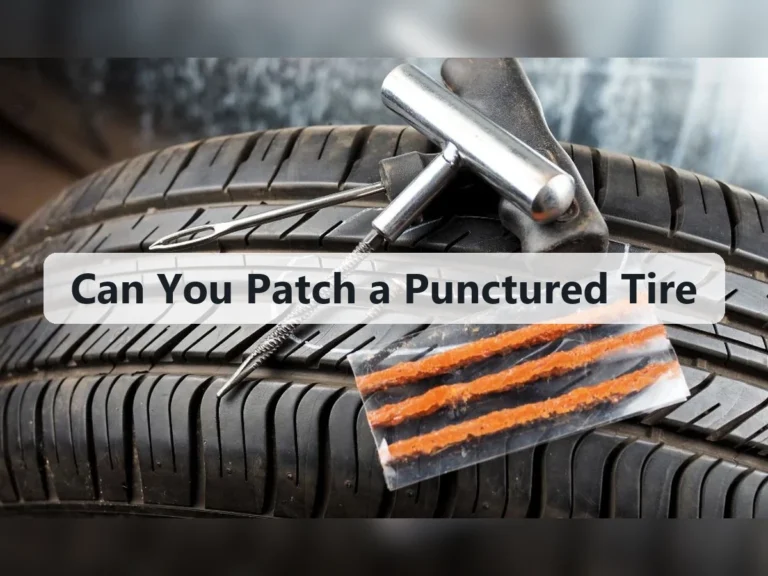
External rope plugs
An external rope plug is inserted through the tread from the outside. It can quickly seal a nail or screw puncture, and it may be useful as an emergency measure when a driver needs to reach a repair facility.
A plug installed without removing the tire does not allow an inspection of the inner liner. It may also fail to seal the puncture correctly, especially if the hole was enlarged by driving, the object entered at an angle, or the tire has internal damage. For those reasons, a plug by itself should not automatically be treated as a permanent repair.
Internal patches
An internal patch is applied to the inside of the tire after the tire is removed from the wheel. It seals the inner liner but may not fill the puncture channel itself, depending on the repair design.
A patch can be appropriate in some situations, but the technician must prepare the inner liner correctly and make sure the damaged area is suitable. A patch placed over contamination, moisture, or an improperly prepared surface may lose adhesion.
Combination patch-plugs
A combination repair, often called a patch-plug, seals both the puncture channel and the inner liner. A stem passes through the hole while a patch sits against the inside surface, creating a more complete repair than an outside-only plug.
For many ordinary tread punctures, a properly installed combination repair is the preferred permanent method. It still cannot make an unrepairable tire safe: a patch-plug does not restore a damaged sidewall, repair a separated belt, or reverse damage caused by driving on a flat tire.
Liquid sealants and temporary products
Liquid tire sealants are designed to slow or stop certain small leaks, but they are not a substitute for a professional inspection. Some products can interfere with tire-pressure monitoring sensors, complicate later repairs, or conceal a puncture that continues to damage the casing.
Follow the product instructions and tell the tire technician that sealant was used. A shop may need to clean the tire, inspect the wheel, and replace or service the sensor before completing a permanent repair.
Which tire punctures are usually repairable?
A puncture is usually a candidate for repair when it is small, located in the main tread area, and caused by a relatively straight penetration such as a nail or screw. The tire must also have adequate tread, no serious internal damage, and no disqualifying previous repairs.
Many tire-industry guidelines use approximately one-quarter inch, or 6 millimeters, as the upper limit for a typical puncture repair. That is a guideline rather than permission to repair every hole of that size, because the shape, angle, location, and condition of the tire also matter.
- The puncture is in the central tread area, away from the shoulder and sidewall.
- The hole is within the repair size allowed for that tire and repair system.
- The tire has not been driven for an extended distance while flat or severely underinflated.
- The casing, belts, bead, and inner liner are free from serious damage.
- The tire has sufficient tread and is not excessively aged, cracked, unevenly worn, or otherwise deteriorated.
- Previous repairs are intact, properly spaced, and not overlapping the proposed repair.
A puncture should be evaluated after the object is removed, not merely judged by the visible nail or screw. A thin screw can create a longer or irregular hole, while a sharp object may enter at an angle and damage more material than expected.
Why tread depth and tire condition affect repair decisions
A patch does not restore worn rubber. If the remaining tread is close to the replacement limit, repairing the puncture may provide little practical value because the tire will soon need replacement for wear.
Uneven wear can also indicate alignment, suspension, balancing, or inflation problems. Those problems should be corrected rather than ignored, or the repaired tire may continue to wear abnormally and develop another failure.
When should a punctured tire be replaced instead?
A tire should generally be replaced rather than patched when the damage is in the sidewall or shoulder, exceeds the approved repair size, involves a cut or tear, or reveals internal structural damage. Replacement is also the safer choice when the tire has been run flat, is severely worn, or has multiple repairs that compromise the repair area.
Sidewall and shoulder damage
The sidewall flexes repeatedly as the tire rolls and carries the vehicle’s load. A repair in this area may not withstand that movement, so sidewall punctures, bulges, cuts, and impact damage are normally considered nonrepairable.
The shoulder is the curved transition between the tread and sidewall. It experiences substantial flexing during cornering, and a puncture near this transition may be unsafe even if part of the hole appears to be under the tread grooves.
Large, irregular, or angled punctures
A hole larger than the permitted repair size removes too much rubber and may damage the reinforcing structure. An elongated cut, torn hole, or puncture created by a sharp object at an unusual angle can be unsafe to seal with ordinary repair materials.
Do not enlarge a small puncture with a reamer or assume that a larger repair kit makes the tire suitable. The repair method must match the tire’s construction and the manufacturer’s instructions.
Damage from driving underinflated
Driving even a short distance on a severely underinflated tire can cause the sidewalls to flex excessively. That heat and flexing can damage the inner liner and cords, sometimes leaving a faint abrasion or powder-like debris inside the tire.
Because this damage may not be visible from the outside, the tire must be removed from the wheel for inspection. If the inner liner shows signs of scuffing, creasing, overheating, or exposed structural material, patching the original puncture will not make the tire safe.
Bulges, bubbles, cracks, and exposed cords
A bulge or bubble in the sidewall usually indicates damaged internal cords. It cannot be repaired with a patch and may precede a sudden tire failure.
Deep cracking, exposed cords, separated tread, bead damage, or severe weather checking are also reasons to replace the tire. These conditions concern the tire’s overall structure rather than one isolated puncture.
How multiple patches affect tire safety
Multiple properly spaced repairs do not automatically make a tire unsafe. The risk increases when repairs are close together, overlap, occupy a large portion of the tread, or are added to a tire that already has age, wear, heat, or run-flat damage.
Each puncture removes material from the tread and inner liner. Each repair also creates a localized area with different stiffness and heat behavior, so a series of repairs can affect how the tire flexes even when every individual hole appears small.
Spacing between repairs
There is no single spacing measurement that applies to every tire and repair system. A qualified technician considers the tire’s dimensions, repair materials, puncture paths, and manufacturer guidance.
Two punctures far apart in the central tread may be repairable. Two punctures only a short distance apart may weaken the same tread section, particularly if the holes are angled toward each other or the repair materials overlap inside the tire.
Overlapping repairs
Overlapping repairs are a major concern because they can interfere with the tire’s inner-liner seal and concentrate stress in one area. A new patch should not simply be placed next to or over an old repair without determining whether the location remains structurally suitable.
If a new puncture occurs directly through a previous repair, replacement is often more sensible than attempting to repair the same spot again. The final decision depends on the repair design and professional inspection, but repeated work in one location has clear limitations.
Repairs on different tires
Having several repaired tires on the same vehicle is not automatically unsafe. Each tire should be evaluated individually, and the vehicle should still have matching size, load, speed, and inflation specifications across the axle as required by the vehicle manufacturer.
Differences in tread depth can affect handling, traction, and drivetrain stress, especially on all-wheel-drive vehicles. If one tire must be replaced, ask the tire professional how the new tire’s diameter and tread depth should be matched to the remaining tires.
How a professional should inspect and repair a punctured tire
A safe permanent repair requires more than finding the leak and covering it. The tire should be removed from the wheel, inspected inside and out, repaired with an approved method, reinflated, and checked for leaks before returning to service.
- Locate and identify the damage. The technician confirms the leak and removes the puncturing object when appropriate. The entry point, angle, hole size, and location are recorded.
- Remove the tire from the wheel. This allows inspection of the inner liner, belts, bead, and surrounding casing.
- Check the tire’s overall condition. The technician looks for run-flat damage, cuts, bulges, cracking, uneven wear, exposed cords, and previous repairs.
- Confirm repair compatibility. The puncture must fall within the permitted repair zone and size for the tire and repair system.
- Prepare the repair area. The inner liner and puncture channel are cleaned and prepared according to the repair material’s instructions.
- Install the approved repair. A suitable patch-plug or other permitted repair is applied without placing it over incompatible or damaged material.
- Reinflate and leak-test the tire. The repair and valve area are checked under pressure, and the tire is mounted correctly.
- Restore the vehicle’s specified pressure. Inflation pressure should be set using the vehicle manufacturer’s door-jamb or owner’s-manual specification, not the maximum pressure molded into the tire sidewall.
The technician may recommend replacement at any step. That is not necessarily an attempt to sell a tire; the internal inspection can reveal damage that cannot be seen while the tire remains mounted.
Why the tire must be removed for a proper repair
Inspection from the outside cannot reveal whether the puncture reached the inner liner cleanly or whether the tire was damaged while losing pressure. It also cannot show whether an earlier repair is separating or whether cords near the puncture have been disturbed.
Removing the tire adds labor, but it is the step that distinguishes a complete repair from a temporary exterior fix. A shop that refuses to inspect a questionable tire may be unable to evaluate the most important safety information.
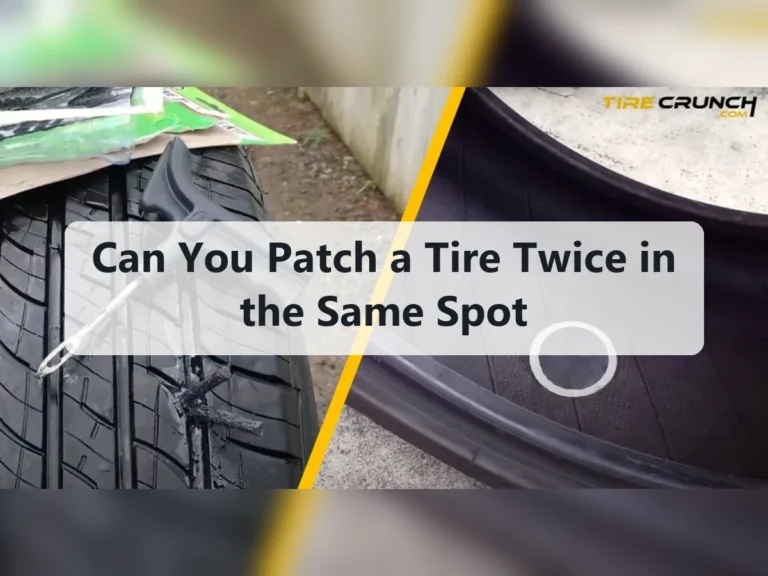
Can you patch a tire more than once in the same area?
A tire generally should not be repeatedly patched in the same small area. If a new puncture is close to or through an existing repair, the tire may have too little undamaged material for a reliable second repair.
The technician must identify the exact location of the old repair from inside the tire. A puncture that appears several millimeters away on the tread may follow an angled path and intersect the earlier repair internally.
Even if the two holes do not visibly overlap, repeated repairs can create a broad weakened zone. Replacement is usually the prudent option when the old and new repair areas cannot be kept clearly separate under the applicable repair instructions.
How tire age, heat, and use change the answer
The number of patches is only one part of a tire’s risk profile. Rubber ages from time, ultraviolet exposure, ozone, heat cycles, and use, while heavy loads and high speeds increase operating stress.
Older tires
A tire can look acceptable while its rubber and internal materials have aged. Check the tire identification number on the sidewall to determine its production date, then compare that age with the vehicle and tire manufacturer’s recommendations.
Age alone does not provide a universal replacement date for every tire, but an older tire deserves a more conservative inspection. Cracks, hardening, repeated air loss, or declining tread condition make another repair less attractive.
Heat and underinflation
Underinflation increases sidewall flexing, rolling resistance, and heat. That heat can accelerate wear and contribute to internal damage, particularly when the vehicle is heavily loaded or driven at highway speed.
After a repair, check pressure regularly with a reliable gauge. A tire that repeatedly loses pressure may have a valve, wheel, bead, or second puncture problem rather than a defective patch alone.
Heavy loads and severe use
Vehicles used for towing, hauling, long highway trips, commercial driving, or frequent high-speed travel place greater demands on the tire. A repair that might be acceptable for ordinary passenger use may deserve a more cautious decision under sustained heavy loads.
Always observe the vehicle’s load limits and the tire’s load rating. A repaired tire is not a reason to exceed either specification.
How to tell whether a repaired tire is losing air
A correctly repaired tire should maintain pressure, but a slow leak can develop at the repair, valve stem, bead, wheel, or another puncture. Any recurring pressure loss deserves prompt investigation.
- The tire-pressure warning light returns after the repair.
- The same tire needs noticeably more air than the others.
- You hear hissing or see bubbles during a soapy-water test.
- The repair material appears loose, raised, cracked, or damaged.
- The vehicle pulls, vibrates, or feels unstable after the repair.
- The tire develops a bulge, unusual wear pattern, or visible cracking.
Do not continue driving normally on a tire that is losing pressure. Inflate it only to the correct pressure if it is safe to do so, and arrange an inspection. If the tire is substantially flat or visibly damaged, use roadside assistance or a spare rather than driving on it.
How much does a tire patch or replacement cost?
A tire repair is usually less expensive than replacing a tire, but prices vary by location, tire size, repair method, vehicle, and whether additional services are needed. Some shops repair eligible punctures at little or no charge for tires purchased from them, while others charge a service fee.
Replacement cost includes more than the tire itself. Mounting, balancing, valve service, disposal, taxes, and possible tire-pressure monitoring sensor service may affect the total.
Cost should not be the only deciding factor when several repairs are already present. Replacing one tire may also create tread-depth or drivetrain-matching concerns, so ask whether the vehicle needs a pair, a matched set, or a tire shaved to match the remaining tires. The correct solution depends on the vehicle’s drivetrain and manufacturer requirements.
Common mistakes that make a tire repair less safe
Many tire-repair problems come from treating a quick seal as a complete inspection. Avoiding these mistakes helps preserve the tire and reduces the chance of a sudden pressure loss.
Using a plug as a permanent answer without inspection
An outside plug may stop air from escaping, but it does not prove that the inner liner and casing are undamaged. Have the tire inspected internally when a permanent repair is needed.
Repairing a shoulder or sidewall puncture
The location is more important than how small the hole appears. Do not accept a sidewall or shoulder repair merely because the puncture is slow or the tire has plenty of tread.
Leaving the nail or screw in place
The object may temporarily limit air loss, but it can also enlarge the hole as the tire rotates. Avoid pulling it out at home unless you are immediately prepared to use a safe temporary solution and reach a repair facility.
Ignoring the cause of repeated punctures
Repeated punctures may result from construction debris, a damaged road, a defective wheel, a valve leak, or a tire that is positioned too close to a hazard. If the same tire loses air again, inspect the entire assembly instead of adding another repair automatically.
Inflating to the number molded on the sidewall
The pressure molded into the sidewall is generally the tire’s maximum rated pressure, not the recommended pressure for the vehicle. Use the pressure listed on the driver’s door placard or in the owner’s manual unless a vehicle or tire manufacturer provides a specific alternative.
What to do after a tire has been repaired
Drive conservatively after a repair until you have confirmed that the tire is holding pressure and behaving normally. A professional repair should not cause vibration, pulling, or unusual handling.
- Check the repaired tire’s pressure when it is cold.
- Inspect the repair area and sidewall for obvious changes.
- Recheck pressure after driving and again over the next several days.
- Have the tire reexamined if the warning light returns or pressure drops.
- Maintain rotation, alignment, and balancing service according to the vehicle’s maintenance schedule.
Keep a record of where and when each repair was performed. This helps a technician evaluate spacing and repair history if another puncture occurs months later.
Do not assume a repair lasts for the life of the vehicle. The tire still needs ordinary inspections for tread wear, age, cracking, impact damage, and inflation problems.
When professional help is necessary
Professional inspection is necessary when the tire has been driven while flat, when damage is near the shoulder or sidewall, when there is more than one repair, or when the leak continues after a repair. It is also the safest choice when you cannot determine the tire’s age, condition, or repair history.
A qualified technician can remove the tire, identify hidden damage, measure the puncture, compare the repair location with manufacturer limits, and determine whether the remaining tread matches the vehicle’s needs. A do-it-yourself plug kit cannot provide the same internal inspection.
Stop driving and seek immediate assistance if the tire has a bulge, exposed cords, a sudden pressure loss, severe vibration, a burning smell, or visible separation. These signs may indicate a structural problem rather than a simple puncture.
FAQ about patching a tire multiple times
Can you patch a tire twice?
Yes, a tire can sometimes be repaired twice if both punctures are small, properly separated, and in the repairable tread area. The tire must pass an internal inspection, and neither repair can overlap a previous repair or involve casing damage.
How many times can you patch a tire before replacing it?
There is no universal patch-count limit; replacement depends on repair location, spacing, size, tire condition, and manufacturer guidance. A tire with two acceptable repairs may be serviceable, while one with a single shoulder puncture or run-flat injury should be replaced.
Can a tire be patched in the same spot twice?
Repeatedly repairing the same small area is generally not recommended. A second puncture may intersect the original repair or leave too little sound material for a reliable seal, making replacement the safer option.
Is a plug or a patch better for a tire?
A properly installed internal patch-plug is generally more complete than an outside-only plug for a permanent repair. The best method still depends on the tire, puncture, and applicable repair instructions, and neither method is suitable for sidewall or structural damage.
Can you patch a tire near another patch?
A second repair may be possible only when it is sufficiently separated and the tire’s repair rules allow it. A technician must inspect the inside because apparent tread spacing may not reflect the puncture paths or the actual condition of the inner liner.
Can a run-flat tire be patched more than once?
Run-flat tires require special evaluation and may have stricter repair limits than standard tires. Driving on a run-flat after pressure loss can cause hidden internal damage, so the manufacturer’s instructions and a professional inspection are essential before any repair decision.
Can a tire with a nail be patched if it is still holding air?
It may be repairable, but holding air does not prove that the tire is safe or that the puncture is small enough. Leave the object alone if possible, check the pressure, and arrange a prompt inspection rather than continuing to drive normally.
Is it safe to drive on a patched tire?
A properly inspected and approved repair can be safe for normal use when the tire remains within its specifications. Monitor pressure and handling, and stop driving if the tire leaks, vibrates, develops a bulge, or shows other signs of failure.
Conclusion: decide by tire condition, not patch count
A tire can sometimes receive multiple repairs, but no fixed number guarantees safety. The decisive factors are the puncture’s position and size, the spacing and quality of previous repairs, the tire’s tread and age, and whether internal damage occurred.
Have any tire with multiple punctures, a shoulder or sidewall injury, a persistent leak, or a history of driving underinflated inspected from the inside. If the technician finds structural damage or an unsuitable repair zone, replacement—not another patch—is the responsible next step.