Can You Patch a Tire Twice in the Same Spot: Explained Clearly
Usually no. A tire repaired twice in the same spot should generally be replaced because repeated drilling and overlapping repairs can weaken the structure and prevent a reliable seal.
Deciding whether to repair or replace a tire is not always obvious when the puncture looks small and the tire has already held air before A second leak.
If you are asking can you patch a tire twice in the same spot the important issue is not merely whether another patch can be attached It is.
- ✓A second repair in the same puncture area is generally not considered a dependable or safe long-term solution.
- ✓A proper repair requires removing the tire and inspecting the inside, not simply adding an outside plug.
- ✓Damage in the sidewall, shoulder, bead, or a large or irregular hole usually calls for replacement.
- ✓A separate repair elsewhere may be possible if the tire meets safety, age, tread, and damage requirements.
Can You Patch a Tire Twice in the Same Spot?
In most cases, a tire should not be patched twice in the same spot. The safer recommendation is to replace the tire, particularly when the first repair involved enlarging, cleaning, or drilling the puncture channel.
A permanent tire repair normally uses a combination repair unit a plug fills the injury channel while a patch seals the inner liner Repeating that process in the.
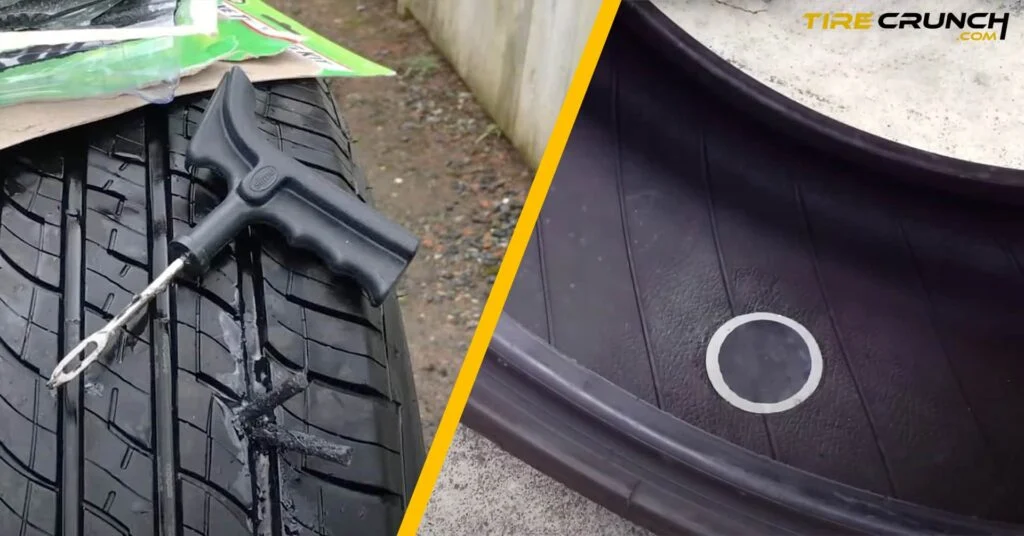
- Same injury: A second repair may overlap the original channel rather than restore untouched rubber.
- Hidden damage: The inner liner and reinforcing cords may be damaged beyond what an outside inspection shows.
- Temporary fixes: An exterior plug can stop air loss temporarily but does not make repeated repair safe.
- Best decision: Have the tire dismounted and inspected before deciding whether it can remain in service.
Why repeating a repair creates a problem
Every puncture repair changes the tire A technician must remove loose rubber and prepare the injury so the repair material can bond and fill the channel If the.
The repair also has to contain air pressure while the tire flexes, heats, and carries the vehicle’s weight. A patch that appears secure while the tire is stationary can leak or separate when the casing bends repeatedly on the road.
Patch versus plug: why the terms matter
Many drivers use patch to describe any tire repair but a plug and a patch do different jobs A plug fills the puncture from the outside A patch.
A properly performed internal repair usually combines both functions The tire is removed from the wheel inspected inside and out prepared correctly and repaired with a unit designed.
What Happens Inside a Tire After the First Repair?
To understand why a second repair is questionable, it helps to look beyond the tread surface. A passenger tire contains layers of rubber, steel belts, body cords, an inner liner, and other components that work together to hold air and maintain shape.
A puncture can bend cut or separate those components even when the visible hole is tiny The first repair may seal the opening but it cannot reverse every.
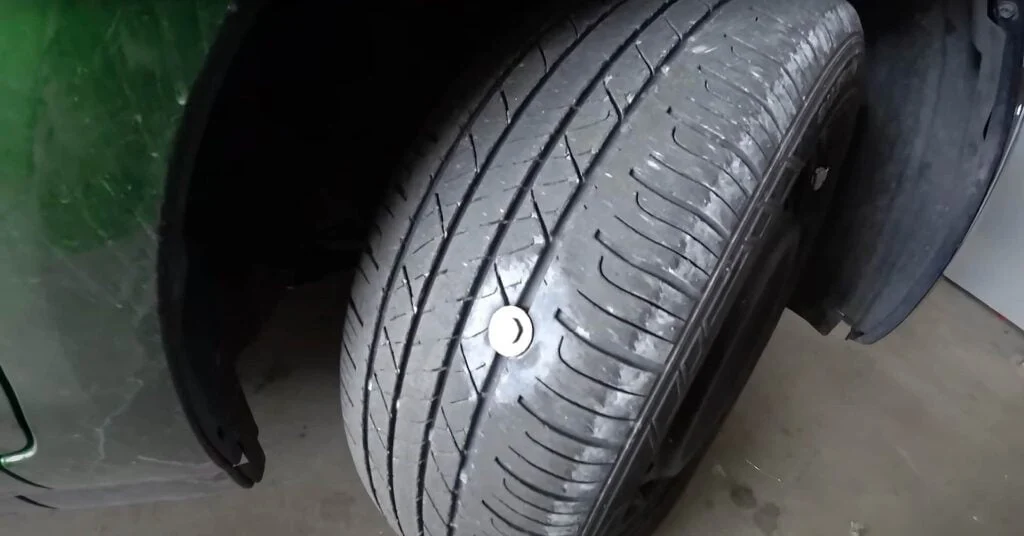
- Inner liner: Look for abrasion, wrinkling, scuffing, or evidence that the tire was driven without enough air.
- Cord condition: Exposed, cut, or distorted reinforcement means the casing may no longer be trustworthy.
- Repair area: Check whether the first repair is centered, secure, and free of bubbling or air loss.
- Heat damage: A tire driven flat or nearly flat may be unsafe even if the puncture itself is repairable.
The importance of the inner inspection
An external inspection can identify a nail, screw, bulge, or obvious tread injury, but it cannot reveal all internal damage. A technician must remove the tire from the wheel to examine the inner liner and determine whether the original repair was performed correctly.
This inspection is especially important after a repeat leak. Air may escape around the repair, through a damaged cord area, or from a different puncture nearby. The visible location of the leak does not always identify the full extent of the problem.
Why an old plug should not simply be pulled out
Removing an old plug can leave a larger, irregular, or contaminated channel. The original repair material may also be bonded to surrounding rubber. Trying to extract it aggressively can enlarge the injury or damage the liner, making a proper repair less likely.
A tire professional may determine that the tire can be repaired only if the injury and the surrounding structure meet all applicable repair requirements. If the old repair has compromised the area, replacement is the prudent option.
Does a slow leak always mean the patch failed?
No. A slow leak can come from the valve stem, wheel rim, bead seal, a second puncture, or corrosion on the wheel. It can also result from a repair that was not prepared or installed correctly.
That is why adding another patch without finding the source is poor troubleshooting. The tire should be checked with an approved leak-detection method, and the wheel and valve should be inspected along with the repair.
When Is a Tire Repair Acceptable?
A tire may be repairable when the injury is limited to the repairable area of the tread is within the permitted size and has not damaged the internal.
Repairability is not determined by the hole alone. Tread depth, tire age, prior repairs, load and speed requirements, run-flat history, and the condition of the casing all influence the decision. This distinction matters when answering “can you patch a tire twice in the same spot”.
- Location: The injury should be in the central tread area, not the sidewall or shoulder.
- Shape and size: A small, clean puncture is more promising than a cut, tear, or irregular hole.
- Condition: There should be no bulge, exposed cord, separation, severe wear, or run-flat damage.
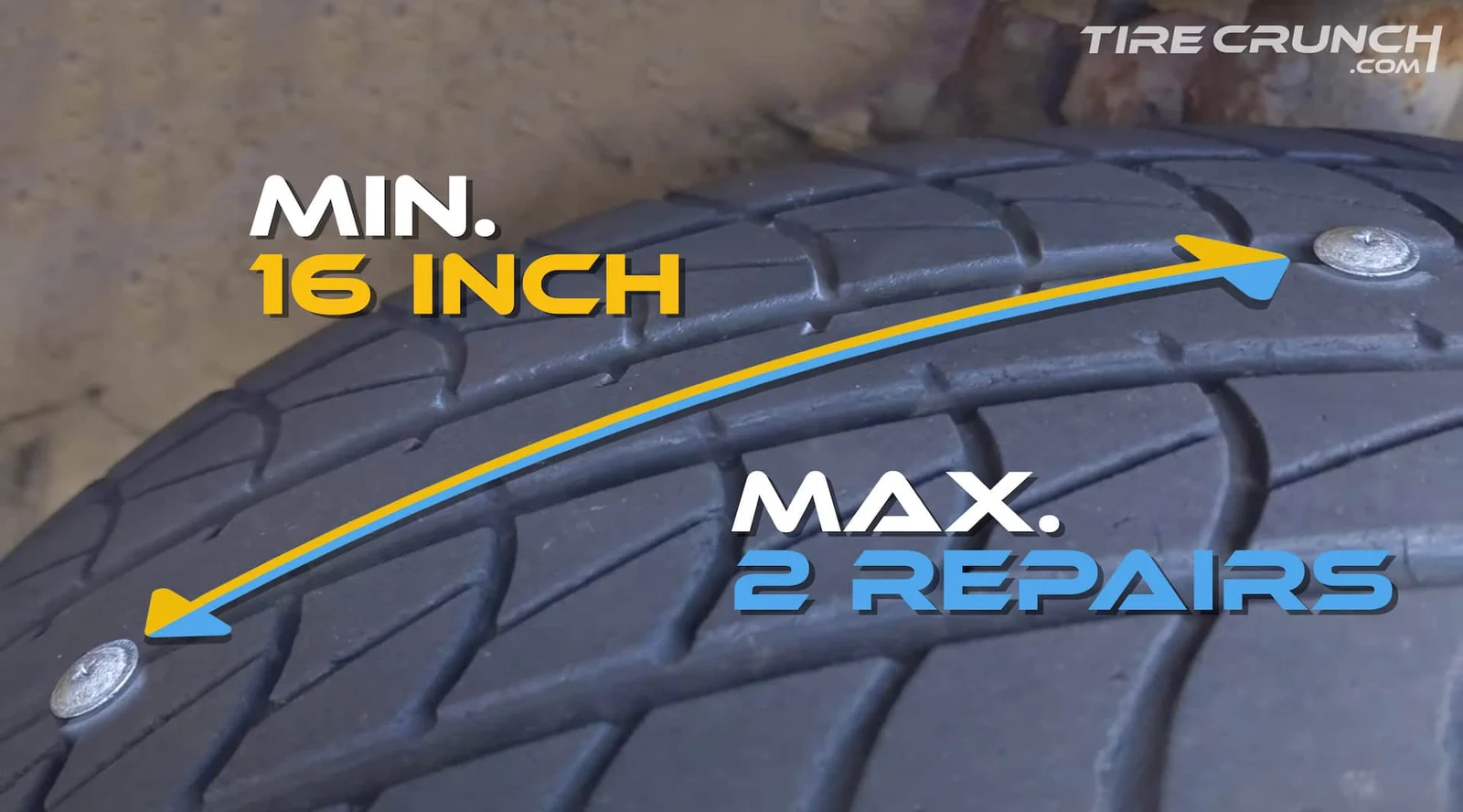
- Repair history: Existing repairs must be spaced appropriately and must not overlap or compromise each other.
Central tread versus shoulder damage
The central tread area is designed to contact the road and generally has more suitable material for a repair. The shoulder curves toward the sidewall and flexes more, so a puncture there is exposed to greater movement and stress.
Damage that reaches the shoulder or sidewall is usually not safely repairable. A plug may appear to hold air in that location, but the tire’s flexible side structure is not an appropriate foundation for a permanent repair.
Size, angle, and type of injury
A narrow puncture from a small nail is different from a long cut caused by broken metal or a pothole impact. A puncture that entered at an angle may create a longer internal channel than its surface opening suggests.
Some injuries also damage the belt package or create a separation under the tread. If the tire has a bulge, vibration, unusual tread distortion, or a repeating thumping sound after the incident, it should not be treated as an ordinary puncture.
How previous repairs affect the decision
A tire can sometimes have more than one repair when each repair is in a suitable part of the tread, properly spaced, and performed according to the tire maker’s or repair professional’s limits. That situation is different from repairing the same injury twice.
Previous repairs reduce the available margin for error. If a new puncture is close to an old one, the technician must determine whether the injuries overlap internally. Two holes that look separate on the outside may affect the same belt or casing region.
Why an Outside Plug Is Not a Safe Second Repair
An exterior plug is useful as an emergency measure in some roadside situations but it is not automatically a permanent repair It may temporarily limit air loss long.
Using an outside plug as the second repair can hide a failed first repair and prevent proper inspection It also leaves the technician unable to assess the inner.
- Do not stack plugs: Inserting a new plug beside or through an old one does not restore damaged tire structure.
- Check pressure first: Never drive on a tire that is visibly low, bulging, shredded, or losing air rapidly.
- Use the spare when needed: A spare is safer than testing whether a questionable repair will hold.
- Limit emergency driving: Go only to a qualified repair facility when the tire is suitable for cautious travel.
When a temporary plug should not be used
Do not rely on an exterior plug when the puncture is in the sidewall or shoulder the tire has been driven flat the tread is separating or the.
If you cannot maintain pressure, the vehicle should not be driven to the shop. Request roadside assistance or use the vehicle’s spare according to its instructions.
Why inflation pressure matters after any repair
Correct inflation supports the tire’s load capacity and controls flexing. Underinflation increases heat and sidewall movement, placing extra stress on a repaired area. Overinflation can reduce the contact patch and make the vehicle less stable over uneven surfaces.
Use the vehicle manufacturer’s recommended cold pressure listed on the driver-door placard or in the owner’s manual, not the maximum pressure molded into the tire sidewall. Check pressure with a reliable gauge when the tire is cold.
Can a Tire Be Repaired Again Somewhere Else?
Possibly, but the answer depends on where the new injury is and what the internal inspection finds. A new, separate puncture in the acceptable central tread area may be repairable even if the tire has an older repair elsewhere.
That does not mean every tire with two repairs is safe The repairs must not overlap the tire must have adequate remaining tread and sound casing and the.
- Separate tread injuries: May be considered individually if they are properly spaced and structurally sound.
- Same injury twice: Usually calls for replacement because the original area has already been disturbed.
- Nearby injuries: Require careful internal inspection because channels or belt damage may overlap.
- Sidewall or shoulder injury: Normally cannot be made safe with a patch or plug.
Questions to ask the tire shop
A good inspection should produce a clear explanation rather than a simple yes or no. Ask whether the tire was dismounted, whether the inner liner shows run-flat damage, and whether the new injury is separate from the first repair. Keep these limitations in mind when considering “can you patch a tire twice in the same spot”.
- Ask the technician to identify the exact source of the leak.
- Confirm whether the existing repair is a proper internal repair or only an exterior plug.
- Ask whether any cords, belts, bead components, or sidewall areas are damaged.
- Ask whether the tire meets the shop’s repair policy and the tire maker’s restrictions.
- Request a replacement recommendation if the repair area has been enlarged or weakened.
When replacing only one tire is complicated
Replacing one tire can create a tread-depth difference on the same axle or drive system. The acceptable solution depends on the vehicle, drivetrain, tire type, remaining tread, and manufacturer guidance.
On some all-wheel-drive vehicles, even a modest difference in tire circumference can place stress on the driveline. Before buying one replacement tire, ask whether the tire should be matched, shaved, or replaced as a pair or set. The correct answer is vehicle-specific.
Signs the Tire Should Be Replaced
Replacement becomes the safer choice when the tire has structural damage, an unrepairable location, or a repair history that leaves too little sound material. The cost of a tire should be weighed against the consequences of a sudden loss of pressure at highway speed.
A tire that repeatedly loses air deserves attention even if the tread still looks deep. Continuing to refill it without finding the cause can allow heat damage, wheel damage, and progressive casing deterioration.
- Repeated pressure loss: The tire needs frequent inflation after a repair.
- Visible bulge or bubble: This can indicate damaged internal cords and is not fixed by a patch.
- Exposed or cut cords: Structural reinforcement has been compromised.
- Vibration or pulling: The tire or wheel may have impact or internal damage.
- Repair overlap: A second repair intersects the first hole or repair material.
Damage from driving underinflated
A punctured tire can lose pressure gradually while the driver continues normally. As pressure drops, the sidewalls flex more and generate heat. The inner liner may develop abrasion marks or a ring of damage that cannot be seen while the tire remains mounted.
If the tire was driven a substantial distance after the pressure warning appeared, tell the technician. That history can change a repairable puncture into a replacement situation.
Age, wear, and condition still matter
A puncture repair does not make an old or worn tire new again. Tires with very low tread, uneven wear, weather cracking, dry rot, or repeated impact damage may not have enough remaining service life to justify another repair.
Check the tire’s date code and overall condition, but do not use age alone as the only decision. A qualified inspection should consider the tire’s environment, storage, mileage, load history, and visible deterioration.
Common Mistakes After a Repeat Puncture
Most problems occur when a driver treats a repeat leak as a minor inconvenience instead of a structural inspection issue. The tire may still look normal, but the repair history and pressure loss deserve a closer look.
Small shortcuts can also make later diagnosis harder. For example, sealant poured into the tire may interfere with inspection, affect the wheel, or conceal the location of the leak.
- Adding another rope plug: This treats the symptom without confirming the condition of the casing.
- Using a patch alone: A patch that does not fill the injury channel may not be a complete repair.
- Driving while low: Low pressure can cause damage beyond the original puncture.
- Ignoring the wheel: A bent rim, cracked wheel, or leaking valve can mimic a tire repair failure.
Do not judge safety by how long the first repair lasted
A tire that held air for months after its first repair is not automatically suitable for a second repair. The original repair may have worked exactly as intended, while the new leak has created a separate problem or weakened the same area.
Likewise, a repair that failed quickly does not prove the tire itself is the only problem. Incorrect preparation, a damaged valve, a bead leak, or a wheel issue may be involved. Inspection is more useful than guessing from the repair’s age.
Do not confuse a warranty question with a safety decision
If a repair failed, ask the shop whether its workmanship or repair materials are covered. That may help resolve the cost, but warranty coverage does not change whether the tire is safe to drive.
Have the tire evaluated before seeking reimbursement or attempting another repair. A tire can be unsafe regardless of who pays for the replacement.
FAQ: Can You Patch a Tire Twice in the Same Spot?
Can you patch a tire twice in the same spot if it is leaking slowly?
Usually not. A slow leak does not make the repeated repair safe because the original puncture channel and surrounding structure may already be enlarged or weakened.
Have the tire dismounted and inspected. If the leak comes from the same repair area, replacement is commonly the safer recommendation.
Can a tire shop plug the same hole again?
A shop may be able to stop air loss temporarily, but inserting another plug is not the same as completing a safe permanent repair. Stacking or replacing plugs can leave an irregular channel and does not address internal damage.
Ask for an internal inspection and a recommendation based on the tire’s casing condition rather than requesting another plug automatically.
Is a patch safer than a plug for a second repair?
Neither a patch alone nor a plug alone automatically makes a second repair safe. A proper permanent repair normally addresses both the puncture channel and the inner liner, and the tire must be structurally suitable first.
If the same area has already been repaired, even the correct repair materials may not restore adequate strength. Replacement may be the appropriate solution.
Can a tire have two patches in different spots?
Sometimes. Two separate repairs may be acceptable when both injuries are in the repairable tread area, properly spaced, within size limits, and surrounded by sound casing.
A technician must inspect the tire inside and out. Two visible holes are not necessarily two independent injuries if they are close enough to affect the same internal structure.
Can you repair a tire after driving on it flat?
Often, no. Driving while flat or severely underinflated can damage the inner liner and cords through heat and sidewall flexing, even if the puncture itself is small.
The tire must be removed from the wheel for inspection. Do not assume that restoring air pressure makes it safe to drive.
Can a sidewall puncture be patched twice?
No. Sidewall punctures are generally not considered safely repairable, whether they are repaired once or repeatedly. The sidewall flexes heavily and contains structural components that a patch cannot reliably restore.
Replace the tire and inspect the wheel if the damage followed an impact.
How far can you drive on a tire with a temporary plug?
Only as far as necessary to reach a qualified tire professional and only if the tire is holding pressure has no structural damage and is suitable for cautious.
If pressure falls quickly or the tire has a bulge, cut, or sidewall damage, do not drive it. Use a spare or request roadside assistance.
Conclusion
So, can you patch a tire twice in the same spot? In most situations, you should not. Reworking the same puncture can enlarge the injury, disturb internal reinforcement, and produce a repair that appears sealed but cannot safely withstand normal flexing and heat.
A separate tread puncture may still be repairable but only after a qualified technician removes the tire and checks the casing inner liner repair history location size and.
Stop adding plugs, check the tire’s pressure, and have the tire dismounted for an internal inspection before driving farther or approving another repair.