Can You Patch a Punctured Tire: What to Know and Why It Matters
Yes, a punctured tire can often be patched if the damage is small, limited to the tread, and the tire’s internal structure is sound. Sidewall damage, large holes, worn tread, or driving on a flat tire usually require replacement.
Deciding whether to repair a tire is not as simple as spotting a nail and buying a plug kit You first have to identify where the puncture is.
In this guide you will learn how to inspect a punctured tire distinguish a proper patch from a temporary plug understand the situations that make repair unsafe and. This guide examines “can you patch a punctured tire” and explains the details that matter in practice.
- ✓A repair is generally possible when the puncture is in the central tread area and is small enough for an approved repair.
- ✓A patch alone is not the preferred permanent repair; a properly installed internal patch-plug seals the injury and fills the puncture channel.
- ✓Sidewall and shoulder damage, exposed cords, large cuts, bead damage, and severe wear are strong reasons to replace the tire.
- ✓Driving on a tire with little or no air can create internal damage that cannot be judged reliably from the outside.
- ✓A plug kit may provide emergency mobility, but it should not substitute for a proper inspection and permanent repair.
Can You Patch a Punctured Tire Safely?
Yes but only when the injury meets several safety conditions The puncture should normally be in the repairable portion of the tread relatively small and free from signs.
A professional repair usually involves removing the tire from the wheel so the inside can be inspected The technician locates the full injury checks the inner liner prepares.
- Location: The injury should be in the main tread area, not the sidewall or outer shoulder.
- Condition: The inner liner, cords, bead, and surrounding rubber must remain structurally sound.
- Size: The hole must fall within the repair limits used by the tire manufacturer or repair professional.
- History: Previous repairs, extended driving while flat, and severe underinflation can disqualify an otherwise small puncture.
The exact repair limits can vary by tire design and professional policy so a visual small hole does not guarantee that the tire is repairable When safety is.
Where a Tire Puncture Can Be Repaired
The safest repair area is generally the central tread where the tread pattern is intended to contact the road and the tire has a relatively stable reinforced structure.
The boundary between the tread and sidewall is called the shoulder It flexes more than the center tread during cornering and is not usually considered a reliable repair.
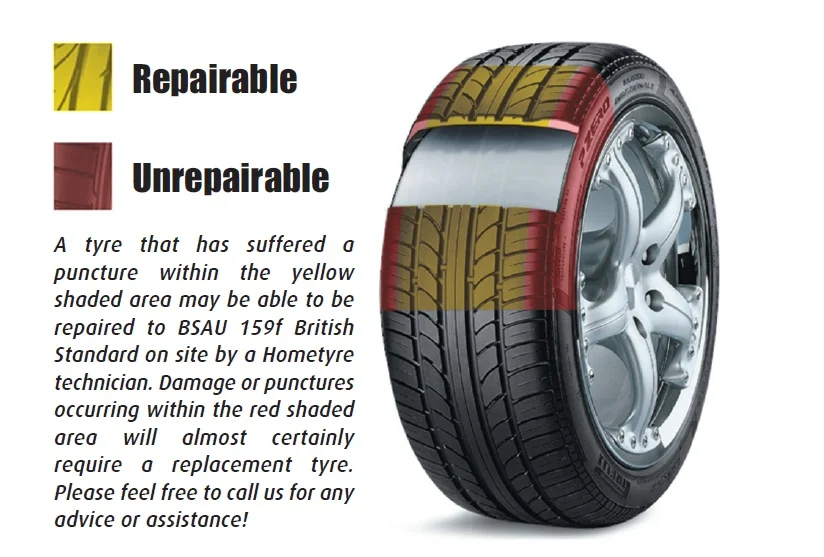
- Center tread: Often the best candidate for a permanent repair when all other conditions are favorable.
- Outer shoulder: Usually not repairable because this area flexes heavily and carries significant cornering stress.
- Sidewall: Do not patch as a road-use repair; sidewall damage can affect the tire’s load-bearing structure.
- Bead area: Damage near the rim seal can cause leaks and may require tire replacement or specialized evaluation.
Why sidewall punctures are different
The sidewall is designed to flex as the vehicle moves over bumps turns and uneven pavement It does not have the same tread thickness or repair characteristics as.
Sidewall damage can also involve the tire s cords even when the cut looks shallow Because those cords help carry the vehicle s load a sidewall patch is.
Shoulder punctures and borderline locations
A puncture near the outer tread ribs deserves careful attention The closer the injury is to the shoulder the more likely the tire will flex around the repair.
If the object entered at an angle the visible hole may not show the full damage Removing the object can reveal a longer channel a torn opening or.
Patch, Plug, or Patch-Plug: What Is the Difference?
The words patch and plug are often used interchangeably but they describe different repair methods A plug is inserted from the outside to fill the puncture channel A.
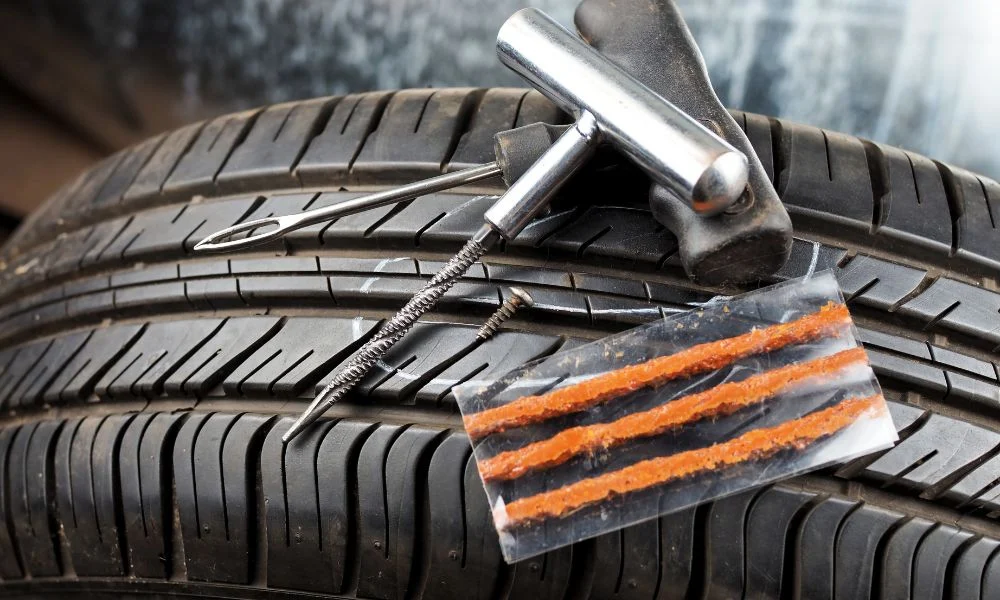
An external plug can be useful as a temporary measure when you are stranded and need to reach a repair facility However installing it without removing the tire.
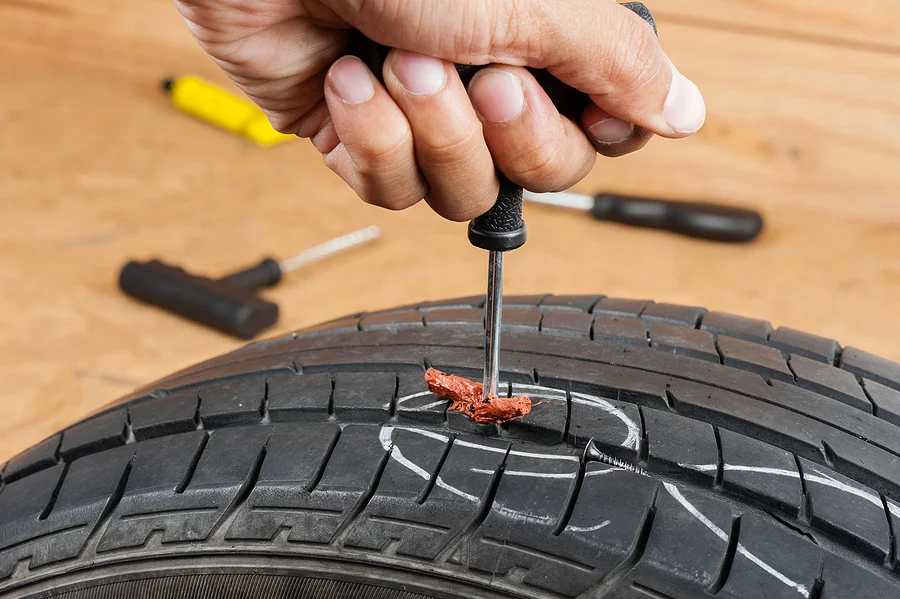
- External plug: Installed through the tread from outside; convenient for emergencies but limited as a final repair.
- Internal patch: Seals the inside surface but may not fill the puncture channel by itself.
- Patch-plug: Seals the inner liner and fills the injury path, making it the more complete repair approach.
- Tire sealant: A liquid emergency product, not a substitute for inspecting and permanently repairing the tire.
Why an internal inspection matters
The inside of a tire can show damage that is invisible from the outside. If the tire was driven while underinflated, the sidewall may have folded against itself and generated heat. This can produce abrasion, rubber dust, wrinkles, or broken cords inside the casing.
A repair inserted from the outside cannot restore that structure. Even a perfectly installed plug will not make a heat-damaged tire safe. This is why a professional may remove a tire that appears to have a simple nail puncture before agreeing to repair it.
When a plug kit is appropriate
A plug kit can be useful for temporary roadside mobility when the puncture is in the tread and the tire still appears stable enough to handle the procedure.
Do not use a plug kit as permission to ignore warning signs A tire that continues losing pressure has a large opening shows sidewall damage or was driven.
When a Punctured Tire Should Be Replaced
Replacement is the safer choice when the puncture affects the sidewall or shoulder the hole is too large or irregular or the tire has structural damage Replacement may.
A tire can lose its repairability even when the puncture itself is small The surrounding rubber may be weakened by age heat improper inflation impact damage or an.
- Sidewall or shoulder injury: A puncture, tear, cut, or bulge in these areas is not a normal patch candidate.
- Visible cords: Exposed or damaged reinforcing material indicates serious structural compromise.
- Flat-tire driving: Heat and flexing may damage the casing beyond what an outside inspection can reveal.
- Severe wear or aging: A repair does not restore tread depth, rubber flexibility, or overall service life.
- Repeated leakage: Continuing air loss after repair suggests a leak, damaged wheel, valve problem, or failed repair.
Damage from driving while flat
One of the most important questions is not simply “Can you patch a punctured tire?” but “What happened after it lost air?” A tire that was driven several miles while visibly deflated may have suffered internal scuffing, even if the puncture was initially repairable.
Low pressure allows the sidewalls to bend excessively and increases heat buildup The tire may then develop internal separations or weakened cords Because these problems can appear later tell the technician.
Tread depth, age, and overall condition
A patch cannot make a worn tire suitable for continued use. Tires with very little tread may have reduced wet-road traction, and a puncture repair may not be worthwhile when the tire is close to replacement for normal wear.
Inspect for dry rot, fine cracks, uneven wear, impact marks, and bulges. The date code molded into the sidewall can help identify the tire’s age, but age is only one factor. Storage conditions, climate, inflation history, and use all affect rubber condition.
Run-flat and specialty tires
Run-flat tires require special attention because they may be driven for a limited distance after losing pressure depending on the design and vehicle instructions That capability does not.
Self-sealing, low-profile, high-performance, and other specialty tires may have their own repair requirements. Check the tire maker’s guidance and the vehicle owner’s manual. A conventional repair assumption may not apply to a tire with unusual construction or a specialized mobility system.
This distinction matters when answering “can you patch a punctured tire”.
How to Inspect a Punctured Tire Before Driving
If you discover a low tire, begin with safety rather than diagnosis. Move away from traffic if possible, turn on hazard lights, and avoid kneeling or working near moving vehicles. Do not remove the nail or screw immediately; the object may be slowing the leak.
Look at the tire s position on the vehicle and compare it with the recommended cold inflation pressure listed on the driver s door placard or in the.
- Find the object: Note whether it is in the center tread, near the shoulder, or in the sidewall.
- Check the shape: Look for a clean puncture versus a cut, tear, bulge, or separated tread area.
- Assess pressure: A tire that is rapidly collapsing or cannot hold air should not be driven normally.
- Look for secondary damage: Check the wheel, valve stem, and sidewall for impact marks or cracking.
Use soapy water to locate a leak
If the tire has enough pressure for safe handling and the vehicle is in a secure location a small amount of soapy water can help identify escaping air.
This test does not prove that the tire is repairable. It only helps locate escaping air. A wheel can be bent, corroded, or cracked, and a valve core can leak independently of the tread puncture.
Know when not to drive
Do not continue driving on a tire that is visibly flat, repeatedly loses pressure, has a sidewall bulge, or makes thumping and vibration noises. Driving may turn a manageable puncture into internal casing damage or create a loss-of-control risk.
Use the vehicle’s spare tire, a properly rated temporary mobility device, or roadside assistance when available. If the vehicle has no spare, follow the manufacturer’s instructions for its tire repair kit and mobility system rather than improvising with unsuitable equipment.
What a Proper Tire Repair Involves
A proper repair starts with removing the tire from the wheel. The technician can then locate the injury from both sides, inspect the casing, measure the opening, and determine whether the puncture falls within the approved repair zone.
The puncture channel is prepared so the repair material can bond correctly The inner liner is cleaned and buffed as appropriate for the repair system and a compatible.
- Full inspection: The tire is removed so hidden inner-liner or casing damage can be evaluated.
- Correct preparation: Contamination, moisture, and poor surface preparation can prevent the repair from sealing.
- Proper placement: The repair must be centered in the injury and remain within the permitted tread zone.
- Leak test: The repaired area, valve, bead, and wheel should all be checked before the vehicle returns to service.
Why some quick repairs fail
A repair can leak if the puncture was not fully cleaned the material was the wrong size the rubber was wet or contaminated or the injury was actually.
Another failure point is misdiagnosis. The visible tread puncture may not be the only leak. If air continues to escape after a repair, inspect the valve, bead seal, wheel, and nearby tread rather than repeatedly adding sealant.
After the repair
Check the pressure again when the tire is cold and monitor it over the next several days. A gradual pressure change caused by temperature is normal, but a repeated drop suggests a leak or another maintenance issue.
Pay attention to steering pull, vibration, unusual noise, or a tire-pressure warning. These symptoms do not automatically mean the repair failed, but they justify stopping and having the tire and wheel checked.
Common Mistakes That Make a Tire Repair Riskier
Many avoidable problems occur because drivers treat a puncture as a simple hole rather than a failure in a highly stressed safety component The most common mistake is.
Another mistake is using a repair product without checking the injury location. A plug cannot turn a sidewall cut into a safe repair, and sealant cannot restore damaged cords. Temporary products have a role, but their limitations must remain clear.
- Removing the object first: Pulling out a nail can make a slow leak much faster before help is available.
- Judging by appearance: Hidden internal damage may exist even when the tread looks normal.
- Ignoring pressure: A repaired tire still needs the correct inflation pressure and regular monitoring.
- Stacking repairs: Multiple nearby repairs can weaken the same section of tread and may exceed accepted limits.
Using tire sealant as a permanent solution
Sealant may temporarily close a small leak, but it can make later inspection more difficult and may be incompatible with tire-pressure sensors or certain tire constructions. It also does not address cuts, casing damage, bead leaks, or sidewall injuries.
If you use sealant because you are stranded, tell the repair facility what product was used. The tire may need cleaning, sensor service, or replacement depending on the product and the condition of the tire.
Ignoring a slow leak
A slow leak is not harmless simply because it takes days to lower the pressure. Underinflation increases heat, changes handling, and accelerates shoulder wear. It can also indicate a bent wheel, damaged valve, bead leak, or an earlier repair that is no longer sealing.
Measure pressure regularly with a reliable gauge and investigate repeated pressure loss promptly. Replacing a valve or repairing a wheel may be necessary even when no new puncture is visible.
How Repair Affects Safety, Handling, and Tire Matching
A correctly repaired tread puncture should allow the tire to return to normal service, but the vehicle still needs proper inflation, wheel balance, and alignment. If the puncture resulted from a pothole or road impact, inspect the wheel and suspension for related damage.
On vehicles with all-wheel drive, replacing one tire can create a tread-depth difference that matters to the drivetrain. The acceptable difference depends on the vehicle and tire maker. A repair may preserve matching tread, while replacement of only one tire may require special consideration.
- Pressure: Inflate the tire to the vehicle manufacturer’s recommended cold pressure.
- Balance: Rebalance if the tire was removed, repaired, or if vibration develops.
- Alignment: Investigate uneven wear or pulling after a pothole or curb impact.
- Drivetrain: Check replacement-tire requirements for all-wheel-drive and four-wheel-drive vehicles.
A repaired tire should not be treated as a reason to postpone ordinary maintenance Rotate tires according to the vehicle or tire maker s guidance inspect tread regularly.
Frequently Asked Questions About Tire Puncture Repairs
Can you patch a punctured tire more than once?
Sometimes, but it depends on the location, spacing, number, and quality of earlier repairs. Multiple repairs close together can weaken the tread section, and a tire with an unsuitable previous repair may need replacement.
Each repair should be evaluated after the tire is removed. Do not assume that an unused portion of the tread is available simply because the new puncture is in a different spot.
Is a nail in the tread always patchable?
No. A nail in the central tread is often a good repair candidate, but the hole may be too large, angled, or torn. The tire may also have been driven underinflated or may already be too worn for repair.
Leave the nail in place until the tire can be inspected if possible. It may be slowing the leak and preserving information about the injury’s size and direction.
Can a tire be patched while it is still on the car?
An external plug can be installed without removing the tire, but that is generally an emergency or temporary approach rather than a complete inspection. A permanent repair should allow the inside of the tire to be examined.
Removing the tire also helps identify hidden liner damage, additional leaks, and problems at the bead or wheel. It is the more reliable way to decide whether the casing remains safe.
Can you patch a punctured tire with a nail near the sidewall?
Usually not if the injury is in the shoulder or sidewall. These areas flex significantly and may contain damaged cords, so an external plug or internal patch is not considered a dependable restoration of the tire’s strength.
Have the exact location evaluated rather than relying on the position of the nail head. The puncture channel may extend farther than the visible entry point suggests.
How long can you drive on a plugged tire?
That depends on the plug, tire, injury, and manufacturer guidance, but an outside plug should generally be viewed as temporary until a proper inspection is completed. Drive only as needed to reach a safe repair facility, at appropriate speeds and with the tire correctly inflated.
Stop if the tire loses pressure, vibrates, pulls, or shows new damage. A plug that appears stable does not prove that the casing is undamaged.
Does a patch make a tire as good as new?
A proper repair can restore a suitable tread puncture to safe service, but it does not erase the tire’s age, wear, previous damage, or operating history. The repaired tire remains subject to the same inflation and inspection requirements as before.
A repair also cannot restore a damaged sidewall, broken cords, severe heat damage, or a worn-out tread. Those conditions call for replacement rather than patching.
Should I replace a tire after driving it flat?
Not automatically, but the tire must be inspected internally before a repair decision is made. Driving flat or severely underinflated can create heat and abrasion damage that is not visible from the outside.
Tell the technician how far the tire was driven and whether the pressure warning was active. That history can be as important as the puncture’s location.
Conclusion
Can you patch a punctured tire? Often, yes—when the damage is a small central-tread puncture and the tire has no hidden structural problems. A proper internal inspection and patch-plug repair are safer than relying on an outside plug alone.
Do not repair sidewall or shoulder damage, a severely worn tire, a tire with exposed cords, or one that was driven extensively while flat. When the decision is uncertain, preserving mobility is less important than confirming that the tire can safely carry the vehicle.
Keep the puncturing object in place if practical, check the tire’s pressure and location, and arrange a professional internal inspection before making a repair-or-replace decision.