Are Fender Flares Universal: Key Facts and Helpful Explanations
No, fender flares are not universal. They are made for specific vehicle shapes, mounting points, and wheel-opening dimensions, although some universal flares can be trimmed and adapted. This guide examines “are fender flares universal” and explains the details that matter in practice.
That distinction matters because the wrong set can waste money, leave gaps around the body, rub against the tire, or create a loose panel that becomes a safety problem. A flare may look close enough in a product photo but still fail to follow the contour of a particular truck, Jeep, SUV, or aftermarket fender. Even a small mismatch can complicate drilling, door clearance, liner placement, and compliance with local equipment rules.
This article explains why fitment varies, how vehicle-specific and universal designs differ, what to measure before buying, and which installation issues deserve extra caution. You will learn how wheel offset, tire width, suspension changes, body style, and mounting hardware affect the decision, plus how to identify a practical match instead of relying on a vague “universal” label.
Are Fender Flares Universal?
Most fender flares are not universal in the literal sense. They are usually designed around the body lines and wheel arches of a particular make, model, year range, cab configuration, or bed length, while universal products are intended to fit a wider range through trimming and custom positioning.
A proper flare covers the outer edge of the wheel opening and follows the body without excessive tension. It must also leave room for steering movement, suspension travel, doors, tailgates, and the inner wheel well. Those requirements make exact fitment more important than a flare’s advertised width alone.
Vehicle-specific fender flares
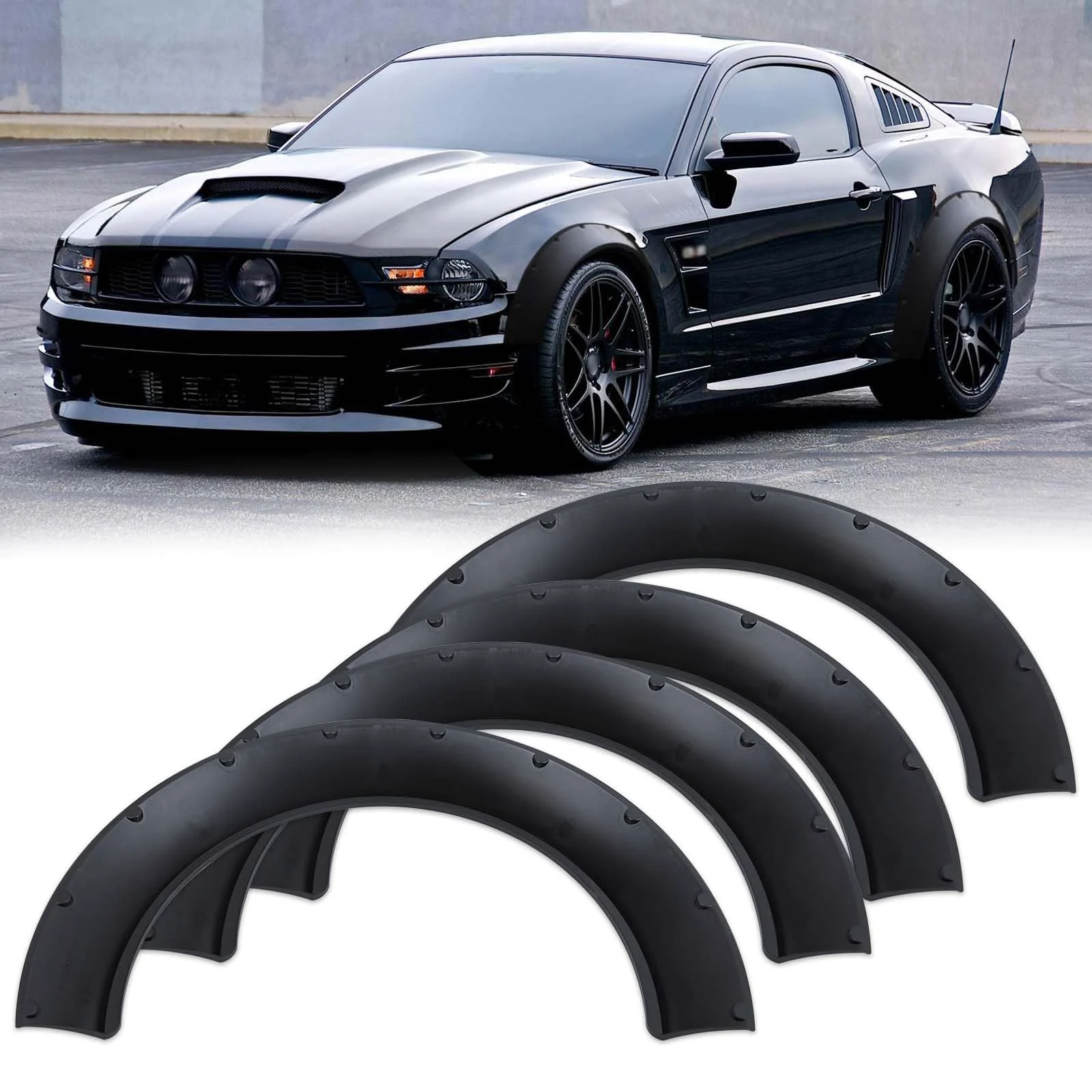
Vehicle-specific flares are molded for a known body shape. They commonly use factory contours, existing holes, supplied brackets, or designated mounting points, so installation is more predictable and the finished appearance is cleaner.
Some models still require drilling or minor trimming, particularly when the flare is designed to imitate an original equipment package. Before ordering, verify the exact year, body style, bed length, trim package, and whether the vehicle has factory flares already installed.
Universal fender flares
Universal flares are often long, flexible, or supplied in sections that can be cut to match a wheel opening. They can be useful for custom builds, older vehicles with limited aftermarket support, replacement projects, or applications where a deliberately rugged appearance is acceptable.
However, “universal” does not mean installation-free. The installer may need to measure the arch, cut the material, create mounting holes, shape the ends, and seal or protect exposed edges. A product can be universal in application while still being unsuitable for a particular body contour.
Why Fender Flare Fitment Varies
Wheel openings differ in radius, height, depth, and relationship to nearby body panels. Two trucks with similar tire sizes may require completely different flares because their beds, bumpers, doors, and factory mounting points do not occupy the same positions.
Wheel-arch shape and body contour
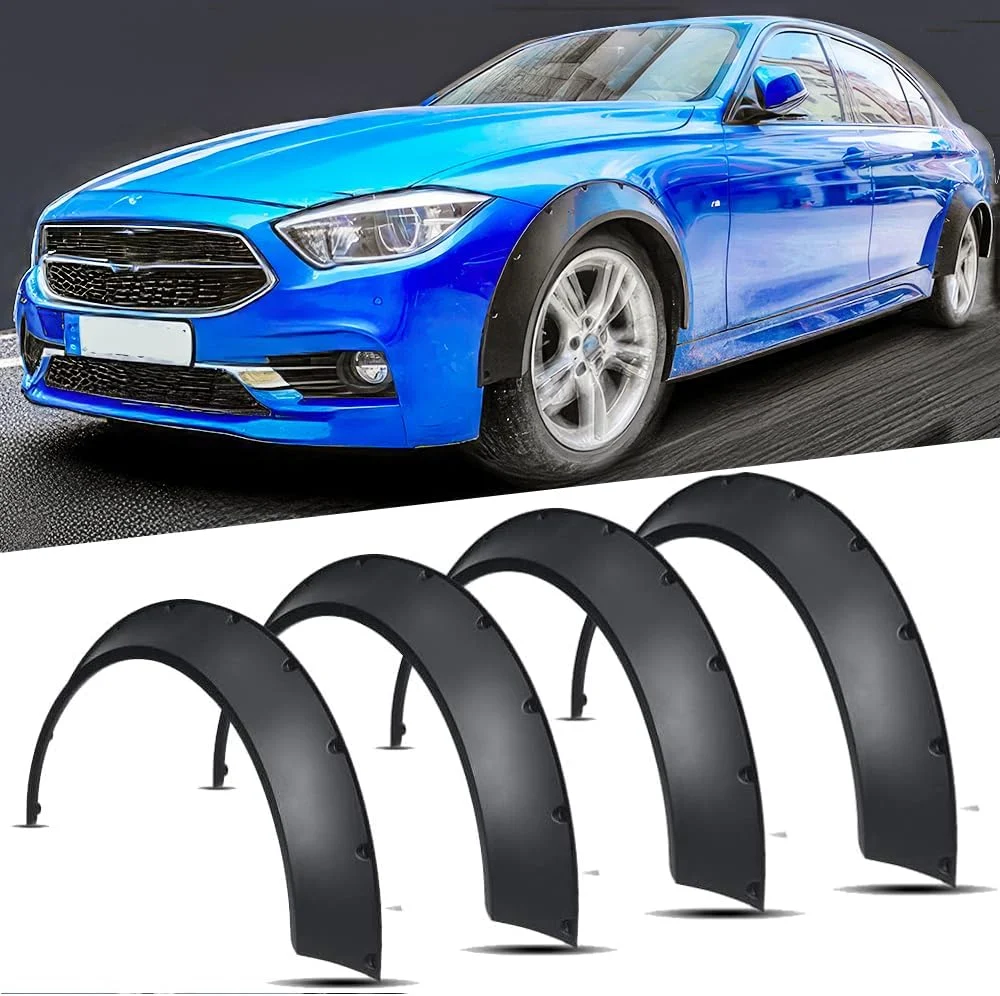
A flare must follow the curve of the arch closely enough to avoid waviness or open gaps. The front and rear portions may taper differently, and some vehicles have wheel openings that are not perfectly symmetrical from one side to the other.
Rigid molded plastic is especially dependent on the correct contour. Flexible rubber or thermoplastic edging can tolerate more variation, but it cannot eliminate problems caused by an incompatible radius or incorrect flare length.
Vehicle configuration
Cab style, bed length, door design, and trim level can change the space available around the wheel. A flare listed for a pickup may not fit every cab-and-bed combination under the same model name.
Factory side steps, rock sliders, bumper corners, mud flaps, and body cladding can also interfere. Check whether the product is intended for a stock vehicle or for a version with those accessories removed or modified.
Flare coverage and tire position
The flare’s job is usually to extend the body outward so the tire does not protrude as far beyond the vehicle. Exact coverage depends on the flare width, wheel offset, tire width, suspension height, and how much the tire moves during steering and compression.
For that reason, a flare selected only by its advertised width may still leave part of the tread exposed. Conversely, an overly wide flare can restrict access to fasteners or look disproportionate on a narrow body.
Universal Versus Vehicle-Specific Flares
The main choice is between easier, more predictable fitment and greater flexibility for custom work. Neither style is automatically better; the right option depends on the vehicle, the desired appearance, the amount of fabrication available, and the reason for adding the flares. This distinction matters when answering “are fender flares universal”.
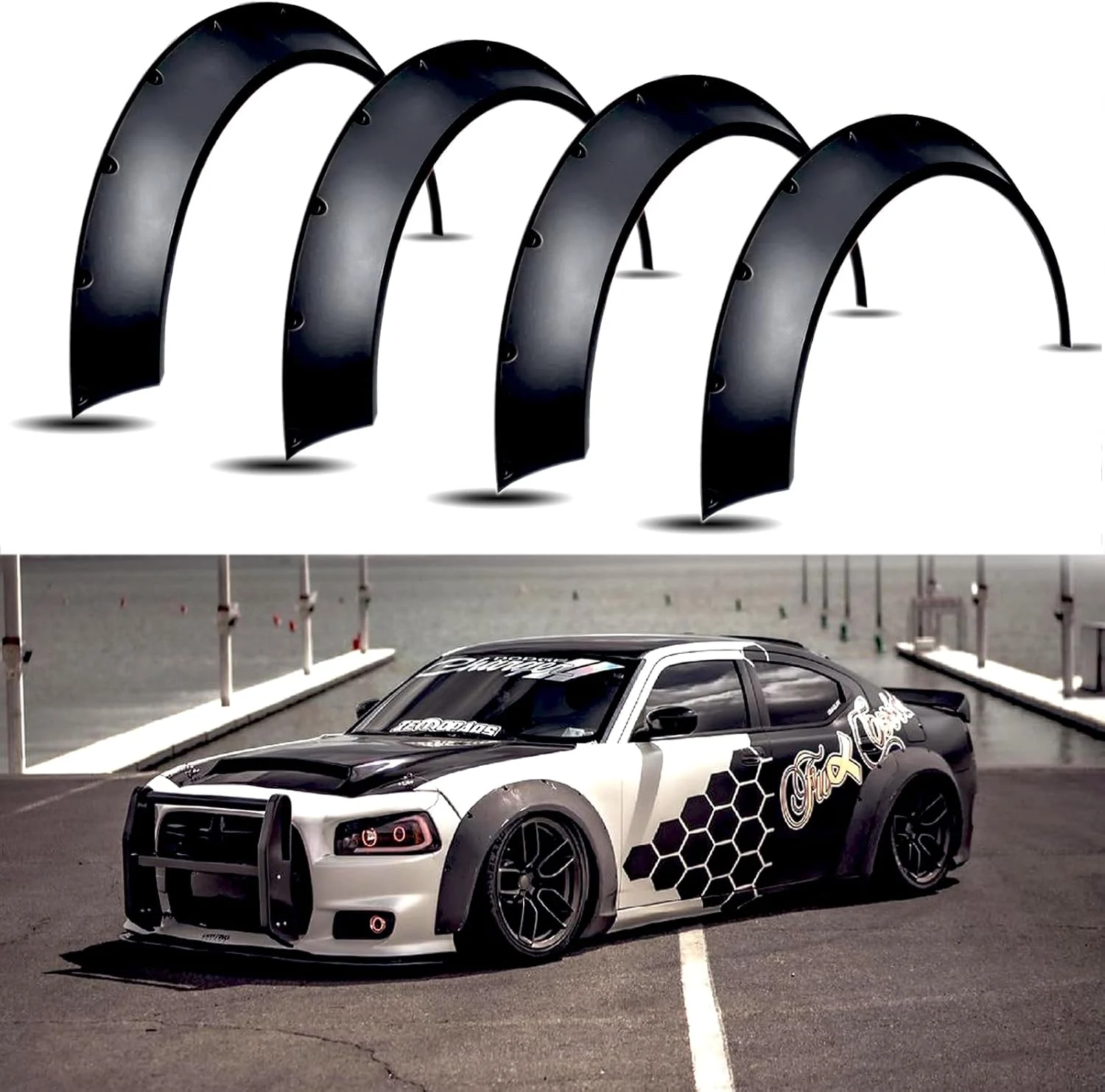
Advantages of vehicle-specific designs
- They generally follow the factory wheel-arch shape more closely.
- Mounting locations and hardware are more likely to be compatible.
- They usually require less cutting and reshaping.
- They provide a more consistent appearance from side to side.
- They make replacement or warranty questions easier to resolve because fitment is clearly defined.
Vehicle-specific products are usually the safer starting point for a daily-driven truck or SUV. They can still require careful installation, but the risk of ending up with uneven gaps, stressed plastic, or interference is lower.
Advantages of universal designs
Universal flares can solve problems that catalog-specific products cannot. They may work on custom fenders, modified bodies, classic trucks, off-road projects, or vehicles for which a manufacturer never offered a dedicated flare.
They can also provide more freedom to choose the coverage area and final shape. The tradeoff is that the quality of the result depends heavily on accurate measuring, patient trimming, and strong mounting.
What “universal” does not guarantee
A universal label does not guarantee that one piece will fit every corner of every vehicle. Some products are universal only within a limited range of wheel-opening sizes or are intended for a specific style of flat or mildly curved fender.
Read the manufacturer’s dimensions, minimum and maximum length, flare height, material thickness, and mounting guidance. If those details are missing, treat the listing as incomplete rather than assuming the part will adapt easily.
How to Check Fender Flare Fitment
Good fitment begins with the vehicle, not the product photograph. Park on level ground, turn the steering as needed to inspect the front openings, and compare measurements from both sides before selecting a flare.
Confirm the vehicle details
- Make, model, and model year
- Cab style and bed length for pickups
- Two-wheel-drive or four-wheel-drive configuration when relevant
- Factory flares, body cladding, running boards, and bumper style
- Stock or modified suspension height
Use the complete fitment description rather than a broad model name. A flare listed for one generation may not match a similar-looking vehicle from the previous or following generation.
Measure the wheel opening
Measure the arch length along the body, the vertical height from the top of the opening to the intended lower edge, and the available depth from the outer fender toward the tire. Also note the front and rear ends of the opening, where the flare may need to meet a bumper, rocker panel, or bedside.
For a universal product, compare these measurements with the flare’s actual dimensions. Leave enough material at each end for secure mounting, but do not assume unused length can always be hidden cleanly.
Check tire and wheel clearance
Inspect clearance with the wheels pointed straight and turned fully left and right. Consider suspension compression, steering movement, and the possibility that a tire may move closer to the flare during off-road articulation.
Wheel offset is particularly important. A wheel with more outward offset can push the tire toward the flare, while a different offset may move it inward toward suspension components. Tire width and sidewall shape also affect the required coverage.
Look for mounting constraints
Identify whether the vehicle has factory holes, plastic liners, inner fender brackets, wiring, or corrosion near the intended fastener locations. Drilling into a concealed area without checking behind it can damage wiring or create a path for water into the body.
If a product uses exposed bolts, decide whether the hardware will sit over solid sheet metal or only thin plastic. The mounting surface must support the flare without cracking, pulling through, or allowing vibration.
Installation Issues That Affect the Result
Even a correctly matched flare can look poor or fail early if it is installed under stress. Lay out every piece before drilling, compare the left and right sides, and confirm the tire clears the flare through the vehicle’s full range of movement. Keep these limitations in mind when considering “are fender flares universal”.
Trimming and shaping
Universal material should be cut gradually. Mark the intended line with removable tape or a suitable marker, make a conservative first cut, and test the piece against the body before removing more material.
Cut edges should be smooth and free of sharp points. On flexible products, an uneven edge can telegraph through the surface; on rigid plastic, it can create a crack that spreads from a mounting hole.
Fasteners and mounting pressure
Use the hardware specified for the flare or appropriate corrosion-resistant replacements. Tighten fasteners evenly rather than forcing one area flush, since excessive pressure can distort the flare or crush a thin fender lip.
Rubber edging, washers, spacers, and backing plates may be necessary depending on the design. They can reduce vibration and help distribute load, but they cannot compensate for a fundamentally mismatched contour.
Body protection and sealing
Clean dirt and rust from the contact area before installation. If drilling is required, protect exposed metal according to the vehicle manufacturer’s corrosion-control practices, and avoid trapping moisture between the flare and body.
Do not seal a flare in a way that prevents drainage or hides a loose fit. Water, mud, and road salt can collect behind a poorly installed flare, especially on vehicles used in winter conditions or on unpaved roads.
Post-installation inspection
After installation, check that doors, tailgates, hood edges, and liners open normally. Drive slowly over an uneven surface and listen for rubbing, rattling, or contact before testing the vehicle at higher speed.
Recheck fasteners after the first few drives. Vibration can settle flexible material, loosen hardware, or reveal a mounting point that needs a washer, spacer, or different position.
Common Mistakes to Avoid
The most common error is treating a visual match as proof of compatibility. Product images often show a modified vehicle, a different wheel setup, or a flare positioned for appearance rather than full suspension clearance.
- Buying by vehicle nickname without verifying the year and body configuration
- Ignoring wheel offset and assuming tire width is the only clearance factor
- Cutting all universal pieces before test-fitting them
- Drilling without checking for wiring, liners, or structural support behind the panel
- Using too few fasteners or tightening them until the flare bends
- Assuming a flare legally replaces required tire coverage in every location
- Skipping an inspection after the first drive
Another mistake is using flares to hide a tire-clearance problem that really requires different wheels, suspension changes, or body modifications. A flare can cover part of the tire visually, but it cannot create safe mechanical clearance where none exists.
Legal and Safety Considerations
Fender flares may affect whether the tread is covered as required by state or local vehicle rules. Requirements vary, so check the rules that apply to where the vehicle is registered and operated instead of assuming an aftermarket part automatically makes the setup compliant.
Coverage is only one concern. A flare that loosens, contacts the tire, blocks a lamp, interferes with a door, or has sharp exposed edges can create a practical safety issue even if it provides adequate visual coverage.
Seek professional help when the installation requires cutting structural sheet metal, relocating wiring, modifying suspension components, or resolving persistent tire contact. A qualified technician can inspect clearance under loaded and articulated conditions that are difficult to reproduce in a driveway.
Frequently Asked Questions About Universal Fender Flares
Are fender flares universal on trucks?
Most truck fender flares are not universal. Pickup beds, cab configurations, wheel openings, and factory trim vary enough that a flare made for one truck version may not align with another. Universal truck flares can work, but they generally require measuring, trimming, and custom mounting.
Can universal fender flares fit any vehicle?
No, universal flares still have size and shape limits. They are adaptable rather than infinitely compatible. The product must have enough length and height, a suitable contour, and a mounting area that can support the installation without unsafe interference.
Do universal fender flares require drilling?
Many universal flares require drilling or custom brackets. Some attach with existing hardware or adhesive, but the method depends on the vehicle and flare design. Confirm what is behind each drilling location before making holes.
How do I know whether a flare is wide enough?
Compare the flare’s installed coverage with the tire’s outward position. Measure from the body’s original fender edge to the outermost part of the tire, then account for steering and suspension movement. A static measurement alone may not show contact during compression or turning.
Can I trim a vehicle-specific fender flare?
Minor trimming may be possible, but it can weaken the part or void fitment expectations. Only remove material where the design allows it, and test-fit first. Extensive cutting usually indicates that the flare is not the correct application.
Are flexible rubber flares easier to fit?
Flexible flares usually tolerate curves better than rigid molded pieces. They can be useful for custom openings, but they still need correct length, secure fasteners, and sufficient tire clearance. Flexibility does not prevent sagging, tearing, or rubbing if the installation is poorly planned.
Should I install flares myself or hire a professional?
A careful do-it-yourself installation is possible when the product is a close match and the required work is simple. Choose professional installation when drilling involves hidden wiring, body repair, suspension changes, or uncertain tire clearance, or when the vehicle is used heavily off-road.
Conclusion: Choose Fitment Over the Universal Label
Are fender flares universal? Usually not; even adaptable designs have limits based on wheel-arch shape, vehicle configuration, tire position, wheel offset, and mounting space. A vehicle-specific set is generally the more predictable choice, while universal flares make sense when custom trimming and careful installation are acceptable.
Verify the exact vehicle details, measure the opening, check steering and suspension clearance, and confirm any applicable tire-coverage rules before buying. If the flare requires major body or suspension changes, have a qualified technician review the setup before the vehicle is driven regularly.