Can You Patch a Spare Tire: When It Works and What to Check First
Usually, no. A spare tire should generally be replaced rather than patched, especially if it is a temporary donut or has sidewall damage.
Can you patch a spare tire safely The answer depends on what kind of spare you have where the puncture is located and whether the tire has already.
The risk is not simply that a patch might leak An unsuitable repair can allow air loss casing separation poor handling or failure when the spare is carrying.
This guide separates repairable damage from reasons to discard the tire You will learn how to identify your spare inspect the puncture understand plug-versus-patch repairs check age and.
- ✓A full-size spare with a small puncture in the tread may be repairable after a professional inspection.
- ✓A compact temporary spare, sidewall puncture, worn tire, or damaged casing should normally be replaced.
- ✓A rope plug installed from the outside is not the same as a permanent internal patch-and-plug repair.
- ✓Check the spare’s pressure, age, tread, sidewalls, and speed limitations before relying on it.
Can You Patch a Spare Tire? Start
The word spare covers several very different tire designs Before considering a repair determine whether yours is a full-size matching spare a full-size tire with a different tread.
A full-size spare is built more like an ordinary tire and may be suitable for a conventional repair if it meets the same safety standards as the vehicle.
Those differences matter because a repair that might be acceptable on a normal radial tire may not be appropriate on a temporary spare. The technician must consider the tire’s construction, repair guidelines, remaining tread, and intended use—not just whether the hole appears small.

- Full-size matching spare: May be repairable if the puncture is in the repairable tread area and the tire is otherwise sound.
- Full-size nonmatching spare: Can sometimes be repaired, but its size, tread, and wheel compatibility still need evaluation.
- Temporary donut: Replacement is usually preferred over patching because it is designed for limited emergency service.
- Sidewall markings: Look for temporary-use language, maximum speed limits, inflation pressure, and tire size information.
Why a temporary spare is a special case
A donut spare is not intended to restore normal driving indefinitely Its narrow tread and different diameter can change steering response braking balance traction and the operation of.
Even if a puncture seems easy to seal the tire may have less repairable material than a standard tire or its casing may have been stressed by storage.
When a full-size spare deserves consideration
A full-size spare that is the same size and type as the road tires may be treated like a regular tire for inspection purposes That does not guarantee.
If the spare is a different size has a different load rating or is mounted on a different wheel ask a tire shop to confirm that it is.
What Damage Can a Spare Tire Repair Safely?
Repair decisions begin with the location and nature of the damage A small puncture caused by a nail or screw in the central tread is the most favorable.
The tire s internal belts and rubber layers carry the load maintain its shape and manage heat A hole in the tread can sometimes be sealed while preserving.
Size also matters, but it is not the only measurement. Repair standards vary by tire design and manufacturer, so a shop should determine whether the puncture falls within accepted limits rather than relying on a homemade rule based solely on diameter.

- Puncture location: The center tread is the only area commonly considered for a conventional permanent repair.
- Object and angle: A slanted or irregular hole may have damaged more of the casing than it appears to from outside.
- Air-loss history: Driving while flat or seriously underinflated can create hidden internal damage.
- Overall condition: Cracks, bulges, exposed cords, bead damage, or severe wear are reasons to reject the tire.
Central tread punctures
A puncture in the middle portion of the tread is potentially repairable when it is small clean and caused by a relatively straight penetrating object The tire should.
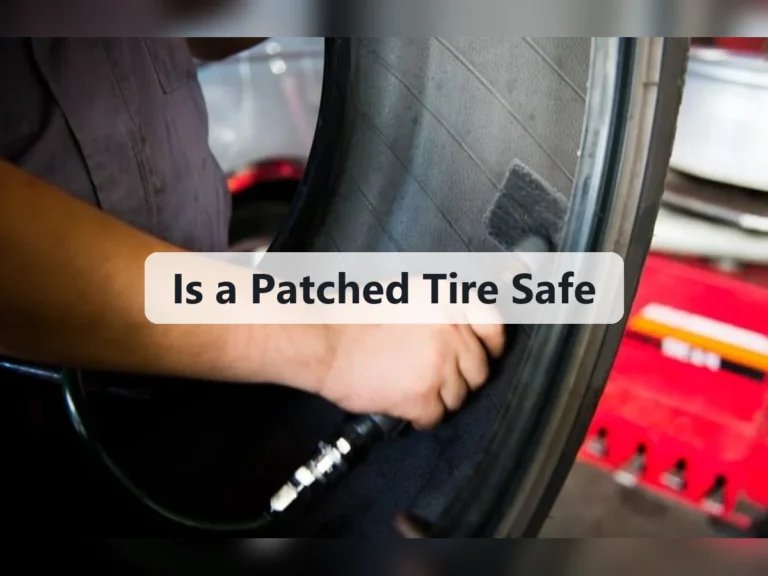
A professional repair normally fills the puncture channel and seals the inner liner. This combination is often called a patch-and-plug repair, although terminology varies between shops. The repair must be centered, properly prepared, and compatible with the tire’s construction.
Shoulder and sidewall damage
The shoulder is the curved transition between the tread and sidewall. It flexes heavily during cornering and is not treated like the central tread. A puncture that reaches this area is generally considered nonrepairable, even if it appears to hold air after a plug is installed.
Sidewall damage should not be patched for highway use The sidewall has no tread belt package to stabilize a conventional repair and its constant flexing can cause the.
Damage caused by driving flat
A tire can suffer internal damage after being driven with too little air even if the puncture itself is in the center tread The sidewalls may rub against.
Tell the technician how far and how fast the vehicle traveled after the pressure warning appeared or the tire went flat If you do not know treat the.
Patch, Plug, or Patch-and-Plug: What Is the Difference?
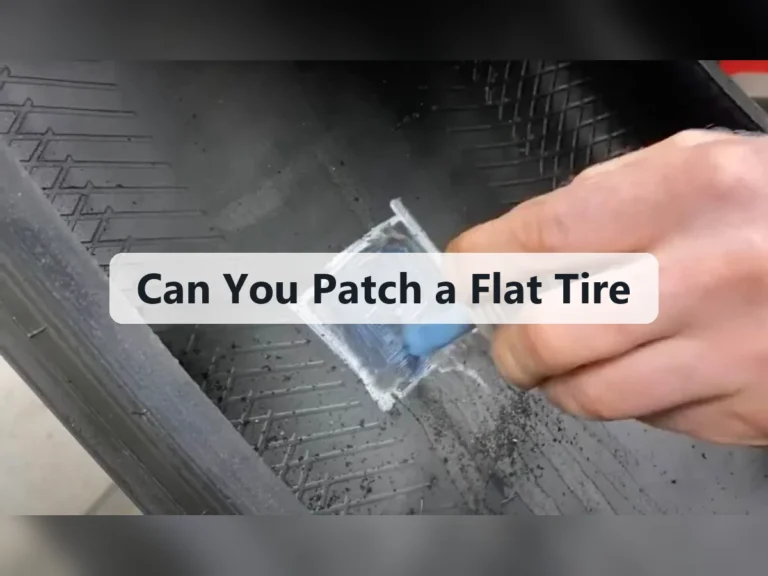
People often use patch to describe any puncture fix but the repair methods are not equivalent A rope plug is pushed into the puncture from the outside It.
An internal patch is applied to the inside of the tire after it has been removed from the wheel A patch can seal the liner but a simple. This distinction matters when answering “can you patch a spare tire”.
Not every shop uses identical terminology, and some tires have special construction or manufacturer restrictions. The important distinction is whether the tire was demounted, inspected internally, and repaired with a method approved for that tire—not merely whether someone inserted a plug.

- Exterior rope plug: Fast and convenient, but generally a temporary measure and not a substitute for internal inspection.
- Internal patch: Seals the liner from inside, but may not fully fill the puncture channel on its own.
- Patch-and-plug: Addresses both the air passage and inner liner when the puncture and tire meet repair requirements.
- Sealant products: May complicate later inspection, affect pressure sensors, or be unsuitable for certain tires.
Why an outside plug can give false reassurance
An exterior plug may stop a visible leak but it does not show whether the tire was damaged internally It also may not create the same durable seal.
Do not keep driving simply because bubbles no longer appear around the puncture. Check pressure with a gauge, observe whether it falls over time, and have the tire removed and assessed as soon as practical.
What a proper inspection involves
A technician typically locates the puncture removes the tire from the wheel examines the inner liner and casing measures the damage and checks the bead and sidewalls The.
After an eligible repair, the tire should be inflated to the correct pressure and checked for leaks. If the vehicle uses a tire-pressure monitoring sensor, the sensor and valve stem should be inspected as well.
When Replacement Is Safer Than Repair
Repairing a tire only makes sense when the repair restores dependable service A spare that is old cracked badly worn or structurally damaged is not made safe by.
Temporary spares also deserve a conservative approach because they may sit unused for years. Storage does not stop rubber from aging. Heat, sunlight, ozone, moisture, and prolonged lack of pressure can degrade the tire even when its tread looks nearly new.
If a repair shop refuses the job, that does not necessarily mean the technician is being overly cautious. The refusal may reflect tire age, construction, damage location, prior repairs, or the manufacturer’s repair limits.
- Sidewall or shoulder puncture: Do not rely on a patch for damage in a flexing, nonrepairable area.
- Visible structural damage: Bulges, exposed cords, deep cuts, separations, or severe abrasions require removal from service.
- Old or weather-cracked rubber: Age-related deterioration can make the casing unsafe even without a major puncture.
- Unknown flat-driving history: Hidden internal damage may make repair unreliable.
Tire age and storage condition
Find the tire identification information on the sidewall and determine its production date according to the markings The vehicle manual and tire manufacturer can provide the most appropriate.
A spare stored beneath a vehicle may face road spray, salt, temperature swings, and physical contact with the carrier. A trunk-mounted spare may be exposed to heat. Either location can produce deterioration that is not obvious until the tire is inflated and examined closely.
Tread wear and uneven damage
Measure or inspect the remaining tread across the tire rather than judging it from one spot Uneven wear can indicate a previous alignment suspension or inflation problem If.
Check for cupping, flat spots from long storage, and damage around the bead. A spare does not need to be used regularly to become unsuitable; it only needs to be unable to carry the vehicle reliably in an emergency.
Previous repairs
A tire with an existing repair is not automatically disqualified, but repairs must be spaced appropriately and located in acceptable areas. Multiple repairs near each other, an improperly installed plug, or a previous repair near the shoulder can weaken the case for another repair.
Never cover a questionable old repair with a new plug and assume the problem is solved. The tire should be evaluated as a complete assembly, including its internal condition and repair history.
How to Inspect a Spare Before You Need It
The best time to evaluate a spare is before a puncture leaves you on the roadside A few minutes of inspection can reveal low pressure corrosion missing tools.
Use the vehicle s specified pressure for the spare not the pressure printed on the doorjamb for the regular tires unless the manufacturer says they are the same.
Include the jack, lug wrench, locking-lug key, and any adapter or retaining hardware in the inspection. A properly inflated spare is not useful if it cannot be mounted safely. Keep these limitations in mind when considering “can you patch a spare tire”.
- Pressure: Check with a gauge when the tire is cold and follow the vehicle or tire instructions.
- Condition: Inspect both sidewalls, the tread, bead area, and wheel for cracks, cuts, bulges, corrosion, or deformation.
- Date: Record the production information and consider replacement if the tire shows age-related deterioration.
- Equipment: Confirm that the jack, wrench, wheel lock key, and spare-retaining mechanism are present and functional.
Check the pressure correctly
Pressure can change with temperature so a reading taken after driving may not match the cold-pressure recommendation Add or release air as needed when the tire is cold then replace the valve cap If the spare repeatedly loses pressure have the tire and.
Do not inflate beyond the maximum pressure marked on the sidewall. The correct operating pressure may be listed in the owner’s manual or on the vehicle information label, and those instructions take priority for the vehicle’s emergency tire.
Inspect the wheel and mounting hardware
A spare can have a sound tire but a damaged wheel. Look for bends, cracks, severe rust, missing studs, or damage around the lug holes. If the spare was previously used after a collision or hard impact, the wheel should be examined before installation.
Check that the lug nuts fit the spare wheel’s seat correctly. A different wheel design may require different lug hardware, and forcing an incorrect lug nut can prevent proper clamping or damage the wheel.
How to Use a Spare After a Puncture
When a road tire is damaged move to a safe location turn on the hazard lights and follow the vehicle s instructions for changing the tire If traffic.
Once installed, confirm that the spare is fully seated and that the lug nuts are tightened in the recommended pattern and manner. Recheck them after driving the distance specified by the vehicle manufacturer or tire instructions, if such a recheck is recommended.
A temporary spare is a bridge to a repair or replacement, not a normal replacement for the vehicle’s road tire. Drive gently, avoid abrupt steering and braking, and observe the lower speed limit printed on the spare or stated in the manual.
- Drive only as needed: Head toward a tire shop or safe destination rather than continuing normal errands.
- Respect the limit: Never exceed the temporary spare’s posted speed rating or distance guidance.
- Watch handling: Vibration, pulling, noise, or warning lights mean you should slow down and stop when safe.
- Replace promptly: Restore the correct road tire as soon as it can be professionally repaired or replaced.
Placement can affect handling
Some vehicles have specific instructions about where to install a temporary spare, particularly when the vehicle is front-wheel drive, all-wheel drive, or equipped with different tire sizes. Follow the owner’s manual rather than assuming the spare can go on any corner.
All-wheel-drive systems can be especially sensitive to differences in tire circumference. Driving with one significantly different tire can create drivetrain stress or trigger system warnings. If the manual requires a particular installation method, follow it exactly.
Do not mix up pressure warnings
A temporary spare may not have a tire-pressure sensor or the vehicle may need a reset procedure after installation A warning light can remain on even when the.
If the spare itself loses air, stop driving and inspect it. A temporary tire with low pressure can become unstable quickly because it is already operating under restricted conditions.
Common Mistakes When Trying to Patch a Spare Tire
Most poor outcomes come from treating the spare as a simple rubber container rather than a load-bearing safety component. A repair that looks successful in the driveway may not address internal damage, incorrect pressure, unsuitable construction, or an unsafe mounting arrangement.
It is also easy to focus on the puncture and overlook the cause. A screw may be only the visible problem; driving on low pressure, hitting a pothole, or damaging the wheel may have created additional hazards.
- Repairing from the outside only: A plug does not replace demounting and inspecting the tire internally.
- Ignoring the tire type: A donut spare has different limitations from a full-size tire.
- Using regular-tire pressure: Temporary spares often require a specific, higher pressure.
- Continuing to drive: A spare is intended to get you to service, not to postpone service indefinitely.
Using a sealant as a permanent answer
Emergency sealants can be useful in limited situations, but they are not a universal repair. Some products cannot seal larger punctures, sidewall damage, or damage caused by a separated object. They can also make later inspection messier and may interact with tire-pressure monitoring components.
Read the product and vehicle instructions before using sealant. If it is used to reach help, tell the tire technician what product was installed and how much was added.
Assuming a tire that holds air is safe
Air retention is only one part of tire condition. A damaged sidewall, aged rubber, bent wheel, or internal belt problem can exist while the tire appears inflated. Check for vibration, bulges, uneven wear, and pressure loss rather than relying on a single driveway test.
FAQ: Can You Patch a Spare Tire?
Can you patch a temporary donut spare?
It is generally better to replace a temporary donut than patch it. A tire professional may inspect it and explain whether any repair is permitted, but its emergency-only construction, limited service life, and restricted handling make replacement the safer default.
Can you patch a full-size spare tire?
Possibly. A full-size spare may receive a professional patch-and-plug repair if the puncture is small, located in the central tread, and the tire has no age, wear, casing, bead, or underinflation damage.
Can you plug a spare tire without removing it?
An exterior plug can be used as a temporary measure in some emergencies, but it is not the same as a complete professional repair. The tire should still be removed from the wheel and inspected internally before being trusted for continued service.
Can you patch a spare tire with a sidewall puncture?
No conventional patch should be relied on for a sidewall puncture. Sidewalls flex continually and are not normally considered a repairable area. Replace the tire, even if the hole is small and the tire appears to hold air.
Can you drive on a patched spare tire?
If a qualified tire professional has approved and correctly repaired an eligible full-size spare, it may be driven within the tire’s normal ratings. A patched temporary spare should not be treated as a normal tire; follow the manufacturer’s limits and replace it when practical.
How do you know whether a spare tire is too old to patch?
Check its production information and inspect for cracking, hardened rubber, bulges, discoloration, flat spots, or other deterioration. Age guidance varies, so consult the tire manufacturer and vehicle manual, but visible aging or uncertain history is a strong reason to replace rather than repair.
Should you patch a spare that was driven flat?
Do not assume it is safe to patch. Driving flat can damage the inner liner and casing through heat and sidewall flexing. Have the tire demounted and inspected; replacement is necessary if internal damage is found or the history cannot be evaluated confidently.
Conclusion
Can you patch a spare tire? Sometimes, but only when it is a serviceable full-size tire with an eligible tread puncture and no hidden structural or age-related damage. A temporary donut, sidewall or shoulder injury, severe wear, cracking, or flat-driving damage usually makes replacement the safer decision.
Use a plug only as a limited emergency measure, and have the tire professionally inspected before relying on it. The major limitation is that a spare is meant to preserve mobility temporarily, not to remove the need for proper repair or replacement.
Identify your spare today, check its pressure and condition, and ask a tire professional to evaluate any puncture before putting the tire back into service.