
Can You Patch a Flat Tire — Practical Limits and What to Do Next
Yes, a flat tire can often be patched when a small puncture is in the tread, but sidewall damage, large holes, and unsafe wear require replacement.
A repairable puncture is usually caused by a nail screw or similar object entering the central tread A proper repair depends on more than stopping the air leak.
That is why the answer to “can you patch a flat tire” changes with location, size, tire condition, and how far the vehicle traveled after the pressure dropped. A quick plug may seem successful while still leaving a hidden safety problem, especially if the tire was driven nearly empty.
This guide explains the difference between a temporary plug and a professional internal repair identifies punctures that should not be repaired and walks through the checks that matter.
- ✓A small puncture in the repairable tread area is often fixable.
- ✓Sidewall and shoulder damage generally means the tire should be replaced.
- ✓A plug inserted from outside is a temporary measure, not the preferred permanent repair.
- ✓Driving on a severely underinflated tire can cause internal damage that makes repair unsafe.
- ✓When the damage or tire history is uncertain, have a qualified tire professional inspect it.
Can You Patch a Flat Tire? The Basic
In everyday language, “patching” can mean several different things. Some drivers use the word for an external rope plug, while tire professionals may mean an internal patch or a combination patch-and-plug installed after removing the tire from the wheel. Those methods are not interchangeable.
The central question is whether the tire casing is still safe. A puncture that passes straight through the thick, flexible tread may be repairable. Damage near the sidewall, a torn opening, or evidence that the tire flexed while empty can compromise the structure beyond what a patch can safely restore.

- Location matters: The center tread is the most likely repair area; the shoulder and sidewall are generally not.
- Size matters: A tiny puncture is different from a cut, tear, or enlarged hole.
- History matters: A tire driven while flat may be unsafe even if the visible puncture looks minor.
- Repair quality matters: The tire should be removed and inspected internally for a durable repair.
What counts as a repairable puncture?
A typical candidate is a clean puncture from a nail or screw located in the main tread away from the outer shoulder The hole must be small enough.
The tire also needs adequate remaining tread, no serious cracking or bulges, and no previous repair that conflicts with the new damage. A puncture close to an old repair may leave too little sound rubber for a dependable seal.
Why “flat” does not automatically mean “ruined”
A tire can lose air while parked and remain structurally sound. For example, a screw may seal part of its own hole, allowing pressure to fall slowly over several hours. If the vehicle is not driven far and the tire is inspected promptly, repair may be possible.
By contrast, the same tire can become unsafe after being driven several miles with little or no air. The sidewalls compress and flex against the road, creating heat and internal abrasion. That damage may not be visible from outside, which is why removing the tire is important.
Which Tire Damage Can Be Repaired?
Repair decisions begin with the type and location of damage. Tread punctures are usually the most favorable situation, while shoulder, sidewall, bead, and belt damage carry much greater risk. A professional inspection should identify not only where the air escapes but also whether the tire’s internal layers remain intact.
Look at the tire only as an initial check. The outer surface cannot reveal every internal failure, and a tire that holds air after a quick plug is not automatically safe for normal highway use.
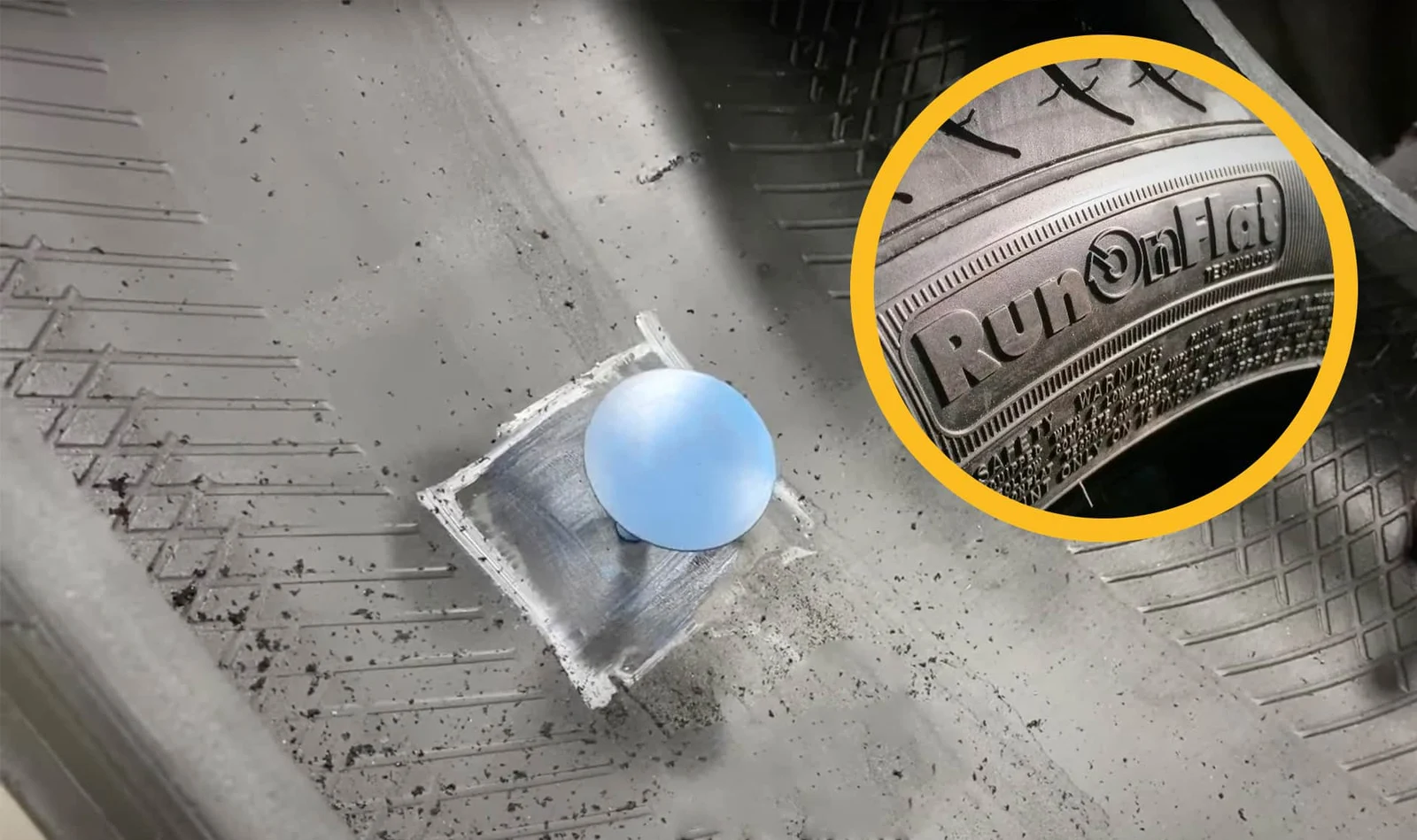
- Puncture path: A straight, narrow hole through the tread is more favorable than a diagonal tear or irregular cut.
- Repair zone: Damage near the shoulder transition is often rejected even when part of it appears to be in the tread.
- Internal condition: Scuffing, rubber dust, wrinkles, or exposed cords inside the tire indicate possible run-flat damage.
- Existing repairs: Multiple repairs, overlapping repairs, or a repair near the new hole can rule out another patch.
Tread punctures
The tread is the thick portion designed to contact the road and resist penetration A small nail or screw in the central tread can often be repaired after.
A proper combination repair uses a rubber stem to fill the puncture path and a patch to seal the inner liner This is different from simply pushing a.
Shoulder and sidewall damage
The shoulder is the curved area where the tread transitions into the sidewall. It flexes more than the center tread, so a repair placed there may not remain secure as the tire bends during turns. For that reason, many shops will recommend replacement for damage in or near the shoulder.
The sidewall supports the vehicle and absorbs repeated flexing. It is not built with the same repair margin as the tread. A puncture, cut, bulge, abrasion, or exposed cord in the sidewall generally calls for replacement rather than a patch.
Valve, bead, and wheel leaks
Not every flat tire has a puncture in the tread Air can escape through a damaged valve stem a loose or corroded valve core or a poor seal.
Soapy water can help locate escaping air, but it does not prove that the tire is repairable. Bubbles around the valve or rim indicate a different problem that may require a valve service, wheel repair, bead cleaning, or replacement of the wheel and tire assembly.
Patch, Plug, or Patch-Plug: Understanding the Repair Choices
A roadside plug kit is useful when you need to stop a leak long enough to reach a safe place or tire shop It is not the same.
When people ask can you patch a flat tire, they may actually be asking whether they can insert a plug without removing the wheel. That can work as an emergency measure for a suitable tread puncture, but it should not replace a professional inspection and permanent repair.

- External plug: Inserted from outside, usually quickly, but it does not allow inspection of the inner liner.
- Internal patch: Applied inside the tire after removal; it seals the inner liner but may not fill the full puncture channel by itself.
- Patch-plug unit: Combines an internal patch with a stem that fills the puncture path and is generally the preferred repair style for a repairable puncture.
- Sealant: A liquid product that may temporarily slow a leak but can complicate inspection, balancing, or future repair.
When an external plug may be useful
An external plug can be appropriate as a temporary roadside response when a small tread puncture is clearly identified and the tire has not been driven flat It.
Do not treat a plug as permission to continue a long trip without inspection. If the puncture is angled, large, near the shoulder, or associated with a damaged tire, forcing a plug into it can worsen the problem or create false confidence.
Why a patch-plug repair is usually preferred
A professional patch-plug repair addresses both parts of the leak. The stem occupies the puncture channel, while the patch seals against the inner liner. The tire is also inspected from the inside, allowing the technician to find evidence of underinflation damage that an external repair cannot reveal.
The tire must be prepared correctly: the area is cleaned, the repair surface is treated as required, and the repair is fitted without contaminating the bonding surface. A rushed or improperly installed patch can leak, separate, or allow moisture into the tire structure.
How a Tire Professional Decides Whether to Repair It
A technician normally begins by identifying the leak and recording the tire s condition The wheel may be removed from the vehicle the tire deflated and one bead. This distinction matters when answering “can you patch a flat tire”.
The professional will consider the puncture’s position, angle, size, and relationship to the tire’s internal construction. They will also look at tread depth, age-related deterioration, previous repairs, uneven wear, and any damage to the wheel.
- Safe repair candidate: Sound tire, adequate tread, small central-tread puncture, and no evidence of driving damage.
- Borderline case: Puncture near the shoulder, multiple repairs, uncertain history, or tire wear that is close to replacement level.
- Replace instead: Sidewall injury, exposed cords, bulge, severe cut, belt separation, or internal run-flat damage.
Inspection for underinflation damage
When a tire rolls with insufficient air, the sidewalls bend excessively. Heat builds up, and the inside may develop a circumferential abrasion ring or loose rubber particles. The outer sidewall can look normal even when the internal structure has been weakened.
A technician may reject a repair if the inner liner is wrinkled, scuffed, discolored, or damaged. This is not excessive caution: a patch cannot restore strength to cords or rubber that have been overheated and abraded.
Tread depth, age, and wear pattern
A repair does not reset the tire’s service life. If the tread is nearly worn out, the tire has severe cupping, or the wear is caused by an alignment or suspension problem, replacement may be the better value. A patched tire still needs enough tread to evacuate water and maintain traction.
Inspect the other tires as well. Replacing one tire may create a tread-depth mismatch on some vehicles, especially those with all-wheel drive. The vehicle manufacturer or tire professional can advise whether one tire, a pair, or a complete set is appropriate.
What to Do When You Discover a Flat
Your first priority is controlling the situation, not immediately repairing the tire. A flat tire can make the vehicle unstable, and stopping in traffic or on a narrow shoulder can expose you to greater danger than the puncture itself.
Reduce speed smoothly, avoid sudden steering, and move as far from traffic as conditions allow. Turn on hazard lights and use roadside assistance if the location is unsafe, visibility is poor, or you do not have the equipment and experience to change the tire.
- Do not crawl underneath: Never place your body under a vehicle supported only by a jack.
- Do not keep driving: Even a short distance on a flat can destroy a repairable tire.
- Use the spare correctly: Follow the speed and distance limits printed on a temporary spare.
- Protect yourself: Wear reflective gear when available and stay away from moving traffic.
If the object is still in the tire
Leave a nail or screw in place until the tire can be assessed, unless it is causing an immediate hazard or the object is damaging another component. Removing it may allow the tire to deflate rapidly. Do not pull it out simply to locate the hole.
Measure the pressure if you have a gauge If the tire is low but still supporting the vehicle inflate it only enough to reach a nearby repair location.
If you have a plug kit
Read the kit instructions before using it. A basic kit usually includes a reaming tool, insertion tool, rubber plug, and cement. These tools can be difficult to use safely beside traffic, and the repair may not be suitable for a puncture outside the central tread.
- Move to a safe, stable location and confirm that the damage is a small tread puncture.
- Inflate the tire enough to identify the leak if it can be done safely.
- Follow the kit’s preparation and insertion directions without enlarging the hole unnecessarily.
- Inflate to the vehicle’s recommended cold pressure and check for continued leakage.
- Drive directly to a tire professional for internal inspection and a permanent repair decision.
Common Mistakes That Turn a Small Puncture Into a Bigger Problem
Many failed repairs begin with a reasonable goal: save time or avoid the cost of a new tire. The trouble comes from treating air retention as proof of structural safety. A tire can hold pressure and still have a damaged belt, overheated sidewall, or unreliable repair.
Good decisions depend on recognizing what a quick fix cannot tell you. If the repair location, tire history, or internal condition is uncertain, the safest choice is to stop and have the assembly evaluated.
- Plugging the sidewall: Flexing in this area makes a dependable repair unlikely.
- Leaving a temporary plug forever: An external plug is not a substitute for inspection and an approved permanent repair.
- Driving while repeatedly refilling: Each low-pressure trip can create additional heat and internal damage.
- Ignoring the cause: A bent wheel, faulty valve, or alignment problem can make a repaired tire lose air again.
Using tire sealant without telling the technician
Some emergency sealants can temporarily close a small puncture, but they may interfere with a normal inspection or contaminate the inner liner. Certain products can also affect pressure-sensor service or wheel balance. Tell the technician exactly what was added and how far the vehicle was driven afterward.
Installing a repair over an old repair
Overlapping repairs weaken the available repair area and make it difficult to prepare a clean bonding surface. A tire with several punctures may have too little undamaged tread structure left, even if each hole is individually small.
Ignoring slow leaks after a repair
Check pressure when the tire is cold and monitor it over the next several days. A recurring pressure loss may indicate an improperly sealed repair, a second puncture, a valve issue, or a wheel leak. Do not keep topping it off indefinitely without finding the cause.
How Much Driving Is Safe After a Tire Repair?
The answer depends on what kind of repair was performed and who performed it A temporary roadside plug should be treated as a way to reach a tire.
After a professional repair, follow the shop’s instructions and recheck pressure regularly. A correctly repaired tire can often return to ordinary service, but it remains important to watch for vibration, noise, steering pull, or renewed pressure loss.
| Situation | Practical response | Why it matters |
|---|---|---|
| Small tread puncture, tire still inflated | Drive carefully to a nearby tire shop after checking pressure | Limits the chance of internal low-pressure damage |
| External plug installed roadside | Use only to reach a professional inspection | The inside of the tire has not been checked |
| Sidewall damage or visible bulge | Do not drive; use a spare or roadside service | Structural damage cannot be safely patched |
| Tire driven flat | Have it removed and internally inspected before reuse | Hidden heat and abrasion damage may be present |
Signs a Repaired or Plugged Tire Needs Attention
A repair should stop the leak, but it should not create new symptoms. Check the pressure with a reliable gauge rather than judging by appearance alone. Tire-pressure monitoring systems can warn you about a problem, but they may not identify a slow leak immediately.
Stop driving and arrange an inspection if the tire loses pressure again, the repair area bubbles when tested with soapy water, or the vehicle develops vibration or pulling. A lump, bulge, exposed cord, or new crack is a reason to avoid driving on the tire.
- Pressure loss: The tire needs repeated inflation or loses pressure noticeably between checks.
- Vibration: A new shake may indicate imbalance, internal damage, or a tire that is no longer running true.
- Visible swelling: A bulge can signal separated or broken internal components.
- Repair movement: A plug that protrudes excessively, leaks, or appears pulled out needs immediate evaluation.
Frequently Asked Questions About Can You Patch a Flat Tire
Can you patch a flat tire without removing it from the wheel?
You can insert an external plug without removing the wheel, but that is generally an emergency or temporary repair. A permanent repair should allow the tire to be removed and inspected from the inside.
Can you patch a tire with a screw in it?
Often, yes, if the screw caused a small puncture in the central tread and the tire was not driven while severely underinflated. The screw should be removed by a professional so the puncture channel and inner liner can be assessed.
Can you patch a flat tire in the sidewall?
In most cases, no. Sidewall damage affects a highly flexible, load-bearing area, and a patch cannot reliably restore the tire’s original strength. Replacement is normally the safer solution.
Is a tire plug as good as a patch?
An external plug is not equivalent to an internal patch or a patch-plug repair. It may stop a suitable tread leak temporarily, but it does not permit a full internal inspection and may not seal the tire as comprehensively.
Can a tire be patched more than once?
Sometimes a tire can have more than one properly spaced repair, but the number, location, and condition of the repairs matter. Repairs that overlap, sit near the shoulder, or leave too little sound tread area may make replacement necessary.
Can you patch a tire after driving on it flat?
Possibly, but only after an internal inspection. Driving on a flat can create hidden heat damage, scuffing, and cord failure; if any of those conditions are present, the tire should not be repaired.
How long can you drive on a patched tire?
A properly installed professional repair may return the tire to normal use when the tire and repair meet applicable requirements. A roadside plug should be used only long enough to reach a qualified tire shop, with reduced speed and extra caution.
Conclusion
So can you patch a flat tire A small puncture in a sound tire s central tread is often repairable preferably with an internal patch-plug repair after the.
When safety is uncertain, do not judge the tire solely by whether it holds air. Use the spare or roadside assistance, then have a professional inspect the tire, wheel, valve, and repair history before returning to normal driving.
Check the puncture location and tire pressure, avoid driving on a flat, and arrange an internal inspection before relying on any patch or plug.


