
Can You Patch a Tire After Using Fix a Flat: Practical Guide
Yes, a tire may sometimes be patched after Fix-a-Flat, but it must be removed, inspected, and repaired by a qualified tire professional.
Using an emergency tire sealant can get a vehicle moving again but it changes what happens next The sealant may coat the inside of the tire obscure the.
Consider two tires with the same small nail hole In one case the tire was driven only a short distance while properly inflated the puncture is in the. This guide examines “can you patch a tire after using fix a flat” and explains the details that matter in practice.
A rushed decision can overlook internal run-flat damage an unsuitable repair location or pressure-sensor contamination This guide explains what Fix-a-Flat does how technicians evaluate the tire when a.
- ✓Fix-a-Flat does not automatically make a tire unrepairable, but the sealant must be removed before a proper internal inspection.
- ✓Permanent repairs are generally limited to suitable punctures in the repairable tread area, not the sidewall or shoulder.
- ✓Driving while severely underinflated can cause hidden internal damage that no patch can safely correct.
- ✓A tire professional should inspect the inside, check the puncture size and location, and evaluate the tire’s age and overall condition.
Can You Patch a Tire After Using Fix a Flat?
The answer is conditional rather than automatic A tire professional may be able to install a permanent repair after using Fix-a-Flat if the puncture is repairable and the.
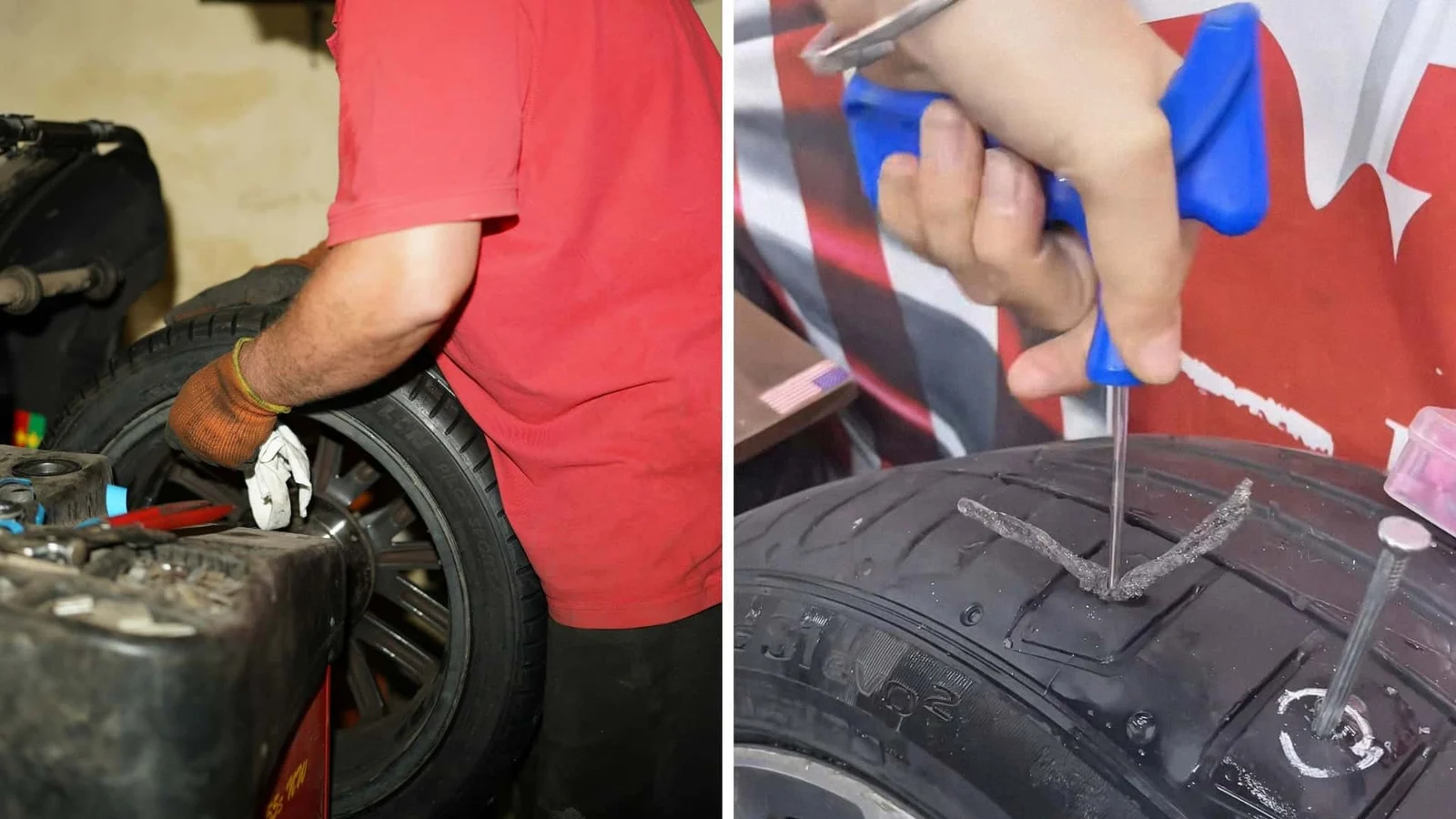
A proper tire repair is more than pushing a rope plug into the outside of the tread The tire should be removed from the wheel inspected from the.

- Sealant is temporary: Fix-a-Flat is designed to help restore mobility or air retention temporarily, not to replace a permanent tire repair.
- Inspection changes the answer: The puncture’s size, location, angle, and history of low-pressure driving matter more than the fact that sealant was used.
- Inside-out repair is essential: A technician needs to see the inner liner and casing before deciding that patching is safe.
Some shops may decline the job because the product creates cleanup, disposal, or equipment concerns. That does not necessarily mean every shop considers the tire unsafe; it may mean the shop lacks the procedure, time, or equipment to service a sealant-filled tire responsibly.
How Fix-a-Flat Affects a Permanent Tire Repair
Fix-a-Flat is a pressurized aerosol sealant intended for temporary emergency use When released through the valve stem it spreads inside the tire and attempts to seal a small.
That residue matters because a patch needs a clean properly prepared bonding surface If sealant remains between the patch and the inner liner the repair may not adhere.

- Repair preparation: Residue can make the inner liner difficult to clean and prepare for a patch.
- Puncture visibility: Sealant can make it harder to identify the original hole or reveal whether more than one injury exists.
- Wheel and valve condition: Liquid may collect around the valve stem or wheel, requiring inspection and cleaning.
- Pressure monitoring: Some tire-pressure monitoring system components can be affected by sealant, especially if the product is not designated as sensor-compatible.
Why an outside plug is not enough
An external rope plug may stop air from escaping but it does not allow an inspection of the tire s internal structure It also does not address possible.
A professional repair normally seals the puncture channel and reinforces the inner liner. The technician can then check whether the tire has exposed cords, abrasion, separation, a bulge, or other evidence that the casing was compromised.
Sealant-compatible products and shop policies
Some emergency sealants are marketed as compatible with tire-pressure sensors or easier to clean than older formulas. Compatibility can reduce certain risks, but it does not eliminate the need for dismounting and inspection. Product claims also vary, so the container or manufacturer instructions should be available to the technician.
Call before driving to a shop and explain that sealant was used. Ask whether the shop accepts sealant-filled tires, whether it can inspect the tire internally, and whether it charges a cleaning or disposal fee. Honest details help the technician plan safely and avoid surprises.
When a Tire Is Usually Eligible for Patching
The most important question is not simply whether the tire held air after Fix-a-Flat. It is whether the original injury is in a repairable area and whether the tire’s structure remains healthy.
Industry repair practices generally focus on the central tread area, where the tread face is designed to contact the road and the casing has suitable thickness. Repairs become much less dependable in the shoulder and sidewall because those areas flex differently and carry important structural loads.
- Repairable location: The puncture is in the tread area, away from the shoulder and sidewall.
- Limited injury: The hole is within the size allowed by the tire manufacturer or the repair shop’s accepted standards.
- No internal damage: The inner liner, body plies, and bead area show no signs of abrasion, tearing, or separation.
- Suitable tire condition: The tire has adequate tread and no serious age, cracking, bulges, or previous improper repairs.
Tread punctures
A small puncture caused by a nail or screw in the main tread is the most favorable scenario. Even then, the object’s angle matters. A straight penetration may leave a clean channel, while an angled injury can create a longer or irregular path inside the tire.
The puncture must also be assessed after removing the object. A hole that appears small on the outside may have enlarged because the object moved, because the tire was driven while flat, or because a previous repair was attempted.
Shoulder and sidewall injuries
A puncture in the sidewall or shoulder is generally not a candidate for a conventional patch repair. These areas flex substantially, and a repair material may not remain secure under repeated movement and heat.
Do not confuse a cosmetic scuff with a harmless puncture. A sidewall cut, bulge, abrasion ring, or exposed cord can indicate structural damage that a patch cannot restore. In these situations, replacement is usually the safer choice.
This distinction matters when answering “can you patch a tire after using fix a flat”.
Large holes, cuts, and multiple injuries
A small round puncture is different from a slash, tear, or hole enlarged by driving. A tire may also be unsuitable if it has several punctures close together, overlapping repairs, or damage near the bead. Each injury weakens the casing and may change the way the tire flexes.
The shop should evaluate the tire as a whole rather than focusing only on the place where Fix-a-Flat escaped. A successful seal at one hole does not make a tire safe if another injury or internal failure is present.
Internal Damage From Driving on a Low Tire
The greatest risk after a flat is often not the puncture itself but the distance driven with insufficient air pressure Air supports the vehicle s load and helps.
Fix-a-Flat can make a tire appear usable again without reversing that damage. A tire that holds pressure in the driveway may still have weakened cords or a damaged inner liner. Internal deterioration can worsen with speed, load, heat, and repeated driving.
- Rubber dust: Powdery black debris inside the tire can indicate that the inner liner rubbed against itself during low-pressure driving.
- Scuffing or abrasion: A circumferential wear mark on the inner sidewall may signal flex damage.
- Bulge or vibration: A new bulge, thump, pull, or vibration can indicate casing or belt trouble.
- Pressure loss: Continued loss after sealant use suggests the puncture remains open or another problem exists.
This is why a visual inspection of the outside is not enough. Internal damage may be invisible until the tire is removed from the wheel, and a patch cannot repair a separated belt or broken body cord.
How far is too far to drive?
There is no universal distance that proves a tire is safe or unsafe Speed vehicle load starting pressure road temperature tire construction and the tire s condition all.
Do not use the distance traveled as a substitute for an inspection. Tell the technician how long the tire was low, whether the vehicle felt unstable, and whether you drove at highway speed. Those details help frame the risk.
Run-flat tires are a separate case
Run-flat tires are designed with reinforced sidewalls or other construction features that can support limited travel after pressure loss. Their driving limits are specific to the tire and vehicle, and exceeding those limits can still cause damage.
Using Fix-a-Flat in a run-flat tire may conflict with the tire or vehicle manufacturer’s instructions. The tire should be evaluated according to its design, and replacement may be required if it was driven beyond its permitted low-pressure conditions.
What a Tire Professional Should Do
A careful repair begins with information, not a patch. Tell the shop the product name, how much was used if known, when it was installed, how far you drove, and whether the tire was fully flat. If the can is available, bring it or photograph its instructions.
The technician should then determine whether the tire can be safely removed and serviced. Sealant can be pressurized inside the tire, so professional handling and appropriate equipment are important.
- Confirm the product: Identify the sealant and whether it is labeled for use with tire-pressure monitoring systems.
- Remove the tire: Demounting allows inspection of the inner liner, casing, bead, and wheel.
- Clean and locate: The technician removes residue as needed and identifies the complete injury path.
- Evaluate repairability: Location, size, angle, internal condition, tread depth, and tire age all enter the decision.
- Balance and monitor: After repair or replacement, the assembly should be inflated, checked for leaks, and balanced as appropriate.
Why the tire must be demounted
Demounting exposes areas that cannot be seen through the tread. It also lets the technician check whether the tire has liner separation, cord damage, a bead problem, or evidence of being driven flat. Without this step, the repair decision is based on incomplete information.
Removing the tire also permits proper preparation for an internal repair. Sealant on the inner liner can prevent reliable adhesion, and residue around the valve or sensor may need attention before the tire is returned to service.
What a permanent repair usually involves
For an eligible puncture, the technician removes the object, examines the injury, prepares the inner liner, and installs an approved repair unit suited to the puncture. A combination plug-patch is commonly preferred because the stem fills the puncture channel while the patch seals the inner liner.
The repair is then checked for leaks. The technician may also inspect the valve assembly, reset or relearn the tire-pressure monitoring system if necessary, and balance the wheel if the tire was removed or if vibration is present. Keep these limitations in mind when considering “can you patch a tire after using fix a flat”.
Patch, Plug-Patch, or Tire Replacement?
Drivers often use “patch” to describe any puncture repair, but the methods are not identical. A simple internal patch covers the liner, while an external plug fills the hole from the tread. A combination repair joins both functions and is generally the more complete approach when the tire qualifies.
The correct choice depends on the injury and the tire’s condition, not on convenience. A cheap repair that fails can cause another loss of pressure, while replacing a structurally damaged tire avoids relying on a compromised casing.
| Option | What it does | Typical limitation |
|---|---|---|
| External rope plug | Fills the puncture from the outside | Does not permit a complete internal inspection and is generally an emergency solution |
| Internal patch | Seals the inner liner over the injury | May not fully fill the puncture channel by itself |
| Combination plug-patch | Seals the liner and fills the puncture path | Only suitable when location and casing condition meet repair criteria |
| Replacement tire | Removes the damaged casing from service | Costs more but is necessary for nonrepairable or structurally damaged tires |
When replacement is the more sensible choice
Replacement is usually the appropriate outcome for sidewall damage severe shoulder damage a large cut exposed cords belt separation significant run-flat damage or a tire that has been.
Age and condition matter as well. A minor puncture in a severely weathered tire may be the event that prompts replacement, even though the hole itself could technically be sealed.
Matching the replacement
If one tire must be replaced, ask how its tread depth and construction compare with the other tires. Vehicles with all-wheel drive can be especially sensitive to differences in rolling circumference, so the vehicle manufacturer’s instructions should guide the decision.
Do not install a tire with a different speed rating, load rating, size, or construction without confirming that it is appropriate for the vehicle. A puncture decision can become a fitment and handling decision when replacement is required.
What to Do Before You Reach a Tire Shop
If the tire is losing pressure do not assume that more sealant will solve the problem Adding product can make later service more difficult and may delay recognition of a dangerous leak Check the pressure with a reliable gauge if possible and follow the sealant can s instructions rather.
Whether driving is acceptable depends on the tire’s pressure and condition. A tire that will not hold enough air to support the vehicle should be changed to the spare or handled through roadside assistance. Driving on a nearly flat tire can turn a repairable puncture into a replacement-worthy casing.
- Stop for instability: Pull over if the vehicle pulls, vibrates, thumps, or feels difficult to control.
- Protect yourself: Avoid standing close to a damaged tire while inflating it, especially if the sidewall is bulging or torn.
- Use the spare correctly: Follow the spare tire’s speed and distance limitations.
- Disclose the sealant: Inform roadside personnel and the tire shop that aerosol sealant was used.
What not to do
Do not keep driving simply because the tire-pressure warning light turned off. The sensor reports pressure, not the strength of the tire’s internal structure. Also avoid making a permanent repair over an existing plug, patch, or damaged area without a professional inspection.
Do not wash sealant into a storm drain or dispose of the can casually. Follow local disposal guidance or ask the servicing shop how it handles the product and contaminated materials.
Common Mistakes After Using Tire Sealant
Many problems arise because drivers treat temporary mobility as a completed repair. The sealant may stop an immediate leak, but it does not confirm that the puncture is within the repairable tread area or that the tire was not damaged while flat.
Good follow-up reduces both safety and cost risks. A prompt inspection can preserve a repairable tire, while continued use can enlarge the injury or create additional casing damage.
- Ignoring the label: Some products have specific limits, inflation instructions, or sensor warnings.
- Skipping the shop: A tire that holds air temporarily still needs an internal inspection.
- Driving at highway speed: Temporary sealant is not a license to resume normal driving without checking the instructions and tire condition.
- Hiding the product use: A technician needs to know about sealant before removing the tire.
Waiting until the next tire service
Sealant can harden, spread, or complicate later cleaning. Delaying evaluation also increases the chance that a slow leak will leave the tire underinflated again. Arrange inspection as soon as practical, preferably before normal commuting or highway travel.
Assuming every Fix-a-Flat formula behaves identically
Products differ in formulation, intended use, cleanup characteristics, and compatibility claims. The exact product matters, so the technician should not have to guess what entered the tire. Keep the container whenever possible.
FAQ: Can You Patch a Tire After Using Fix a Flat?
Can a tire shop patch a tire that still contains Fix-a-Flat?
A shop may be able to service it, but the tire should be handled and inspected according to the product and the shop’s procedures. The tire usually needs to be removed from the wheel, and sealant may need to be cleaned before an internal repair is attempted.
Does Fix-a-Flat permanently ruin a tire?
No, using Fix-a-Flat does not automatically ruin a tire. A tire can remain repairable if the puncture is suitable, the casing is undamaged, and the sealant can be properly removed or managed.
Can I put a patch over a tire plug after using sealant?
Do not layer repairs on your own. A technician should remove or assess the existing plug, inspect the complete puncture channel from inside, and decide whether a proper combination repair is possible. An improper or overlapping repair may not seal reliably.
Can I drive to the tire shop after using Fix-a-Flat?
Only if the tire is holding adequate pressure, the product instructions permit limited travel, and the vehicle feels stable. If the tire remains low, leaks quickly, has sidewall damage, or causes vibration, use a spare or roadside assistance instead.
Will Fix-a-Flat damage my tire-pressure sensor?
It can, depending on the formula and the sensor design. Some products are marketed as sensor-compatible, but that does not remove the need to inspect the valve stem and sensor after sealant use.
Can a sidewall puncture be patched after using Fix-a-Flat?
Usually not. Sidewall and shoulder injuries are generally outside the normal repairable area because those sections flex heavily and are critical to the tire’s structure. Replacement is commonly safer than attempting a patch.
How long can I leave Fix-a-Flat in a tire?
Follow the product’s instructions, but treat the sealant as temporary and arrange professional inspection promptly. Leaving it in place for an extended period can complicate service and allows a hidden leak or internal damage to go unaddressed.
Conclusion
So can you patch a tire after using Fix a Flat Sometimes yes but only after a professional removes or manages the sealant and confirms that the puncture.
The safest decision comes from an internal inspection, not from how well the tire appears to hold air. Until it is evaluated, avoid high-speed or unnecessary driving and disclose the sealant use to whoever services the vehicle.
Check the tire’s pressure, save the Fix-a-Flat container, and call a tire shop for an internal inspection before relying on the tire again.


