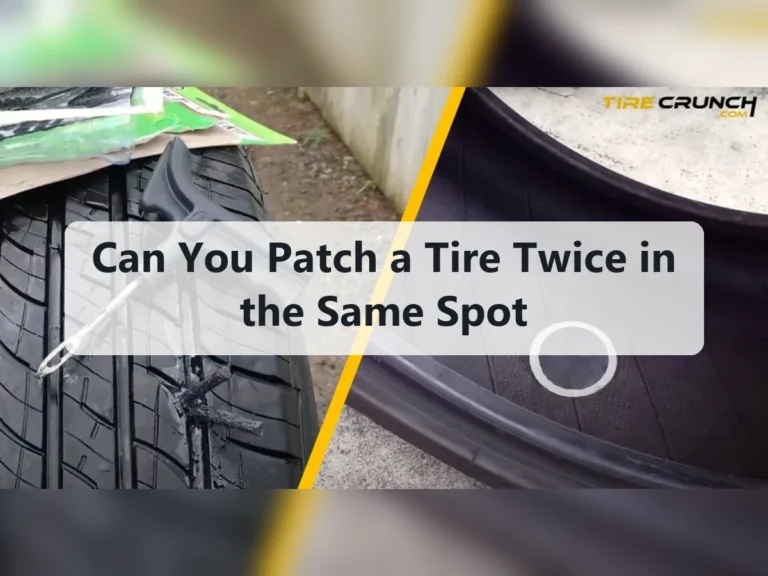
Do You Need Rubber Cement to Plug a Tire: Complete Guide and Tips
No, rubber cement is not usually required to plug a tire. Most tire plug kits use a specialized vulcanizing cement or sealant, and some plugs are designed to install dry.
You are on the shoulder after finding a screw in your tire, and the repair kit in your trunk includes a sticky tube labeled cement. The obvious question is whether rubber cement is essential or whether the plug can simply be pushed into the puncture. The answer depends on the type of plug, the instructions supplied with the kit, and the location and size of the damage.
That distinction matters because ordinary rubber cement, tire-repair cement, and chemical vulcanizing fluid are not interchangeable. A plug may hold temporarily without adhesive, yet a poorly prepared puncture can leak, pull the plug out, or leave the tire unsafe to drive on. A plug also cannot fix every kind of tire damage.
This guide examines “do you need rubber cement to plug a tire” and explains the details that matter in practice.
This guide examines “do you need rubber cement to plug a tire” and explains the details that matter in practice.
This guide explains do you need rubber cement to plug a tire, how different repair materials work, when a plug is appropriate, and which warning signs call for a tire shop instead. You will learn what to inspect, how to follow a plug kit correctly, and how to decide whether the repair is suitable for a temporary roadside fix or a professional repair.
- ✓Ordinary household rubber cement is not the preferred adhesive for a tire plug.
- ✓Use the cement or lubricant specified by the plug manufacturer; some self-vulcanizing plugs require no added cement.
- ✓Only repair a small tread puncture when the tire has not been driven severely underinflated and the plug kit permits the repair.
- ✓Sidewall, shoulder, large, irregular, or multiple punctures generally require tire replacement or professional evaluation.
Do You Need Rubber Cement to Plug a Tire?
In most cases, you do not need household rubber cement. A standard tubeless tire plug is made from a tacky, rubber-like material that grips the cleaned puncture channel. Many kits also include a small tube of vulcanizing cement, which is formulated to bond with tire rubber and help seal the repair as the materials cure.
Some plug systems are specifically designed to work without extra adhesive. Their plugs may contain a self-vulcanizing compound or use a construction that seals mechanically as the tire flexes. Adding an unapproved product can make installation messier without improving the seal, and it may interfere with the plug’s intended curing process.
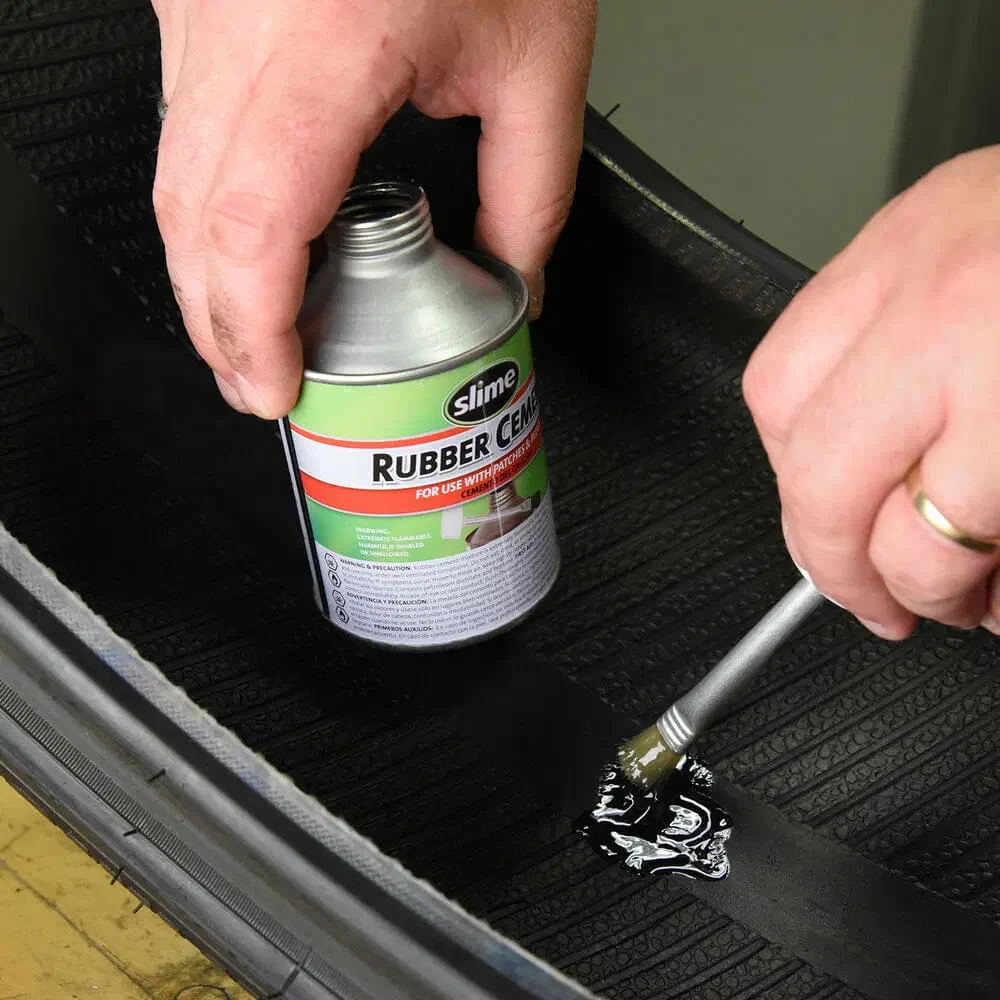
- Kit instructions: Follow the supplied directions before adding any adhesive or lubricant.
- Product type: Distinguish tire-repair cement from general-purpose rubber cement.
- Plug design: A self-vulcanizing or pre-coated plug may be intended for dry installation.
- Repair limits: Confirm the kit is approved for the puncture’s size and location.
If the instructions call for cement, apply only a thin coating to the plug or the prepared puncture as directed. The goal is to help insertion and promote a seal, not to fill the entire hole with glue. Excess adhesive can make the tool slip, contaminate the tire surface, or give a false impression that a damaged tire has been structurally repaired.
Rubber Cement, Vulcanizing Cement, and Tire Plug Sealant
The word “cement” causes much of the confusion. Household rubber cement is generally a repositionable adhesive used for paper, crafts, and light materials. It may feel sticky and flexible, but that does not make it the right chemical or mechanical match for a tire that experiences heat, pressure, water, and constant flexing.
Vulcanizing cement is made for tire repair. It helps the plug and the surrounding rubber bond more reliably, often through a chemical process that supports adhesion as the repair sets. It is still not a substitute for correct puncture preparation or a professional repair when the tire is damaged beyond a safe plug repair.
Some products marketed as tire sealant are also different from plug cement. Liquid sealants are poured into a tire or delivered through the valve to slow or stop certain small leaks. They are not automatically suitable for installing a rope plug, and they may complicate later inspection or balancing.
Read the product directions rather than combining materials because they appear similar.

- Household rubber cement: A general adhesive that is not the normal choice for a pressurized tire repair.
- Vulcanizing cement: Tire-specific compound used with certain plug kits to support bonding and sealing.
- Liquid sealant: A separate leak-control product that does not replace proper puncture repair.
- Dry-install plug: A plug designed to seal through its own material and fit, without added cement.
When people ask, “do you need rubber cement to plug a tire,” they often mean whether the plug will stay in place without glue. A properly matched plug can seal because it is compressed inside the puncture and bonded to the tire material, but the exact answer belongs to the kit’s instructions. Never assume that a random adhesive improves a repair.
When a Tire Plug Is Appropriate
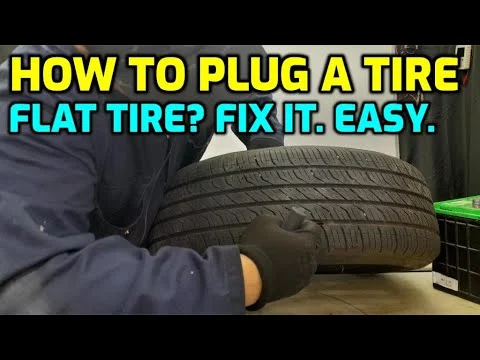
A plug is intended for a limited type of puncture: a small, clean hole in the central tread caused by an object such as a nail or screw. The tire should still have enough structural integrity for repair, and the injury should fall within the plug manufacturer’s stated size limits. A slow leak with a visible object in the tread is a common example, but visibility alone does not prove that a plug is safe.
The tire’s history also matters. Driving a tire for a significant distance while it is very low on air can damage the sidewall and internal cords, even if the puncture itself looks minor. That hidden damage may not be visible from outside, so a tire shop may need to remove and inspect the tire from the inside.
- Location: The puncture should be in the main tread, not the sidewall or shoulder.
- Shape: A small, fairly straight puncture is more suitable than a cut or tear.
- Condition: No bulge, exposed cord, severe cracking, or run-flat damage should be present.
- History: Avoid relying on an exterior plug if the tire was driven substantially underinflated.
Many tire professionals prefer an internal patch-plug repair because it combines a plug for the puncture channel with a patch that seals the inner liner. A rope plug installed from the outside can be useful as a temporary roadside measure, but local laws, tire policies, vehicle requirements, and manufacturer guidance may limit how it should be used.
When You Should Not Plug the Tire
Do not use a plug as a way to rescue a tire with structural damage. The sidewall flexes far more than the tread, and a repair inserted into the sidewall or shoulder may fail because of that movement. A plug also cannot restore strength to a tire with a damaged cord or separated internal layer.
Replacement or professional inspection is the safer choice for a puncture near the edge of the tread, a long slice, a jagged hole, a puncture larger than the kit allows, or damage involving more than one injury in the same area. A tire with a visible bulge, exposed fabric, deep cracking, or an unusual vibration should not be treated as a simple plug job. This distinction matters when answering “do you need rubber cement to plug a tire”.
- Sidewall injury: Do not plug it; sidewall repairs are not a dependable solution.
- Shoulder puncture: The curved transition area is generally outside normal plug-repair limits.
- Underinflation damage: Have the tire dismounted and inspected if it was driven flat or nearly flat.
- Repeated leaks: A plug that keeps leaking may indicate an enlarged hole, poor preparation, or internal damage.
Also check for the original cause of the leak. A nail may be only part of the problem; a bent wheel, leaking valve stem, damaged bead, or corrosion at the rim can produce similar symptoms. Spraying soapy water around the tread, valve, and bead can help locate bubbles, but it does not replace a full inspection when the source is uncertain.
How to Use a Tire Plug Kit Correctly
Follow the specific instructions included with your kit because tools and plug materials vary. Work only in a stable, safe location away from traffic, use gloves and eye protection, and do not crawl under a vehicle supported only by a jack. If the vehicle cannot be placed safely, call roadside assistance.
- Confirm the puncture: Locate the leak and identify the object. Do not remove the nail or screw until you are ready to prepare the repair, because removing it can release air quickly.
- Inflate enough to inspect: Use an appropriate inflator and the vehicle’s recommended cold tire pressure as a reference. Never exceed the tire’s marked maximum pressure.
- Remove the object: Pull the nail or screw out with pliers. If the hole is large, irregular, or in an unsuitable location, stop rather than forcing a plug.
- Prepare the channel: Insert and work the kit’s reaming tool as directed. This cleans rough edges and creates the shape needed for the plug to seat.
- Prepare the plug: Thread or load the plug into the insertion tool. Apply the kit’s vulcanizing cement only if the directions require it, and use a modest amount.
- Insert the plug: Push it into the puncture until the specified amount remains outside. Avoid twisting or stretching it more than the instructions allow.
- Finish the repair: Withdraw the tool according to the kit directions and trim excess plug material if instructed. Do not pull out a plug simply because a small portion remains visible.
- Check for leaks: Inflate the tire to the vehicle’s recommended pressure and apply soapy water to the repair. Bubbles indicate that the repair is not sealing.
A plug that continues to bubble, moves when touched, or leaks rapidly should not be trusted for normal driving. Install the spare or use another safe mobility option, then have the tire inspected. A roadside plug is not permission to ignore a pressure warning.
Common Mistakes That Make Plug Repairs Fail
Most failures are caused less by the absence of rubber cement than by choosing the wrong repair or skipping preparation. Pushing a plug into a dirty, wet, or enlarged puncture can prevent the material from gripping the inner surfaces. A plug that is too small may not fill the channel, while one that is too large can damage the surrounding rubber during insertion.
Another mistake is treating the visible tread as the whole tire. A puncture may pass through at an angle, split an internal belt, or sit closer to the shoulder than it first appears. Driving on low pressure can also create heat-related damage that adhesive cannot repair.
- Using household glue: An adhesive’s stickiness does not prove that it is compatible with tire rubber or pressure.
- Skipping the reamer: Poor preparation can leave debris and prevent the plug from sealing.
- Overusing cement: Too much product can hinder insertion and create a messy, unreliable repair.
- Ignoring pressure loss: A slow leak after repair still requires immediate diagnosis.
Do not stack plugs in one hole, enlarge a puncture just to make installation easier, or drive at highway speed to “test” a questionable repair. If the plug does not hold at low speed and stable pressure, the correct response is inspection or replacement—not more adhesive.
How to Check a Plugged Tire Afterward
After installation, compare the pressure with the vehicle’s recommended setting and monitor it before driving far. Check the repair again after the tire has sat for several hours or overnight. A pressure-monitoring system can alert you to a problem, but it does not replace checking the actual pressure with a reliable gauge.
Inspect for fresh bubbles, a plug that appears to be pulling out, new cracking, or a wet trail of sealant. Pay attention while driving: vibration, pulling, thumping, or a renewed tire-pressure warning means you should slow down safely and stop for an inspection.
- Pressure loss: Any measurable recurring loss suggests the repair or another component is leaking.
- Plug movement: A plug that shifts or protrudes unusually may not be seated correctly.
- New vibration: This can point to tire damage, wheel damage, or an installation problem.
- Warning light: Confirm pressure manually instead of assuming the sensor is mistaken.
Keep in mind that an exterior rope plug may be temporary even when it holds air. Ask a qualified tire professional whether the tire can receive an internal repair and whether the tire’s condition, age, tread, and previous repairs make continued use appropriate.
FAQ About Do You Need Rubber Cement to Plug a Tire
Can I plug a tire without any cement?
Sometimes. Certain plugs are made for dry installation, while others require tire-repair cement for proper sealing or easier insertion. Use the instructions for that exact kit rather than applying a general adhesive by guesswork.
Can I use household rubber cement on a tire plug?
It is not recommended as a substitute for tire-specific vulcanizing cement. Household rubber cement may not bond reliably under tire heat, pressure, moisture, and flexing, and it may not be compatible with the plug material.
What if my plug kit includes a small tube
That tube is usually intended for the supplied plugs and should be used exactly as directed. Apply only the amount specified, allow any stated setting time, and do not mix it with other sealants or adhesives.
Will cement make a bad tire plug safe?
No. Cement cannot correct a sidewall puncture, internal cord damage, a large tear, severe underinflation damage, or a puncture outside the repairable tread area. The tire still needs a proper inspection and may need replacement.
Is a tire plug a permanent repair?
An exterior plug can be a practical temporary repair, but it is not automatically a permanent repair. A tire professional may recommend an internal patch-plug repair after removing and inspecting the tire.
How do I know whether the plug is leaking?
Inflate the tire to the recommended pressure, apply soapy water around the plug, and watch for growing bubbles. Recheck pressure later; continued loss means the repair should not be trusted.
Conclusion
So, do you need rubber cement to plug a tire? Usually not household rubber cement, and not always any cement at all. Use the tire-specific compound supplied with the kit when required, or install a dry-use plug according to its directions.
The repair is appropriate only for a limited tread puncture in an otherwise sound tire.
When the injury is near the shoulder, involves the sidewall, is unusually large, or follows driving while severely underinflated, stop treating it as a simple plug problem. A professional inspection or replacement is the safer decision.
Read your plug kit’s instructions, inspect the puncture location and tire condition, and test for leaks before driving beyond a safe place for professional help.