Can You Patch a Tire After It Has Been Plugged: Explained Clearly
Yes, a plugged tire can sometimes be patched, but the plug must be removed and the tire inspected and repaired from the inside by a qualified technician.
The hardest part is identifying what actually caused the tire to lose air A visible plug may look secure while a second puncture damaged inner liner leaking valve.
That small detail—the puncture’s location and the condition of the tire inside—changes the final decision. A puncture in the center tread may qualify for a professional plug-patch repair, while damage near the shoulder, sidewall, or an existing repair often calls for replacement. This guide examines “can you patch a tire after it has been plugged” and explains the details that matter in practice.
This guide explains the difference between a plug a patch and a combination repair how technicians inspect a previously plugged tire which failures signal hidden damage and when.
- ✓A tire should not be patched over an old plug without removing the plug and inspecting the casing.
- ✓A professional plug-patch repair is usually considered only for a small puncture in the repairable center tread.
- ✓Shoulder, sidewall, overlapping, enlarged, or run-flat-damaged punctures commonly require tire replacement.
- ✓Persistent air loss after a plug may come from internal damage, a valve, the wheel, or another puncture.
Can You Patch a Tire After It Has Been Plugged?
In some cases yes but the safe repair is not usually a patch placed on top of the existing plug A tire professional normally removes the tire from.
A patch seals the inner liner around the puncture while a plug fills the injury channel through the tread Used together as one manufactured repair unit they address.

- Not a surface fix: A patch must bond to a clean, prepared inner liner; dirt, moisture, sealant, or an old plug can prevent a reliable seal.
- Inspection comes first: The technician must see whether the cords, inner liner, and surrounding rubber are still sound.
- Location controls eligibility: Center-tread punctures are more repairable than injuries near the shoulder or sidewall.
The answer also depends on how the original plug was installed A correctly placed plug in a small straight puncture may leave a repairable tire A plug inserted.
Why a Plug and Patch Are Different
Understanding the two repair methods makes the decision clearer. A tire plug is inserted through the outside of the tread. Its rubber material fills the puncture channel, and the repair can often be completed without removing the tire from the wheel.
A patch is installed on the inside of the tire after the tire has been removed. It covers the opening in the inner liner, but a flat patch by itself may not completely seal the full puncture channel through the tread.
For that reason many professional repair procedures use a combined plug-patch unit The stem fills the injury path and the inner patch seals against the liner The exact.

| Repair type | How it is installed | Main limitation |
|---|---|---|
| External rope plug | Inserted through the tread from outside | May not reveal internal damage and is not the same as a complete internal repair |
| Flat patch | Bonded to the inside of the tire | May not seal the entire puncture channel by itself |
| Plug-patch unit | Installed internally with a stem through the puncture | Still unsuitable for many shoulder, sidewall, large, or structurally damaged injuries |
When people ask can you patch a tire after it has been plugged they are often describing one of two different situations They may mean adding an internal.
- Plug-only repair: Fast and useful as a temporary measure in some situations, but it does not provide the same inspection opportunity as an internal repair.
- Internal repair: Requires tire removal and preparation, allowing the technician to find hidden punctures, liner damage, or debris.
- Combination repair: Addresses both the puncture channel and inner liner when the tire meets repair criteria.
When a Previously Plugged Tire May Be Repairable
A tire with an earlier plug may still be serviceable if the original injury is small, located in the repairable tread area, and free from structural damage. The tire must also have retained enough air to avoid being driven while severely underinflated.
The repair decision is not based only on whether the tire currently holds air A plug can temporarily stop a leak while the casing has been weakened by.
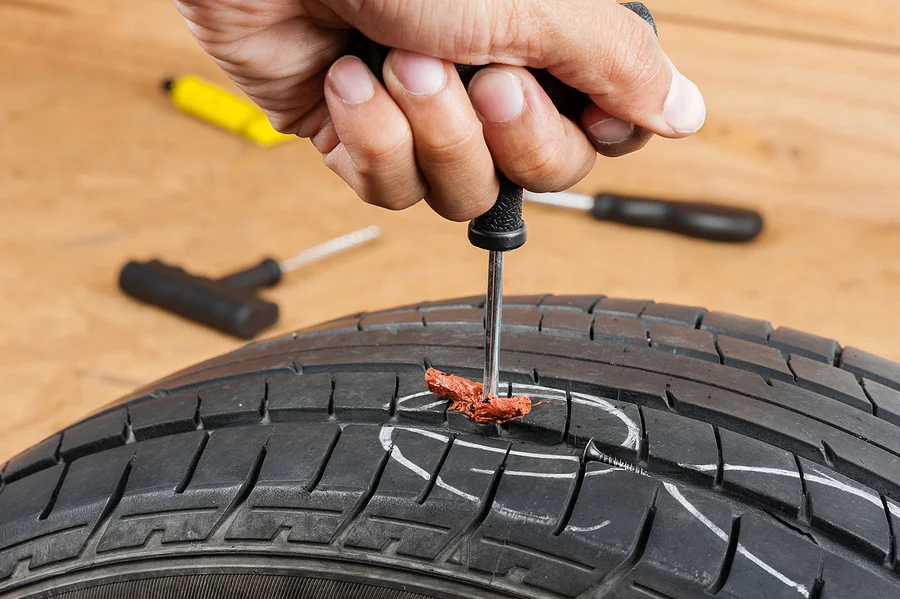
- Repairable zone: The injury is in the central tread area rather than the shoulder or sidewall.
- Limited size: The puncture is within the tire maker’s or repair material maker’s permitted limits.
- Clean casing: No severe abrasion, exposed cords, bulges, cuts, or separation appears inside or outside.
- Sound history: The tire was not driven a significant distance while flat or nearly flat.
Center tread versus shoulder damage
The center tread generally has thicker rubber and a more favorable belt structure for a repair. A puncture in that area may be sealed if it is small, round enough for the repair procedure, and not too close to another injury.
The shoulder is the curved transition between the flat tread and sidewall It flexes heavily during cornering so repairs in or near this area are exposed to movement.
What the original plug reveals
The plug itself can provide clues. If it is loose, mushroomed incorrectly, cut short, leaking, or surrounded by torn rubber, the puncture may have been enlarged during installation. A puncture that required excessive force to plug may also have damaged the belt area.
Removing the plug can leave an irregular channel rather than a clean, uniform injury. A technician may be able to prepare that channel for an approved repair, but if the opening is too large or the cords are compromised, replacement is the safer result.
Why tire age and wear still matter
Even an eligible puncture may not justify repairing a worn or aged tire. Low tread depth, uneven wear, cracking, repeated air-loss events, or a history of overheating reduces the margin for continued service.
A repair does not restore tread, reverse rubber aging, or correct alignment-related wear. If the tire is near the end of its useful life, paying for a repair may postpone rather than solve the underlying safety decision.
When Patching After a Plug Is Unsafe
Some conditions rule out a second repair because the problem is no longer just a hole. A puncture can damage the tire’s internal cords, and no patch can restore the original strength of a compromised sidewall or belt package.
Replacement is especially important when the tire was driven while underinflated As the sidewall flexes against the road heat builds and the inner liner can develop a dark.
- Sidewall or shoulder injury: Do not assume a patch makes these areas safe for normal driving.
- Visible bulge: A bubble indicates structural damage and is not repaired by plugging or patching.
- Exposed or cut cords: Broken reinforcement means the tire’s structure may no longer be reliable.
- Severe underinflation: Internal abrasion or heat damage can remain after the tire is reinflated.
Overlapping repairs
Two punctures close together can weaken the rubber between them. If a new injury overlaps the old repair or falls within the same stressed area, the technician may not have enough healthy material for a proper repair.
Spacing matters because each repair removes or disturbs some rubber and belt-area material. Multiple repairs are not automatically forbidden, but they require a careful inspection of the whole tire rather than a decision based on one hole.
Large, irregular, or angled punctures
A nail or screw may create a small, relatively straight channel. A torn object, bent metal fragment, or driving with the object lodged in the tire can create a wider and irregular opening. Reaming or plugging such an injury may enlarge it further.
Angled punctures are also difficult because the repair stem may not sit correctly through the casing. If the injury crosses belt edges or distorts the tread, a patch cannot reliably rebuild the original structure.
Sealant and contamination
Some emergency tire sealants leave liquid or residue inside the tire. That material can interfere with bonding, obscure a slow leak, and create a messy inspection. It may also require special handling when the tire is removed.
Tell the technician if you used sealant, an inflator, or a temporary plug kit. Hiding that history makes it harder to judge whether the inner liner can be cleaned and prepared properly. This distinction matters when answering “can you patch a tire after it has been plugged”.
How a Professional Evaluates the Tire
A sound decision starts before any new repair material is installed. The technician should verify the tire’s size and condition, locate every leak, and examine the interior rather than treating the visible plug as the entire diagnosis.
The tire is commonly removed from the wheel for inspection This allows the technician to check the inside of the liner the area around the original plug the.
- Leak source: Confirm whether air escapes from the puncture, valve stem, bead, wheel, or another location.
- Internal surface: Look for abrasion, wrinkles, heat marks, rubber dust, or a damaged liner.
- Repair history: Note previous plugs, patches, sealant, and how long the tire was driven after losing pressure.
- Overall condition: Evaluate tread, age-related cracking, uneven wear, bulges, and remaining serviceability.
Finding the true leak
A soapy-water test can show bubbles around a puncture, but a slow leak may be difficult to find while the wheel is still mounted. The valve core, valve stem, bead seat, and wheel rim can all mimic a failed plug.
If a tire continues losing pressure after plugging, do not automatically add another plug. The original repair may be leaking, but the source could be a second puncture or a wheel problem that requires a different fix.
Inspecting the inner liner
The inner liner should generally be smooth and intact. A rough, abraded, or heat-damaged area suggests that the tire was operated without adequate inflation. A plug can stop the external leak while leaving that internal damage untouched.
The technician also checks whether the repair area can be properly prepared. A successful patch requires clean, dry, suitably textured rubber and a repair surface large enough for the patch to bond completely.
Checking the wheel and valve
A cracked or bent wheel can repeatedly unload the tire bead and cause air loss. Corrosion around the bead seat can have a similar effect, especially where moisture and road salt are common.
The valve stem and valve core should also be checked. Replacing a leaking valve may solve the problem without disturbing a sound tire repair, while replacing the tire would not correct a leak from the wheel.
What Happens During a Proper Internal Repair
If the tire qualifies, the technician follows a controlled process rather than placing a patch wherever it appears convenient. The tire is removed, the old plug is addressed, and the injury is inspected and prepared according to the selected repair system.
The preparation step is important because bonding depends on the condition of the inner liner. Lubricants, moisture, dirt, mold-release residue, and leftover sealant can weaken the bond or create a path for air to travel beneath the patch.
- Remove and inspect: Take the tire off the wheel and examine both sides of the casing, including the previous repair.
- Locate and evaluate the injury: Confirm its position, size, angle, and condition of the surrounding cords and rubber.
- Remove unsuitable material: Take out the old plug or other temporary repair when the procedure requires it.
- Prepare the liner: Clean and texture the approved repair area without damaging the underlying structure.
- Install the repair: Fit the appropriate plug-patch unit and secure it according to its instructions.
- Recheck the tire: Inflate, inspect, and test for leaks before returning the tire to service.
The exact tools and materials differ between shops. The important distinction is that the repair is made after an internal inspection and uses a system intended for the type of injury, not an improvised combination of unrelated products.
- Layering repairs: Placing a patch over an old plug can trap contamination and prevent full contact with the inner liner.
- Skipping removal: Repairing from outside alone cannot reveal sidewall abrasion or internal belt damage.
- Ignoring pressure loss: A tire that keeps leaking needs diagnosis, not repeated plugs.
Is a Plugged and Patched Tire Reliable?
A properly inspected and repaired tire can perform normally when the injury is eligible and the repair is installed correctly. However, the repair does not make the tire indestructible or erase the conditions that caused the original failure.
Reliability depends on several factors puncture location injury size tire construction remaining tread inflation history road use and the quality of the repair A small center-tread puncture in.
| Situation | Likely decision | Reason |
|---|---|---|
| Small center-tread puncture, no internal damage | Professional internal repair may be considered | Healthy surrounding structure can support the repair |
| Plug leaking but tire otherwise sound | Remove and evaluate for a combination repair | A failed temporary repair does not automatically prove the tire is ruined |
| Puncture near shoulder or sidewall | Usually replace | High flex and structural risk make repair unreliable |
| Tire driven while flat | Inspect closely; replacement may be required | Heat and abrasion may have weakened the casing |
| Multiple close or overlapping punctures | Often replace | Insufficient healthy material may remain between injuries |
After any repair, check the pressure with an accurate gauge and follow the vehicle manufacturer’s recommended cold inflation pressure. Do not use the maximum pressure molded into the tire sidewall as the normal target unless the vehicle documentation calls for it.
Monitor the tire for pressure loss, vibration, pulling, noise, or visible changes. A new symptom does not prove the repair failed, but it is a reason to stop treating the tire as routine and have it inspected promptly.
What Drivers Should Do Before Visiting a Tire Shop
If the tire is losing air minimize driving Driving several miles on a low tire can turn a potentially repairable puncture into a casing damaged beyond repair Inflate.
Do not pull out a nail or screw if it is still stopping air from escaping Removing it may convert a slow leak into a rapid loss of.
- Record the pressure: Note how quickly the tire loses air and whether the warning light returns.
- Photograph the repair: A clear picture can help the shop understand the existing plug’s location and condition.
- Describe the history: Mention when the puncture occurred, how far you drove, and whether sealant was used.
- Inspect the matching tire: Compare tread wear and pressure on the same axle, but do not delay the damaged tire’s evaluation.
Questions to ask the technician
Ask whether the tire was removed and inspected internally where the injury sits in relation to the shoulder and whether there are signs of run-flat or low-pressure damage.
A clear explanation should connect the recommendation to observable conditions. “It cannot be repaired” is more useful when accompanied by the reason—such as sidewall location, belt damage, excessive size, or evidence of driving while underinflated.
When replacement is the better value
A repair may cost less immediately, but replacement is the better value when the tire is worn, aged, repeatedly leaking, or structurally questionable. The cost of another temporary fix can add up while leaving you with less confidence and no solution to the underlying risk.
If only one tire is replaced ask how its tread depth and construction compare with the other tires Depending on the vehicle and drivetrain a large difference in rolling circumference may create handling or mechanical concerns so the shop may discuss replacing.
Common Questions About Repairing a Plugged Tire
Can you patch a tire after it has been plugged without removing the plug?
That is generally not the proper approach. A technician should determine whether the old plug must be removed, inspect the inside of the tire, and use a repair system that seals the puncture and bonds correctly to the prepared inner liner.
Is a plug-patch better than a plug alone?
For an eligible puncture, an approved plug-patch repair provides both a seal through the injury channel and coverage on the inner liner. It also requires the tire to be removed, which allows an inspection that an outside-only plug does not provide.
Can a tire be repaired twice?
Sometimes, but the answer depends on the location, spacing, size, and condition of each injury. Repairs that overlap, sit too close together, or leave too little healthy tread and belt area may make replacement necessary.
How close to the sidewall can a tire be patched?
There is no universal safe distance that makes every near-sidewall repair acceptable. The shoulder and sidewall flex substantially, so many tire-service professionals will reject an injury in those areas rather than rely on a patch that cannot restore the original structure.
What if the tire is still losing air after being plugged?
Have it inspected instead of adding another plug. The leak may come from the original repair, a second puncture, the valve, the bead, or the wheel, and internal damage may also be present.
Can a tire patch fix damage from driving flat?
A patch can seal a puncture, but it cannot reverse internal abrasion, heat damage, or weakened cords caused by driving with little or no air. If those signs are present, replacing the tire is usually the safer choice.
Can I install an internal patch at home?
Internal repairs require tire removal, proper preparation, suitable repair materials, and careful reinflation. Because an error can affect a safety-critical component, this work is best handled by a qualified tire professional with the correct equipment.
Conclusion
Whether can you patch a tire after it has been plugged depends on more than the plug s appearance A small center-tread puncture in a structurally sound tire.
If the tire has lost pressure, limit driving and have it removed for a complete inspection. Ask the technician to identify the true leak source, explain the casing condition, and compare the repair cost with the tire’s remaining life.
Do not add another plug or patch at home; have the tire professionally dismounted and inspected before deciding between an internal repair and replacement.