Do Screw in Tire Plugs Work: What to Know and Why It Matters
Screw-in tire plugs can temporarily seal some small tread punctures, but they are not a dependable substitute for an internal tire repair or replacement.
A screw-in tire plug may make a leaking tire look fixed because the hissing stops and the pressure holds for a while. That visible improvement, however, does not prove the tire’s internal structure is sound. The plug must seal the puncture, remain secure as the tire flexes, and avoid masking damage that cannot be seen from outside.
Think of it like pushing a stopper into a leaking garden hose: the water may stop escaping, but the hose could still be split beneath the surface. In a tire, the important details include the puncture’s size, angle, location, and whether the sidewall or steel belts were damaged. This guide explains do screw in tire plugs work in real driving conditions, how they differ from a proper plug-patch repair, which punctures are especially risky, and what symptoms mean you should stop driving.
By the end, you can decide whether a plug is only an emergency measure, whether a tire shop should inspect it immediately, or whether replacing the tire is the safest choice.
- ✓Screw-in plugs can slow or stop air loss from some small tread punctures, especially as a temporary measure.
- ✓They do not let a technician inspect the tire’s inner liner, belts, or hidden structural damage.
- ✓Sidewall punctures, shoulder damage, large holes, and driven-flat tires generally call for replacement rather than plugging.
- ✓A professional internal plug-patch repair is more reliable than an externally installed screw-style plug.
Do Screw in Tire Plugs Work Reliably?
They can work in a limited sense: a rubber-coated screw or threaded plug may fill a small hole and reduce air loss. The plug material expands or grips the puncture channel, creating friction and helping close the path between the tread and the tire’s interior.
That is different from proving the tire is safe for normal use. A tire experiences repeated flexing, heat, braking loads, cornering forces, and impacts. A repair that seals while the vehicle is parked may loosen, tear, or leak after the tire warms up and deforms on the road.
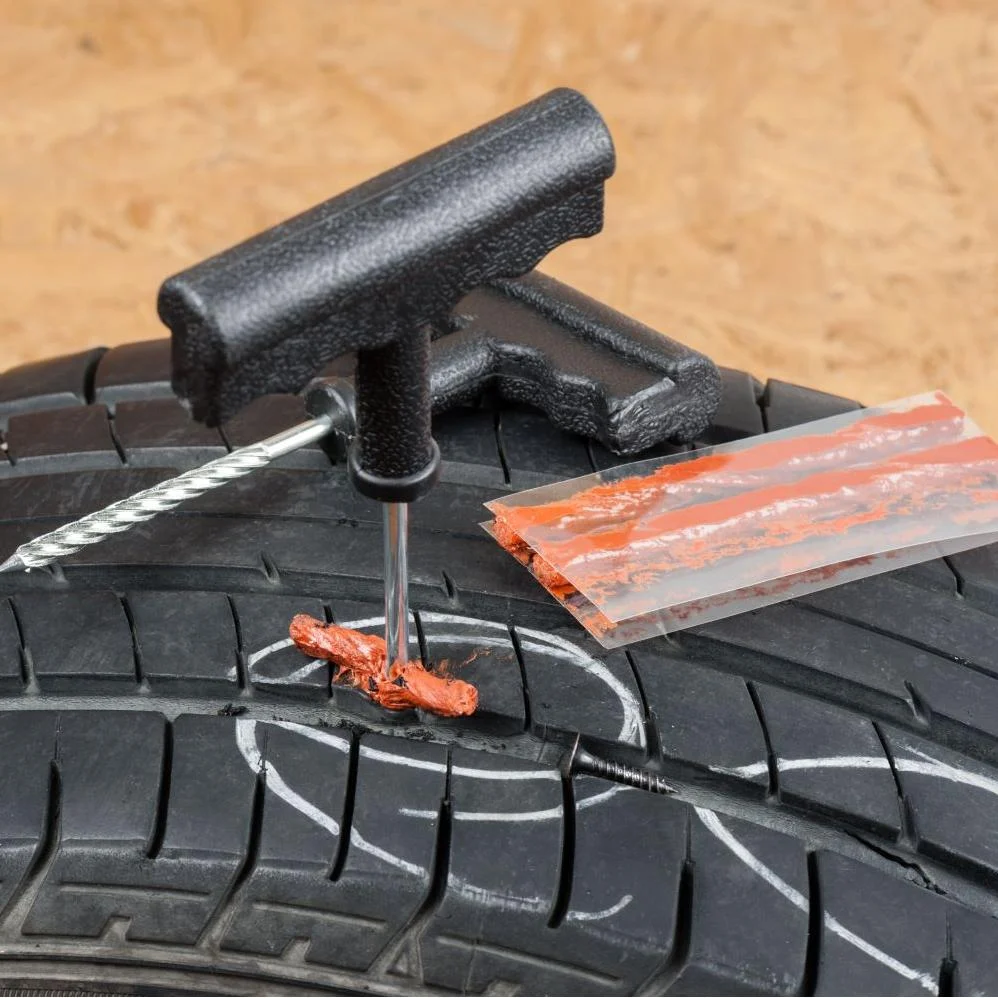
- Puncture location: The repairable area is usually the central tread, not the shoulder or sidewall.
- Hole size: A small, clean puncture is less concerning than a cut, torn hole, or irregular damage.
- Air-loss pattern: A tire that keeps losing pressure after plugging needs prompt inspection.
- Internal condition: Only removing the tire allows a proper check for liner and belt damage.
Many screw-in products are sold for roadside emergencies, farm equipment, trailers, or off-road use. That does not automatically make them suitable as a permanent repair for a passenger vehicle traveling at highway speeds. The product’s instructions, the tire manufacturer’s guidance, and local repair practices may all impose different limits.
Another concern is installation. Enlarging the puncture to insert a plug can damage the tire’s cords or create a path that is wider than the repair material can reliably seal. If the plug is cut too short, installed at the wrong angle, or forced into a puncture with internal tearing, it may fail without an obvious warning.
When a Screw-in Plug Is Most Likely to Hold
The best-case situation is a small nail or screw that entered nearly straight through the thick, central tread. The object may have created a relatively clean channel without slicing across multiple tread blocks or damaging the sidewall. If the tire has not been driven while severely underinflated, the surrounding rubber may still be structurally intact.
Even in this favorable scenario, a screw-in plug should be viewed as a short-term solution until the tire can be assessed. A technician can remove the tire, locate the puncture from the inside, and determine whether the injury is appropriate for a conventional repair.

- Emergency mobility: Use a compatible plug only to reach a safe location or tire service facility.
- Central tread injury: A puncture well away from the shoulder has a better chance of being repairable.
- Stable pressure: The tire should be inflated correctly and monitored closely after any temporary repair.
- Undamaged casing: The tire must not show bulges, exposed cords, deep cuts, or signs of running flat.
Do screw in tire plugs work better when the puncture remains occupied by the original nail or screw? Often, leaving the object in place until the tire can be inspected helps limit additional air loss, but driving on it still carries risk. Once the object is removed, the hole may leak faster, and inserting a plug incorrectly can make later professional repair more difficult.
Do not assume a plug is adequate because the tire looks normal afterward. Check the pressure with a reliable gauge rather than judging by appearance, and recheck it soon after the repair. A tire can lose enough air to become dangerous while still appearing reasonably inflated.
When Plugging Is Unsafe or Inappropriate
The most important distinction is between a puncture in the repairable tread area and damage to the shoulder or sidewall. The sidewall carries and flexes differently from the tread. A plug placed there may not remain secure, and the damage can compromise the tire’s strength even if air loss stops.
Shoulder punctures are also problematic because they sit where the tread transitions into the sidewall and flexes heavily. A hole near that curve is not equivalent to a hole in the middle of the tread. Many tire professionals will recommend replacement rather than attempting a repair in either location.

- Sidewall or shoulder damage: Do not rely on a plug; replacement is commonly the safer option.
- Large or jagged holes: A torn puncture may not seal and may indicate damaged cords.
- Multiple nearby injuries: Several repairs close together can weaken the tread area.
- Run-flat damage: Driving with little or no pressure can create hidden internal deterioration.
A tire that has been driven while flat or severely underinflated deserves special caution. The sidewall may rub against itself, creating heat and abrasion inside the tire. That damage may be invisible from the outside, and a screw-in plug cannot restore weakened rubber or broken cords.
Replacement is also the safer path when the tire has a bulge, exposed fabric, deep cuts, severe uneven wear, or a history of impact with a pothole or curb. These signs point to more than a simple air leak. They may indicate structural damage that a surface plug cannot address.
Why Location Matters More Than Appearance
A round-looking hole does not automatically mean the tire is repairable. The puncture may have entered at an angle, scraped the belt package, or widened as the tire rolled. The visible opening is only the outer end of the injury, not a complete view of the internal damage.
This is why tire repairs are commonly evaluated with the tire removed from the wheel. The technician can inspect the inner liner, identify any abrasion from low-pressure driving, and determine whether the puncture falls within accepted repair limits.
Screw-in Plugs Versus Proper Tire Repairs
A screw-in plug is installed from the outside. A conventional professional repair generally involves removing the tire, preparing the injury from the inside, and installing a combination plug-patch. The plug fills the puncture channel while the patch seals the inner liner.
The internal method takes more time, but it allows inspection before the repair is completed. It also reduces the chance that air will migrate between the tire’s layers. An outside-only plug does not provide the same level of inspection or sealing.
- Installation: Screw-in plugs enter from the tread surface; plug-patches are installed from inside the tire.
- Inspection: Internal repairs require the tire to be removed, exposing hidden damage.
- Sealing: A plug-patch addresses both the puncture channel and the inner liner.
- Purpose: External plugs are commonly emergency measures, while approved internal repairs may support continued service when the injury qualifies.
Repair policies vary by tire type, puncture size, location, speed rating, and the condition of the casing. A technician may decline a repair even when the hole appears small if the tire has been driven underinflated or has already been repaired too close to the injury.
Sealant products and tire-inflation kits are different from screw-in plugs. Some sealants temporarily coat the inside of the tire and may interfere with pressure sensors or later repairs. Read the product instructions and tell the tire shop what was used.
How to Check a Tire After a Plug
If a plug has already been installed, treat the tire as a condition requiring attention rather than assuming the problem is over. Inflate it to the vehicle manufacturer’s recommended cold pressure, usually found on the driver’s doorjamb label. Do not use the maximum pressure molded into the tire sidewall as the vehicle’s normal target unless the vehicle documentation says so.
Inspect the repair area for bubbling, movement, cracking, or fresh wetness from a leak-detection solution. A bubbling plug indicates escaping air. If pressure drops noticeably, avoid highway driving and arrange an inspection or replacement.
- Confirm the pressure: Measure with a gauge when the tire is cold.
- Look for renewed leakage: Apply soapy water around the plug and valve stem and watch for growing bubbles.
- Check the surrounding rubber: Look for bulges, cuts, exposed cords, or tread separation.
- Monitor pressure again: Recheck before the next trip and stop if the tire loses pressure.
- Schedule a tire inspection: Ask for an internal assessment rather than relying on the outside plug alone.
Do screw in tire plugs work indefinitely? There is no safe universal time limit. Some remain in place for a long period, while others leak quickly.
Mileage, temperature, road hazards, tire pressure, installation quality, and the original damage all affect the outcome.
Do not repeatedly add air and continue driving without finding the cause of the loss. Low pressure increases heat buildup and changes handling, braking, and fuel economy. It can also turn a potentially repairable puncture into a tire that must be replaced.
Frequently Asked Questions
Are screw-in tire plugs a permanent repair?
They should generally be treated as temporary or emergency repairs unless a qualified tire professional confirms that the specific product and tire application support continued use. An internal plug-patch is the more complete repair approach for an eligible tread puncture.
Can a screw-in tire plug be used on a sidewall?
A sidewall plug is not considered a safe solution for ordinary passenger-vehicle use. Sidewall damage can affect the tire’s structure, so replacement is usually recommended instead of plugging.
How long can I drive on a screw-in tire plug?
Drive only as far and as fast as necessary to reach a safe location or tire service facility, following the product instructions. There is no dependable mileage promise because plugs and punctures vary widely.
What happens if a tire plug starts leaking?
Stop driving at highway speed, check the pressure, and inspect for bubbles or movement around the plug. If the tire is losing air, use a spare or roadside assistance when possible and have the tire professionally evaluated.
Can a plugged tire be repaired again?
Sometimes, but not always. A technician must consider the location of the existing repair, the new injury, the distance between them, the tire’s condition, and whether the casing has been weakened.
Does a screw-in plug damage the tire?
Installation can enlarge or distort the puncture, especially if the tool is used incorrectly. The original object may also have damaged internal cords, which is one reason an outside inspection cannot fully establish safety.
Should I replace a tire after driving it flat?
Often, yes, especially if it was driven any meaningful distance with little or no pressure. Internal sidewall abrasion and heat damage may not be visible until the tire is removed, so professional inspection is important.
Conclusion
Do screw in tire plugs work? They can temporarily stop air escaping from a small, clean tread puncture, but they do not prove that the tire is safe or permanently repaired. Avoid them for sidewall, shoulder, large, jagged, or run-flat damage, and do not ignore continuing pressure loss.
For a tire you intend to keep using, have a qualified tire professional remove it from the wheel and assess whether an internal plug-patch repair is appropriate. If hidden damage is present, replacement is the safer decision.
Check the tire’s cold pressure now, limit driving on an outside plug, and arrange an internal inspection before returning to normal highway use.