Are Screw in Tire Plugs Permanent: Clear Answers and Key Facts
Screw-in tire plugs are not considered a permanent repair. They may stop a small tread puncture temporarily, but a professional internal patch-plug repair is safer for long-term use.
A screw-in plug can feel like a reassuring fix when a tire starts losing air in a driveway, parking lot, or roadside shoulder. The installation is quick, inexpensive, and often enough to slow or stop the leak immediately. That result, however, does not prove the tire has been restored to its original safety margin.
The important distinction is between stopping air loss and creating a durable repair that seals the tire from the inside. A plug screwed into the tread can shift, leak, or fail as the tire flexes and heats during driving. That does not mean every plugged tire will suddenly fail, so there is no need to panic if one has already been installed.
This guide examines “are screw in tire plugs permanent” and explains the details that matter in practice.
It does mean you should treat it as a temporary measure and have the tire inspected promptly. This guide examines “are screw in tire plugs permanent” and explains the details that matter in practice.
In this guide, you will learn are screw in tire plugs permanent in practical terms, how they differ from an internal patch-plug repair, which punctures can sometimes be repaired, and what warning signs require immediate action. You will also have clear decision points for deciding whether to drive carefully to a tire shop, remove the tire from service, or replace it.
- ✓Screw-in plugs are generally temporary emergency repairs, not permanent tire repairs.
- ✓A proper repair normally requires removing the tire and inspecting the inside before installing a patch-plug combination.
- ✓Puncture location, hole size, internal damage, tire pressure, and tread condition determine whether repair is possible.
- ✓Air loss, vibration, bulging, exposed cords, or a plug that moves are reasons to stop driving and seek immediate inspection.
Are Screw in Tire Plugs Permanent in Real-World
In real-world use, screw-in tire plugs should be treated as temporary. They can seal a small puncture in the tread well enough to restore air pressure for a short trip, but they do not provide the same internal reinforcement as a professionally installed repair.
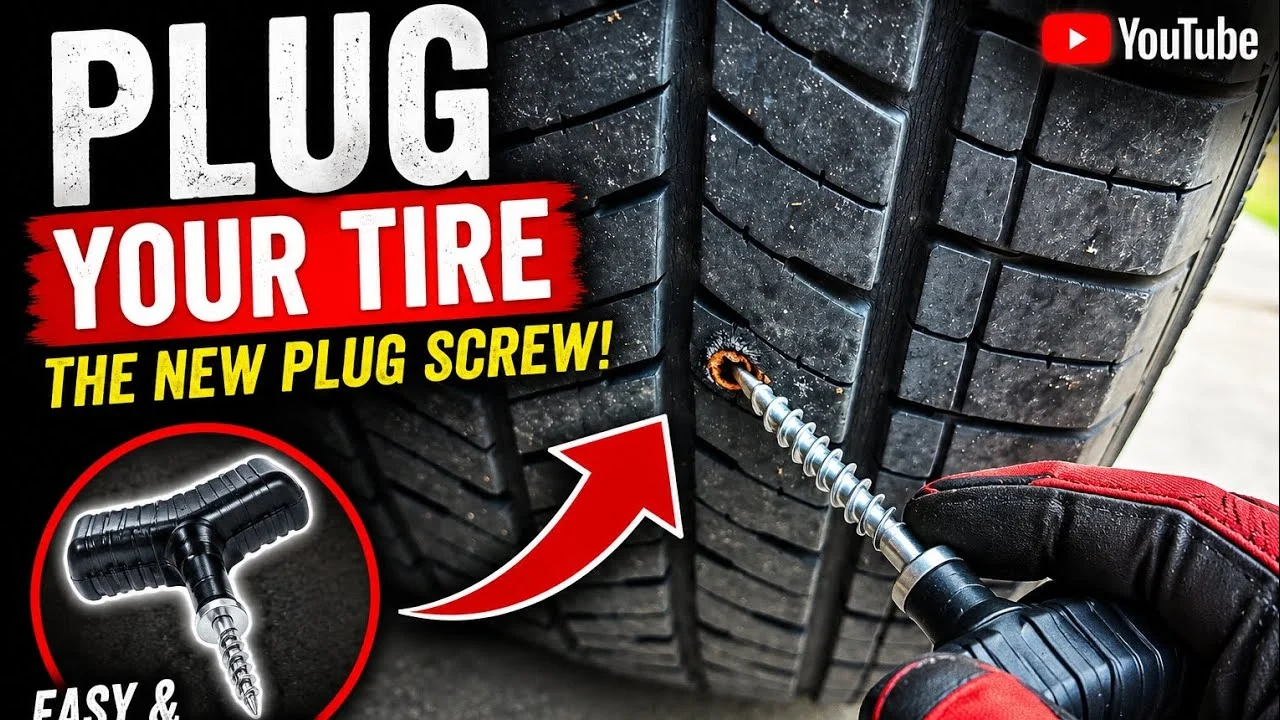
These products usually consist of a rubber-coated screw or threaded plug that enters the puncture from outside. The threads grip the rubber and the sealant helps block air. Because the tire remains mounted on the wheel, the installer cannot see whether the puncture damaged the inner liner, belts, or sidewall.
That hidden condition is the central limitation. A tire can hold air after a plug is installed while still containing internal damage caused by driving underinflated. Heat, repeated flexing, moisture, and road impact can gradually worsen a weak area.
The plug itself may also dry out, loosen, shear, or leak around its edges.
- Leak status: Confirm whether the tire is holding pressure after sitting overnight, not only immediately after installation.
- Puncture location: A hole in the central tread is more repairable than one near the shoulder or in the sidewall.
- Internal condition: The tire must be removed for a proper inspection if you want to know whether it is safely repairable.
Why a Screw-In Plug Is Different From a Permanent Repair
A permanent tire repair is designed to seal both the puncture channel and the inner liner. A typical professional repair uses a rubber stem with an interior patch, often called a patch-plug combination. The tire is removed from the wheel, the inside is inspected, and the repair is installed from within.
The internal patch spreads sealing pressure across a larger area of the liner. The stem fills the puncture path so air cannot travel between the tire’s layers. This approach also allows the technician to identify problems that an outside-only plug hides, including scuffing, separation, exposed cords, or signs that the tire was driven while flat.
By contrast, an exterior screw-in plug depends heavily on the original rubber around the hole. It does not repair damage to the inner liner or reinforce a puncture that has enlarged from movement. Its performance can vary with the plug’s design, installation angle, hole size, tire condition, and exposure to heat.

- Installation: A screw plug enters from outside; a permanent-style repair requires tire removal and interior access.
- Sealing method: An outside plug fills the hole, while a patch-plug repair seals the puncture and the inner liner.
- Inspection: Internal damage can remain hidden behind a screw plug but is visible during professional dismounting.
- Use case: Screw plugs are best viewed as emergency measures; approved internal repairs are intended for continued service when the tire qualifies.
When a Plugged Tire May Be Repairable
Not every punctured tire must be replaced. A tire may qualify for repair when the damage is limited, the casing remains sound, and the puncture meets accepted repair criteria. A technician will consider the tire’s age, tread depth, previous repairs, pressure history, and the location and size of the hole.
The most favorable situation is a small, straight puncture in the central portion of the tread, caused by a nail or similar object. The tire should not have been driven for an extended distance while severely underinflated, and it should not show bulges, exposed cords, belt separation, or irregular internal wear. This distinction matters when answering “are screw in tire plugs permanent”.
A tire that already contains an outside plug is not automatically ruined. The shop may be able to remove it, inspect the damage, and install a proper internal repair. However, the existing hole may have been stretched or contaminated, and the final decision must be based on the tire’s actual condition rather than the presence of the plug alone.

- Central tread puncture: The damaged area is away from the flexible shoulder and sidewall zones.
- Small, clean hole: The casing has not been enlarged, torn, or damaged by a sharp object moving inside it.
- Healthy tire: There is sufficient tread and no evidence of run-flat driving, separation, or prior unsafe repairs.
- Prompt inspection: The tire is evaluated before continued high-speed or long-distance driving.
Situations Where a Screw Plug Is Especially Unsafe
Location matters more than many drivers realize. The tread center is built to contact the road and has a relatively stable structure. The shoulder and sidewall flex much more, so a plug in those areas is exposed to movement that can make sealing unreliable.
A screw-in tire plug is particularly concerning when it sits in the sidewall, shoulder, or the transition between them. Those zones are commonly considered unsuitable for repair because a puncture can weaken the tire’s primary load-bearing structure. A plug cannot restore damaged sidewall cords or safely reverse a bulge.
Driving on a tire with very low pressure creates another serious risk. The sidewall may fold and generate heat, damaging the inside even if the tread puncture appears small. Once internal rubber has been abraded or the cords have been compromised, an exterior plug cannot make the tire safe again.
- Sidewall damage: Do not rely on a plug for a puncture, cut, bubble, or bulge in the sidewall.
- Shoulder damage: A hole near the tread edge flexes heavily and is often not an acceptable repair.
- Visible cords: Exposed or damaged reinforcement means the tire should be removed from service.
- Repeated leakage: Continued pressure loss indicates that the plug or tire is not sealing reliably.
How Long Can You Drive on a Screw-In Tire Plug?
There is no dependable mileage or time limit that makes an outside plug safe. One may hold for days, weeks, or longer, while another may begin leaking on the next drive. The fact that a plug has lasted for a certain period does not convert it into a permanent repair.
If a screw plug is used to handle an emergency, the safest plan is to check the pressure with a gauge and drive only as far as needed to reach a qualified tire service facility. Avoid treating the tire as ready for a road trip, towing, heavy loads, or sustained high speeds.
Check pressure again after the tire has cooled and after it has sat for several hours. A visible plug, sealant residue, or apparently stable pressure is not a substitute for an inspection. If pressure falls, the steering changes, or the vehicle begins vibrating, stop driving and arrange roadside assistance or a safe tire change.
- Short trip to service: Consider it only if the tire is properly inflated, the plug is in the central tread, and there are no warning signs.
- Long-distance travel: Do not plan a trip around an outside plug that has not been professionally evaluated.
- Low pressure: Inflate only according to the vehicle placard when safe to do so, then seek immediate inspection.
- Uncertain condition: Use the spare or request assistance rather than guessing.
Signs a Screw-In Plug Is Failing
The most obvious warning sign is renewed air loss. Measure the pressure with a reliable gauge rather than judging by appearance, because a tire can be significantly underinflated before it looks flat. A tire-pressure monitoring system may warn you, but it may not detect a slow leak immediately.
Keep these limitations in mind when considering “are screw in tire plugs permanent”.
Look for bubbles when a soap-and-water solution is applied around the plug, but do this only while the vehicle is parked safely and the tire is accessible. A plug that is lifting, splitting, twisting, or protruding unusually far should not be pushed back in or trimmed as a do-it-yourself fix.
Other symptoms can indicate damage beyond the plug itself. New vibration, pulling, thumping, uneven tread wear, a burning smell, or a visible lump in the sidewall warrants stopping as soon as safely possible. These signs can point to underinflation or structural failure rather than a simple leak.
What to Do If the Tire Loses Air Again
Do not repeatedly add air and continue normal driving. If the tire is losing pressure quickly, install the spare if available or call for roadside help. Driving on a soft tire can create internal damage in a short distance.
Tell the tire professional that an exterior plug was installed and explain how long the tire may have been driven while underinflated. That information helps the technician decide whether inspection and repair are appropriate or whether replacement is the safer option.
Can You Install a Screw-In Plug Yourself?
Many screw-plug kits are marketed for do-it-yourself use, and the basic process may appear simple: locate the puncture, prepare the hole, insert the plug, and inflate the tire. The difficulty is not only inserting the material. It is determining whether the puncture is suitable and whether the tire has hidden internal damage.
Improper preparation can enlarge the hole or damage the steel belts. Inserting a plug at the wrong angle can leave a channel that leaks around the repair. A plug can also mask a puncture caused by an object that remains inside the tire or by damage that extends beyond the visible entry point.
For those reasons, a do-it-yourself plug should be regarded as an emergency roadside measure, not a maintenance upgrade. If used, follow the kit instructions precisely, restore the correct pressure, and arrange a professional inspection instead of assuming the repair is complete.
- Skipping the pressure check: A tire that looks inflated may still be dangerously low.
- Plugging the shoulder: Flexible edge areas are not equivalent to the central tread.
- Ignoring prior damage: A tire driven flat may be unsafe even when the puncture is small.
- Using sealant as proof: Temporary sealants and plugs can hide a leak without repairing structural damage.
Frequently Asked Questions
Are screw in tire plugs permanent for highway driving?
No. They are not a reliable permanent solution for regular highway driving. A tire shop should inspect the tire and determine whether an internal patch-plug repair or replacement is appropriate.
Can a screw-in tire plug last the life
It can sometimes remain sealed for a long time, but longevity is unpredictable. A plug that has not leaked is still an outside repair with limitations, not evidence that the tire has been permanently restored.
Is a tire safe after a screw plug stops
Not necessarily. Stopping the leak addresses air retention, but it does not confirm that the inner liner, belts, and surrounding rubber are undamaged. Professional inspection is the safer next step.
Can a tire shop repair a tire that already has
Often, the shop can remove the plug and inspect the puncture. The tire may receive an internal repair if the hole, location, tread, and casing condition meet repair requirements. If the damage is too large or too close to the sidewall, replacement may be necessary.
Why should sidewall punctures not be plugged?
The sidewall flexes continuously and contains critical load-bearing cords. A plug does not restore those cords or provide dependable reinforcement in that highly flexible area, so sidewall punctures are generally not safely repairable.
Should I replace a tire instead of repairing a plugged
Replacement is more likely when the puncture is in the shoulder or sidewall, the tire was driven while flat, the hole is large or torn, the tread is nearly worn out, or the tire has previous damage. A qualified inspection can separate a repairable puncture from a structurally unsafe tire.
Conclusion
So, are screw in tire plugs permanent? No—consider them temporary emergency repairs that may preserve air long enough to reach a tire professional. A proper internal inspection and patch-plug repair, when the tire qualifies, offers a more dependable long-term solution.
Check the pressure now, avoid unnecessary driving, and arrange an inspection promptly. If the tire is losing air, shows sidewall or shoulder damage, or causes vibration, use the spare or call for assistance rather than continuing on the plug.
Use a screw-in plug only as a short-term measure, then have the tire removed, inspected, and professionally repaired or replaced before returning to normal driving.