How Long Do Screw in Tire Plugs Last: Complete Guide and Facts
A properly installed screw-in tire plug may last for the remaining life of a tire, but it is a temporary repair that should be professionally inspected.
A screw-in tire plug can restore air pressure quickly after a nail or screw punctures the tread, which makes it appealing for roadside emergencies and short-term repairs. However, its apparent durability depends on much more than whether the tire stops leaking. The puncture’s size and location, the tire’s condition, installation quality, driving speed, weather, and load all affect how safely the repair performs.
If you discover a slow leak after installing a plug, can you safely keep commuting on the tire, or should you replace it before the next highway trip? This guide explains how long do screw in tire plugs last, why some remain stable while others fail, and how a plug differs from an internal patch-plug repair. You will learn what to inspect, which warning signs matter, when professional service is necessary, and how to decide whether the tire is repairable at all.
- ✓A screw-in plug can last a long time when placed in the central tread and installed correctly, but no fixed lifespan is guaranteed.
- ✓Plugs are not appropriate for sidewall or shoulder punctures, large damage, run-flat damage, or badly worn tires.
- ✓A professional tire shop can inspect the inside of the tire and install a combination patch-plug when appropriate.
- ✓Repeated air loss, vibration, bulging, or visible plug damage means the tire should be checked immediately.
How Long Do Screw in Tire Plugs Last
There is no universal mileage or time limit for an external screw-in plug. A quality plug in a small puncture through the middle of the tread can remain sealed for thousands of miles, sometimes until the tread wears out. That outcome is possible, not guaranteed, and it does not turn an emergency repair into an automatically permanent repair.
The important distinction is between holding air and being an approved, durable tire repair. A plug may stop a leak while the tire still has hidden internal damage from driving underinflated. The puncture may also be too close to the shoulder, where the tread flexes heavily and a plug is more likely to loosen or leak.
Professional tire repair generally involves removing the tire, inspecting the inner liner, and repairing suitable tread punctures from the inside with a combination patch-plug. An external screw-in plug does not allow that internal inspection. For that reason, many tire professionals consider it a temporary measure, particularly on a vehicle used regularly at highway speeds.

- Leak rate: Check pressure with an accurate gauge when the tire is cold, rather than relying on appearance.
- Puncture location: A repairable central tread puncture is very different from damage near the shoulder or sidewall.
- Internal condition: A tire driven while flat or seriously underinflated may need replacement even if the plug seals.
- Repair quality: A crooked, loose, oversized, or poorly cemented plug has a higher chance of leaking.
What Determines a Screw-In Plug’s Service Life?
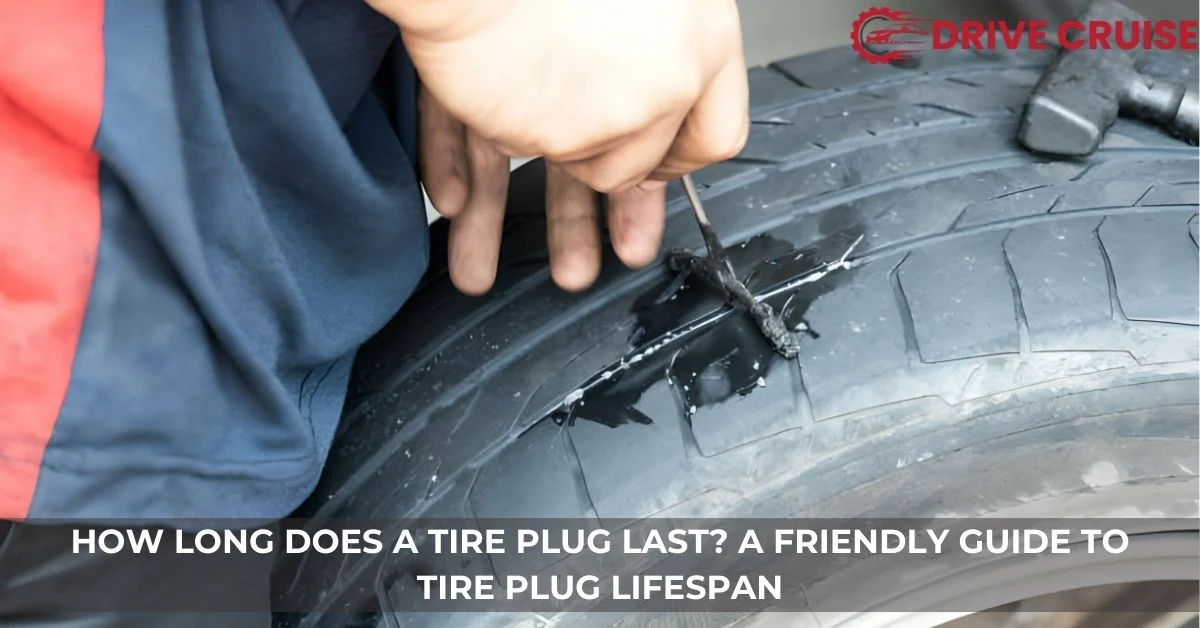
The plug itself is only one part of the repair. The rubber compound, screw or anchor design, sealant, puncture channel, and surrounding tire structure must work together while the tire flexes, heats up, and carries the vehicle’s load.
Driving conditions also matter. A plug used on a lightly loaded passenger car at moderate speeds may experience less stress than one in a heavily loaded SUV, pickup, trailer, or delivery vehicle. Frequent highway travel, rough roads, sharp temperature changes, and repeated low-pressure driving can all shorten the repair’s useful life.
- Puncture size: Small, clean punctures are easier to seal than torn or enlarged holes.
- Tread position: The center tread generally flexes less destructively than the shoulder area.
- Tire age: Cracking, hardened rubber, or degraded sidewalls can make any repair unsafe.
- Vehicle load: Extra cargo and towing increase heat and stress at the repair site.
Puncture location and shape
The safest repair candidates are usually small punctures within the main tread grooves, away from the shoulder. A nail or screw entering fairly straight creates a more predictable channel than an object that enters at an angle and tears the rubber.
Damage caused by a sharp object being dragged through the tire may be irregular or elongated. A screw-in plug can fill part of that opening without restoring the tire’s internal strength. Multiple punctures close together can also weaken the belt area, even when each hole looks small from the outside.
Installation and sealant condition
A plug must be inserted deeply enough to anchor and seal, but forcing it into an unsuitable hole can enlarge the damage. The surface should be prepared according to the kit’s directions, and the plug should not be left protruding excessively or cut so short that it pulls through.
Sealant products vary in quality and compatibility. Some harden, shrink, or become less effective with age and heat. A repair that looks acceptable immediately after installation can develop a slow leak later if the plug does not bond well with the surrounding rubber.
Heat, speed, and underinflation
Underinflation creates additional flexing in the sidewall and tread. That flexing generates heat and places more movement at the puncture channel, which can work a plug loose. High speed and heavy loading amplify the same problem.
Correct cold inflation pressure, taken from the vehicle placard or owner’s manual, helps limit stress. Do not use the maximum pressure molded into the tire’s sidewall as the normal vehicle setting unless the vehicle manufacturer specifies it.
When Is a Screw-In Plug Unsafe or Inappropriate?
A plug should not be used as a solution for every puncture. The most serious limitation is location: damage in the sidewall or shoulder affects a part of the tire that flexes significantly and supports the vehicle differently from the central tread.
Replacement is often the safer choice when the tire has a bulge, exposed cords, deep cuts, bead damage, severe cracking, or substantial tread wear. A tire that has been driven with little or no air may also have hidden damage between the sidewall and wheel, even if no defect is visible from the outside. This distinction matters when answering “how long do screw in tire plugs last”.

- Do not plug sidewalls: Sidewall repairs are not a safe substitute for replacing damaged tire structure.
- Do not ignore a bulge: A bulge can indicate separated internal cords and possible sudden failure.
- Watch multiple repairs: Several punctures, especially close together, can compromise the tire.
- Consider the tire’s rating: High-speed, heavy-load, and specialty tires deserve professional evaluation.
Why shoulder and sidewall damage is different
The shoulder is the curved transition between the tread and sidewall. It bends more as the vehicle turns, so a plug placed there can be repeatedly pulled and flexed. The sidewall has no tread belt structure designed to support an ordinary puncture repair.
Even if the air loss stops, the damaged area may not have enough strength for continued service. A plug’s ability to seal air is not proof that the tire can safely withstand cornering, braking, heat, or impact loads.
When a temporary plug may be reasonable
An external plug can be reasonable as a short-term roadside measure when the puncture is small, the tire is otherwise healthy, and the vehicle can be driven carefully to a tire shop. It is especially useful when removing the wheel immediately is impossible or when a spare tire is unavailable.
Drive conservatively after a temporary repair. Avoid high speeds, heavy loads, and unnecessary distance, and check pressure soon afterward. If pressure falls again, stop using the tire rather than adding air repeatedly and assuming the problem is solved.
How to Monitor a Plugged Tire
Regular pressure checks are the simplest way to identify a developing leak. Check the repaired tire when it is cold, ideally before driving, and compare it with the other tires. A small change caused by outdoor temperature may be normal, but a repeated drop beyond normal seasonal variation deserves attention.
Look at the plug and nearby tread without touching a hot tire. The plug should remain seated, with no obvious lifting, tearing, fraying, or wet bubbling from escaping air. A tire pressure monitoring system is helpful, but it may not alert you until pressure has already fallen significantly.
- Repeated pressure loss: A tire that needs frequent inflation may still be leaking through the plug or another defect.
- New vibration: Vibration can indicate damage, imbalance, or a structural problem unrelated to the visible plug.
- Air noise or bubbles: Hissing or bubbles from soapy water indicate an active leak.
- Uneven wear: Irregular tread wear may point to low pressure, alignment trouble, or internal damage.
A simple pressure and visual check
Use a reliable gauge on a cold tire and record the reading. If you suspect a leak, apply a mild soapy-water solution around the plug and watch for growing bubbles. Do not use this test as a substitute for professional inspection, and keep the valve stem and bead in mind because leaks can occur away from the plug.
Inspect the tread for a second object or puncture. Removing a nail or screw without having a repair plan can release air quickly, so do not pull out an embedded object simply to examine it unless you are prepared to inflate and repair the tire safely.
Plug Versus Patch-Plug: Which Repair Lasts Longer?
The key difference is where the repair is installed. An external plug fills the puncture from the outside, while a combination patch-plug is installed from inside the tire after the tire has been removed and inspected. The patch seals the inner liner, and the stem fills the puncture channel.
That internal process lets a technician check for scuffing, belt separation, moisture, or other damage caused by driving underinflated. It also allows the puncture to be prepared correctly instead of relying only on access from the tread surface.
- External plug: Fast and convenient, but it does not provide an internal inspection.
- Patch-plug repair: More thorough and generally preferred for a permanent repairable puncture.
- Replacement tire: Necessary when the damage or tire condition makes repair unsafe.
How long do screw in tire plugs last compared with a professional repair? A plug may last for the rest of the tire’s life, but a properly installed internal repair gives a better basis for continued service because the tire has been inspected and sealed from inside.
Do not assume a professional shop can repair every tread puncture. Repair limits depend on puncture size, angle, location, tire condition, speed rating, and the manufacturer or shop’s procedures. When in doubt, have the tire removed for evaluation.
Frequently Asked Questions
Can a screw-in tire plug last for the life
It can, especially when the puncture is small and central, the tire is healthy, and the installation is sound. However, longevity is unpredictable, so the plug should not be treated as a guaranteed lifetime repair.
How far can I drive on a screw-in tire plug?
There is no safe universal distance. Drive only as needed to reach a repair facility, keep speed and load low, and stop if pressure drops, handling changes, or the plug shows damage.
Is a screw-in plug safe for highway driving?
A tire that has only an external plug has not received the same inspection as an internal repair. Highway use adds heat and speed, so have the tire professionally evaluated before relying on it for extended freeway travel.
Can I plug the same tire more than once?
Multiple repairs may be possible in some tires, but their spacing and locations matter. Several punctures, overlapping repairs, or damage near an earlier repair can make replacement safer than another plug.
Why is my plugged tire still losing air?
The plug may be loose, incorrectly installed, or unable to seal an irregular puncture. The leak could also come from the valve stem, wheel rim, bead, or another puncture. Continued air loss requires prompt inspection.
Should I replace a tire if the plug comes out?
Do not reinstall a plug and continue driving without checking the tire. Have it inspected for an enlarged hole, internal damage, and remaining tread. Replacement may be necessary if the puncture is no longer repairable.
Does tire sealant make a screw-in plug permanent?
Sealant may help a plug seal, but it does not repair damaged belts or make an unsuitable puncture safe. Use only products compatible with the tire and repair method, and follow with a proper inspection.
Conclusion
How long do screw in tire plugs last depends on puncture location, tire condition, installation quality, pressure, heat, speed, and load. A plug may hold until the tire wears out, but an external repair remains less certain than a professional internal patch-plug, and sidewall or shoulder damage usually calls for replacement.
Use a plug as a cautious temporary solution, monitor pressure closely, and arrange an inspection before depending on the tire for long trips or highway driving.
Check the plugged tire’s cold pressure today and schedule a tire-shop inspection if it has not been examined internally.