Do You Need to Balance a Tire After Patching: Explained Clearly
Usually, no. A proper patch does not change wheel balance, but rebalance the assembly if the tire was removed, weights moved, or vibration develops.
A flat repair can create an easy-to-miss decision repair the puncture and leave or ask whether another service is necessary before returning to the road The answer matters.
The practical stakes are time cost comfort and safety Paying for an unnecessary service is inconvenient but ignoring a new vibration a damaged wheel or an incorrectly repaired. This guide examines “do you need to balance a tire after patching” and explains the details that matter in practice.
- ✓A properly installed internal patch normally does not require balancing by itself.
- ✓Balancing may be appropriate after tire removal if a weight was lost, the tire was repositioned, or vibration begins.
- ✓A vibration that existed before the puncture repair may point to a separate tire, wheel, alignment, suspension, or hub problem.
- ✓Repair safety depends more on puncture location, size, angle, tire condition, and repair method than on balancing.
Do You Need to Balance a Tire After Patching?
In most cases patching a tire does not automatically require balancing A balance adjustment is needed when the combined tire and wheel no longer rotate with their mass.
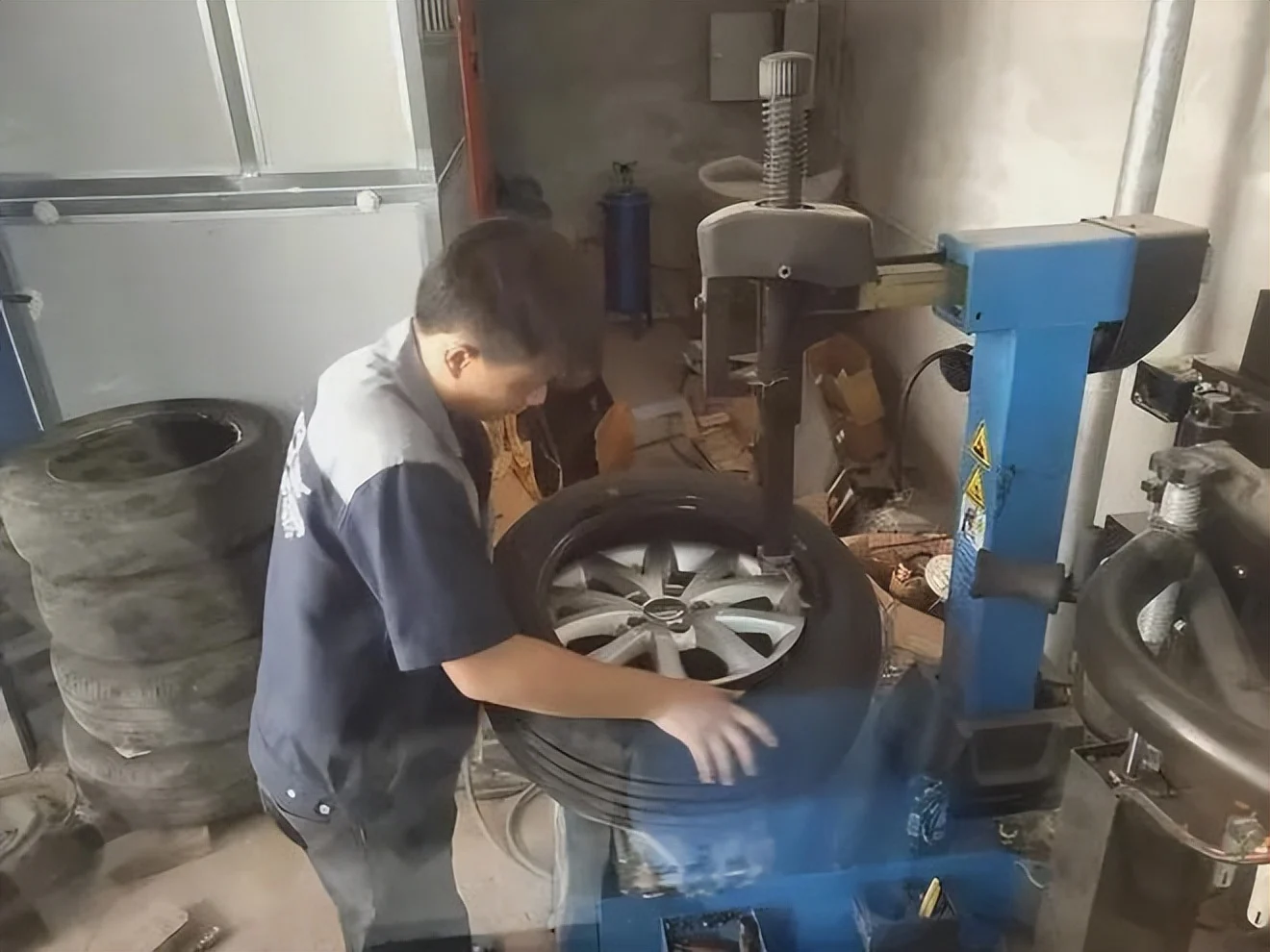
That answer has an important qualification the repair process may involve removing the tire from the wheel breaking the bead cleaning the inner liner and reinstalling the tire.
- Patch alone: A sound internal patch normally does not call for a new balance.
- Tire removed: Rebalancing becomes reasonable if weights were disturbed or the assembly shows an out-of-balance reading.
- New symptom: A vibration after repair should be diagnosed rather than dismissed as normal.
- Different service: Alignment, rotation, and balancing correct different problems and should not be treated as interchangeable.
Why a patch usually does not affect balance
Balance is about centrifugal force created by uneven mass as the tire rotates A tire that has a heavy spot a light spot or a wheel with uneven.
Internal patches are also installed near the puncture generally on the inside of the tread They are bonded to a prepared surface and intended to restore air retention.
Why a shop may recommend checking the balance anyway
A technician may place the wheel on a balancing machine after removing and reinstalling the tire because the check is quick and can reveal a displaced weight or.
Ask whether the assembly actually failed a balance measurement or whether the service is being suggested automatically. A measured imbalance, a missing weight, or a customer complaint about shaking provides a stronger reason than the fact that a patch was installed.
What Happens During a Tire Patch and Balance Check?
Understanding the separate jobs of repair and balancing makes the decision clearer A professional puncture repair begins with removing the tire or otherwise accessing the inside locating the.
For a combination repair the puncture channel is cleaned and filled while an internal patch seals the inner liner The patch is applied to clean prepared rubber and.
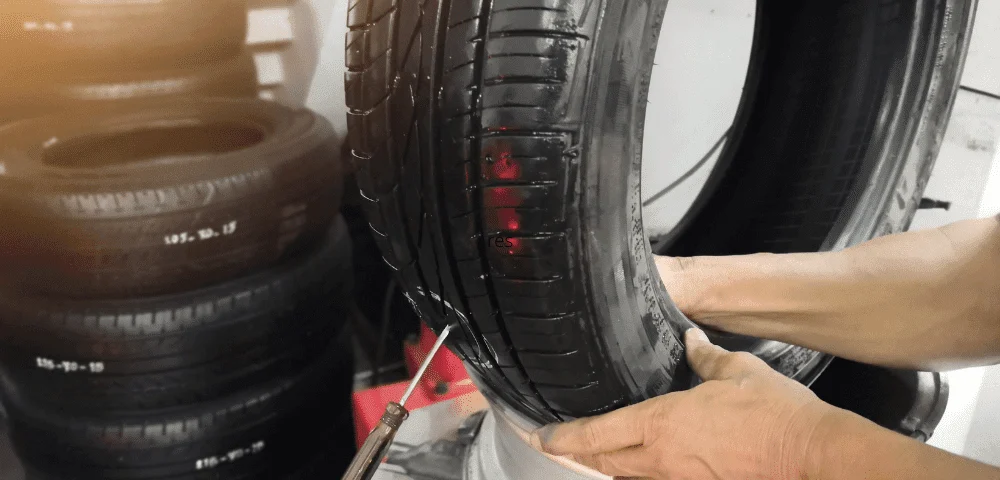
- Repair location: Confirm the injury is in the repairable tread area, not the sidewall or shoulder.
- Internal condition: Ask whether the tire was inspected for damage from being driven flat or severely underinflated.
- Wheel weights: Look for a missing adhesive or clip-on weight if balancing changed after service.
- Leak test: The repaired area and valve area should hold air after the tire is reinflated.
Patch, plug, and combination repair
A plug fills the puncture channel from the outside A patch seals the inner surface while a combination repair addresses both the channel and the inner liner Many.
None of these repair methods automatically determines whether balancing is required The deciding factor remains the condition and measured balance of the tire-and-wheel assembly A plug can be.
What a balancing machine actually measures
On a balancing machine, the mounted assembly spins while sensors identify where excess weight or imbalance exists. The machine indicates whether correction is needed and where a technician should install a small wheel weight. This is different from checking air pressure or looking for a leak.
Some machines also identify a radial-force variation or a tire-and-wheel uniformity issue. That can help distinguish a simple imbalance from a tire that is stiff, irregular, damaged, or poorly seated on the rim. A tire may have the correct weights and still produce a ride problem if its shape or construction is abnormal.
When Balancing After a Repair Makes Sense
There are several situations in which balancing after a tire repair is sensible. The strongest is a new vibration that appears immediately after the wheel is returned to the vehicle. The next is visible evidence that a weight was lost or that the tire was remounted and the previous balance was not preserved.
Balancing can also be worthwhile when the tire was driven at very low pressure suffered a hard impact or was removed from the wheel after a long period.

- New speed-related shake: Check balance first when vibration begins after the repair and changes with vehicle speed.
- Missing weight: Rebalance when a weight has clearly fallen off or was removed during service.
- Wheel removal and remounting: Consider a check when the tire was dismounted, especially if its original position was not marked.
- Impact or underinflation: Inspect for rim and tire damage before treating the problem as a simple balance issue.
Symptoms that point toward imbalance
An out-of-balance wheel commonly causes a repetitive vibration that becomes more noticeable in a particular speed range Depending on the vehicle and the location of the problem the. This distinction matters when answering “do you need to balance a tire after patching”.
Uneven or cupped tread wear can develop over time, although suspension problems, worn shocks, incorrect pressure, and alignment issues can create similar patterns. A balance problem may also produce a light drumming or rhythmic feel. These signs are clues, not a diagnosis, so a shop should measure the assembly and inspect the vehicle.
Symptoms that suggest another problem
A pull to one side is more often associated with alignment, tire conicity, unequal pressure, or a brake issue than with balance. A steering wheel that is off-center while driving straight also points more toward alignment or steering geometry. A vibration that changes when braking may involve the brake system rather than the repaired tire.
A thump at low speed, a visible bulge, a repeating slap, or a sudden loss of pressure deserves immediate attention. These symptoms can indicate structural tire damage, a separated belt, a bead problem, or a serious wheel defect. Do not keep driving at highway speed simply because the puncture was patched.
Does tire rotation change the decision?
Rotation does not itself require balancing but moving a tire to another axle can change where a vibration is felt A front-wheel vibration may be felt mostly through.
Rotation also provides an opportunity to inspect tread depth, wear patterns, pressure, and the repaired area. Follow the vehicle manufacturer’s rotation guidance and any limitations caused by directional tread, staggered wheel sizes, or different front and rear tire specifications.
How to Decide What Service You Actually Need
Many tire services sound similar because they all involve a wheel, but they solve different conditions. Balancing corrects mass distribution. Alignment adjusts the direction and angles of the wheels relative to the vehicle.
Rotation changes tire positions. A puncture repair restores air retention when the tire is suitable for repair.
Confusing these services can lead to unnecessary spending or leave the real problem unresolved If your only issue is a slow leak from a repairable tread puncture and.
- Balancing: Corrects uneven weight distribution in the rotating tire-and-wheel assembly.
- Alignment: Corrects wheel angles and vehicle tracking, not rotating mass.
- Rotation: Moves tires to different positions to manage wear; it does not automatically balance them.
- Repair: Seals a qualifying puncture after the tire is inspected for safety and structural condition.
| What you notice | More likely checks | Why it matters |
|---|---|---|
| Shake at a repeatable road speed | Balance, wheel runout, tire uniformity | Rotating imbalance often changes with speed. |
| Vehicle pulls or steering wheel is crooked | Pressure, alignment, tire conicity | Directional or geometry issues are not fixed by balancing. |
| Air pressure keeps dropping | Repair, valve, bead, wheel leak | A balanced tire can still be unsafe if it does not hold air. |
| Bulge, sidewall cut, or severe thump | Tire and wheel inspection | Structural damage may make the tire unrepairable. |
Questions to ask the tire shop
A clear conversation helps you separate necessary work from an optional check. You do not need specialized equipment knowledge; ask what the technician found and what measurement supports the recommendation.
- Was the tire removed from the wheel for this repair?
- Was a wheel weight missing, moved, or replaced?
- Did the assembly fail a balance measurement?
- Is the vibration new, or was it present before the puncture?
- Did the inspection find a bent rim, tire damage, or a bead-seating issue?
- Does the repair include a leak check and a pressure adjustment?
If the shop says balancing is needed, ask whether the charge covers one wheel or all four. Balancing only the affected assembly may be appropriate, while checking multiple wheels can make sense when the vehicle has a broader vibration or no clear history of previous service.
When a second opinion is reasonable
Seek another inspection when a shop recommends replacing a tire solely because it was patched without explaining the puncture location or internal damage A repair may be inappropriate.
A second opinion is also useful when a balance service does not cure the vibration. The next inspection may need to include wheel runout, tire uniformity, hub mounting surfaces, lug torque, suspension components, wheel bearings, and brakes. Repeatedly adding weights without finding the cause is not a complete diagnosis.
Safety Limits: When a Patch Is Not Enough
Balancing cannot make an unsafe tire safe Before discussing balance the tire must qualify for repair and remain structurally sound A puncture in the center portion of the.
A tire that was driven while flat or nearly flat may have hidden inner-liner and sidewall damage even if the outside looks acceptable. Heat and flexing can weaken the structure. The technician may need to remove the tire and inspect its interior before deciding whether repair is appropriate.
- Do not repair the sidewall: Sidewall and shoulder injuries can compromise the tire’s structure and are commonly considered nonrepairable.
- Stop for visible damage: Bulges, exposed cords, deep cuts, and severe deformation require inspection before further driving.
- Watch pressure: A repaired tire should be monitored for continued air loss, especially during the first several trips.
- Use the spare when necessary: If pressure drops rapidly or the tire behaves abnormally, avoid highway driving until it is checked.
Why low pressure changes the risk
Air pressure supports the vehicle’s load and helps control heat buildup. When pressure is low, the sidewalls flex more, and a tire can generate damaging heat. Driving even a short distance after a puncture may cause internal damage that cannot be corrected with a patch.
Keep these limitations in mind when considering “do you need to balance a tire after patching”.
Check pressure with a reliable gauge when the tires are cold and compare it with the vehicle’s door-jamb label, not the maximum pressure molded into the tire sidewall. The recommended pressure is vehicle-specific and may differ between front and rear positions or between normal and heavy-load conditions.
Repair quality matters more than a balance charge
A correctly repaired tire should have a sealed repair area a clean inner liner proper preparation and no continuing leak The repair should not leave a loose section.
After installation, make sure the lug nuts are properly tightened, the valve stem is not leaking, and the tire pressure is set correctly. These checks are basic but important because an improperly seated wheel or leaking valve can create symptoms that are wrongly blamed on the patch.
What to Do If the Vehicle Vibrates After Patching
If the vehicle was smooth before the repair and vibrates afterward, treat the timing as useful evidence. It does not prove the patch caused the problem, but it narrows the inspection to the serviced wheel, its mounting, the wheel weights, and any condition that became apparent during dismounting.
First, check the tire pressure and look for a missing weight, visible bulge, uneven bead seating, or fresh damage. Do not crawl under the vehicle or touch a hot tire unnecessarily. If the vibration is severe, the steering feels unstable, or pressure is falling, stop driving and arrange an inspection.
- Confirm pressure: Compare the cold reading with the vehicle’s recommended pressure.
- Notice the pattern: Record whether the vibration changes with speed, braking, acceleration, or turning.
- Inspect safely: Look for obvious damage or a missing weight without attempting an unsafe roadside repair.
- Return promptly: Ask the repairing shop to verify mounting, balance, leak status, and tire condition.
Use the vibration pattern as a clue
A vibration that increases with road speed often suggests the rotating assembly, while one tied to acceleration may involve drivetrain components. A shake that appears mainly during braking points toward brakes or suspension. A vibration that changes during turns can involve a wheel bearing, tire condition, or suspension part.
These patterns are not definitive, and road surfaces can imitate mechanical problems. Still, describing the pattern accurately helps a technician avoid replacing parts by guesswork. Mention the speed range, whether the steering wheel or seat moves, and whether the issue existed before the repair.
Do not keep adding wheel weights
Small corrective weights are normal, but a large amount of weight or repeated balancing attempts can indicate a bent wheel, tire uniformity problem, incorrect mounting, or a damaged tire. The technician should inspect why the assembly needs excessive correction rather than continuing to attach weights indefinitely.
The wheel should also be clean where it mounts to the hub, and the tire bead should be seated evenly. Rust, debris, a bent flange, or improper lug tightening can create runout and vibration even when the balancing machine is used correctly.
Cost, Timing, and Maintenance Considerations
The cost of a balance check varies by location vehicle wheel size service package and whether additional diagnosis is required A puncture repair balancing service tire rotation and.
Time is usually not the main reason to skip a needed inspection A balance check may be relatively quick while finding a bent wheel or internal tire damage.
- Check pressure monthly: Use the vehicle’s recommended cold pressure and inspect before long trips.
- Inspect tread: Look for irregular wear, embedded objects, cracks, bulges, and low tread depth.
- Respond to symptoms: Do not wait for the next rotation if shaking or air loss starts.
- Keep repair records: Note the repaired tire’s position, date, and any balance or rotation work.
How long can a repaired tire last?
A repairable puncture does not automatically set a fixed expiration date for the tire Remaining service life depends on tread depth age wear prior damage inflation history climate load and the quality of the repair A properly repaired tire can continue.
Do not use a repair as a reason to ignore normal replacement criteria. Replace the tire when it reaches the vehicle or tire maker’s applicable limits, develops structural damage, shows severe irregular wear, or can no longer provide dependable air retention.
FAQ: Do You Need to Balance a Tire After Patching?
These questions address the most common decisions that arise after a puncture repair. The key distinction throughout is whether the assembly has a measured or noticeable balance problem, not simply whether a patch was installed.
Does an internal tire patch change wheel balance?
Usually, no. A properly installed internal patch is generally too small and centrally positioned to create a meaningful change in the balance of the tire-and-wheel assembly.
Should a tire be balanced every time it is removed?
Not automatically. Removal and remounting can disturb a weight or change the tire’s position, so a check is reasonable when the assembly shows an imbalance, a weight was lost, or a new vibration appears.
Can a tire plug cause an imbalance?
A typical plug should not create a significant imbalance when installed correctly, but any repair or mounting process can expose an existing issue. If shaking begins afterward, have the assembly measured instead of assuming the plug is responsible.
Is balancing needed if the tire was repaired without removing it?
Generally, no. A repair performed without dismounting the tire is less likely to disturb wheel weights. Balance the wheel only if there is a vibration, a known missing weight, or another reason to suspect uneven mass distribution.
What if the tire vibrates after a patch?
Check pressure first and stop driving if the vibration is severe or the tire is losing air. Ask a technician to inspect mounting, wheel weights, bead seating, wheel runout, tire uniformity, and possible internal damage.
Will balancing fix a tire that keeps losing air?
No. Balancing does not seal punctures or correct leaks at the valve, bead, wheel, or repair area. Continued air loss requires a leak inspection and may mean the repair was unsuccessful or the tire is not safely repairable.
Should all four tires be balanced after one tire is patched?
Not necessarily. The repaired assembly is the logical starting point, but a broader check may be useful if the vehicle has a general vibration, an unknown maintenance history, or uneven wear affecting multiple tires.
Conclusion
For most drivers, the answer to do you need to balance a tire after patching is no: a proper patch does not normally alter balance. Rebalancing becomes appropriate when the tire was dismounted and a weight was disturbed, a balance measurement shows a problem, or a new speed-related vibration appears.
Balance is only one part of a safe repair. The puncture must be in a repairable area, the tire must be free of structural damage, the repair must hold air, and the wheel must be mounted correctly. If anything feels different after service, have the assembly inspected rather than continuing to drive and guessing.
Before leaving the shop, confirm the repaired tire’s pressure, ask whether the assembly was measured for balance, and report any new vibration immediately.