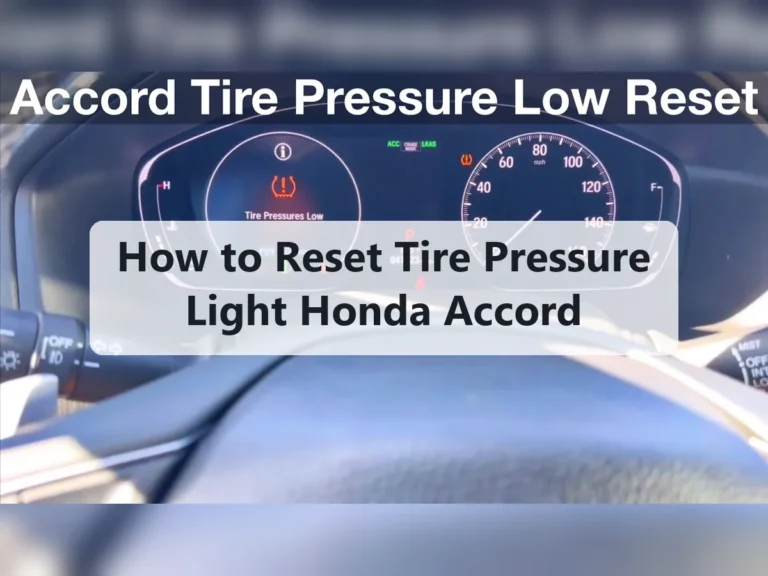
How to Reset Tpms Sensor: Instructions, Tips, and Useful Advice
Getting a tire pressure monitoring system (TPMS) reset wrong can leave the warning light on, hide a genuine low-pressure problem, or cause the system to display incorrect readings. In some vehicles, simply pressing a reset button is enough; in others, the sensors must be relearned with a scan tool or by driving in a specific sequence. This guide explains how to reset tpms sensor alerts safely, how to identify the correct procedure for your vehicle, and what to do when the warning does not clear.
What Does a TPMS Reset Actually Do?
A TPMS reset or initialization clears the system’s stored reference values and allows the vehicle to recognize the current tire pressures. Depending on the vehicle, “reset” may mean one of three different things:
- Pressure calibration: The vehicle stores the current tire pressures as the normal baseline.
- Sensor relearn: The vehicle identifies the position and identification code of each tire pressure sensor.
- Fault-code clearing: A diagnostic tool removes a stored TPMS fault after a sensor, valve stem, or wiring problem has been repaired.
These functions are related but not interchangeable. A reset will not repair a dead sensor, damaged wiring, a leaking tire, or a sensor with a weak battery. Also, some vehicles use indirect TPMS, which estimates pressure through wheel-speed sensors, while others use direct TPMS sensors installed inside each wheel.
Before You Reset the TPMS Sensor
Always check the actual tire pressures before attempting any reset. The system should not be calibrated while a tire is underinflated, overinflated, or leaking.
Find the Correct Cold Tire Pressure
Use the tire-pressure specification on the driver’s door-jamb label, door frame, fuel-filler flap, or owner’s manual. Do not use the maximum pressure printed on the tire sidewall as the vehicle’s recommended setting. The sidewall figure is the tire’s maximum permitted pressure under specified conditions, not necessarily the correct pressure for your car.
Check pressure when the tires are cold, ideally after the vehicle has been parked for at least three hours. Driving heats the air inside the tires and can temporarily increase the reading. Measure all four tires and the spare if the vehicle monitors it.
Inspect for an Actual Tire Problem
- Look for nails, screws, cuts, bulges, or cracks.
- Check whether one tire is losing pressure faster than the others.
- Inspect the valve stem for damage or leakage.
- Confirm that the wheel has not been severely bent by a pothole.
- Make sure the tire bead is seated correctly after tire installation.
If a tire is visibly damaged, rapidly losing air, or significantly below specification, repair the problem before resetting the system. A reset can turn off a warning temporarily without making the vehicle safe.
What You Need to Reset a TPMS System
The tools required depend on the vehicle and the type of reset. In many cases, you need only an accurate tire-pressure gauge and the ignition key. Other procedures require additional equipment.
- A reliable digital or mechanical tire-pressure gauge
- An air compressor or access to an inflation station
- The vehicle owner’s manual
- A TPMS reset button, if fitted
- A TPMS activation tool for sensor relearn procedures
- An OBD-II diagnostic scanner with TPMS functions, when required
- A battery charger or fully charged vehicle battery for lengthy diagnostic work
The owner’s manual is especially important because reset instructions vary between models, trim levels, production years, and market regions. A procedure that works on one vehicle may not work on a similar-looking model.
How to Reset TPMS Sensor: Standard Procedure
The standard process is to set every tire to the recommended cold pressure, switch the ignition on without starting the engine, use the vehicle’s reset menu or button, and then drive if the manual requires a calibration period. Follow these steps in order.
Step 1: Set All Tires to the Recommended Pressure
Measure and adjust all monitored tires. If the vehicle has a full-size spare equipped with a TPMS sensor, check it as well. Remove the gauge carefully and replace each valve cap tightly enough to prevent contamination, but do not overtighten it.
After inflating the tires, wait a few minutes and recheck them. An inaccurate gauge or a loose compressor connection can result in different pressures from one tire to the next.
Step 2: Park Safely and Switch on the Ignition
Park on a level surface, engage the parking brake, and place the transmission in Park or Neutral as appropriate. Turn the ignition to the “On” position without starting the engine. In a push-button vehicle, press the start button without pressing the brake pedal, unless the owner’s manual specifies another method.
Step 3: Locate the TPMS Reset Control
Depending on the vehicle, the reset function may be located in one of these places:
- Vehicle settings or maintenance menus in the instrument cluster
- The infotainment touchscreen
- A button beneath the dashboard near the steering column
- A button inside the glove compartment or center console
- A dedicated control near the steering wheel
The button may be labeled “TPMS,” “SET,” “Tire Set,” or display a tire-shaped icon with an exclamation mark. Some systems require the button to be held for several seconds until the warning light flashes or the vehicle chimes.
Step 4: Initialize or Store the New Pressure Values
Open the vehicle settings and select a menu such as Tire Pressure, TPMS Calibration, Set Pressure, or Initialize. Confirm the selection when prompted. If the vehicle has a physical button, press and hold it until the indicator responds.
The system may not show an immediate change. Some vehicles turn the warning light off after initialization, while others require a short drive before the stored baseline becomes active.
Step 5: Complete the Required Drive
If the manual calls for a drive cycle, drive normally on roads where it is safe to maintain a steady speed. Many indirect TPMS systems need several minutes of driving, often above approximately 20 mph, to compare wheel-speed data. Avoid hard acceleration, sharp turns, and unnecessary braking during the calibration period.
When calibration is complete, the warning light should turn off or the dashboard should display normal pressure information. If the light flashes first and then remains on, the vehicle may have detected a TPMS malfunction rather than simple low pressure.
How to Reset a TPMS System Through the Vehicle Menu
Modern vehicles often use an electronic reset sequence instead of a dedicated button. The names differ, but the process is usually similar.
- Switch the ignition on without starting the engine.
- Use the steering-wheel controls or touchscreen to open the vehicle settings.
- Select Vehicle, Service, or Driver Assistance.
- Open Tire Pressure, TPMS, or Calibration.
- Choose Set, Store Pressures, or Reset.
- Confirm the request and wait for the message or chime.
- Drive the vehicle if a calibration drive is required.
Some vehicles will not allow the menu reset unless all doors are closed, the parking brake is engaged, or the engine is off. If the option is unavailable, check the manual rather than repeatedly trying random button combinations.
How to Reset TPMS After Rotating or Replacing Tires
After a tire rotation, the vehicle may still display correct pressure values but show them beside the wrong wheel position. Whether this matters depends on the TPMS design. Some systems automatically learn wheel positions; others require a manual relearn.
Automatic Position Learning
With an automatic system, set all pressures correctly and drive normally. The vehicle compares sensor signals and wheel-speed information to update its internal map. This may take several minutes or a complete drive cycle.
Manual Sensor Relearn
A manual relearn usually requires the vehicle to enter learning mode and then receive a signal from each sensor in a particular order. The sequence is commonly left front, right front, right rear, and left rear, but this is not universal.
To activate each sensor, a technician may use a TPMS activation tool near the valve stem. Some vehicles recognize a pressure increase or decrease instead. Others require a scan tool connected to the diagnostic port. Follow the vehicle-specific instructions because activating sensors in the wrong order can prevent the procedure from completing.
When a TPMS Relearn Tool or OBD Scanner Is Required
A relearn tool is commonly needed when a sensor has been replaced, a new wheel set has been installed, or the vehicle cannot automatically identify sensor locations. An OBD-II scanner may be necessary to write the sensor identification numbers into the vehicle’s body control module or TPMS receiver.
A typical professional relearn procedure involves:
- Checking and correcting the tire pressures.
- Reading the vehicle’s TPMS configuration with a compatible scan tool.
- Placing the vehicle into sensor-learning mode.
- Activating each sensor in the required order.
- Confirming that every sensor transmits an identification code and pressure reading.
- Saving the information to the vehicle’s control module.
- Clearing relevant diagnostic trouble codes.
- Performing a road test and checking the warning light.
Universal sensors may need to be programmed before installation. Programming gives the sensor the correct vehicle application and identification data. Relearning, by contrast, teaches the vehicle where the programmed sensor is installed. These are separate operations, and confusing them is a common reason a replacement sensor appears not to work.
Direct and Indirect TPMS: Why the Reset Method Differs
Direct TPMS
Direct systems use pressure sensors inside the wheels or attached to the valve stems. They transmit actual pressure and temperature information to a receiver. A direct sensor may need a battery, activation, programming, and position relearn.
A direct system can usually identify a failed sensor because it stops receiving a valid signal. The warning light may flash for a period after the vehicle starts and then remain illuminated. This pattern generally indicates a system fault rather than an ordinary low-pressure alert.
Indirect TPMS
Indirect systems do not measure air pressure directly. Instead, they use the anti-lock braking system’s wheel-speed sensors to detect changes in rolling circumference. A tire with lower pressure can rotate at a slightly different speed than the others.
Indirect systems must be recalibrated after adjusting pressure, rotating tires, replacing tires, or changing wheel sizes. Because there are no pressure sensors inside the wheels, a TPMS activation tool will not reset the system. The vehicle’s calibration menu or button is normally used instead.
What If the TPMS Light Will Not Turn Off?
If the light remains on after resetting, do not assume the reset failed immediately. Drive for the required distance, then recheck all pressures with a gauge. Compare the readings with the door-jamb specification, not just the dashboard display.
Possible causes include:
- A slow puncture or leaking valve stem
- Incorrect tire pressure on one or more wheels
- A spare tire with low pressure or an unrecognized sensor
- A failed sensor battery
- A sensor damaged during tire mounting
- An incompatible replacement sensor
- A sensor that was not programmed or relearned
- Corroded valve hardware or a poor sensor connection
- A damaged TPMS antenna, receiver, fuse, or wiring harness
- A control-module fault requiring diagnostic testing
Pay attention to the warning-light behavior. A solid light commonly indicates low pressure. A flashing light followed by a solid light often indicates a TPMS malfunction. The exact meaning varies, so consult the owner’s manual.
Common TPMS Reset Mistakes to Avoid
Resetting Before Checking Pressure
This is the most serious mistake. The system may accept an unsafe pressure as its new normal. Always inflate the tires first and inspect them for damage.
Using the Tire Sidewall Pressure
The number on the sidewall is not the vehicle’s recommended operating pressure. Use the manufacturer’s label or manual instead.
Assuming Every Vehicle Has a Reset Button
Many newer vehicles hide the reset function in a menu, while some require a scan tool. Searching for a physical button can waste time and may lead to an incorrect procedure.
Ignoring the Spare Tire
Some vehicles monitor the spare, and some do not. If the spare contains a sensor, it may need to be inflated and included in the relearn process.
Replacing Sensors Without Checking Compatibility
Sensor frequency, communication protocol, valve design, and vehicle compatibility all matter. A sensor that physically fits the wheel may still be unable to communicate with the car.
Clearing the Warning Without Diagnosing It
Disconnecting the battery or repeatedly clearing fault codes is not a substitute for diagnosis. It may erase useful information while leaving the underlying fault active.
Practical Tips for Reliable TPMS Operation
- Check tire pressure at least once a month and before long trips.
- Inspect pressure when the tires are cold for the most consistent reading.
- Use a quality gauge and compare it periodically with a workshop gauge.
- Replace valve caps after checking pressure to keep dirt and moisture away.
- Tell the tire technician that the vehicle has TPMS before tire removal.
- Replace the sensor sealing washer, grommet, and valve core when required.
- Use the vehicle’s recommended tire size and load rating.
- Keep the spare tire properly inflated, even if it is not monitored.
- Do not rely solely on the dashboard display; confirm pressure with a gauge.
- Have the system scanned if the light flashes or returns repeatedly.
TPMS sensors often use batteries sealed inside the sensor body. When the battery is depleted, replacing the complete sensor is usually more practical than attempting a repair. Sensor life varies with use, temperature, and transmission frequency, but many last several years.
When Should You Use a Professional Technician?
You can usually perform a basic pressure calibration yourself when the owner’s manual provides a reset procedure. Professional assistance is recommended when a sensor has been replaced, the warning light flashes, the vehicle requires an OBD relearn, or the system reports a communication fault.
A tire shop or repair facility can test each sensor, verify its identification number, measure signal strength, check the valve assembly, and inspect the receiver circuit. This is often faster and less expensive than replacing parts based on guesswork.
Stop driving and inspect the vehicle immediately if a tire is visibly low, the steering feels unstable, the vehicle pulls to one side, or you hear repeated thumping. For general tire-safety guidance, consult the National Highway Traffic Safety Administration tire safety information.
Frequently Asked Questions About TPMS Resetting
How long does it take to reset a TPMS sensor?
A basic pressure reset may take only a few minutes, but a relearn can take 10 to 30 minutes. The time depends on whether the vehicle needs a drive cycle, manual sensor activation, programming, or an OBD scan. Always allow extra time to verify the pressures and confirm that the warning light stays off.
Can I reset the TPMS without a scan tool?
Yes, many vehicles can be reset without a scan tool. Vehicles with indirect TPMS or a built-in calibration menu generally need only correctly set tire pressures and the manufacturer’s reset sequence. A scan tool or activation tool is more likely to be required when direct sensors are replaced or their positions must be relearned.
Why is the TPMS light still on after I filled the tires?
The system may need calibration, or there may be a leak or sensor fault. Recheck every tire when cold, complete the specified reset and drive cycle, and observe whether the light is solid or flashing. A flashing light usually points to a malfunction rather than simple low pressure.
Do I need to reset TPMS after a tire rotation?
Sometimes, depending on the vehicle’s sensor design. Some systems learn the new positions automatically, while others need a manual relearn. If the vehicle displays individual tire locations, use the owner’s manual to determine whether those positions must be updated.
Can I drive with the TPMS warning light on?
Only after checking the tire pressures and confirming that the tires are safe. The warning light may indicate a slow leak or a system fault, and the dashboard cannot tell you whether the pressure is dangerously low without verification. Inflate or repair the tire before continuing a long trip.
Will disconnecting the car battery reset TPMS?
Usually, no. Disconnecting the battery may reset some unrelated electronic settings, but it generally does not erase sensor identification data or repair a TPMS fault. Use the prescribed reset, relearn, or diagnostic procedure instead.
Conclusion
Learning how to reset tpms sensor alerts starts with the right tire pressure, not with the reset button. Inflate every tire to the vehicle manufacturer’s specification, inspect for leaks or damage, identify whether the vehicle uses direct or indirect TPMS, and follow the correct calibration or relearn procedure. If the light returns, flashes, or refuses to clear, treat it as a diagnostic warning and have the sensors and TPMS system tested rather than repeatedly resetting it. A careful approach keeps the warning system accurate and helps protect your tires, handling, fuel economy, and safety.