How to Fix Transmission Control Module: Practical Guide and Tips
A failing transmission control module, or TCM, can make an automatic vehicle shift harshly, refuse to change gears, stay in one gear, or enter limp mode. Those symptoms are serious enough to investigate, but they do not prove the module itself is bad. Low battery voltage, damaged wiring, a poor ground, a failed sensor, or a transmission problem can create nearly the same behavior.
Learning how to fix transmission control module problems starts with diagnosis rather than immediately buying a replacement computer. In many vehicles, the practical repair is restoring power or ground, repairing a connector, correcting a software issue, or replacing and programming the module. Some TCMs are separate units, while others are built into the powertrain control module or valve body.
This guide shows a beginner-friendly path from symptom confirmation to a verified repair. You will learn how to scan the correct module, test its power and communication circuits, distinguish a control problem from a mechanical fault, and decide when professional programming or transmission service is necessary. Work slowly, use vehicle-specific information, and stop if the vehicle cannot be safely supported or driven.
At a glance
- A transmission code does not automatically mean the TCM needs replacement.
- Battery voltage, fuses, grounds, connectors, and communication must be checked before condemning the module.
- A replacement TCM often requires VIN writing, configuration, or adaptive relearn before the vehicle can shift correctly.
How to fix transmission control module problems safely
The method below is a diagnostic repair process, not a universal soldering or reset procedure. TCM locations, fuse names, test voltages, programming requirements, and relearn procedures vary by year, make, model, engine, and transmission. Use a repair manual or reliable service information for the exact vehicle before probing wires or replacing parts.
Tools you will need
- OBD-II scan tool that can access transmission or manufacturer-specific modules, not only generic engine codes
- Digital multimeter for checking battery voltage, power feeds, grounds, and continuity
- Vehicle-specific wiring diagram and repair information
- Basic hand tools for accessing fuses, connectors, and the module
- Optional: battery charger or maintainer to keep voltage stable during scanning and programming

Step 1 Confirm the symptom and make the vehicle safe
Write down exactly what the vehicle does. Note whether it slips, bangs into gear, remains in one gear, loses reverse, delays engagement, stalls when selecting drive, or displays a transmission warning. Record whether the symptom happens cold, hot, during acceleration, or after rain.
Check the basics before connecting a scanner. Make sure the battery terminals are tight, the battery is not visibly damaged, the transmission fluid is not leaking severely, and the gear selector actually indicates the selected range. Do not crawl under a vehicle supported only by a jack, and do not continue driving if it cannot shift safely into traffic or reverse.
A useful first distinction is whether the engine starts and whether the scan tool can communicate with the vehicle. A no-start condition may involve a separate issue, while a vehicle that starts but stays in a single gear may be in a protective operating mode commonly called limp mode.
Step 2 Check battery voltage, fuses, and visible wiring
With the ignition off, inspect the battery terminals and main grounds for looseness or heavy corrosion. Use the vehicle specifications for an exact battery test, but a fully charged 12-volt battery will generally measure around 12.6 volts at rest; a substantially lower reading deserves attention before deeper diagnosis.
Turn the ignition on without starting the engine and check every fuse labeled for the transmission, powertrain control module, ignition, or related sensors. Do not replace a blown fuse with a larger fuse. If a replacement fuse fails again, there is likely a short circuit that must be located rather than bypassed.
Follow the visible transmission wiring harness from the module toward the transmission. Look for oil-soaked insulation, crushed sections, chafing against brackets, water intrusion, loose locking tabs, or pins pushed backward inside a connector. A visual inspection cannot prove a wire is good, but it can reveal a problem that no module replacement will solve.
Important
Disconnect the negative battery cable before unplugging a module unless the service instructions specifically require another procedure. Never unplug or connect control-module connectors with the ignition on, and avoid probing terminals in a way that can spread or short them.
Step 3 Scan all available modules and save the codes
Connect the scan tool with the ignition off, then follow its instructions for the vehicle. Choose the transmission, TCM, or powertrain module menu rather than relying only on a basic generic emissions scan. Basic readers may show engine codes while missing manufacturer-specific transmission faults.
Save the diagnostic trouble codes, freeze-frame information, and live data before clearing anything. A code beginning with P07 or a manufacturer-specific transmission code may point toward a gear-ratio error, solenoid circuit, speed sensor, communication fault, or control-module power problem. The code identifies a detected condition; it does not always identify the failed part.
Also check for codes in the engine, body, anti-lock brake, and network modules. Modern vehicles share data over communication networks, so a lost-communication code in several modules can indicate a power supply or network problem rather than a defective TCM.
If the scan tool cannot communicate with the TCM, note whether it can communicate with other modules. Communication with the engine module but not the TCM narrows the investigation toward the TCM’s power, ground, network wiring, connector, or internal electronics. If no module communicates, begin with battery voltage, the diagnostic connector, and the vehicle’s main power distribution.
Step 4 Interpret the codes before clearing them
Read the service information for each code and identify its stated testing conditions. For example, a solenoid circuit code may require checking the solenoid resistance and the wiring between the module and transmission. A ratio code may result from worn clutches, low fluid, a damaged speed sensor, or incorrect hydraulic pressure rather than a TCM fault.
Separate circuit codes from performance codes. Circuit and communication codes justify electrical testing first. Gear-ratio, pressure, shift-quality, and slipping codes often need transmission-fluid, hydraulic, sensor, or mechanical diagnosis even when the TCM is functioning normally.
Do not erase codes yet if the vehicle is still being diagnosed. Clearing them removes useful evidence and may reset adaptive shift information, which can temporarily change the symptom without repairing its cause.
Step 5 Test TCM power and ground circuits
Use the wiring diagram to identify the TCM’s constant battery feed, ignition-switched feed, grounds, and communication wires. Do not assume that a fuse labeled “TCM” proves power reaches the module; a loose terminal, damaged splice, or corroded connector can interrupt the circuit after the fuse. A useful way to approach how to fix transmission control module is to check your progress after each stage.
With the connector connected when possible, back-probe the specified circuits using the multimeter and the manufacturer’s test conditions. Confirm that the module receives the required voltage with the ignition on and, where specified, during cranking. A voltage that disappears during cranking can point to a weak battery, poor connection, or overloaded circuit.
Test the ground with a voltage-drop method while the circuit is operating rather than relying only on a continuity beep. Place the meter across the suspected ground path and battery negative, then compare the reading with the vehicle’s specified limit. Excessive voltage drop indicates resistance in a ground cable, terminal, splice, or mounting point.
Repair electrical faults with the correct sealed terminals, wire size, and weatherproofing. Twisting wires together and covering them with ordinary household tape is not a durable repair in a wet, vibrating engine compartment.
Step 6 Inspect communication wiring and connector condition
Many vehicles use a controller area network, or CAN bus, to let the TCM exchange information with the engine computer and other modules. A damaged CAN wire, shorted module, corroded connector, or incorrect aftermarket accessory can prevent communication even when TCM power and ground are present.
Follow the service procedure for testing the network. Some tests are performed with the battery disconnected and modules asleep; others require the ignition on. Do not measure resistance or apply test voltage to a network circuit unless the service information calls for that exact test, because the wrong procedure can damage electronics or produce a misleading result.
Inspect connector pins for green corrosion, moisture, bent contacts, or terminals that slide backward when the connector is latched. The connector must be fully seated and its secondary lock engaged. If the module sits inside the transmission or under the vehicle, fluid contamination and water intrusion deserve special attention.
Step 7 Check related sensors, solenoids, fluid, and mechanical symptoms
Use live data to compare input and output speed readings, transmission temperature, selected gear, and commanded gear when those values are available. A sensor that reports an impossible speed while the wiring tests good may be defective, but confirm the sensor’s power, ground, and signal requirements before replacing it.
For a solenoid code, follow the specified resistance and circuit tests. Resistance alone does not prove that a solenoid operates under pressure, and a good solenoid cannot compensate for a blocked passage, worn valve body, damaged clutch pack, or incorrect fluid level.
Check the transmission fluid only according to the vehicle’s procedure. Some transmissions require a specific temperature range, level plug, or scan-tool temperature reading, while others have a dipstick. Use only the specified fluid; the wrong fluid can cause shift problems and clutch damage.
Evidence of burnt fluid, metal debris, persistent slipping, a missing gear, or a harsh mechanical bang points beyond a simple control-module repair. In that situation, a transmission specialist should perform hydraulic and mechanical tests before anyone sells you a TCM.
Step 8 Repair the identified fault or verify the module failure
At this point, repair the fault supported by the test results: restore a missing power feed, clean or repair a ground, replace a damaged terminal, repair a network wire, correct a sensor circuit, or address a confirmed fluid issue. Clear the affected code only after recording it and completing the repair.
A TCM becomes a reasonable replacement candidate when its power and grounds are correct under load, communication wiring passes the specified tests, connectors are sound, related components have been checked, and the service procedure identifies an internal failure. Some manufacturers require a diagnostic test or software check before authorizing replacement.
Do not substitute a used module merely because its part number appears similar. Hardware revisions, calibration files, immobilizer data, transmission type, engine configuration, and vehicle options can all matter. Confirm compatibility by the exact vehicle identification number and service information.
Step 9 Install, program, and configure a replacement TCM
Follow the manufacturer’s removal and installation procedure. Disconnect the battery as directed, protect the connector from dirt, and tighten fasteners and grounds to the specified requirements. A loose module ground or damaged connector can make a good replacement appear defective.
Many replacement TCMs need programming with manufacturer software or a capable professional scan tool. Programming may write the vehicle identification number, calibration, configuration settings, and security information. Keep the battery voltage stable during this process and do not interrupt the connection unless the procedure tells you to.
Understanding how to fix transmission control module also means recognizing the limits of the method.
Some vehicles also require a clutch-volume index reset, throttle or range-sensor setup, transmission adaptive relearn, or other initialization. These are not interchangeable procedures, so use the exact instructions for the vehicle. If the module is integrated into a valve body or mechatronic assembly, replacement may require additional hydraulic and setup work.
Step 10 Clear codes, perform the required relearn, and road-test carefully
After the repair or programming, scan all modules again and address any current codes before driving. Follow the specified relearn procedure in a safe area; some procedures require controlled acceleration, steady speeds, or repeated shifts that should not be attempted in traffic.
Start with a short, gentle test drive. Confirm that the vehicle selects reverse and drive normally, shifts through the available gears, shows a believable transmission temperature, and does not return to limp mode. Watch for warning lights, delayed engagement, slipping, or a new communication fault.
Rescan after the drive and compare current codes with stored or pending codes. A successful repair usually leaves no current fault, restores normal communication, and produces consistent shift behavior. It does not necessarily erase old history immediately, so distinguish stored history from a code that has returned as current.
Check your result
The repair is more convincing when the original symptom is gone, the TCM communicates reliably, power and ground remain stable, no relevant current codes return, and the vehicle completes the required relearn without abnormal shifts.
What a transmission control module actually does
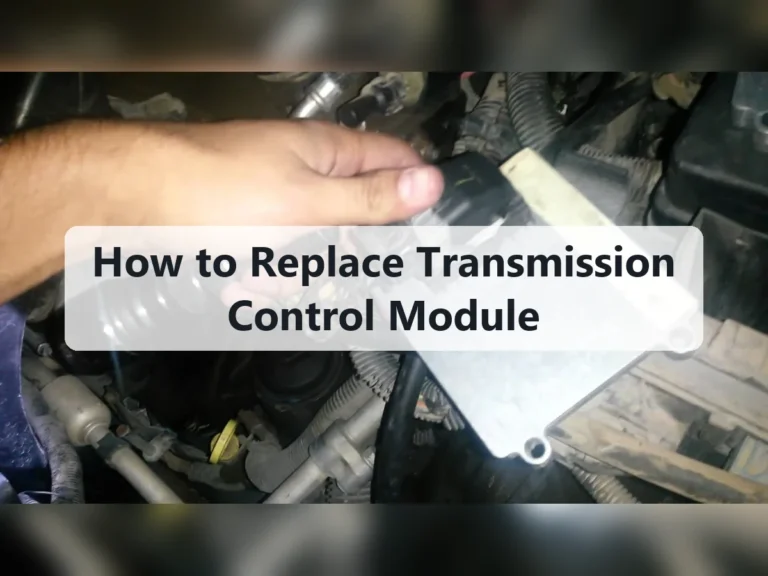
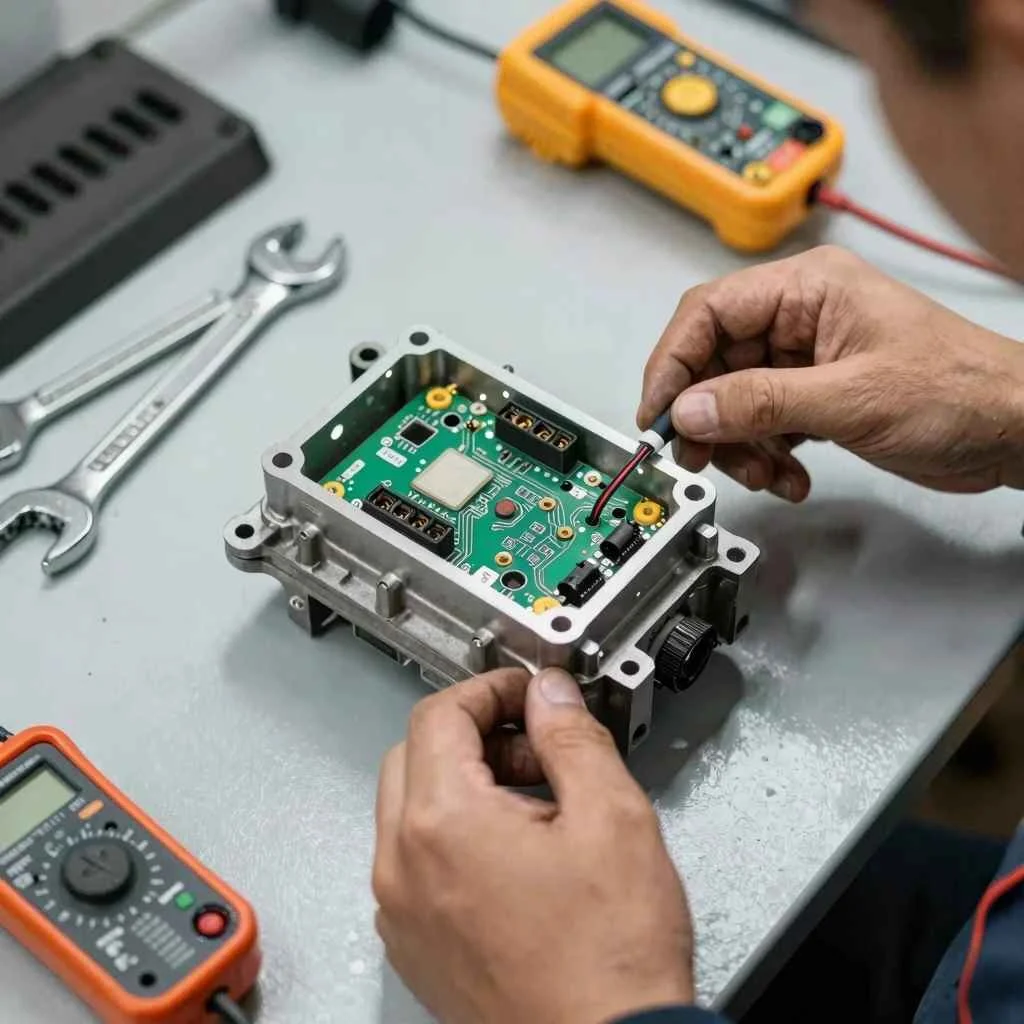
The TCM is the computer that manages many automatic-transmission decisions. It receives information from sensors and other vehicle modules, then commands shift solenoids, pressure control, torque-converter lockup, and sometimes the transmission range functions. On some vehicles it is a separate box; on others it is integrated into the engine computer, transmission valve body, or a larger mechatronic assembly.
Inputs can include turbine or input speed, output speed, fluid temperature, throttle position, engine load, brake-pedal status, and the selected gear. The TCM uses those signals to decide when and how firmly to shift. If an input is missing or implausible, it may choose a protective gear and turn on a warning light.
Common signs of a TCM-related problem
Symptoms that can involve the control system include delayed or harsh shifts, failure to shift beyond one gear, erratic gear selection, no reverse, an illuminated transmission warning, and communication codes. These signs overlap with low fluid, worn clutches, valve-body faults, bad speed sensors, and engine problems.
That overlap is why replacing the computer based only on a symptom is risky. A TCM cannot correct a failed clutch pack, restricted hydraulic passage, broken transmission connector, or low system voltage.
Resetting is not the same as repairing
Disconnecting the battery or clearing codes may reset learned values, but it does not repair damaged wiring or a failed component. It can also erase diagnostic evidence and cause temporary changes in shift quality while the module relearns driving behavior.
A reset is appropriate only when the service procedure calls for it, such as after a repair or during a specified adaptive relearn. If the same code returns, treat that return as information rather than repeatedly clearing it.
Troubleshooting results that do not make sense
Electrical diagnosis is easiest when each test changes the next decision. The table below gives a practical direction, but the vehicle’s wiring diagram and service instructions take priority over general patterns.
| Finding | Likely direction | What to avoid |
|---|---|---|
| TCM has no communication, but other modules work | Check TCM power, grounds, connector, and network circuits | Buying a module before circuit testing |
| Solenoid circuit code returns | Test the solenoid, wiring, connector, and driver circuit | Assuming the code names the TCM as the failed part |
| Gear-ratio or slipping code returns | Check fluid, speed data, pressure, and internal transmission condition | Expecting programming to repair worn clutches |
| New module communicates but shifts poorly | Verify calibration, configuration, fluid, and relearn procedure | Continuing to drive aggressively while it bangs or slips |
When the code returns immediately
An immediate return usually means the fault is present during the module’s self-test. Recheck the connector seating, fuse power, ground voltage drop, and the exact code definition. If the code is a communication fault, include other modules and aftermarket equipment in the inspection.
When the vehicle improves after a battery reset
Temporary improvement may mean adaptive values were cleared, not that the underlying problem disappeared. Scan for pending codes, check battery and charging voltage, and perform the manufacturer’s relearn rather than treating the reset as a completed repair.
When a replacement module cannot be programmed
Confirm the scan tool supports that vehicle and module, the battery is stable, the ignition state is correct, and the replacement part is compatible. Security access, network faults, an incorrect calibration, or a damaged connector can interrupt programming. Stop rather than repeatedly attempting a procedure that reports a hardware or communication failure.
Frequently asked questions
These questions address the decisions that most often confuse someone diagnosing a transmission computer for the first time.
Can a bad battery cause TCM problems?
Yes. Low cranking voltage, unstable charging voltage, loose terminals, or poor grounds can cause communication errors and incorrect control behavior. Correct the power supply and rescan before condemning the TCM.
Can I drive with a suspected bad TCM?
Only if the vehicle shifts safely and the service information does not prohibit driving it. A vehicle stuck in one gear, unable to select reverse, slipping, or shifting violently should not be driven in traffic; have it inspected or transported instead.
Does every replacement TCM need programming?
No single answer applies to every vehicle, but many modern replacements require programming, configuration, security matching, or adaptive relearn. A module that plugs in physically may still be unusable until it is configured for the vehicle.
Will changing the transmission fluid fix a TCM code?
It can help if the actual problem is incorrect fluid level or fluid condition, but it will not repair a failed electrical circuit or computer. Use the vehicle-specific fluid inspection procedure before adding or replacing fluid.
Can I install a used TCM?
Sometimes, but compatibility and programming requirements make used units uncertain. Match the exact application and confirm whether the unit can be reprogrammed, security-matched, or reset before purchase.
Confirm the cause before replacing the module
The safest way to learn how to fix transmission control module faults is to treat the TCM as one part of a connected system. Confirm the symptom, scan every relevant module, check battery power and grounds, inspect wiring and connectors, test related sensors and solenoids, and consider mechanical transmission evidence before replacing electronics.
If testing proves the module has failed, use a compatible replacement and complete every required programming and relearn procedure. If the vehicle has slipping, severe engagement problems, contaminated fluid, uncertain wiring, or a programming failure, the sensible next action is qualified transmission or automotive electrical diagnosis rather than more parts swapping.