Will Jl Fenders Fit a Jk: Key Facts and Helpful Explanations
Usually, JL fenders will not fit a JK as a direct bolt-on replacement. The Jeep Wrangler JL and JK use different body panels, mounting points, inner liners, lighting arrangements, and flare geometry, so a successful swap normally requires conversion brackets, fabrication, or a purpose-built aftermarket kit. This guide examines “will jl fenders fit a jk” and explains the details that matter in practice.
That simple answer has important limits. Some aftermarket fenders are designed to fit both generations, while certain JL-style products can be adapted to a JK with modified hardware; however, an original-equipment JL fender is not automatically compatible just because both Jeeps are Wranglers. The exact result also changes between two-door and four-door models, front and rear applications, and steel, aluminum, or plastic replacement parts.
Before buying, it helps to compare the mounting structure, wheel-opening shape, clearance, turn-signal placement, and included hardware rather than judging by appearance alone. This guide explains why the generations differ, what an adaptation may involve, how to verify an aftermarket listing, and which fitment and road-safety details should be checked so you can decide whether a conversion is practical or whether JK-specific fenders are the better choice.
Why JL and JK fenders are different
The JK was sold in the United States from the 2007 through 2018 model years, while the JL began with the 2018 model year and continues in later production generations. Although the vehicles share the Wrangler name and a familiar boxy profile, the body architecture around the fenders is not identical.
A fender is more than an outer plastic or metal panel. It has to align with the hood, grille, cowl area, body tub, inner fender structure, flare extensions, fasteners, and lighting components. A part can look close in a product photo yet fail to line up with the Jeep’s mounting holes or leave gaps that allow water and debris into areas that were previously protected.

Mounting points and panel shape
JL fenders use a different attachment arrangement from JK fenders. The brackets, bolt locations, panel contours, and relationship to the hood and grille were revised, so an OEM JL panel generally cannot be placed on a JK and secured with the original fasteners.
Even if a fabricator creates mounting tabs, the panel may need to be positioned carefully to avoid rubbing the hood or contacting the grille. Small alignment errors can produce uneven gaps, loose hardware, or stress at the fender mounts.
Lighting and inner-fender differences
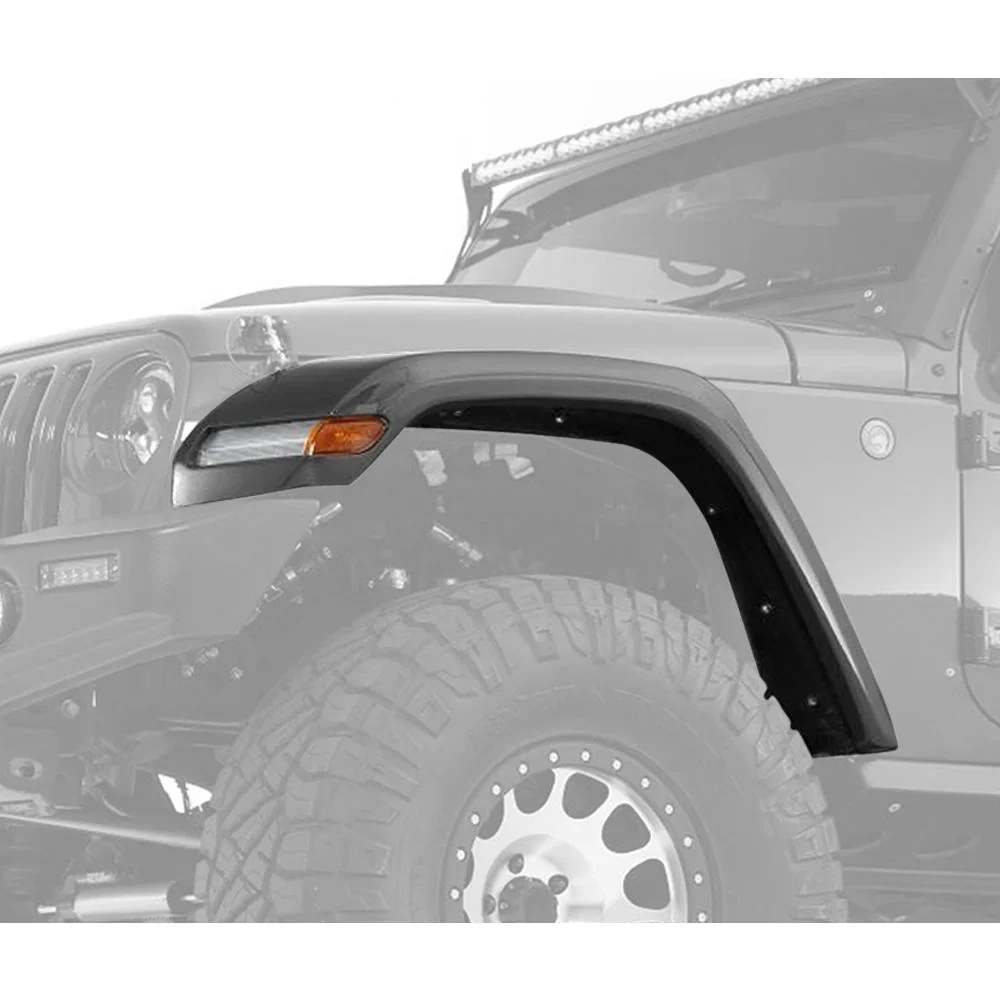
Front fenders can also involve side-marker or turn-signal assemblies, wiring harnesses, bulb sockets, and connector locations. JL lighting may not plug into a JK harness without an adapter or wiring changes, and the lamp may sit in a different location within the flare.
The inner fender liner is another common obstacle. Its shape and attachment points may not match the outer fender, leaving the installer to reuse, trim, replace, or fabricate liner sections. An incomplete liner can expose wiring, air-intake components, and engine-bay areas to mud and water.
Will JL fenders fit a JK as a direct swap?
No, not in the normal OEM sense. A factory JL fender should be treated as incompatible with a JK unless the seller or installer specifically documents a conversion method for that exact application.
When people ask will jl fenders fit a jk, they may be referring to one of two very different situations: installing a genuine JL takeoff part or installing an aftermarket fender marketed with JL styling. The first is usually a fabrication project; the second may be a straightforward replacement if the product was engineered around JK mounting points.

OEM JL takeoff fenders
Used JL takeoff fenders can sometimes be adapted, but the work is not limited to drilling a few holes. The installer may need custom brackets, revised spacers, trimmed plastic, altered inner liners, and wiring changes for the marker lamps.
There is also a risk that a modified factory panel will not maintain the same rigidity as a correctly mounted part. A fender that shifts under vibration can rub against the hood, crack around fasteners, or loosen during off-road use.
Aftermarket JL-style fenders
Aftermarket manufacturers sometimes create a JL-inspired appearance for the JK. These products may use the later styling while retaining JK-specific mounting points, inner-liner compatibility, and wiring provisions.
The phrase “JL fender” in a listing does not prove JL-generation fitment. It may describe the design style only, so read the application notes for the vehicle year, body style, front or rear position, and required accessories.
What to check before buying a conversion
The safest buying decision starts with the exact part number and application chart, not with a visual comparison between two Jeeps. A reliable listing should state whether the fender is for a JK, JL, or both, and should identify whether it is a complete assembly or only an outer flare or skin.
Confirm the vehicle and fender position
Verify the Jeep’s model year and generation first. A 2007–2018 JK and a 2018-or-newer JL can overlap in calendar year, so “2018 Wrangler” by itself is not precise enough.
Then confirm all of the following:
- Two-door or four-door body style, if the product distinguishes them.
- Front or rear fender position.
- Driver-side or passenger-side part.
- Factory or aftermarket bumper and flare configuration.
- Compatibility with the existing inner liner and lighting.
Read what the package actually includes
Some products include only the visible flare, while others include a complete fender assembly, brackets, hardware, liners, and lights. A product that technically fits may still require additional purchases if it does not include the correct mounting brackets or marker-light components.
Look for clear statements about bolt-on installation, drilling, trimming, relocation, wiring, and required tools. “No modifications” should be understood as a claim about that specific product on the listed Jeep, not as proof that all JL parts fit a JK.
Compare clearance and tire coverage
Many fender swaps are intended to create more wheel travel or tire clearance. That benefit depends on the flare position, inner liner shape, bump-stop setup, wheel offset, tire width, and suspension travel. This distinction matters when answering “will jl fenders fit a jk”.
A narrower flare can expose more tread or place the tire outside the body line. Depending on local requirements and vehicle inspection practices, that may create a coverage concern. More clearance also does not automatically make a tire-and-wheel combination safe; check full-lock steering, compression, and articulation before driving normally.
What an adapted JL-style fender may require
A conversion can be practical for a skilled installer, but the work should be planned as a system rather than as a single cosmetic panel swap. The outer fender, mounting brackets, liner, lighting, hood clearance, and tire clearance all need to work together.
Brackets and fabrication
Custom brackets may be needed to bridge the different bolt patterns. They should be made from suitable material, positioned so loads are distributed across strong mounting areas, and secured with hardware appropriate for vibration and off-road use.
Randomly drilling thin panel sections can weaken the fender or place fasteners too close to an edge. If cutting or welding is required, protect nearby wiring and painted surfaces, and account for corrosion protection after the work is complete.
Inner liners and water protection
The liner helps keep mud, gravel, and water away from electrical connectors and engine-bay components. If the original liner no longer follows the new fender, it may need trimming or replacement, but large openings should not simply be left exposed.
After installation, inspect the clearance around the suspension, steering, tire, battery wiring, air box, and washer-fluid components. Turn the steering from lock to lock and check again with the suspension loaded if the new design changes the wheel opening.
Lighting and wiring
Do not assume that a JL marker lamp can connect directly to a JK harness. Connector shapes, wire functions, lamp locations, and electrical requirements may differ.
Use a proper adapter or a carefully documented wiring solution, secure the harness away from tire contact and sharp edges, and verify that the marker or turn signal works correctly. A loose connection can create intermittent lighting failures that are difficult to diagnose after the fender is installed.
Common mistakes that cause fitment problems
The most common mistake is buying based on styling photos. A JL-style fender may resemble an OEM JL part while being built for the JK, or an actual JL takeoff part may be advertised without clearly explaining that it needs fabrication.
Assuming shared Wrangler parts are interchangeable
The two generations share broad design themes and some aftermarket accessories, but that does not mean their body panels share mounting dimensions. Treat each part as generation-specific until the manufacturer confirms otherwise.
Ignoring the flare and wheel combination
Fender width and flare position affect tire coverage, scrub clearance, and how the Jeep looks from above. A wheel with aggressive negative offset can push the tire outward enough to contact the flare or extend beyond it, even when the fender itself is installed correctly.
Reusing unsuitable hardware
Missing brackets often tempt installers to reuse short bolts, weak self-tapping screws, or improvised spacers. That can allow movement and enlarge mounting holes over time. Use the specified hardware whenever possible and replace damaged clips, rivets, and fasteners instead of forcing them back into service.
When a JK-specific fender is the better choice
A JK-specific fender is usually the simplest option when the goal is a reliable replacement, added clearance, or a modest appearance change. It avoids the uncertainty of adapting a later-generation body panel and usually preserves the intended relationship between the fender, liner, hood, and wiring.
Choose a purpose-built JK part when the Jeep is driven daily, the vehicle must remain easy to service, or there is no clear documentation for the conversion. A qualified body or off-road fabrication shop may still be appropriate for a custom build, especially when the project includes lighting relocation, extensive trimming, or structural bracket work.
Before final tightening, loosely install the entire assembly and check panel gaps. Confirm that the hood opens without contact, the doors clear the rear fenders, the tire does not rub at steering lock or suspension compression, and all lighting remains visible from the required angles.
FAQ about will jl fenders fit a jk
Can factory JL front fenders bolt onto a JK?
Not as a normal direct bolt-on installation. Factory JL front fenders use different mounting and component arrangements, so a JK typically needs custom brackets, modifications, and possible wiring changes.
Are JL-style aftermarket fenders easier to install on a JK?
Yes, when they are designed specifically for the JK. Many aftermarket products copy JL styling but are engineered around JK body mounts, which can make them substantially easier than adapting a genuine JL takeoff part.
Do JL rear fenders fit a JK better than front
Neither should be assumed to fit without verification. Rear panels also differ in mounting, body contours, flare shape, and liner arrangements, although the exact work required depends on the particular product.
Will a JL fender work with a JK inner liner?
Usually not without checking or modifying the liner. The inner structures and attachment points can differ, and an altered fender may require a replacement liner, trimming, or a fabricated splash shield.
Do JL fender lights plug into a JK harness?
Not necessarily. Connector style, wire functions, and lamp placement may differ, so verify the wiring instructions and test every lighting function before completing the installation.
Can a shop make JL fenders fit a JK?
A capable fabrication shop may be able to adapt them. The shop should evaluate mounting strength, panel alignment, liner protection, lighting, corrosion prevention, and tire clearance rather than treating the job as a cosmetic bolt-on swap.
What is the easiest way to get a JL look
Buy an aftermarket JK-compatible JL-style fender kit. Confirm the exact JK generation, included brackets and liners, lighting provisions, and whether drilling or trimming is required before ordering.
Conclusion: choose fitment over appearance alone
So, will jl fenders fit a jk? Genuine JL fenders generally do not install as direct replacements, although a skilled fabricator can adapt them and many aftermarket JL-style products are made specifically for JKs. The major limitation is that mounting, liner, lighting, and tire-clearance issues can affect both durability and safety.
Check the part number and installation requirements first, then choose a JK-specific kit or have the conversion professionally evaluated before driving the Jeep.