Are Chevy 1500 and 2500 Fenders the Same: Important Differences
Usually, Chevy 1500 and 2500 fenders are not guaranteed to be the same, even when the trucks look nearly identical. Some generations and body configurations share front fenders, while others use different panels because of changes to the suspension, wheel opening, bumper, grille, or body structure.
That distinction matters when replacing a rusted, dented, or collision-damaged panel. A fender can appear close enough in an online photo yet leave uneven gaps, interfere with the door or hood, or fail to line up with the headlamp and bumper. The safest goal is not simply finding a panel labeled “Silverado”; it is matching the truck’s exact application.
This guide explains are Chevy 1500 and 2500 fenders the same in practical terms, including when interchange is possible and when it is not. You will learn how generation, cab style, bed length, two-wheel-drive or four-wheel-drive configuration, and 2500HD status affect fitment, what to verify in a parts listing, and when a body shop or parts counter should confirm the number before you buy.
Why Chevy 1500 and 2500 fenders can differ
The 1500 and 2500 designations describe different truck capacities, but the badges alone do not determine whether a body panel will interchange. Chevrolet has used shared cab and front-end styling across certain half-ton and heavy-duty models, then changed the underlying details across other generations.
A front fender is shaped around more than the visible outer skin. Its mounting flanges and edges must meet the hood, door, inner fender, grille, headlamp, bumper, wheel liner, and rocker area at precise locations.
Shared styling does not prove shared fitment
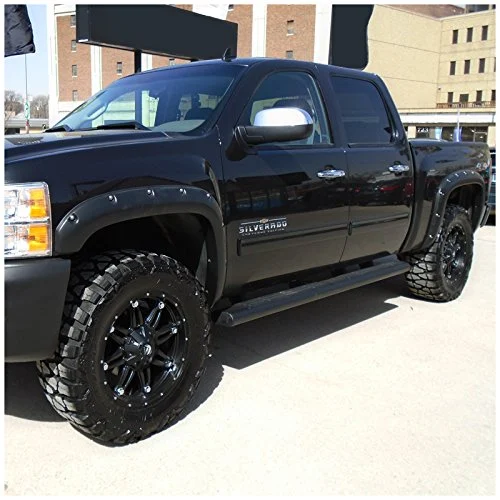
Two trucks may use the same cab design and similar headlights while having different fenders. A heavy-duty version may have a different wheel opening, front suspension clearance, bumper relationship, or front clip, even if the exterior styling appears familiar.
The reverse can also happen: a manufacturer may use one fender stamping across several models to simplify production. In that situation, a 1500 and a 2500 may accept the same panel, but only for a specific generation and body configuration.
1500 versus 2500HD matters
“2500” is not always precise enough for a parts search. Some older trucks were identified simply as 2500, while later Silverado listings commonly distinguish the 2500HD from the light-duty 1500 and from other 2500 configurations.
Aftermarket catalogs may list a fender for “1500/2500” because the panel fits a shared body style. Another listing may separate “1500” and “2500HD” because the front-end dimensions or mounting points differ. Read the application notes rather than assuming the broad model name covers every version.
Are Chevy 1500 and 2500 fenders the same by generation?
There is no single answer for every Chevrolet truck. The most reliable comparison starts with the generation, because body panels are engineered around a particular platform and facelift rather than around the badge alone.
Even within one generation, a mid-cycle redesign can change the fender, grille, headlamp, or bumper interfaces. A panel from a pre-facelift truck may not fit a later model without replacing adjoining parts, regardless of whether both vehicles are called Silverado 1500 or 2500.
GMT-era and early Silverado trucks
Older Chevrolet pickups often had several closely related configurations, including light-duty and heavy-duty models with overlapping styling. Some front fenders may interchange within a narrow year range, while others differ around the wheel opening or front-end attachments.
Parts descriptions for these trucks may use production ranges that overlap or exclude certain body styles. Confirm whether the listing covers a standard 1500, a 2500, a 2500HD, or a specific classic-body version before treating it as a direct replacement.
Later Silverado generations
As Chevrolet introduced newer Silverado designs, the 1500 and HD trucks increasingly received distinct front-end treatments. The 2500HD may have different fender contours or attachment points even when the doors and cab proportions look similar from the side.
Model-year boundaries are especially important after a major redesign. A fender for one generation should not be selected solely because the truck is the same size or carries the same engine family. Use the vehicle identification number, exact year, and body designation to narrow the application.
Classic, facelifted, and overlapping listings
Parts catalogs sometimes use labels such as “new body style,” “classic,” “old body style,” or “HD.” These terms can describe different front-end assemblies within nearby model years. A listing that appears to cover several years may fit only one of those styling groups.
If the seller shows only a generic photograph, ask for the manufacturer’s part number and fitment range. The photo can confirm general shape, but it cannot verify mounting holes, edge dimensions, or compatibility with the truck’s lamps and bumper.
What must match before a fender will fit?
When checking interchangeability, compare the complete vehicle configuration rather than just the 1500 or 2500 badge. The most important attributes are the model year, generation, cab and front-end design, drive configuration where applicable, and whether the truck is a heavy-duty model.
A correct-looking replacement should align with the hood-to-fender gap, door edge, rocker panel, headlamp, grille, and bumper. If one of those interfaces is different, the panel may require modifications that compromise fit, finish, or corrosion protection.
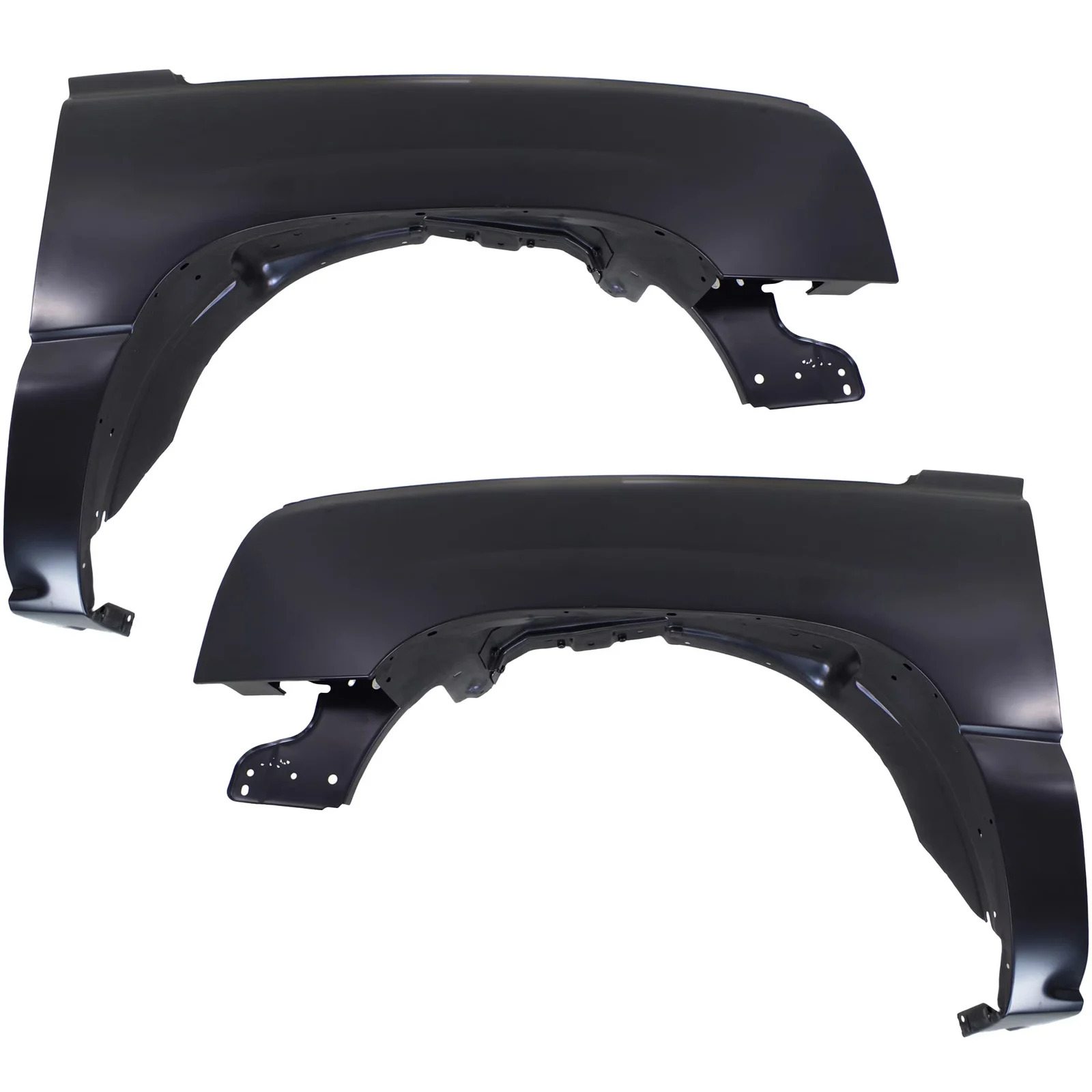
- Model year and generation: Verify the exact production design, including any mid-year or facelift distinction.
- 1500, 2500, or 2500HD designation: Confirm the precise series shown in the parts catalog.
- Cab style: Regular cab, extended cab, and crew cab can use different surrounding body components.
- Front-end configuration: Compare grille, headlamp, bumper, and marker-light openings.
- Wheel opening and liner: Check the arch shape, flare provision, and inner-liner relationship.
- Driver or passenger side: A left-hand and right-hand fender are not interchangeable.
- Trim and flare equipment: Determine whether the truck has factory molding, a fender flare, or a special package.
Wheel opening and suspension clearance
The wheel arch is one of the most visible clues, but it is not enough by itself. A panel can have a similar arch while placing the lip, liner attachment, or lower mounting point differently.
Heavy-duty trucks may also use suspension and tire combinations that require different clearance. Never force a fender into place or trim the arch until the correct replacement has been ruled out; cutting a panel can create alignment and rust problems. This distinction matters when answering “are chevy 1500 and 2500 fenders the same”.
Mounting points and adjoining panels
Inspect the location of the upper bolts, rear flange, lower bracket, inner-fender attachments, and front mounting tabs. A mismatch in one bracket can prevent proper alignment even when the outer contour looks correct.
The fender should be checked alongside the hood, door, grille, headlamp, bumper, and wheel liner. Replacing a panel without checking those neighboring parts can hide collision damage or lead to gaps that cannot be corrected with ordinary adjustment.
How to verify a replacement fender before buying
The best way to answer are Chevy 1500 and 2500 fenders the same for a specific truck is to compare a verified part number and application range. A seller’s broad title is useful for searching, but it is not a substitute for detailed fitment information.
Start with the VIN or the vehicle’s exact year, series, cab style, and front-end configuration. A dealership parts department, reputable collision-parts supplier, or experienced body shop can often identify whether the original and replacement numbers supersede one another.
Use the part number as the primary check
Compare the original fender’s stamped or printed number, if available, with the replacement manufacturer’s number. An aftermarket number may not match the original equipment number, but its catalog should identify the original applications it replaces.
Look for clear language such as “fits 1500 and 2500HD” or “fits 1500 only,” and read every exclusion. Statements about cab style, classic versus new body style, or front-end trim can be more important than the headline product name.
Ask for measurements and photographs when necessary
For a used fender, request photographs of the mounting flanges, rear edge, lower corner, wheel arch, and headlamp area. A panel may have been repaired, cut for accessories, or bent in a way that is not visible in a straight-on image.
Measurements can help confirm a suspected match, but they should support—not replace—the catalog application. Small differences in holes and contours are difficult to identify with casual measuring, especially when the panel is off the vehicle.
Check whether the panel is primed or ready to paint
Replacement fenders may be sold as bare steel, primed, painted, or coated with a transport finish. Surface treatment does not determine fitment, but it affects preparation and corrosion protection after installation.
Do not assume that a “direct replacement” arrives ready for final paint. The body technician should inspect the panel, test-fit it, seal exposed edges as appropriate, and protect the inside surface before final assembly.
Can a 1500 fender be modified to fit a 2500?
Modification is sometimes possible in a fabrication setting, but it is usually not the sensible solution for a normal replacement. Drilling new holes, reshaping a flange, or trimming the wheel opening can disturb panel strength, alignment, liner fit, and the finish around the repair.
For a collision repair, altered fitment can also affect how the bumper, lamp, hood, and door align. A body shop may be able to adapt a panel for a custom project, but that is different from a bolt-on interchange and should be priced as fabrication rather than assumed to be a simple installation.
Why forcing a close panel is risky
A poor-fitting fender can rub the tire or door, leave openings for water and debris, or create stress at the fasteners. It may also make the truck look uneven after paint, because body gaps become more noticeable once the surface is finished.
Structural safety belongs to qualified repair professionals, particularly if the original damage involves the apron, radiator support, suspension, or front frame area. A replacement outer panel cannot correct underlying collision damage.
Installation and fitment checks
Even the correct fender may need normal adjustment because aftermarket panels can vary in stamping quality and vehicles can have prior damage. Test-fit the panel before drilling, painting, or transferring trim.
With the fender loosely installed, check the door and hood operation first. Then inspect the gaps at the grille, headlamp, bumper, rocker, and wheel opening, making sure the liner and wiring do not contact the tire.
- Compare the new panel with the original before removing hardware.
- Transfer only compatible brackets, moldings, emblems, and flare hardware.
- Install the panel loosely so it can move during alignment.
- Check door, hood, lamp, grille, bumper, and wheel-liner clearances.
- Tighten fasteners gradually after the gaps are even.
- Apply suitable corrosion protection to exposed metal and repaired edges.
Never work under an unsupported hood or remove damaged front-end components without securing them. If collision damage has shifted the body structure, have the truck inspected before fitting cosmetic panels.
Frequently asked questions
Are Chevy 1500 and 2500 fenders the same on every
No, interchangeability changes by generation and configuration. Some model years share panels between selected 1500 and 2500 versions, while other years separate the 1500 from the 2500HD. The exact application must be confirmed.
Will a Silverado 1500 fender fit a Silverado 2500HD?
It may fit certain shared-body applications, but it is not automatically interchangeable. Compare the part number, wheel opening, mounting points, and front-end design for the specific year before ordering.
Do the cab and bed style affect front-fender fitment?
They can affect surrounding parts and catalog fitment. Regular, extended, and crew cab trucks may use different body interfaces, while bed length usually concerns the rear body more directly. The complete configuration still belongs in the parts search.
Can a 2500 fender fit a 1500 if the trucks
Matching headlights do not prove that the fenders interchange. The fender’s rear flange, wheel arch, lower bracket, liner, and bumper relationship may still differ.
Is a used fender safer to buy than an aftermarket
Neither option is automatically better. A used original panel may have hidden repairs or rust, while an aftermarket panel may need more adjustment. Inspect condition and verify application before comparing price.
What information should I give a parts seller?
Provide the VIN, model year, series, cab style, side needed, and any classic, facelift, or HD designation. A photo of the truck and the original panel number can further reduce the chance of ordering the wrong part.
Conclusion: verify the exact truck before ordering
So, are Chevy 1500 and 2500 fenders the same? Sometimes, but only within specific generations and configurations; the 1500 and 2500HD labels alone are not enough to establish a match. The major limitation is that a visually similar panel can still differ at the wheel opening, mounting points, or adjoining front-end components.
Before buying, confirm the VIN-based application or part number, compare the body style and front-end design, and test-fit the panel before paint. If the truck has collision damage or the catalog information is unclear, have a qualified body shop or parts professional verify fitment first.