Are Tonneau Covers Watertight: Key Facts and Helpful Explanations
Most tonneau covers are water-resistant, not completely watertight. A well-fitted cover can greatly reduce rain, snow, and road spray entering the truck bed, but seams, hinges, corners, tailgate gaps, drainage paths, and installation errors may still allow some moisture through.
Truck owners usually want two things: a bed that stays dry enough for cargo and a cover that will not create problems during storms, washing, or winter driving. Reaching that goal starts with separating marketing terms from real-world performance. “Water-resistant,” “weather-resistant,” and “waterproof” can describe different levels of protection, and even a high-quality cover depends on the truck’s bed design, tailgate alignment, seals, and installation.
This guide explains how tonneau covers manage water, why leaks develop, which cover styles generally offer the strongest protection, and how to test and improve a leaking setup. You will also learn what cargo can safely ride under a cover, when bed liners or storage containers are still necessary, how maintenance affects sealing, and when a replacement or professional adjustment makes more sense than another layer of sealant.
What “watertight” means for a truck bed cover
A tonneau cover is watertight only if it prevents water from entering under the conditions being considered. That sounds simple, but a cover can keep out ordinary rain while allowing water through during a pressure-washing session, highway spray, or a heavy storm with wind-driven rain.
For most pickup applications, the more accurate term is weather-resistant. A weather-resistant cover limits water entry through overlapping panels, rubber seals, compression latches, drainage channels, and carefully fitted edges. It is designed to protect the bed and ordinary cargo, not to create a permanently sealed, submersible container.
Even covers advertised as waterproof may have practical limitations. The cover itself may shed water effectively, while the truck’s tailgate gap, stake-pocket area, bed rail, or drain tube becomes the actual leak path.
Water-resistant is different from waterproof
Water-resistant means a product can withstand exposure to water without allowing significant penetration under normal use. Waterproof suggests a higher level of protection, but the word does not automatically describe a certified performance level for every brand or truck configuration.
Manufacturers may use terms such as water-shedding, weatherproof, sealed, or dust-resistant. These descriptions are useful only when paired with details about construction, seals, testing, and installation requirements. A cover with a waterproof vinyl exterior can still leak around its frame or hinges.
The practical question is not whether a cover can resist any water at all. It is whether it keeps the amount of water entering the bed low enough for the cargo, climate, driving conditions, and owner’s expectations.
How tonneau covers keep rain and spray out
Tonneau covers control water through several overlapping features rather than one perfect barrier. The exterior surface sheds most precipitation, while edges and joints direct water away from the bed or into controlled drainage areas.
Common sealing features include bulb seals, foam weatherstripping, rubber edge seals, overlapping panel joints, compression latches, and side rails. Some systems also include gutters that collect water and send it toward drain tubes near the front corners of the bed.
Each feature has a specific job. The cover surface handles falling rain, the perimeter seal closes the gap between the cover and bed rails, and the drainage system manages water that reaches the rail or frame instead of allowing it to flow directly into the cargo area.
Cover material affects water protection
Soft roll-up covers commonly use coated vinyl or a similar flexible fabric stretched across bows or a support frame. The material can shed rain effectively, but folds, seams, rear corners, and attachment points may be more vulnerable to leakage than a continuous hard panel.
Hard folding covers often use aluminum, fiberglass, composite, or plastic panels. Their broad surfaces can provide strong water shedding, while the folding joints and panel overlaps require reliable seals. A panel can remain dry while water enters through a hinge line or an incorrectly compressed edge gasket.
Retractable covers usually travel inside side rails or a canister. They can offer good everyday weather protection, but the rails and canister need to handle water that reaches the moving cover. Debris in the drainage channels can reduce performance.
One-piece hinged covers may have fewer moving joints than folding or retractable designs. However, their perimeter seal must match the truck bed closely, and the cover may need to be removed or tilted for tall cargo.
Seals and drainage paths matter as much as the top panel
A cover’s top surface receives the most attention, but the seal around the edges often determines whether the bed stays dry. If the rubber gasket is too thin, misplaced, damaged, or compressed unevenly, water can bypass the cover even when the panel is in excellent condition.
Drainage channels are equally important. Water may collect on the cover frame during rain, then move toward the front of the bed or the corners. Properly routed drain tubes carry that water outside the bed; blocked, kinked, or disconnected tubes can redirect it into the cargo area.
The tailgate is a common weak point because the cover and tailgate may use separate seals. A cover can seal correctly along both bed sides while water enters through the gap above or beside the tailgate, especially when the tailgate is misaligned.
Which tonneau cover styles usually provide the best water resistance?
No single cover style is watertight on every truck, but some designs generally provide more consistent weather protection than others. A well-installed cover in the right size usually performs better than a theoretically superior design that does not fit the specific bed.
- One-piece hard covers: These often have a broad, rigid surface with fewer panel joints. Their main vulnerabilities are the perimeter seal, hinges, rear corners, and tailgate interface.
- Hard folding covers: These can offer strong protection when panel overlaps and seals are properly adjusted. Folding joints may admit water during wind-driven rain or if seals wear.
- Retractable covers: These commonly include rails and drainage systems that can manage water well. Their moving parts, canister, and rail channels require regular cleaning and inspection.
- Soft folding covers: These are convenient and often effective against ordinary rain. Seams, folds, tension adjustment, and side attachment points can be more sensitive to weather and age.
- Soft roll-up covers: These are practical and affordable, but the flexible material and rear closure may provide less consistent sealing than a rigid cover, particularly in severe weather.
- Snap-on covers: These may keep out light weather when properly tensioned, but their attachment points and fabric edges are typically less resistant to wind-driven water.
The strongest choice depends on how the truck is used. A commuter carrying groceries may be satisfied with a soft cover, while an owner transporting tools through wet winters may prefer a rigid design with compression latches and a managed drainage system.
Hard covers are not automatically leakproof
A hard panel can create the impression of a sealed box, but rigidity alone does not stop water. Water follows the easiest route, and a small gap at a corner or hinge can admit more moisture than a flexible cover with a correctly adjusted perimeter seal.
Hard covers also place greater demands on alignment. If the cover sits too far forward, too far back, or unevenly across the bed rails, the gaskets may not compress consistently. Over-tightening clamps can distort rails and create another gap instead of fixing the original one.
Soft covers can perform well when properly tensioned
A soft cover is not necessarily unsuitable for wet climates. Quality fabric, welded or well-sealed seams, proper tension, and a secure tailgate seal can provide useful protection against rain and road spray.
Soft covers can lose water resistance when the fabric sags and forms pools. Standing water adds weight, stretches the material, and increases pressure around seams and attachment points. Cold temperatures can also make vinyl less flexible, while heat and ultraviolet exposure can cause shrinkage, cracking, or loss of tension over time.
Why a tonneau cover may leak even when it fits
Most tonneau cover leaks come from a small number of correctable causes: poor alignment, damaged seals, blocked drainage, incorrect installation, or water entering through an area the owner assumed the cover sealed. Finding the source requires tracing the water path rather than applying sealant everywhere.
Incorrect installation creates uneven gaps
A cover can appear centered while still sitting too high on one side or too close to the cab or tailgate. Clamps, brackets, rails, and latches must be positioned according to the product instructions, because a small change in rail location can alter how the seals compress.
Bed caps, spray-in liners, drop-in liners, and utility modifications can also affect fit. A liner lip may lift a rail enough to prevent the gasket from sealing, while a thick bed mat may interfere with drainage or cover hardware.
Worn or compressed weatherstripping allows bypass leaks
Rubber seals gradually flatten, harden, tear, or detach. Repeated opening, cargo contact, sunlight, road salt, and cleaning chemicals can accelerate wear. A gasket that looks intact may still fail if it no longer rebounds against the bed rail.
Inspect the full perimeter, not only the location where water appears. Water can travel along a rail or under a seal before dripping at a different point, making the visible wet spot misleading.
Clogged drains redirect water into the bed
Retractable and framed covers often depend on channels or tubes to move water away. Leaves, mud, insects, ice, and debris can block these passages. A disconnected tube may also dump water behind the bed liner or onto cargo.
Clean drain openings gently and confirm that tubes have a downhill route to the outside. Avoid forcing rigid tools through narrow tubes, because a puncture or disconnection can create a new leak.
The tailgate gap is often the real entry point
Many tonneau covers do not completely seal the tailgate unless a separate tailgate gasket or compatible bed seal is installed. The gap may be especially noticeable when the tailgate is adjusted unevenly, the truck bed is damaged, or the cover’s rear seal does not overlap correctly.
Water entering at the tailgate may move forward under a bed mat, making the problem seem like a leak near the cab. Drying the bed and testing one area at a time helps identify the actual entry point.
Bed damage and accessories can interfere with sealing
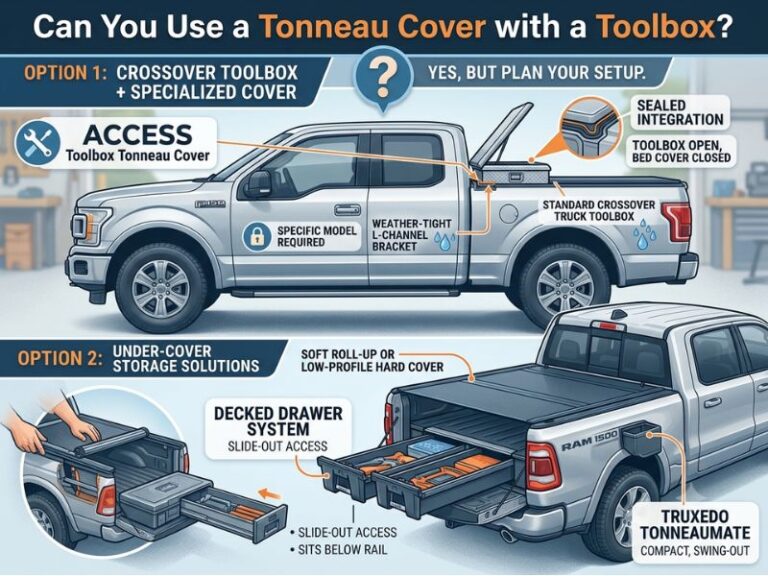
A dented bed rail, bent tailgate, aftermarket bed extender, tool box, ladder rack, or cargo-management accessory can prevent a cover from sitting flat. Even a small obstruction beneath a rail can create a continuous channel for water.
Check compatibility before blaming the cover. Some accessories require specific side rails, spacer kits, low-profile brackets, or a cover designed to work around the accessory.
How to test a tonneau cover for leaks safely
The most useful leak test is controlled, gentle, and repeatable. A hose test can reveal a problem, but a high-pressure nozzle may force water past seals in a way ordinary rain never would.
- Remove or protect cargo, dry the bed, and place clean paper towels or cardboard along the bed rails, front wall, corners, and tailgate.
- Close and latch the cover exactly as you do during normal use. Confirm that panels, snaps, clamps, and latches are fully engaged.
- Use a gentle stream of water over one section at a time, starting near the lowest-risk area and working toward seams and corners.
- Wait briefly after wetting each section. Water can travel along the underside before it drips, so inspect the paper and surrounding surfaces carefully.
- Mark the first wet location, dry the area, and repeat the test to confirm the result.
- Inspect the seal above the entry point, the nearby rail, and any drainage channel before making an adjustment.
Do not begin with a pressure washer. High-pressure water can enter through normal expansion gaps, force debris into seals, damage soft fabric, and produce a result that does not represent typical rain or road spray.
A controlled drive in light rain can provide additional information, but safety comes first. Do not leave unsecured materials in the bed, and never use a leak test as a reason to drive during dangerous weather.
How to distinguish condensation from a leak
Moisture is not always coming through the cover. Temperature changes can produce condensation on the underside of the cover, bed walls, or metal cargo. A damp bed mat can also retain water long after the original source has dried.
Dry the entire bed, ventilate it, and place absorbent material at suspected entry points. If moisture appears only after a temperature swing without exterior rain, condensation may be contributing to the problem.
How to improve the water resistance of an existing cover
Small adjustments often improve a cover’s performance, but the correct fix depends on where water enters. Adding sealant without identifying the path may trap water, interfere with moving parts, or make future maintenance difficult.
Clean and inspect before adding anything
Remove dirt from the bed rails, cover underside, seals, hinges, latches, and drainage channels. Use a mild cleaner that is safe for the cover material, then allow the surfaces to dry before inspecting them.
Look for gaps, torn gaskets, loose fasteners, shifted rails, fabric shrinkage, sagging, and damaged corners. Check whether the cover closes evenly and whether latches require unusual force.
Use the correct seal or weatherstrip
Replacement weatherstripping should match the original profile and location as closely as possible. A seal that is too thick may prevent latches from closing, while one that is too thin may never contact the bed rail.
Adhesive-backed foam can help with certain flat, clean surfaces, but it is not a universal substitute for a molded rubber gasket. Avoid covering drain openings or placing soft material where it can detach and enter moving hardware.
Adjust rails, clamps, and latches gradually
Make one adjustment at a time and test the cover after each change. The goal is even contact around the perimeter, not maximum compression.
If a latch is difficult to close, the cover may be misaligned or the seal may be too thick. Forcing it can bend hardware, distort the frame, and shorten the life of the seal.
Maintain fabric, vinyl, and moving parts correctly
Keep soft materials clean and use only care products approved for that material. Harsh solvents, petroleum-based products, and abrasive tools can weaken coatings or cause premature cracking.
Lubricate hinges, latches, and retractable mechanisms only with a product suitable for the manufacturer’s hardware. Excess lubricant can attract grit and contaminate seals. Keep rails and drain channels free of debris throughout the year.
What cargo can safely stay under a tonneau cover?
A tonneau cover is useful protection, but it should not be treated as a guarantee that the bed will remain dry. Ordinary tools, outdoor equipment, groceries, and many boxed items can usually ride under a functioning cover, provided they are packed and secured appropriately.
Items that are highly sensitive to moisture should receive additional protection. Use sealed containers, dry bags, plastic totes, or manufacturer-approved cargo cases for electronics, documents, clothing, medical supplies, and materials that can be damaged by even a small amount of condensation.
Never assume a covered bed provides climate control. Heat can build under a dark cover, cold can affect batteries and liquids, and humidity can cause corrosion. A waterproof container inside the bed offers a second barrier but may still need ventilation or temperature protection for certain contents.
Why cargo placement matters
Do not stack cargo against the cover, seals, or drainage channels. A box pressing upward on a soft cover can create a low spot where water pools, while cargo touching the side rails may displace the gasket.
Keep sharp edges away from vinyl and fabric. Secure loose objects so they do not slide into latches or rub against the cover during braking and cornering. A cover is not a substitute for cargo tie-downs.
Water resistance, truck-bed liners, and tailgate seals
A bed liner can reduce damage from moisture, but it does not make a tonneau cover watertight. A liner may protect painted steel from scratches and help water drain, while a mat can hide moisture and slow drying.
Drop-in liners sometimes overlap the bed rails or tailgate in ways that affect cover fit. Spray-in liners generally have less impact on rail geometry, but their textured surface can still change how a gasket contacts the bed.
A tailgate seal can reduce water and dust entering through the rear gap, especially when paired with a compatible tonneau cover. It should be installed without interfering with tailgate operation, latch engagement, or factory drainage.
Inspect the entire system as a group: cover, bed rails, liner, tailgate, accessories, and drain routes. Improving one area may not solve a leak caused by another.
How weather and driving conditions change cover performance
Light, vertical rain is easier for a cover to manage than wind-driven rain. At highway speed, airflow can push water upward and sideways into gaps that rarely see water while the truck is parked.
Road spray contains dirt and salt that can wear seals and clog drains. Snow and ice add weight and may prevent the cover from closing completely. Remove heavy accumulation carefully rather than dragging a shovel or hard tool across the cover.
Extreme heat can soften adhesives and accelerate vinyl aging. Freezing temperatures can make seals stiff and brittle, while repeated freeze-thaw cycles may expose small gaps around fasteners and seams.
Car washes require extra caution
A cover that handles rain may not withstand an automatic car wash or pressure wand. Brushes, blowers, high-pressure jets, and cleaning chemicals can lift edges, separate seals, or force water through joints.
Follow the cover maker’s cleaning guidance and avoid aiming high-pressure water directly at seams, hinges, latches, or rail interfaces. If a wash facility cannot accommodate the cover safely, hand washing with a gentle stream is the safer option.
Common misconceptions about watertight tonneau covers
“Waterproof fabric means the bed cannot get wet”
Fabric is only one part of the system. Water can enter at stitching, corners, attachment points, zippers, rails, and the tailgate even when the central fabric panel does not absorb water.
“A more expensive cover will never leak”
Higher-priced covers may use better materials, stronger hardware, and more refined drainage, but price cannot overcome a poor fit or damaged truck bed. Installation and maintenance remain decisive.
“A little water is proof the cover is defective”
A small amount of moisture may occur during severe wind-driven rain, high-pressure washing, or a storm that exceeds normal design conditions. The important questions are where the water enters, how much reaches the bed, and whether the result is consistent with the product’s stated use.
“Sealant is always the best repair”
Sealant may hide a symptom while leaving the underlying alignment or drainage problem in place. It can also make replacement difficult and prevent moving parts from operating correctly.
“A covered bed is secure because it is dry”
Weather protection and theft protection are separate features. Some covers provide privacy and a physical barrier, but many can be opened or removed with limited tools. Use appropriate locks and do not leave valuable property unattended.
When to repair, replace, or seek professional help
Repair is often reasonable when the problem is a clogged drain, loose fastener, shifted rail, or worn seal that has a clear replacement part. Minor alignment changes can restore performance when the cover and truck bed are otherwise undamaged.
Replacement may make more sense when the fabric has shrunk, the panel is warped, the frame is bent, or seals have deteriorated throughout the system. Repeated patching can cost more than a properly fitted replacement and may leave cargo exposed during the next storm.
Professional help is appropriate when the bed is damaged, the cover interferes with the tailgate, brackets do not match the truck, or the leak persists after careful adjustment. A qualified installer can check rail height, latch compression, accessory clearance, and drain routing as a complete system.
Contact the manufacturer or seller when the cover is relatively new and the installation appears correct. Keep photographs of the leak location, installation details, and test conditions, but do not modify the cover extensively before checking applicable warranty requirements.
How to choose a cover when water protection is the priority
Start with the truck’s exact year, make, model, bed length, cab configuration, and existing accessories. A cover made for a similar-looking bed may not align with the tailgate, bed caps, or factory rails.
Then compare the construction details that directly affect moisture control:
- Perimeter seals and whether they contact the bed rails continuously.
- Panel overlaps, hinges, seams, and corner construction.
- Drainage channels and whether drain tubes are included or optional.
- Tailgate compatibility and the need for an additional rear seal.
- Access to the bed with the cover partially or fully opened.
- Replacement seals, hardware availability, and maintenance requirements.
- Compatibility with bed liners, tool boxes, racks, and bed extenders.
- How the cover is expected to perform during car washing, snow, and highway spray.
Read product descriptions carefully, but give more weight to specific construction information than broad words such as “all-weather.” If possible, inspect how the cover closes and where water is intended to go before buying.
Match the cover to the cargo and climate
Someone in a dry climate who mainly wants shade and security may value convenience over maximum sealing. Someone in a region with frequent storms, snow, or salted roads may benefit from a rigid cover, robust perimeter seals, and accessible drainage.
If the cargo must remain dry without a second container, choose a system with the strongest documented weather design available for the truck and still use protective packing for sensitive items. No consumer tonneau cover should be treated as a guaranteed dry-storage vault in every condition.
FAQ: Are tonneau covers watertight?
Are tonneau covers watertight in heavy rain?
Most tonneau covers resist heavy rain but are not guaranteed to be completely watertight. A properly fitted cover can keep the bed substantially drier, but wind-driven rain may enter through seams, corners, tailgate gaps, or drainage channels.
Are tonneau covers watertight during highway driving?
They can provide good protection at highway speed, but road spray may expose weak seals. Air pressure can force water into areas that remain dry during parked rain, especially around the rear corners, tailgate, and side rails.
Which tonneau cover is most water-resistant?
Rigid covers with continuous perimeter seals and well-designed drainage often offer the strongest overall protection. Hard folding, one-piece, and retractable designs can all perform well when correctly matched and installed, while a poorly fitted rigid cover may leak more than a properly adjusted soft cover.
Can I make a tonneau cover completely watertight?
You can improve water resistance, but complete watertight performance is difficult to guarantee. Cleaning drains, correcting alignment, replacing seals, and sealing compatible tailgate gaps can help, but these steps cannot eliminate every limitation caused by severe weather, truck-bed damage, or cover design.
Why does my tonneau cover leak at the tailgate?
The tailgate gap or rear seal is often the source of that leak. Check tailgate alignment, the cover’s rear gasket, bed-rail contact, and whether a separate tailgate seal is required for the specific cover and truck.
Can I use a pressure washer on a tonneau cover?
Direct high-pressure spray can force water past seals and damage some cover materials. Use a gentle stream unless the manufacturer specifically permits pressure washing, and avoid targeting seams, hinges, latches, and rail interfaces.
Should I keep valuable electronics under a tonneau cover?
Use a sealed secondary container for electronics and other moisture-sensitive cargo. A tonneau cover reduces exposure but does not control humidity, condensation, temperature, or unexpected water entry.
Practical takeaway on tonneau cover water protection
Tonneau covers are generally designed to be weather-resistant rather than perfectly watertight. A quality cover, correct fit, intact seals, clear drains, and a compatible tailgate setup can keep most rain and road spray out of the bed, but severe weather and small installation gaps may still allow moisture inside.
Inspect the cover and truck as one system, test with gentle water, and protect sensitive cargo with sealed containers. If a leak continues after cleaning and careful adjustment, replace worn seals or have the cover and bed evaluated before relying on it for important cargo.