What Is a Tire Patch — A Clear Definition with Real Examples
A tire patch is a repair material bonded to the inside of a tire to seal a puncture after the damaged area is prepared.
A small nail or screw can turn an ordinary drive into an important repair decision Acting quickly may.
That trade-off is why the visible rubber patch is only part of the story A proper repair depends on the puncture s location angle size condition of the. This guide examines “what is a tire patch” and explains the details that matter in practice.
This guide explains what is a tire patch how technicians install one when it is appropriate and why some punctures cannot be repaired safely You will also learn.
- ✓A tire patch seals a puncture from the inside after the tire is removed and inspected.
- ✓A puncture in the tread may be repairable, while damage in the sidewall or shoulder usually is not.
- ✓A patch alone does not repair every type of puncture; a combination plug-and-patch repair may be required.
- ✓Internal damage, excessive wear, an oversized hole, or unsafe location can make tire replacement necessary.
What Is a Tire Patch and What Does
A tire patch is a piece of flexible rubber-based repair material bonded to the inside of a pneumatic.
The patch does not simply sit on top of the tread like a sticker A technician normally removes the tire from the wheel locates the injury inspects the.

- Internal placement: The patch is installed inside the tire, where air pressure helps press the repair material against the inner liner.
- Surface preparation: Buffing and cleaning remove contamination and create a suitable surface for bonding.
- Inspection first: A tire cannot be judged repairable from the outside alone because driving underinflated may damage its interior.
- Seal versus structure: A patch seals an air leak, but it cannot restore a cut or casing that has lost structural integrity.
People often use patch as a general term for any tire repair but repair methods are not identical A patch a plug and a combination repair each address.
How a Professional Tire Patch Is Installed
A professional patch repair begins with removing the wheel and separating the tire from the rim This allows.
The technician then identifies the injury s size direction and location If the hole is within the repairable tread area and the tire has no consequential internal damage.
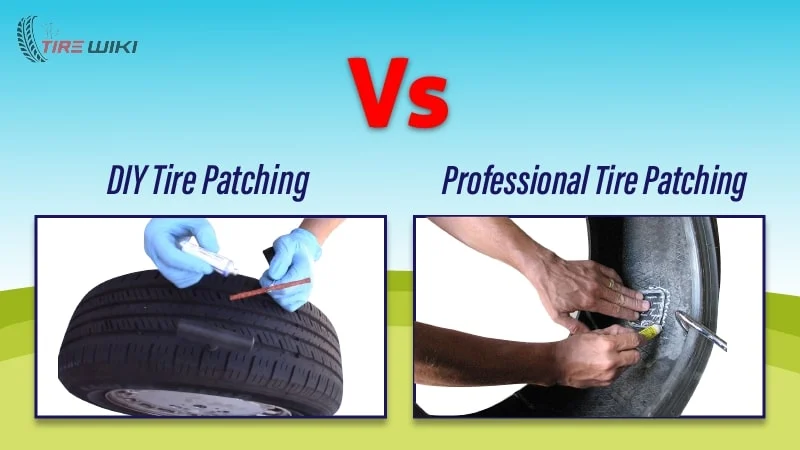
- Find the leak: The tire is inspected with visual checks, air pressure, and often a leak-detection solution.
- Examine the casing: The technician looks for abrasion, separation, excessive flex damage, or debris inside the tire.
- Prepare the liner: The bonding area is cleaned and lightly roughened according to the repair system’s instructions.
- Apply pressure: The patch is centered over the injury and firmly rolled or pressed to remove air pockets.
Why the tire must be removed
An external view can show a nail screw or visible hole but it cannot reveal all the consequences of air loss When a tire is driven with too.
Removing the tire also lets the technician verify that no object has entered at an angle that the hole is not larger inside than outside and that the.
What bonding actually means
Most patch systems use a prepared rubber surface and a chemical or heat-assisted bonding process The patch must be centered correctly pressed evenly and free from contamination If.
The patch also needs to match the tire s movement Tires constantly deform where they meet the road so a rigid material or poorly fitted repair can create.
Why a patch may be paired with a plug
A patch placed only over the inner liner can seal the inside but the puncture channel itself may remain open to water and road debris A plug fills.
Not every tire or puncture requires the same repair design The important point is that a patch-only repair.
When Is a Tire Patch Safe and Appropriate?
A patch is generally considered for a small puncture in the central tread area of an otherwise serviceable tire The tire must have adequate remaining tread no significant.
Location matters because the tread shoulder and sidewall perform different jobs The tread contacts the road and is supported by internal belt construction The sidewall flexes substantially and.
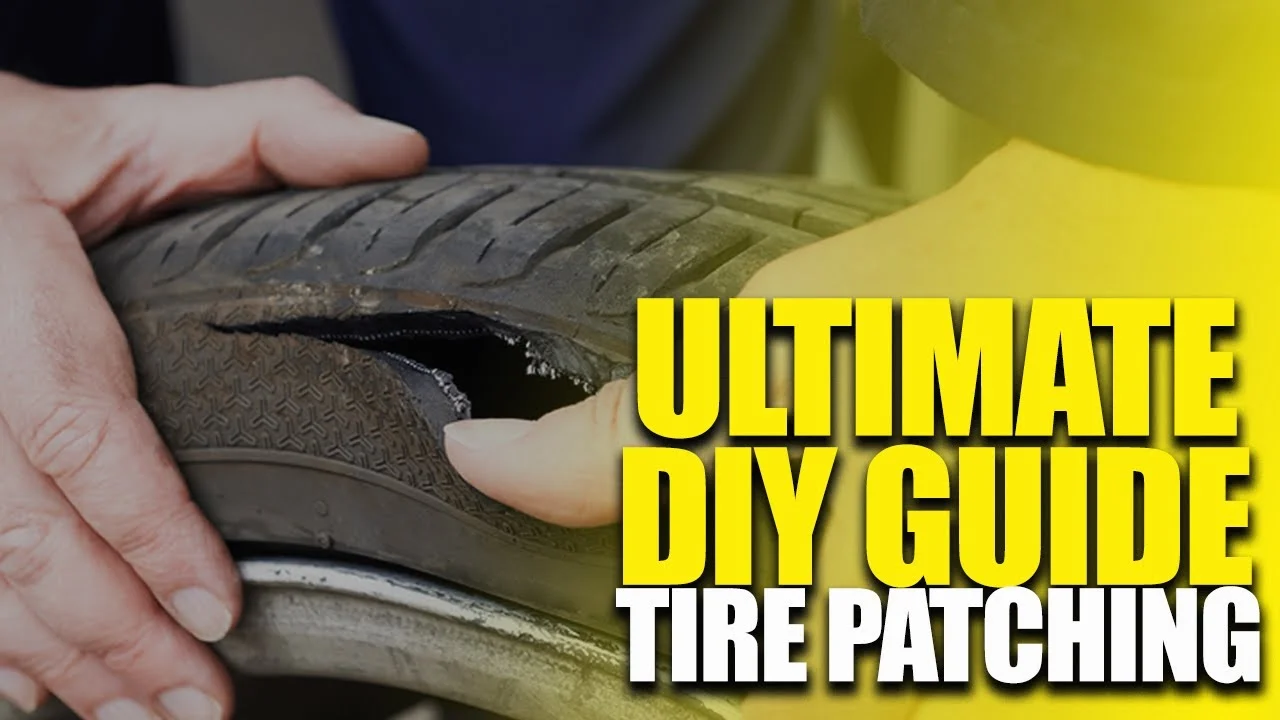
- Repairable zone: The injury is usually evaluated in the central tread, away from the shoulder and sidewall.
- Manageable size: A small, clean puncture is more likely to qualify than a long cut, irregular tear, or enlarged hole.
- Sound tire: The casing, inner liner, tread, and bead must remain in usable condition.
- Limited history: Previous repairs, repeated air loss, or unknown low-pressure driving can change the decision.
Tread punctures
A straight puncture through the main tread is the classic candidate for an internal repair For example a screw may enter the tread nearly perpendicular to the road.
A puncture is not automatically safe just because it is in the tread The hole may be too large close to the shoulder angled into a belt or.
Shoulder and sidewall damage
The shoulder and sidewall experience more flex than the central tread A repair placed there can be subjected to movement that weakens the bond or allows the injury.
This remains true even when the damaged area is small The concern is not only air retention it.
Run-flat and specialized tires
Some run-flat low-profile high-performance and specialty tires have additional inspection requirements A run-flat tire may travel a limited distance after losing pressure but that does not mean it.
Repair decisions for specialized tires should follow the tire maker’s instructions and the repair system’s limitations. If the technician cannot verify the tire’s condition, replacement may be the more responsible choice.
Patch, Plug, or Plug-Patch: What Is the Difference?
The words patch and plug are often used casually yet they describe different repair approaches A plug is inserted into the puncture from the outside and fills the. This distinction matters when answering “what is a tire patch”.
That difference matters because a puncture is a passage through the tire not merely a hole on one surface A repair may need to seal the inner liner.
- Plug: Fast external insertion that fills the puncture channel, but it does not allow a full internal inspection by itself.
- Patch: Internal material that seals the liner after the tire is removed and prepared.
- Plug-patch: A combined repair that closes the channel and seals the inside when the system is approved for that use.
- Replacement: The correct outcome when the injury or tire condition exceeds repair limits.
| Repair type | Typical advantage | Important limitation |
|---|---|---|
| External plug | Can be quick and does not require removing the tire | May not reveal internal damage and may not meet the requirements for a permanent repair |
| Internal patch | Allows inspection of the tire’s interior and seals the liner | May not close the puncture channel unless the design includes that function |
| Plug-patch | Addresses both the channel and inner liner | Still unsuitable for sidewall damage, severe casing injury, or an unserviceable tire |
| Replacement | Removes uncertainty when repair limits are exceeded | Costs more than a repair and may require matching tire specifications |
A mushroom-style repair unit is one example of a combination design its stem fills the puncture channel while its cap seals against the inside Other systems use separate.
Why a quick plug is not always equivalent
An external plug can be useful as a temporary measure in some circumstances but a fast repair is not automatically a complete inspection If the tire has been.
There is also a risk of treating repeated air loss as proof that the first repair failed The leak may instead come from the rim valve stem bead.
When a Tire Should Be Replaced Instead
Repair is not the goal in every puncture situation Replacement is usually the safer decision when the damage affects the sidewall or shoulder when the casing is cut.
Replacement may also be appropriate when tread wear is too advanced the tire has multiple overlapping repairs or the puncture is too large or irregular for the approved.
- Sidewall injury: A patch cannot restore the sidewall’s original load-bearing structure.
- Visible cords: Exposed or damaged reinforcement indicates more than a simple air leak.
- Run-flat damage: Driving without pressure can create hidden heat damage that requires specialized evaluation.
- Severe wear: Repairing a puncture does not add tread or correct aging, cracking, or other service concerns.
Damage from driving underinflated
A tire with a puncture may lose pressure gradually allowing a driver to travel several miles before noticing During that time the sidewalls bend more and generate heat.
If that interior damage is present, sealing the original puncture does not solve the problem. The tire’s ability to contain air and withstand load may have been compromised across a much larger area.
Multiple repairs and overlapping injuries
One properly spaced tread repair is a different situation from several repairs clustered near one another Each injury.
A tire with a previous repair is not automatically unsafe, but its history should be disclosed. The technician needs to know where earlier repairs were made and whether the tire has continued losing pressure.
Age, cracking, and general condition
A new puncture can draw attention to a tire that was already nearing the end of its useful service Dry cracking.
A patch addresses one injury; it does not reverse rubber aging or correct an alignment problem. If the tire is worn or deteriorated, replacing it may provide a more reliable result than repairing an isolated hole.
Real Examples of Tire Patch Decisions
Realistic examples show why the same-looking nail hole can lead to different recommendations. The decision depends on the entire tire, not only the object that caused the leak.
These examples are decision patterns rather than permission to repair a tire without inspection A trained technician still.
- Clean center-tread puncture: Often worth inspecting for a repair if the tire has good condition and pressure history.
- Shoulder screw: More likely to require replacement because the repair zone is exposed to greater flex.
- Low-pressure travel: Requires an internal inspection even when the puncture appears tiny.
- Repeated leak: Calls for a new leak diagnosis instead of assuming the patch is the only issue.
Example: A screw in the center tread
A passenger car tire has a short screw in the center tread. The driver notices the pressure warning soon after the puncture and avoids extended driving. The tire has even tread, no cracks, and no previous repairs.
After removal the technician finds a small clean channel and no interior abrasion This is the type of.
Example: A nail near the shoulder
A nail enters close to the outer tread edge, where the tread begins to curve toward the sidewall. From the outside, the hole looks no larger than the center-tread example.
The location changes the result. Because the area flexes heavily and may fall outside the repairable zone, the technician may recommend replacement even though the puncture is small and the tire still holds air.
Example: A tire driven flat
A driver notices a low tire but continues to a nearby destination. The puncture is eventually found in the center tread, and the driver expects a simple patch. Keep these limitations in mind when considering “what is a tire patch”.
During dismounting, the technician sees abrasion and loose rubber inside the sidewall. The original puncture is not the only concern, so replacement is more appropriate than sealing the hole.
Example: A recurring leak after repair
A repaired tire loses a small amount of air again. The owner assumes the patch has failed, but a new inspection finds corrosion at the wheel bead or a leaking valve stem.
This example illustrates why the entire wheel-and-tire assembly must be checked. Adding another patch without locating the actual leak can waste money and delay the necessary repair.
Common Mistakes With Tire Patches
Many repair problems begin with a misunderstanding rather than a defective patch Drivers may focus on stopping the.
Knowing the common failure points helps you ask better questions and recognize when a low-cost repair is being presented as a substitute for a full inspection.
- Repairing from the outside only: This can leave internal damage undiscovered.
- Ignoring location: A small injury near the shoulder is not equivalent to one in the center tread.
- Skipping pressure checks: A slow leak can turn a repairable puncture into a damaged tire.
- Assuming one leak: A tire may have a second puncture, bead leak, or valve problem.
Using a do-it-yourself patch without understanding the system
Some retail kits are intended for temporary roadside use, while others have more specific application requirements. A kit’s availability does not prove that it is suitable for every tire, injury, or speed condition.
Improper buffing contamination incorrect cement poor centering or insufficient pressure can all compromise the bond If the tire must be removed to inspect the inside the work is.
Driving on a visibly damaged tire
A tire that is losing pressure should not be treated as safe merely because the leak seems slow. Low pressure changes handling, increases heat, and can damage the tire before the driver reaches a repair facility.
Check the pressure with a reliable gauge and follow the vehicle manufacturer s recommended cold pressure If the.
Confusing a successful seal with a complete inspection
If air stops escaping, the immediate symptom has improved, but the tire may still have other concerns. A repair should be evaluated for air retention, correct seating, valve condition, wheel damage, and balance-related symptoms.
After installation, pay attention to renewed pressure loss, vibration, pulling, bulging, or unusual noise. These signs do not identify one specific cause, but they justify prompt inspection rather than continued use without explanation.
How to Check a Repaired Tire After Service
A repaired tire should leave the shop properly inflated and securely mounted. The repair area should not show obvious lifting, exposed material, or continuing bubbling when checked with an appropriate leak-detection method.
Keep monitoring the pressure over the next several drives A tire pressure monitoring system can alert you to.
- Confirm pressure: Check the repaired tire when cold and compare it with the vehicle’s recommended setting.
- Watch for loss: Recheck periodically, especially before highway trips or heavy loading.
- Notice handling: Vibration, pulling, or a new thumping sound deserves inspection.
- Inspect visually: Look for bulges, cracking, objects, or changes around the repair area.
Do not judge the repair by how long it has lasted alone A tire that holds air for a few days may still have a problem and a.
Pressure and load matter
Correct inflation supports the tire’s intended shape and limits excessive flex. Underinflation can increase heat and wear, while overinflation can reduce the intended contact pattern and make the tire more vulnerable to impact-related damage.
Use the pressure listed on the vehicle s information label or in its owner s manual not the.
When to stop driving
Stop and seek assistance if the tire is rapidly losing air has a bulge or deep cut produces.
A short trip to a repair facility may be reasonable only when the tire is properly inflated appears structurally sound and the route can be traveled safely Otherwise.
FAQ: What Is a Tire Patch?
Is a tire patch a permanent repair?
An approved internal repair or plug-patch can be a long-term repair when the injury is within the permitted area and the tire has no other damage. It is not automatically permanent merely because a patch was applied.
The quality of the inspection, preparation, material, and installation all matter. A tire with sidewall damage, casing deterioration, or severe wear may remain unsafe despite being patched.
Can a tire patch be placed on the outside?
A traditional tire patch is installed inside the tire. An object inserted from the outside is generally called a plug, although some external products are marketed with casual “patch” language.
Ask what repair method was used and whether the tire was removed for inspection. That question distinguishes an internal repair from a quick external puncture seal.
How long does a tire patch last?
There is no universal lifespan that applies to every patch A properly selected and installed repair may remain.
Pressure loss, vibration, a raised repair edge, or any new tire damage should trigger an inspection regardless of how recently the repair was installed.
Can a patch repair a sidewall puncture?
A sidewall puncture is generally not considered a normal repair candidate. The sidewall carries load while flexing repeatedly, and a patch cannot restore damaged reinforcing cords or guarantee the original structural strength.
Because the consequences of sidewall failure can be severe, replacement is commonly recommended for this type of injury.
Is a tire plug better than a patch?
Neither is universally better because they perform different functions. A plug fills the puncture channel, while a patch seals the inside; a plug-patch may address both when the tire and injury qualify.
The best choice is the approved repair method for the specific damage after internal inspection. A faster method is not necessarily a safer or more complete one.
Can I patch a tire that was driven flat?
Only an internal inspection can determine whether that tire remains serviceable, and significant driving while flat or severely underinflated can cause hidden damage. If abrasion, heat damage, or casing deterioration is found, the tire should be replaced.
Do not assume that a clean puncture makes a driven-flat tire repairable. The pressure history is part of the repair decision.
What should I do if a patched tire keeps losing air?
Have the entire assembly inspected instead of applying another repair immediately. The cause may be a failed bond, a second puncture, a leaking valve stem, a damaged wheel, or an imperfect bead seal.
Until the cause is identified, maintain the correct pressure only if the tire can safely hold it, and avoid driving on a visibly deflated tire.
Conclusion
Understanding what is a tire patch means looking beyond the piece of rubber used to seal a hole A safe repair depends on puncture location injury size and.
A patch can be an effective solution when it is selected and installed after a proper