How Many Times Can You Plug a Tire: Full Guide and Key Facts
A tire should generally be plugged only once, and only when the puncture is small, repairable, and located in the tread—not the sidewall or shoulder.
A puncture can look like a simple hole, but the visible damage does not reveal everything happening inside the tire. A short nail in the center tread may be repairable, while a similar-looking injury near the edge can compromise the tire’s structure and handling.
The timing matters, too. Driving on a flat or seriously underinflated tire can create internal damage that makes a plug unsafe, even if the original puncture is small. A plug may stop air loss temporarily, but it is not automatically a complete repair.
This guide examines “how many times can you plug a tire” and explains the details that matter in practice.
This guide examines “how many times can you plug a tire” and explains the details that matter in practice.
This guide explains how many times can you plug a tire, how puncture location and size change the answer, why plug-only repairs are limited, and which warning signs call for replacement. You will also learn how to inspect a previous repair, what a professional repair involves, and how to decide whether the tire is safe to keep using.
- ✓A tire should usually have no more than one plug, provided the puncture is repairable and the tire has no hidden damage.
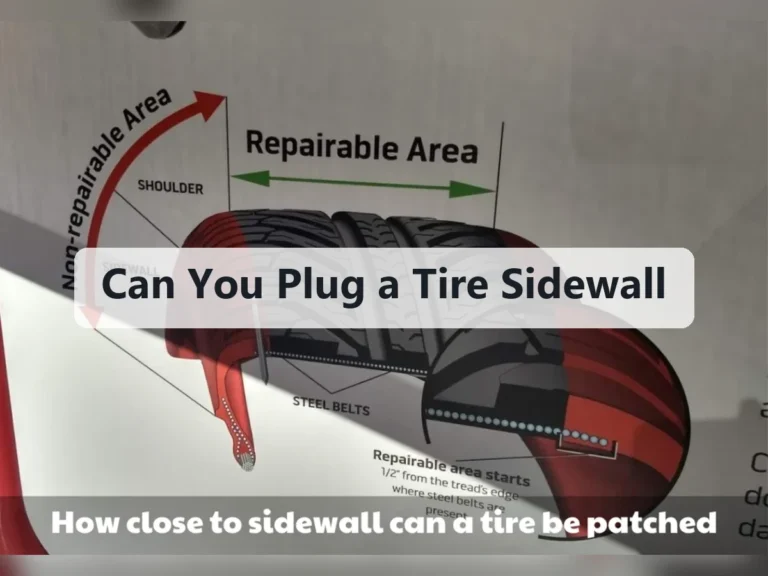
- ✓Plugs are generally limited to the central tread area; sidewall and shoulder punctures usually require tire replacement.
- ✓A proper repair combines an internal patch with a plug or plug-patch unit, rather than relying on an exterior rope plug alone.
- ✓Multiple punctures, overlapping repairs, air loss, bulges, or evidence of driving while flat are reasons to seek professional inspection.
How Many Times Can You Plug a Tire
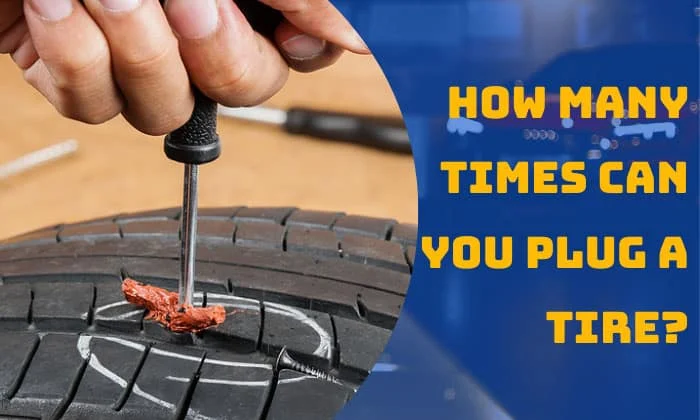
For most passenger tires, one plug is the practical maximum for a puncture repair. That answer assumes the injury is small, fully within the repairable tread area, and not too close to another repair or the tire’s edge.
A tire with two or more punctures is not automatically unusable, but each injury must be assessed separately. The repairs need enough rubber between them, must not overlap, and cannot weaken the same section of the tire. Because internal damage is impossible to judge from the outside, a tire shop should inspect the tire after removing it from the wheel.
The distinction between one approved repair and repeated plugging matters. A plug inserted into a puncture can seal the path through the tread, but it does not restore every layer of the tire. Repeated plugs can reduce the remaining material, complicate future inspection, and create uncertainty about how well the repair seals.
- Repair count: Treat one properly assessed tread puncture as the normal limit for a plug repair.
- Spacing: Separate injuries must not overlap or sit so close together that the tread structure is weakened.
- Tire history: A tire driven while flat, previously patched, or repeatedly losing air needs professional inspection.
- Repair location: The center tread is the usual repair zone; the shoulder and sidewall are not.
Why a second plug is not automatically safe
Each puncture removes or damages rubber, cords, and sometimes the inner liner. A second repair may be acceptable in a limited situation, but adding another plug simply because the first one held does not prove that the tire remains structurally sound.
Problems become more serious when punctures are close together. Two holes can create a weakened section between them, and an oversized injury may have damaged the steel belts even when the hole appears small after the object is removed.
When a Tire Plug Is an Appropriate Repair
A plug is most likely to be suitable when a sharp object, such as a screw or nail, creates a small, clean puncture in the central tread. The tire should still be in good overall condition, with adequate tread, no sidewall damage, and no evidence that it was driven underinflated.
Industry repair practices commonly limit puncture repairs to the tread area and to relatively small injuries. The exact limit can vary by tire manufacturer, repair facility, and tire type, so the tire’s specifications and the shop’s procedure matter. A puncture that looks minor should still be measured from the inside and outside.
The best permanent repair is usually a combination repair: a plug seals the puncture channel while an internal patch seals the inner liner. An exterior rope plug can be useful as an emergency measure, but it should not be treated as proof that the tire has received a complete, permanent repair.
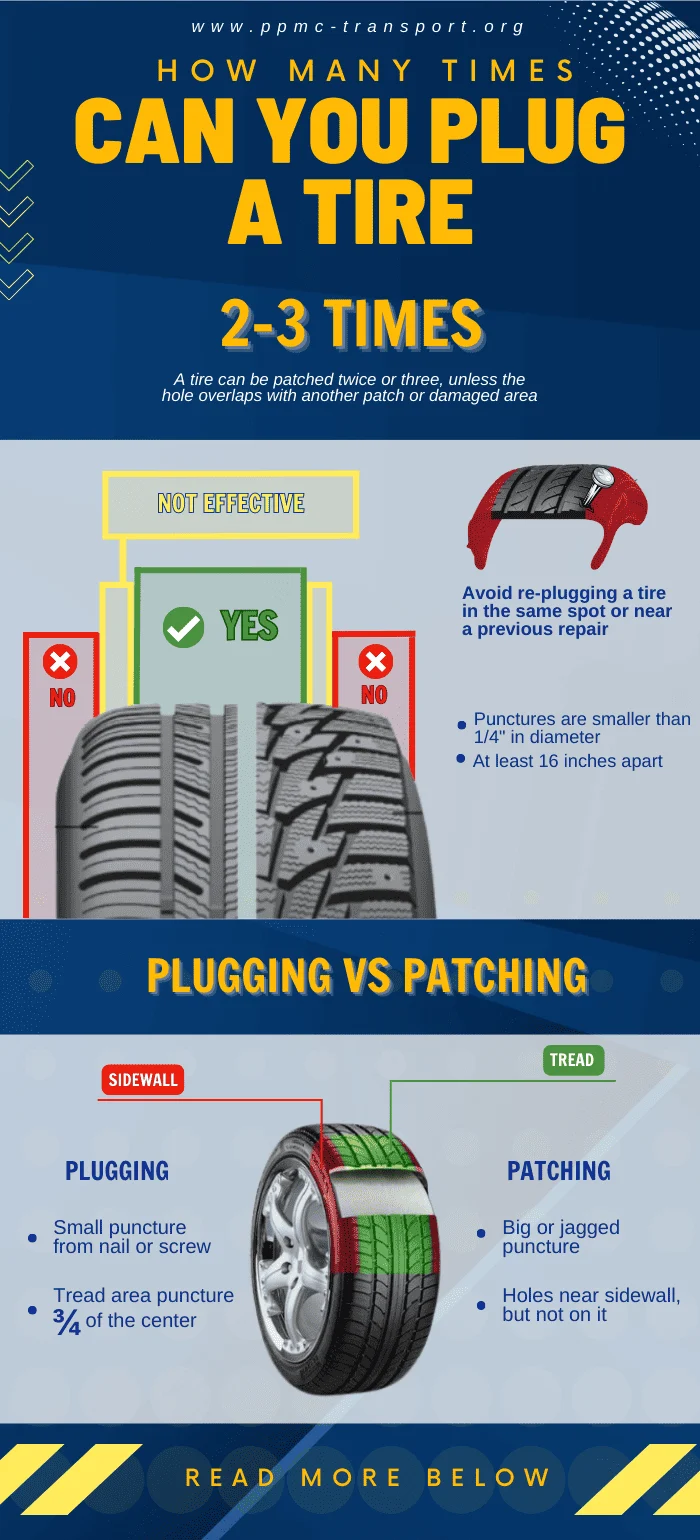
- Small tread puncture: The injury is narrow and located in the main tread grooves or center tread area.
- Sound casing: The tire has not been driven flat and shows no bulges, cuts, exposed cords, or unusual wear.
- Single repair: There is no overlapping damage or cluster of punctures in the same area.
- Internal inspection: The tire is removed from the wheel so hidden liner and belt damage can be checked.
Plug versus patch versus plug-patch
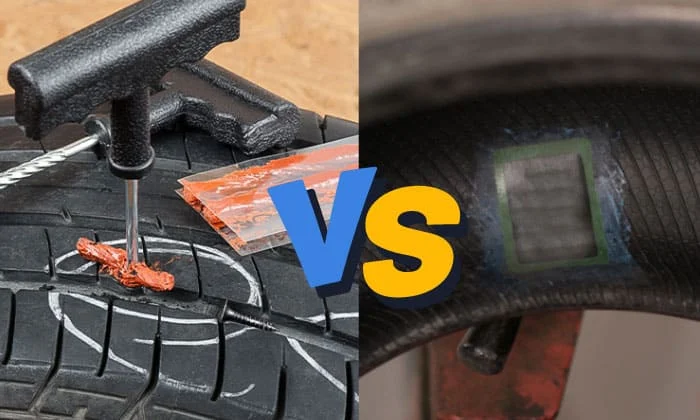
A plug fills the puncture from the outside. It is fast and convenient, but the repair depends heavily on the plug’s fit, the preparation of the hole, and the condition of the surrounding rubber.
A patch is installed on the inside of the tire and seals the inner liner. By itself, a patch may not fill the puncture channel through the tread, which can allow moisture to reach the belt package. A plug-patch combination addresses both paths and is generally the more complete approach.
This distinction matters when answering “how many times can you plug a tire”.
For that reason, a tire shop may refuse to install another exterior plug over an old plug or may recommend replacement instead. The issue is not simply the number of visible plugs; it is whether the tire still has a reliable, inspectable repair and sufficient structural material.
When You Should Not Plug the Tire
Some punctures are unsafe to repair regardless of whether they are the first injury. The sidewall and shoulder flex constantly as the tire rolls, so a plug in either area may not remain secure. Damage in these zones can also affect the cords that carry the vehicle’s load.
You should also avoid plugging a tire that has been driven for a meaningful distance while flat or severely underinflated. The sidewalls can fold and generate heat, causing internal damage that cannot be confirmed by looking only at the tread surface.
Replacement is usually the safer choice when the tire has a large cut, a tear, a bulge, exposed cords, severe cracking, uneven wear from internal damage, or a puncture that reaches the shoulder. Run-flat tires and specialty tires may also have repair restrictions that require following the manufacturer’s instructions.
- Sidewall injury: Do not plug or patch a damaged sidewall; replace the tire.
- Shoulder puncture: Damage near the transition from tread to sidewall is commonly outside the repairable zone.
- Large or irregular hole: A torn belt area cannot be restored with a simple plug.
- Flat-tire driving: Internal abrasion and heat damage may exist even when the tire reinflates.
Why location matters more than appearance
The tread is designed to contact the road and contains layers that can sometimes be repaired when a small puncture occurs. The sidewall has a different job: it flexes to absorb impacts and support the vehicle. A repair material that holds in the tread may work loose or fail in a flexing sidewall.
The shoulder is especially difficult because it sits between those functions. Even if part of the hole appears to be in the tread, a repair close to the shoulder may not leave enough stable rubber around the injury. A trained technician can identify the repair boundary more reliably than a quick visual check.
How to Inspect a Previously Plugged Tire
If a tire has already been plugged, monitor it rather than assuming the repair is permanent. Check the tire pressure with a reliable gauge when the tire is cold and compare it with the vehicle manufacturer’s recommended pressure, usually found on the driver’s doorjamb label.
Look at the repair from the outside. A small amount of plug material may remain visible, but the plug should not be pulling out, splitting, or surrounded by fresh cracking. Do not repeatedly trim, push, or add material to the repair yourself; that can hide a developing problem.
Inspect the entire tire for changes. A new bulge, vibration, pull, thumping sound, or repeated pressure loss deserves immediate attention. A tire can lose air slowly without appearing flat, and low pressure increases heat and flexing that may turn a manageable repair into a dangerous failure.
- Pressure: Measure cold pressure regularly and investigate any unexplained loss.
- Repair surface: Watch for movement, cracks, separation, or air bubbles around the plug.
- Driving feel: Stop using the tire if vibration, pulling, wobbling, or noise develops.
- Overall condition: Check for bulges, cuts, exposed cords, and irregular tread wear.
A simple leak check
For a suspected leak, mix dish soap with water and apply it around the valve stem, bead area, and repair. Growing bubbles can reveal escaping air, although the absence of bubbles during a brief check does not certify the tire as safe. Keep these limitations in mind when considering “how many times can you plug a tire”.
Never use this check as a substitute for an internal inspection. A tire may have belt damage without an active leak, and a slow leak can be difficult to reproduce when the tire is cold or not flexing under load.
What Happens During a Professional Repair?
A proper repair begins with removing the tire from the wheel. The technician can then examine the inside for abrasion, liner separation, belt damage, and evidence of run-flat or underinflated operation.
The puncture is measured and inspected to confirm that it falls within the repairable area. If approved for repair, the technician prepares the channel and inner liner, installs the appropriate repair unit, seals the area, and checks the tire for leaks before returning it to service.
This process explains why a quick driveway plug and a permanent tire repair are not always the same thing. The outside plug may stop air loss, but only removal from the wheel reveals whether the tire’s internal structure remains suitable for continued use.
- Remove first: Internal inspection is necessary before deciding whether a puncture is repairable.
- Prepare correctly: Cleaning and preparing the puncture channel helps the repair material seal properly.
- Seal both paths: A plug-patch unit can close the puncture channel and the inner liner.
- Test afterward: The repaired tire should be checked for air leakage before driving normally.
How Driving Conditions Affect a Plugged Tire
A properly repaired tire still needs the correct pressure and reasonable operating conditions. Overloading, sustained high speeds, severe heat, and underinflation increase flexing and temperature, placing more stress on the repair and the tire as a whole.
Road hazards can also create new damage near an existing repair. If the tire picks up another nail or screw, do not automatically remove it before reaching a repair facility; the object may be slowing the leak. Have the tire assessed so the technician can determine whether the injuries are separate, overlapping, or too close for safe repair.
Rotation and alignment also matter. Uneven wear can reduce tread depth around a repair and may signal suspension or alignment problems that will shorten the tire’s remaining life. A plugged tire should not be treated as exempt from normal maintenance.
When replacement makes more sense
Replacement is the better decision when repairability is uncertain or when the tire is already near the end of its useful life. Paying for a repair on a tire with very little tread, severe cracking, or repeated air loss may only postpone a necessary replacement.
If only one tire on an axle is replaced, consider tread-depth differences and the vehicle’s drivetrain requirements. Some all-wheel-drive vehicles require closely matched tire diameters, so the owner’s manual or a tire professional should guide the decision.
FAQ: How Many Times Can You Plug a Tire?
Can you plug a tire twice?
Sometimes two separate tread punctures can be repaired, but two plugs are not an automatic approval. The injuries must be small, properly spaced, outside the shoulder area, and free of internal damage. A tire shop should inspect the tire before making that decision.
Is one plug in a tire safe?
One plug may be safe when it repairs a small central-tread puncture in an otherwise healthy tire. A professional internal inspection and a proper plug-patch repair provide more confidence than an exterior plug alone.
How close can two tire plugs be?
There is no universal safe spacing that applies to every tire and injury. Repairs that overlap or sit close enough to weaken the surrounding tread should not be made. The technician must evaluate the tire’s construction, puncture size, and remaining material.
Can you plug a tire after it has been patched?
Do not add a plug casually to a tire that already has a patch. The tire should be removed and inspected to determine whether the existing repair is sound and whether a second injury is repairable. Adding repairs without inspection can conceal damage.
Can a plugged tire be used on the highway?
A properly repaired, correctly inflated tire may be used normally when it meets the tire maker’s and repair facility’s requirements. An emergency rope plug, a leaking repair, or a tire with suspected internal damage should not be treated as highway-ready.
Should you plug a tire with a screw still
Leave the screw in place until the tire can be checked if it is holding air. Removing it may turn a slow leak into a rapid one. A technician can remove the object, measure the injury, and determine whether repair is appropriate.
How long does a tire plug last?
A properly installed permanent repair can last for the remaining useful life of the tire, but its durability depends on the puncture, repair method, tire condition, pressure, and driving conditions. An emergency plug may not provide the same long-term assurance.
Conclusion
When deciding how many times can you plug a tire, use one repair as the normal limit and focus on the tire’s condition rather than counting plugs alone. A small central-tread puncture may be repairable, while sidewall damage, shoulder damage, overlapping injuries, air loss, or flat-tire driving usually points to replacement.
Do not rely on an exterior plug as a complete diagnosis. Have any previously plugged or multiply punctured tire inspected from the inside, keep it properly inflated, and replace it when its structure or repairability is uncertain.
Check the tire’s cold pressure and repair location today, then schedule an internal inspection before continuing to drive on a questionable plug.