How Much to Fix TPMS Sensor: Costs, Testing, and Next Steps Guide
A tire-pressure warning light can turn a simple low tire into an uncertain repair bill. The sensor may need replacement, but the light can also come from incorrect tire pressure, a damaged valve stem, a lost sensor signal, or a relearn procedure that was never completed. Knowing the difference helps you avoid paying for a part that was not actually the problem.
If you are asking how much to fix tpms sensor problems, the honest answer is that the price depends on the vehicle, sensor type, labor, and whether one or several sensors have failed. A basic diagnosis may cost little or nothing when performed with other tire service, while replacement and programming can cost substantially more. The warning light by itself does not identify the failed component.
This guide shows how to inspect the tires safely, check the pressure, identify the likely TPMS fault, compare repair choices, and confirm that the system works afterward. You will also learn when a sensor can be serviced during a tire repair and when the safest decision is to have a tire shop or dealership diagnose it.
At a glance
- Check and correct all four tire pressures before assuming a sensor has failed.
- A TPMS sensor and its relearn or programming procedure are separate parts of the repair.
- If the warning light flashes, a tire is damaged, or the pressure will not hold, stop troubleshooting and seek tire service.
How to Fix TPMS Sensor Problems and Estimate the Cost
The safest beginner method is to start with the tires and the vehicle’s specified cold pressure, then distinguish a simple pressure warning from a sensor-system fault. Do not begin by buying a sensor based only on the dashboard light. First gather the vehicle information, document what the light is doing, and find out whether the vehicle uses direct or indirect TPMS.
Tools you will need
- A reliable tire pressure gauge for checking each tire against the vehicle specification
- An air compressor or tire inflator, if a tire needs air
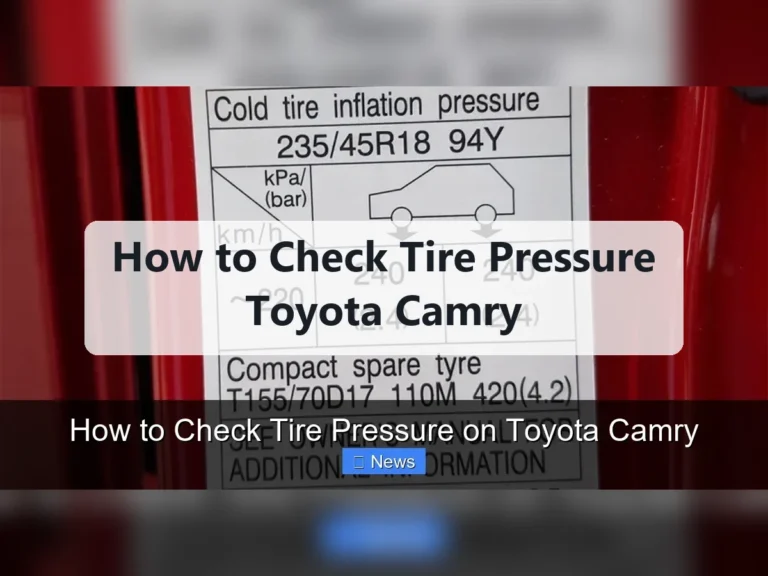
- The owner’s manual or the tire-pressure label on the driver’s doorjamb
- A tread-depth gauge, optional, for checking whether tire replacement is already due
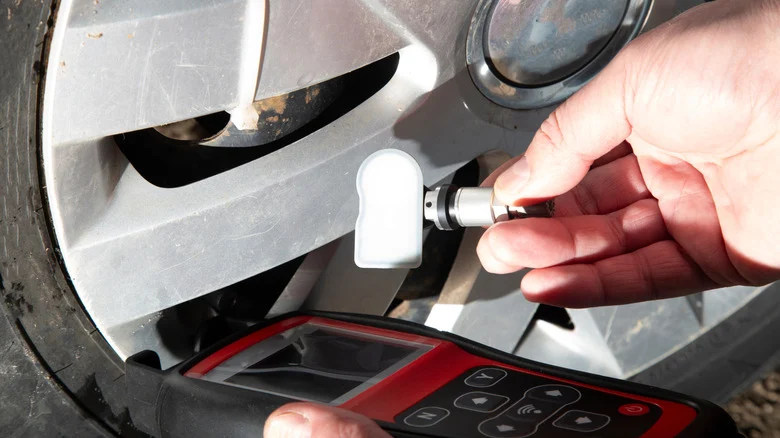
- A TPMS-capable scan tool, optional; a tire shop can use one if you do not have it
Step 1 Read the warning light and note when it appears
Turn the ignition on without starting the engine and observe the TPMS indicator. A symbol shaped like a tire with an exclamation mark usually means the system has detected low pressure. On many vehicles, the light stays on steadily when a tire is underinflated.
If the light flashes for roughly a short period after startup and then remains on, the vehicle may have a TPMS system fault rather than only low tire pressure. The exact behavior varies by manufacturer, so compare what you see with the owner’s manual. Also note whether the light appeared after a tire change, wheel replacement, puncture repair, or a period of very cold weather.
Drive only as much as necessary to get to a safe inspection location. A warning light does not tell you whether a tire is losing air quickly, so visual observation and a gauge check matter more than the light itself.
Step 2 Inspect the tires, wheels, and valve stems before adding air
Park on a firm, level surface away from traffic. Look at all four road tires, and include the spare if the vehicle’s TPMS monitors it. Check for a visibly low tire, a nail or screw in the tread, cuts, bulges, exposed cords, a damaged wheel, or a valve stem that appears bent or cracked.
Do not remove a nail or screw merely to see whether it is causing the problem. Removing it can turn a slow leak into a rapid leak. A bulge, sidewall cut, exposed cord, or tire that is losing air quickly requires professional tire service rather than a TPMS repair.
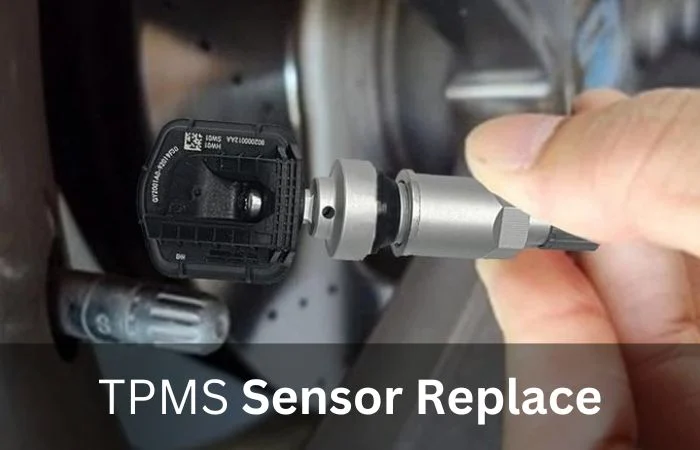
Valve stems deserve attention because a direct TPMS sensor is often attached to the valve assembly inside the wheel. Corrosion, impact damage, or a leaking valve core can cause low pressure even when the electronic sensor itself is communicating correctly.
Important
Do not drive on a tire that is visibly damaged, nearly flat, or losing pressure rapidly. TPMS sensors cannot make an unsafe tire safe, and an underinflated tire can overheat or suffer internal damage.
Step 3 Measure cold tire pressure and compare it with the vehicle specification
Remove the valve cap and press the tire pressure gauge firmly onto each valve. Record the reading for every tire before adding air. “Cold” means the vehicle has been parked long enough for the tires to cool, normally before driving or after several hours of sitting; do not use the maximum pressure molded into the tire sidewall as the normal fill target.
Use the pressure shown on the driver’s doorjamb label or in the owner’s manual. The correct front and rear pressures may differ, and some vehicles specify a separate pressure for a full load. The door label is generally more relevant than a generic online chart because it reflects the vehicle’s intended tire size and load requirements.
Add air in small amounts and recheck the reading. Replace each valve cap when finished. If one tire is substantially lower than the others, do not assume the sensor caused it; the sensor may simply be reporting a real leak.
After correcting the pressures, start the vehicle and follow the manual’s instructions for driving or resetting the TPMS. Some systems clear after the vehicle is driven, while others require a reset button, a scan tool, or a dedicated relearn procedure. If the light goes out and remains off, the immediate issue may have been pressure rather than a failed sensor.
Step 4 Determine whether the vehicle uses direct or indirect TPMS
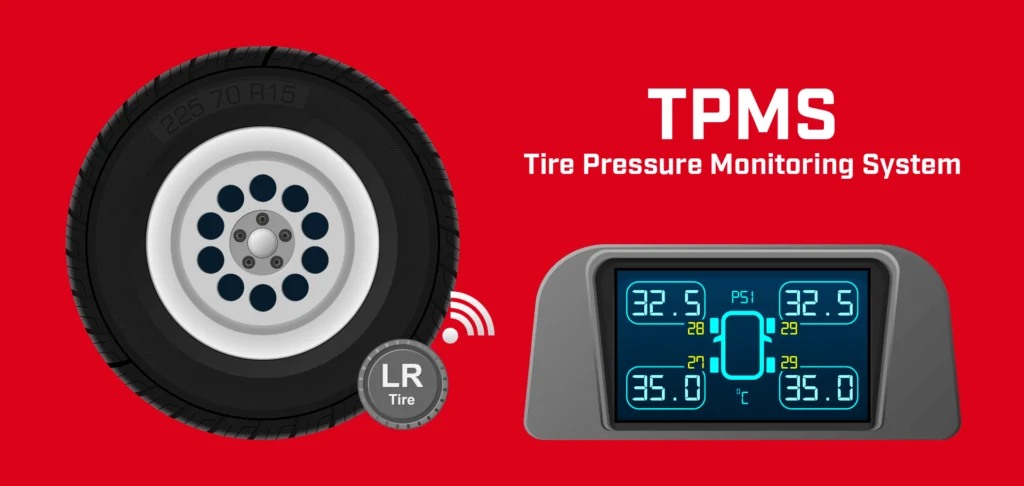
A direct TPMS uses a pressure sensor inside each monitored wheel, commonly integrated with the valve stem. The sensor transmits pressure and temperature data to the vehicle. When its battery is depleted, the sensor is damaged, or the vehicle cannot receive its signal, replacement or electronic diagnosis may be necessary.
An indirect TPMS does not measure pressure at each valve. Instead, it uses wheel-speed information from the antilock braking system to detect changes in tire rolling size. It may need calibration after tire inflation or rotation, but there may be no individual pressure sensor to replace.
The owner’s manual, parts information, or a tire shop can identify the system type. Do not order a replacement sensor until you know the year, make, model, trim, wheel size, and whether the vehicle has a full-size monitored spare. Sensors that look similar may use different frequencies, valves, software, or mounting hardware.
Step 5 Check for a reset, calibration, or relearn requirement
Correct tire pressure does not always turn the light off immediately. A vehicle may need a TPMS reset through the dashboard menu, a calibration drive, or a sensor relearn process. “Relearn” means teaching the vehicle which sensor belongs at each wheel, while “programming” may mean configuring an aftermarket sensor before installation.
These are related but not always identical operations.
Follow the exact procedure in the owner’s manual. Some vehicles require the ignition in a particular position, a reset command, or a specific driving pattern. Others require a TPMS activation tool at each wheel or a scan tool connected to the vehicle.
Watch the result rather than assuming the reset worked. A successful reset normally leaves the light off after the vehicle starts and completes the required drive or calibration. If the light flashes, returns, or displays a message such as “sensor fault,” further diagnosis is needed.
Step 6 Have the individual sensors tested before authorizing replacement
If pressure is correct and the warning remains, ask a tire shop or repair facility to identify the actual fault. A TPMS-capable tool can often read a sensor’s identification number, pressure, temperature, battery condition, and signal response. The vehicle may also store a fault code that points to a missing signal or communication problem.
Request a diagnosis for each wheel rather than replacing all sensors automatically. A single dead sensor may be the only failure. However, if the vehicle is old enough that several original sensor batteries are near the end of their service life, replacing more than one during the same tire service can reduce repeated labor later.
That is a practical choice, not a rule. A useful way to approach how much to fix tpms sensor is to check your progress after each stage.
Ask whether the quote includes the sensor, valve-service kit, installation, programming, relearn, disposal, and any tire removal or balancing. The answer to how much to fix tpms sensor issues is often confusing because shops may list these as separate line items.
Step 7 Choose repair, replacement, or continued diagnosis
A TPMS sensor is usually replaced rather than repaired when its internal battery is dead or its electronics have failed. The valve stem, nut, seal, and core may be serviceable separately on some designs, but the sensor housing and wheel fitment must match the application.
If a sensor was damaged during tire work, ask the shop to inspect the valve assembly and wheel. If a sensor is simply not communicating, confirm that the replacement is compatible and can be programmed or relearned to the vehicle. An inexpensive universal sensor is not automatically a correct sensor; it may need application-specific programming.
For an indirect system, the repair may involve correcting tire sizes, resolving an ABS or wheel-speed sensor issue, or performing calibration rather than replacing a valve-mounted TPMS unit. This is why a diagnostic result is more useful than a parts-store guess.
Step 8 Confirm the repair before leaving the shop or finishing at home
Once the tire service or sensor replacement is complete, confirm that all tires are set to the specified pressure and that the valve caps are installed. Ask the technician whether the sensor was programmed, whether its identification was learned by the vehicle, and whether the system was tested after installation.
Start the vehicle and observe the indicator. A successful repair usually produces a normal startup sequence with no flashing TPMS light, although some vehicles require driving before the system displays current readings. Follow the specified drive procedure rather than assuming an immediate result means the repair failed.
After the required drive, stop in a safe place and check the dashboard again. If the light stays off and the pressures remain correct, the result is encouraging. Recheck the tire pressures later when the tires are cold, especially if the original warning involved a suspected leak.
Check your result
A useful final check is simple: every monitored tire holds the specified cold pressure, the TPMS indicator does not flash or return, and the vehicle’s display shows plausible pressure readings when equipped to do so.
What Determines How Much to Fix TPMS Sensor Problems?
The total bill is driven by the failed component and the work needed to access and configure it. A pressure adjustment or reset can be inexpensive, while replacing a sensor may require removing one side of the tire from the wheel, installing new sealing hardware, balancing the assembly, and completing programming or relearn.
Sensor type and vehicle design
Direct systems generally involve a physical sensor at each monitored wheel, so a dead sensor can create a parts-and-labor repair. Some sensors are original-equipment units, while others are programmable aftermarket units. Compatibility, warranty, and the installer’s ability to configure the part can affect the quote.
Indirect systems may have no tire-mounted pressure sensor. A warning can instead be connected to calibration, tire-size differences, or an ABS wheel-speed problem. Asking which type your vehicle uses can prevent you from paying for the wrong repair.
What the quoted service includes
Compare quotes by asking for the complete installed price, not only the sensor’s shelf price. A clear quote should identify whether it includes tire removal, valve hardware, sensor programming, relearn, balancing, taxes, and disposal.
When a tire is already being removed for a puncture repair, tire replacement, or wheel work, the additional labor for a sensor may be different from a standalone visit. Still, the sensor should be tested first unless its failure is already confirmed.
Whether one sensor or several has failed
Replacing one failed unit is reasonable when the other sensors test normally. Replacing several at once can make sense when multiple batteries are weak, the vehicle is receiving intermittent signals from more than one wheel, or the tires are already being removed for another service.
Do not replace every sensor solely because one warning appeared. Tire pressure changes from temperature, a single puncture, or a missed reset can all trigger the light without proving that the entire set is defective.
Troubleshooting a TPMS Light That Will Not Go Away
A warning that returns after inflation usually indicates either a continuing pressure problem or a system fault. Use the observed pattern to narrow the possibilities, but do not treat these clues as a substitute for testing the vehicle and sensors.
| What you observe | Likely direction |
|---|---|
| Light stays on steadily after startup | Check all tire pressures and look for a leak; reset only after the pressures are correct. |
| Light flashes, then stays on | Possible sensor, receiver, communication, or system fault; request a TPMS scan. |
| Light returns after a day or two | Possible slow leak, damaged valve seal, puncture, or sensor reading that needs verification. |
| Light appeared after tire rotation or replacement | Possible relearn, programming, incorrect sensor, or sensor damage during tire service. |
| Pressure display shows dashes or no reading at one wheel | Possible missing, unlearned, incompatible, or failed sensor. |
Pressure is correct, but the light remains on
Confirm the readings with a separate tire pressure gauge and check the vehicle’s specified values again. If all pressures are correct, perform only the reset or calibration procedure the manual supports. Continuing to press a reset button repeatedly will not repair a sensor communication fault.
The light returns after inflation
Measure the tires again when cold and compare the results with your earlier notes. A repeat drop in one tire points toward a puncture, bead leak, valve leak, wheel damage, or other air-loss problem. Have the tire inspected instead of repeatedly adding air.
The sensor was replaced but the warning remains
Possible causes include an incorrect sensor, incomplete programming, a missed relearn, a damaged valve seal, a second failed sensor, or a vehicle-side receiver fault. Return to the installer with the original work order and ask for a post-repair scan. The replacement part should be verified against the vehicle, not merely assumed to be correct because it fits the wheel.
Cold weather caused the warning
Air pressure falls as temperature drops, so a tire that was close to the minimum can trigger the warning on a colder morning. Inflate the tires to the door-label specification when cold, then monitor them. If one tire continues to fall relative to the others, investigate a leak rather than blaming temperature alone.
TPMS Sensor Questions Beginners Commonly Ask
Can I drive with the TPMS light on?
Only far enough to reach a safe inspection location if the tires appear normal and hold pressure. Check the pressure as soon as possible. Do not continue driving if a tire is visibly low or damaged, the vehicle pulls to one side, or the light flashes and another warning indicates a larger vehicle-system problem.
Can I replace a TPMS sensor myself?
You may be able to purchase the correct sensor, but installation usually requires tire removal from the wheel and a way to program or relearn the sensor. Removing a tire from a wheel can damage the bead or sensor if done incorrectly. For most beginners, having a tire shop install and test it is the safer option.
Does a new TPMS sensor automatically work?
Not always. Some replacement sensors are vehicle-specific, some need programming, and many require a relearn procedure after installation. Ask how the sensor will be configured and how the shop will verify communication before approving the work.
Should I replace all four TPMS sensors at once?
Not necessarily. Replace the failed unit when the other sensors test healthy. Replacing multiple sensors can be reasonable when they are the same age, several show weak batteries, or tire removal for another job makes the added service convenient, but testing should guide the decision.
Why does the TPMS light come on after a tire rotation?
The vehicle may need to relearn which sensor is at each wheel, or a sensor may have been damaged or left unrecognized during the service. Check the tire pressures first, then follow the vehicle’s relearn instructions or ask the installer to scan the sensors and update their positions.
Confirm the Cause Before Paying for a TPMS Repair
To determine how much to fix tpms sensor problems, start with the actual tire pressures and inspect for leaks or damage. Then identify whether the vehicle uses direct or indirect TPMS, verify any reset or relearn requirement, and have the individual sensor tested before approving replacement.
The best repair is the one that clears both the physical problem and the warning-system fault. If a tire will not hold pressure, a sensor cannot be identified, or the light flashes after a replacement, stop guessing and use a qualified tire shop or dealership for diagnosis. Once the specified pressures hold and the indicator stays off after the required drive, record the result and check the pressures periodically.