How to Tell Which TPMS Sensor Is Bad Without Scanner at Home
A TPMS warning light does not always tell you which tire or sensor has a problem. Sometimes a tire is simply low from a temperature change, while other times a puncture, leaking valve stem, dead sensor battery, or communication fault is responsible. If your vehicle shows only a general warning symbol, the dashboard may provide very little information.
You can still narrow down the problem without a scan tool by using a reliable tire pressure gauge, checking all four tires when cold, and watching what happens after you correct the pressures. The goal is not to guess from the light alone. It is to separate a real air leak from a sensor that is no longer reporting.
This guide explains how to tell which tpms sensor is bad without scanner, what clues are dependable, and where the method reaches its limit. You can usually identify the suspect wheel or determine that the fault needs a TPMS-capable tool, but a dashboard with one generic warning light cannot always prove which individual sensor has failed.
At a glance
- Check actual tire pressure before blaming a TPMS sensor.
- A tire that repeatedly loses air probably has a leak, not merely a bad sensor.
- If pressures remain correct but the warning returns, professional TPMS testing may be necessary.
How to tell which tpms sensor is bad without scanner
This method works best on vehicles with direct TPMS, a system with a pressure sensor inside each wheel. It uses simple observations to identify a suspicious tire, but it cannot electronically confirm a dead sensor the way a TPMS diagnostic tool can.
First determine whether your vehicle uses direct or indirect TPMS. Direct systems measure pressure at each wheel. Indirect systems use wheel-speed information from the anti-lock braking system to detect that one tire is rotating differently, so they may not have individual pressure sensors to test.
Tools you will need
- A reliable tire pressure gauge for comparing all four tires
- An air compressor or nearby source of compressed air, if a tire needs inflation
- Optional: soapy water in a spray bottle for locating an external air leak
- Optional: the vehicle owner’s manual for the recommended cold tire pressure and reset procedure

Step 1 Confirm what the warning light is telling you
Turn the ignition on without starting the engine and observe the TPMS symbol. A horseshoe-shaped symbol with an exclamation point that briefly illuminates and then goes out during the bulb check is normal. A light that stays on usually means the system has detected low pressure or another fault.
Pay attention to whether the light is steady or flashing. A steady light commonly indicates that at least one tire is below the vehicle’s specified pressure. A light that flashes for roughly a minute and then remains on often indicates a TPMS system problem, such as a missing, damaged, unlearned, or dead sensor.
The exact pattern varies by vehicle, so treat this as a useful clue rather than a universal rule. Read the owner’s manual if the light flashes, if another warning message appears, or if the vehicle has a separate tire-pressure display.
Step 2 Check all tire pressures while the tires are cold
Park the vehicle for several hours, preferably before driving for the day. Remove each valve cap and measure all four road tires with the same gauge. “Cold” means the tires have not been heated by driving or direct sunlight; warm tires can temporarily read higher.
Compare each reading with the pressure listed on the driver’s door-jamb label or in the owner’s manual, not the maximum pressure molded into the tire sidewall. The door-jamb specification is the vehicle manufacturer’s recommended pressure for normal operation.
Write down the readings instead of relying on memory. A noticeably low tire is your first suspect, but do not immediately call its sensor bad. A sensor can report low pressure correctly, and a puncture or leaking valve may be the real problem.
Important
Do not continue driving on a visibly damaged or severely underinflated tire. Inflate it only enough to move the vehicle safely for inspection, or use roadside assistance if the tire cannot hold pressure.
Step 3 Inflate the tires to the specified pressure
Adjust every tire to the cold pressure shown on the door label. Check the spare tire too if your vehicle has a full-size spare that is monitored; some vehicles monitor a compact spare, while others do not.
Replace the valve caps after inflating. They help keep dirt and moisture away from the valve core, although they are not a substitute for repairing a leaking valve. Recheck the pressure after the gauge has been removed because an inaccurate or poorly seated gauge can produce a misleading reading.
If one tire was low, note how far it was below specification. A small difference across all four tires may result from cold weather or ordinary gradual loss. One tire that is substantially lower than the others deserves a leak inspection before sensor diagnosis.
Step 4 Inspect the suspect tire and valve area for an air leak
Look across the tread and sidewall for a nail, screw, cut, bulge, or other damage. Also inspect the metal or rubber valve stem for cracks, corrosion, looseness, or damage from a curb or tire service.
If you have soapy water, spray it around the valve stem, valve core, and visible tread puncture. Growing bubbles indicate escaping air. A bubbling valve core may be replaceable, but a leaking valve stem or tire-mounted sensor generally requires tire-service equipment.
Do not pull out a nail or screw just because you found one. Removing it can make the leak worse. Mark its location mentally or with a removable note and have a tire professional inspect the tire.
Step 5 Set a baseline and monitor the pressures
After correcting the pressures, record the date and each tire’s reading. Check them again when the tires are cold after the vehicle has been parked, and repeat the comparison over the next few driving days. A useful way to approach how to tell which tpms sensor is bad without scanner is to check your progress after each stage.
A tire that loses pressure again while the other three remain close to their starting readings is the strongest practical clue that something is wrong at that wheel. The cause may be a puncture, bead leak, valve stem, wheel damage, or sensor seal—not necessarily the electronic sensor itself.
If all four tires remain properly inflated but the warning light returns, the problem is more likely to involve the TPMS system. Possible causes include a sensor with a depleted internal battery, a sensor damaged during tire service, a sensor that was never relearned after wheel replacement, or a vehicle-side receiver problem.
Step 6 Use the vehicle display, if it identifies individual pressures
Some vehicles show four individual tire-pressure readings on the instrument cluster or infotainment screen. Compare those displayed values with your manual gauge readings. The display may update slowly, so drive only as permitted by the vehicle instructions and recheck later rather than expecting an immediate change.
If one wheel shows no reading, dashes, or an obviously implausible value while the other three respond normally, that wheel becomes the leading suspect. A display that shows a normal pressure does not prove the sensor is perfect; it only confirms that the system received a plausible signal at that moment.
Some systems display pressure by wheel position, while others may not accurately identify a tire after rotation until a relearn is completed. Confirm the vehicle’s configuration before assigning a reading to a particular corner.
Step 7 Reset or relearn the system only as the manual allows
Many vehicles have a TPMS reset button or a menu command. Others relearn automatically after driving, and some require a specific sequence involving the ignition, tire inflation, or wheel positions. Follow the procedure in the owner’s manual rather than using a generic reset sequence.
A reset does not repair a leak or revive a dead sensor. It establishes a new reference for an indirect system or tells the vehicle to accept current sensor information. Resetting before correcting the pressures can cause the vehicle to treat an incorrect pressure as normal.
After the prescribed reset or relearn, observe the warning light. If it goes out and stays out while the actual pressures remain correct, the issue may have been a low-pressure event or a temporary relearn problem. If the light flashes again or returns despite stable pressures, continue to the verification section below.
Step 8 Identify the most likely fault from the combined evidence
Use all the observations together instead of relying on one clue. A single low tire with visible damage points toward an air leak. A tire that repeatedly loses pressure with no obvious tread damage may have a bead, valve, wheel, or sensor-seal leak.
When the pressures remain stable, a flashing warning light or a missing individual display reading points more strongly toward a sensor or communication fault. If the vehicle has no individual readings, you may be able to identify the problem as “one of the wheel sensors” but not reliably name the exact wheel without a TPMS-capable tester.
At this point, label the suspect wheel position in your notes and arrange a tire shop inspection. Do not remove a tire from the wheel at home unless you have the correct equipment and training; the sensor is mounted inside the tire, and improper dismounting can damage it or the wheel.
What the pressure results actually mean
The most important distinction is between a sensor that reports an abnormal pressure and a sensor that cannot communicate. A functioning sensor may correctly warn you about a low tire, so the warning light alone is not evidence that the sensor has failed.

Low pressure in one tire
One low tire usually means the tire needs inspection first. Common causes include a puncture, a leaking valve core, a damaged valve stem, a poor bead seal, or a bent wheel. Temperature changes can lower pressure in all four tires, but they do not normally make only one tire change dramatically.
If the tire loses air quickly, avoid repeated inflation and highway driving. A tire professional can determine whether the casing is safe to repair. Driving while underinflated can create internal damage even when the leak itself appears small.
Understanding how to tell which tpms sensor is bad without scanner also means recognizing the limits of the method.
Correct pressure but a persistent warning
When your gauge shows correct, stable pressures and the light remains on, the sensor may not be transmitting. Sensor batteries are usually sealed inside the sensor and are not intended to be recharged. A sensor may also have been damaged during tire installation or may need to be relearned after a wheel or sensor replacement.
Radio interference, a failed receiver, and wiring or control-module faults are less common but possible. Without a diagnostic tool, these problems can look similar from the driver’s seat.
Flashing light followed by a steady light
This pattern often means the vehicle detected a TPMS malfunction rather than simply low pressure. It can occur when a sensor is absent, incompatible, unregistered, or no longer transmitting.
Because warning-light behavior differs by make and model, use the manual to confirm the meaning. If the system has four stable manual pressure readings but the light flashes on every start, professional testing is the appropriate next move.
How to verify the suspected wheel
Verification means checking whether the evidence remains consistent, not forcing a diagnosis from limited information. A manual gauge can establish the tire’s actual pressure, but it cannot listen for the sensor’s radio transmission or read its identification number.
If the vehicle displays individual pressures, compare each displayed value with the gauge on more than one occasion. A missing or frozen value at the same wheel is meaningful. A value that changes normally but differs slightly from your gauge may simply reflect sensor accuracy, update timing, or temperature.
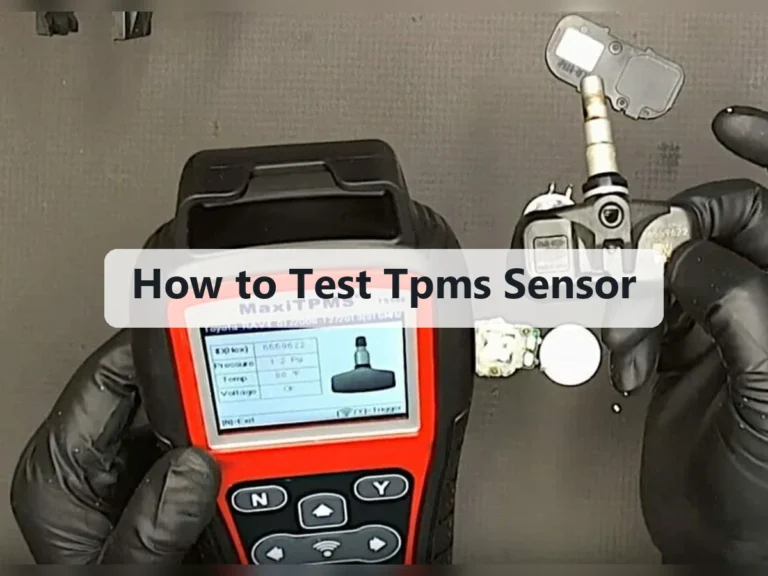
If the vehicle does not display individual pressures, ask a tire shop to test each sensor before authorizing replacement. A TPMS tester can usually identify the sensor ID, measured pressure, temperature, battery condition, and whether the sensor responds. That test is different from a generic engine-code scanner and is the reliable way to name one bad sensor.

Check your result
Good verification: the actual pressures are correct and stable, no tire has an obvious leak, the warning persists or flashes, and one wheel fails to report when the vehicle provides individual readings. If those conditions are not all present, keep investigating the tire or valve before condemning the sensor.
Common mistakes and situations that change the diagnosis
Several details can make a normal sensor appear faulty. Correcting these first prevents an unnecessary sensor replacement.
- Checking warm tires: heat from driving raises pressure temporarily. Use cold readings for comparison.
- Using the sidewall maximum: that number is not the normal vehicle setting. Use the door-jamb label.
- Resetting too early: a reset cannot repair a puncture and may hide the fact that the baseline pressure was wrong.
- Ignoring a spare tire: some vehicles monitor the spare, and a low spare can keep the warning active.
- Assuming wheel position is remembered: tire rotations can confuse position-based displays until the system relearns.
- Replacing only the sensor: the actual leak may be in the valve seal, bead, wheel, or tire.
Aftermarket wheels and replacement sensors also deserve special attention. A sensor may physically fit but still require the correct frequency, protocol, or vehicle registration. Ask the installer to verify compatibility rather than assuming every universal sensor will work automatically.
Direct and indirect TPMS are not diagnosed the same way
With direct TPMS, each wheel normally contains a pressure sensor. A tire can have correct pressure while its sensor has a dead battery or communication problem.
With indirect TPMS, the vehicle estimates pressure loss from wheel-speed changes. There may be no pressure sensor inside the wheel, so asking which TPMS sensor is bad may not fit the system. Uneven tire wear, mismatched tire sizes, incorrect inflation, or an ABS-related fault can affect the warning.
When to stop the home checks
Stop and seek tire-service help if a tire is losing air rapidly, has a sidewall injury or bulge, has been driven while severely underinflated, or shows wheel damage. Do not remove a tire from its rim to reach the sensor without proper tire equipment.
Also arrange professional diagnosis when the warning flashes repeatedly, the vehicle has no individual pressure display, or the light returns after all pressures are correct and stable. A TPMS tester can distinguish a dead sensor from a relearn issue much more safely than guesswork.
Frequently asked questions
Can I tell which TPMS sensor is bad just from the warning light?
Usually not. A steady light may only indicate that one or more tires are low. A flashing light often indicates a system fault, but it generally does not identify the failed wheel.
Will a bad TPMS sensor make the tire lose air?
Not necessarily. The electronic sensor itself does not usually cause air loss, but its valve stem, seal, or valve core can leak. A tire can also have a separate puncture while its sensor works normally.
Can I drive with the TPMS light on?
Check all tire pressures before driving any distance. If the pressures are correct and stable, drive cautiously to obtain service, but remember that the monitoring system may not warn you about a later pressure loss. Do not drive normally on a visibly low or damaged tire.
Does adding air make the TPMS light turn off?
It may, after the vehicle detects the corrected pressure, but some vehicles require a reset or relearn procedure. If the light returns, recheck the pressures and inspect for a leak instead of repeatedly adding air.
Can a tire shop test a TPMS sensor without removing the tire?
Yes. A TPMS-capable tester can often activate and read the sensor through the tire. The tire may need to be removed only if the sensor, valve, seal, or tire requires replacement or internal inspection.
Conclusion
Learning how to tell which tpms sensor is bad without scanner starts with the tires themselves. Measure all four pressures cold, compare them with the door-jamb specification, inspect the lowest tire and valve, and monitor whether the pressure stays stable after correction. Those checks can often identify a leaking wheel or show that the warning is more likely an electronic fault.
The limitation is important: a generic warning light cannot always identify one failed sensor. If the pressures are correct, the warning persists or flashes, and the vehicle does not show individual readings, have a tire shop test each sensor with a TPMS tool before replacing parts. That final check is safer, more accurate, and less expensive than guessing.