How Much to Replace TPMS Sensor: A Practical Repair Cost Guide
A tire-pressure warning light is easy to recognize, but the repair behind it is not always obvious. The problem may be a weak TPMS sensor battery, a damaged valve stem, a tire leak, or simply incorrect tire pressure. Because the sensor is mounted inside the wheel, replacing it usually involves removing the tire from the rim rather than swapping a part under the hood.
If you are wondering how much to replace tpms sensor, a reasonable starting point is the price of the sensor plus tire-service labor and, when required, programming or relearning. The exact bill depends on the vehicle, the sensor type, whether one or several sensors need replacement, and the shop’s procedures. A quote that includes only the sensor may not be the complete installed price.
This guide explains how to identify the likely repair, compare an estimate, and check the result after installation. You will learn what equipment is involved, why compatibility matters, how a replacement sensor is registered to the vehicle, and when a persistent warning means you should return to the shop instead of continuing to drive and guessing.
At a glance
- A TPMS sensor is inside the wheel, so replacement normally requires tire-machine service.
- Ask whether the quote includes the sensor, installation, valve hardware, programming, and relearn.
- The warning light should turn off only after correct tire pressure and successful vehicle recognition are confirmed.
How to determine how much to replace tpms sensor
Use the process below to turn a warning light into a specific repair estimate. The safest realistic method for a beginner is not to remove the tire at home; it is to check the easy causes first, identify the vehicle’s TPMS requirements, and then have a tire shop or qualified repair facility install and register the correct sensor.
Tools you will need
- Accurate tire pressure gauge, for checking each tire against the vehicle’s door-jamb specification
- Vehicle owner’s manual, for the recommended pressure and TPMS reset or relearn instructions
- Repair estimate, showing parts, labor, programming, and any valve or service-kit charges
- Optional: TPMS scan tool, for identifying a failed sensor and reading its ID or battery status
Step 1 Check the tire pressures before pricing a sensor
Park on a level surface and check all four tires when they are cold, meaning the vehicle has been sitting long enough for the tires not to be warmed by driving. Compare each reading with the pressure listed on the driver’s door-jamb label, not the maximum pressure molded into the tire sidewall.
Correct any low pressure and inspect for an obvious nail, screw, cracked valve stem, or damaged tire. If the warning light is on steadily and the pressure is low, the cause may be a leak rather than a dead sensor. A sensor reports pressure; it does not prevent a tire from losing air.
After inflation, observe the warning light. Some vehicles turn it off after several minutes of driving, while others require a reset or relearn procedure. If the light flashes for roughly a minute and then stays on, that pattern often indicates a system fault rather than simple low pressure, although the exact meaning varies by vehicle.
Step 2 Confirm whether the vehicle uses direct or indirect TPMS
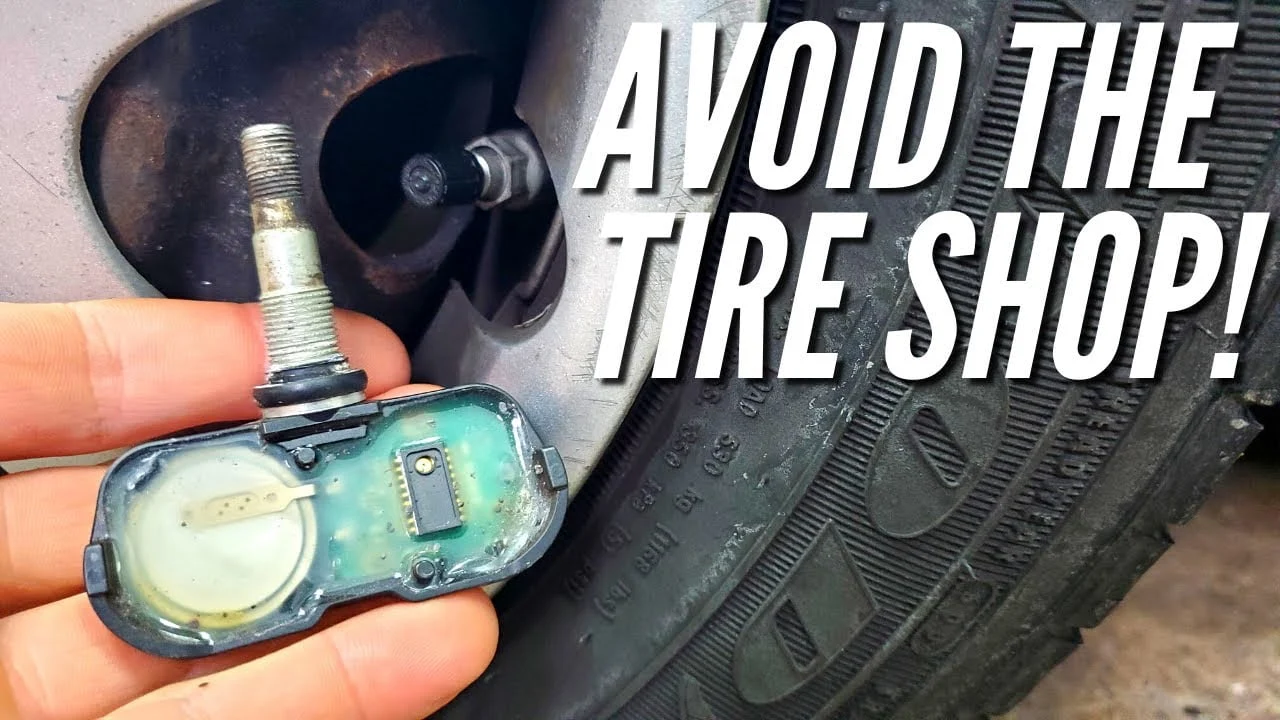
A direct TPMS uses a pressure sensor mounted inside each wheel, commonly attached to the valve stem. It measures pressure and often temperature, then sends data to the vehicle. This is the type that usually requires a physical sensor replacement when its internal battery fails.
An indirect system does not use a pressure sensor in each wheel. Instead, it compares wheel-speed information from the anti-lock brake system to detect that one tire is rotating differently from the others. An indirect system may need calibration after tire inflation or rotation, but it generally does not require the same valve-mounted sensor.
Check the owner’s manual or ask a shop to identify the system by the vehicle identification number. Do not approve a valve-mounted sensor replacement based only on the warning light. The diagnosis should match the vehicle’s actual equipment.
Step 3 Identify which sensor or component has failed
Ask for a TPMS diagnosis rather than assuming every warning means all sensors need replacement. A shop may use a handheld TPMS tool to activate each sensor and read its pressure, temperature, identification number, and battery or communication status. It can also reveal a missing, incompatible, or damaged sensor.
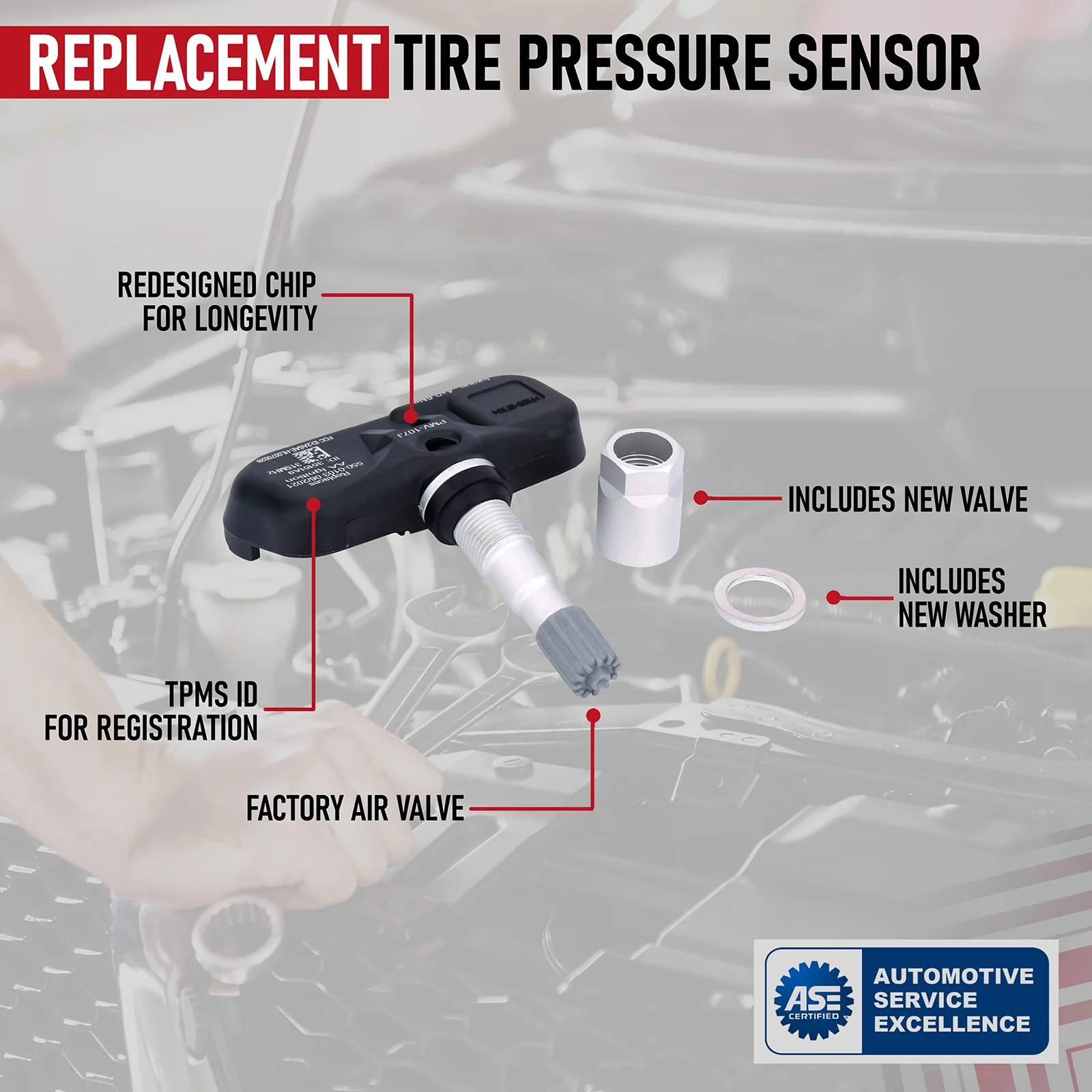
Some vehicles use a sensor integrated with the valve stem, while others use a separate sensor attached to the wheel. The valve core, cap, nut, grommet, and sealing washer may be replaced as a service kit when the sensor is installed. These small parts help prevent leaks and should be listed separately or described as included.
If only one sensor has failed, replacing one may be reasonable. If the vehicle is older and several original sensors have weak batteries, a shop may suggest replacing more than one while the tires are already being serviced. That is a maintenance choice, not proof that every sensor must be changed immediately.
Step 4 Request an installed quote, not just a part price
Ask the repair facility to separate the quote into the sensor, tire removal and installation, programming, relearn, valve hardware, and disposal or shop fees. This makes it easier to compare two estimates that use different wording. A low sensor price may not represent a lower final bill if programming or tire-machine labor is added later.
When considering how much to replace tpms sensor, remember that the vehicle and service method control much of the price. An original-equipment sensor may cost more than an aftermarket or programmable unit, while some aftermarket sensors arrive ready for a particular vehicle and others must be configured before installation.
Ask these practical questions before authorizing the work:
- Is the quoted sensor compatible with the exact year, make, model, trim, and wheel configuration?
- Does the price include removing and remounting the tire?
- Will the shop replace the valve seal or TPMS service kit?
- Will the sensor be programmed or cloned before installation?
- Will the vehicle need a manual relearn, an OBD relearn, or a drive-to-learn procedure?
- What happens if the warning light remains on after the repair?
Step 5 Choose the correct sensor and installation method
There are three common replacement approaches. An original-equipment sensor is designed for the vehicle and is often the most straightforward choice. A vehicle-specific aftermarket sensor is made to communicate with the same system but should still be verified by application.
A universal programmable sensor can work across many vehicles, but it must be configured correctly before or during installation.
Some shops clone the identification number from the old sensor to the replacement. This can allow the vehicle to recognize the new part without learning a new ID, but cloning is not possible if the old sensor cannot be read, and not every vehicle or sensor supports the same method.
Do not select a sensor based only on the valve shape or the fact that it fits physically inside the wheel. Communication frequency, protocol, mounting design, and software compatibility matter. A sensor can seal correctly and still fail to communicate with the vehicle.
Step 6 Have the sensor installed with proper tire service
The technician deflates the tire, breaks the bead away from the valve area, removes the tire from the wheel, and replaces the sensor. The exact procedure depends on the wheel and sensor design. Tire-machine work requires care because the bead or machine head can damage the new sensor if it is positioned incorrectly.
Once the sensor is fitted, the tire is remounted and inflated to the specified pressure. The wheel may also be balanced if the sensor’s weight or location changes the balance. Ask the technician to check for an air leak around the valve stem before the vehicle leaves.
Important
Do not attempt to pry a tire off a wheel with household tools just to replace a TPMS sensor. You can damage the tire bead, bend the wheel, break the sensor, or create a leak that is not immediately visible.
Step 7 Program the sensor and complete the vehicle relearn
Installation alone does not always finish the repair. The vehicle must recognize the replacement sensor’s identification number, which may require a TPMS scan tool, an OBD-connected relearn tool, a button sequence, or a prescribed driving cycle.
Follow the owner’s manual for the vehicle-specific process, or let the shop complete it. Some systems learn automatically after the vehicle is driven above a certain speed for a period of time. Others require the sensors to be activated in a particular order, or require the new IDs to be entered through the diagnostic connector.
A successful relearn usually produces recognizable sensor readings on a scan tool and eventually turns off the TPMS warning. If the vehicle has a spare tire with a sensor, ask whether it also needs to be included in the relearn sequence; the answer varies by model.
Step 8 Verify the repair before accepting the vehicle
Check that all tires are inflated to the door-jamb specification and that the warning light is off after the required reset or drive cycle. If the shop used a scan tool, ask whether it received a valid response from the replacement sensor and whether all monitored wheels were detected.
Drive only as directed by the vehicle manual or the technician if the system needs time to learn. Then check the dashboard again. A light that returns immediately, a flashing light followed by a steady light, or a “sensor fault” message indicates that the repair is not fully verified.
A useful way to approach how much to replace tpms sensor is to check your progress after each stage.
Check your result
Before leaving, confirm three things: the tire pressures are correct, the replacement sensor is communicating, and the shop has explained what to do if the warning returns.
What controls the replacement price?
The total cost is a combination of parts and service, not a universal price for one small component. Understanding each part of the quote helps you spot missing work without assuming that the least expensive estimate is the best value.
Sensor type and vehicle compatibility
Original-equipment, vehicle-specific aftermarket, and programmable universal sensors can have different prices. The appropriate choice depends on communication protocol, frequency, wheel design, and whether the vehicle requires a sensor with a particular software application.
Luxury vehicles, unusual wheel packages, and vehicles with more complex tire-pressure systems may require more specialized parts or diagnostic equipment. A correct fit is more important than choosing the cheapest sensor listed for a similar-looking vehicle.
Labor and tire-machine service
The sensor is normally inside the tire, so the tire must be separated from the wheel to reach it. Labor can include deflating the tire, breaking the bead, removing and remounting the tire, inflating it, checking for leaks, and balancing the wheel.
If the tire is already being removed for another repair, the additional TPMS labor may be lower than when the sensor is the only reason for tire service. Ask whether the quote reflects work that is already included in another tire or wheel job.
Programming, cloning, and relearn
Some replacement sensors are preprogrammed for a vehicle, while others need configuration. After that, the vehicle may still need to learn the sensor ID. A quote may list these tasks as programming, activation, registration, initialization, or relearn.
These terms are related but not always identical. Programming prepares the sensor; relearning teaches the vehicle which sensor ID belongs to which wheel. Ask the shop to explain which operation the vehicle requires.
Valve and sealing hardware
The valve stem and sensor seal are exposed to pressure, vibration, weather, and repeated service. Reusing old sealing hardware may create a slow leak, especially if the rubber is hardened or the metal valve is corroded. A TPMS service kit often includes the seal, grommet, washer, nut, and valve core appropriate to that sensor.
Not every vehicle uses the same kit, and some sensor designs use a rubber snap-in valve rather than a metal clamp-in valve. The parts should match the sensor and wheel, not simply be treated as interchangeable.
How to judge the result after service
A repaired TPMS system should do more than make the warning disappear briefly. It should report the pressure accurately, maintain an airtight valve connection, and communicate reliably after the vehicle has been driven and parked.

Use the correct pressure as the baseline
Compare the displayed pressure with a reliable handheld gauge, allowing for small differences between gauges and the vehicle’s display. The dashboard pressure may update only after driving, and some systems display values only when the vehicle is moving.
Never lower a tire to match an inaccurate dashboard reading. The door-jamb label is the starting specification unless the vehicle manufacturer provides a different instruction for a special load or wheel setup.
Watch the warning-light pattern
A steady warning commonly points to low pressure, but it can also remain on after a system fault. A flashing warning at startup followed by a steady warning commonly suggests that the vehicle cannot complete its sensor check. The owner’s manual remains the authority for the exact pattern.
Check for a valve leak
If pressure drops after a sensor replacement, ask the shop to inspect the valve and tire bead. A technician can use leak-detection solution around the valve stem and bead area; growing bubbles indicate escaping air. Do not assume a new sensor cannot leak simply because the dashboard currently shows a pressure value.
Common problems after TPMS sensor replacement
Most post-repair problems fall into a few categories. The table below can help you describe the symptom clearly before returning to the installer.
| What you notice | Reasonable next check |
|---|---|
| Warning remains on immediately | Confirm tire pressure, sensor compatibility, and whether relearn was completed. |
| Light flashes, then stays on | Have the vehicle scanned for a missing, unreadable, or incorrectly programmed sensor. |
| One tire loses air | Inspect the valve seal, valve core, tire bead, and tire for a puncture. |
| Pressure display is blank for one wheel | Check sensor communication, ID registration, and the sensor’s battery or power condition. |
| Light returns after days or weeks | Recheck all pressures and look for a slow leak or an intermittent sensor fault. |
When a reset does not solve the issue
A dashboard reset cannot repair a dead sensor, restore a damaged valve seal, or make an incompatible part communicate. Resetting repeatedly may erase useful information without addressing the underlying fault.
If the light stays on after correct inflation and a completed relearn, return to the shop that performed the work. Request a scan of all sensors and confirmation that each ID is assigned to the correct wheel position if the vehicle uses position-specific registration.
When more than one sensor may need attention
TPMS sensors often use sealed batteries that are not intended to be replaced separately. When several original sensors are the same age, another may fail later, but that does not automatically justify replacing every sensor today.
Ask for the diagnostic evidence and the shop’s recommendation. Replacing additional sensors can be sensible when tire removal is already being done, but it should be a transparent maintenance decision rather than an unexplained bundle.
When to stop driving and get help
Stop and address the problem promptly if a tire is visibly low, the vehicle pulls, the tire vibrates, or you hear air escaping. TPMS cannot reliably warn you about every tire problem, and a damaged tire can become unsafe before the sensor reports a critical reading.
If the vehicle has a damaged wheel, a torn tire sidewall, severe corrosion around the valve, or an unfamiliar warning involving the brakes or stability system, use a qualified repair facility rather than treating the issue as a simple sensor replacement.
Beginner questions about TPMS sensor replacement
These questions cover the decisions that most often cause confusion when a warning light appears.
Can I replace a TPMS sensor without removing the tire?
Usually not for a direct system. The sensor is mounted inside the wheel, so the tire normally must be removed from the rim with a tire machine. A relearn or reset may be possible without tire removal, but that is different from replacing the physical sensor.
Should I replace all four TPMS sensors at once?
Not necessarily. Replace the sensor or sensors that testing identifies as failed, then consider the age and condition of the remaining sensors. Replacing several together can reduce repeated tire-service labor, but it is optional unless the vehicle manufacturer or diagnostic results indicate otherwise.
Can I install any TPMS sensor that fits the wheel?
No. The sensor must match the vehicle’s communication system, frequency, software, and mounting arrangement. A sensor that physically fits may still fail to transmit usable information.
How long does a new TPMS sensor last?
Its life depends on the sensor design, battery, environment, wheel service, and driving conditions. Because many sensors use sealed batteries, the battery generally is not replaced separately; the sensor is replaced when its power or electronics fail.
Why is the TPMS light still on after I filled the tires?
The pressure may still be incorrect, the system may need a reset or relearn, or a sensor may be damaged or unreadable. Check every tire with a gauge and consult the vehicle-specific instructions before assuming the sensor itself needs replacement.
Confirm the repair before you pay the final bill
Knowing how much to replace tpms sensor starts with separating diagnosis from installation. Check the pressures first, confirm whether the vehicle uses direct or indirect TPMS, and request an installed quote that identifies the sensor, tire labor, valve hardware, programming, and relearn.
After service, verify the pressure, confirm that the vehicle recognizes every required sensor, and watch the warning light through the prescribed drive or reset procedure. If the light returns or a tire loses air, go back for a leak and communication check rather than repeatedly resetting the system. The safest result is not merely a dark dashboard light, but a correctly sealed wheel and a TPMS system that can report a real pressure problem when you need it.