Can You Install a Tonneau Cover with a Bedliner: Complete Guide
You’ve invested in a truck, and naturally, you want to protect both its bed and the cargo you carry. Perhaps you’ve already installed a rugged bedliner, giving your truck bed a formidable shield against scratches, dents, and the elements. Now, you’re contemplating adding a tonneau cover to further enhance security and weather protection, not to mention improving fuel efficiency. It’s a smart move, aiming for the best of both worlds. The question “can you install a tonneau cover with a bedliner” becomes clearer once the surrounding conditions and practical details are considered.
However, a common question arises for many truck owners in this exact situation: will my existing bedliner interfere with the installation of a tonneau cover? The thought of having to remove or modify a perfectly good bedliner can be daunting, leading to uncertainty about the compatibility of these two essential truck accessories. You might be picturing complicated alterations or even the need to choose one over the other.
The good news is that in most cases, you absolutely can combine these protective elements. The vast majority of tonneau covers are designed with bedliners in mind, recognizing their widespread use among truck owners. This article will delve into the specifics, explaining how different types of bedliners and tonneau covers interact, what potential challenges you might encounter, and how to ensure a smooth, successful installation. I’ll guide you through the considerations, helping you understand the nuances so you can confidently equip your truck.
By the end of this guide, you’ll have a clear understanding of the compatibility factors, installation tips, and specific product considerations that will allow you to enjoy the full benefits of both a bedliner and a tonneau cover, ensuring your truck is as protected and versatile as possible. I’ll explain exactly how can you install a tonneau cover with a bedliner, addressing common concerns and providing practical advice.
Understanding Bedliner Types and Their Impact on Tonneau
Before diving into tonneau covers, it’s crucial to understand the different types of bedliners, as each can present unique considerations for installation. The way a bedliner fits and its material can directly influence how a tonneau cover’s rails or clamps will sit.
Drop-In Bedliners
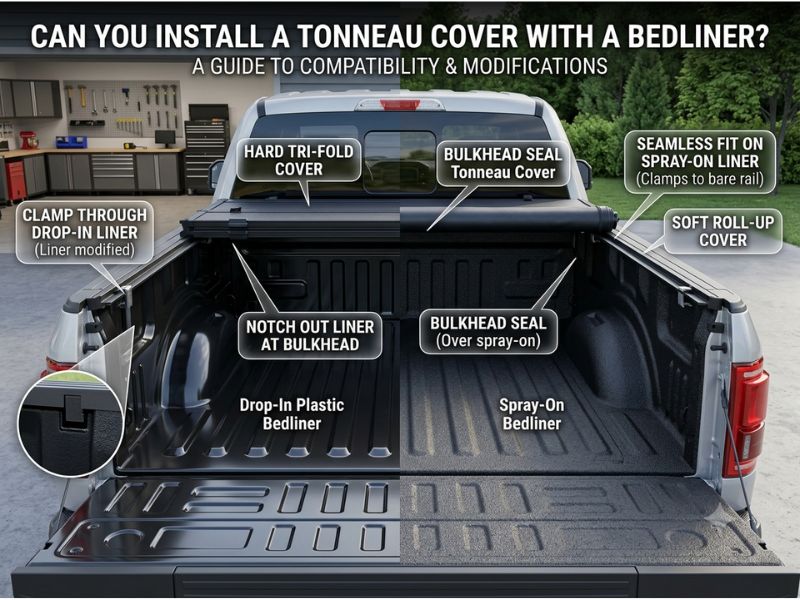
Drop-in bedliners are perhaps the most common type. They are pre-formed plastic shells that simply drop into your truck bed, providing a durable, somewhat rigid layer of protection. They are known for their ease of installation and removal, and their ability to protect against impacts and abrasions.
- Fitment: Drop-in bedliners typically cover the entire bed floor, the inner sidewalls, and often extend over the top edge of the bed rails. This “over-the-rail” design is the primary point of interaction with a tonneau cover.
- Installation Challenges: The main challenge with over-the-rail drop-in bedliners is that they occupy the space where many tonneau cover clamps or rails need to sit. The thickness of the plastic on the bed rails can prevent a secure clamp, or the tonneau cover’s rail might not sit flush.
- Solutions: Many tonneau cover manufacturers design their products to be compatible with over-the-rail drop-in liners. They might include shims, longer clamps, or specific rail designs that can accommodate the liner’s thickness. In some cases, minor trimming of the bedliner’s lip might be necessary, particularly around the stake pockets or where the tonneau cover’s drain tubes need to pass. However, I always recommend checking the tonneau cover’s specifications for compatibility before making any modifications.
Spray-In Bedliners
Spray-in bedliners are applied directly to the truck bed surface, creating a seamless, permanent protective coating. They conform precisely to the contours of the bed, including the floor, sidewalls, and often the top of the bed rails. These liners are known for their excellent adhesion, durability, and non-slip surface.
- Fitment: Spray-in bedliners are “under-the-rail” by nature, meaning they coat the top of the bed rails but do not extend over the edge. This is a significant advantage when installing a tonneau cover.
- Installation Challenges: Generally, spray-in bedliners present very few challenges for tonneau cover installation. Since they don’t add significant thickness or create an overhang on the bed rails, most tonneau covers can be installed directly onto the truck’s metal bed rails without any interference. The only minor consideration might be if the spray-in liner creates a slightly uneven surface, but this is rarely an issue for the clamping mechanism.
- Solutions: No special solutions are typically needed. Tonneau cover clamps will grip directly onto the truck’s metal bed rail, with the spray-in liner acting as a protective, non-slip layer.
Bed Mats and Liners (Floor Only)
Some truck owners opt for a simpler bed mat or a liner that only covers the bed floor, leaving the sidewalls and bed rails exposed. These are often made of rubber or heavy-duty fabric.
- Fitment: These liners stay entirely within the bed, not interacting with the top of the bed rails at all.
- Installation Challenges: They pose no challenges whatsoever for tonneau cover installation, as the tonneau cover mounts exclusively to the bed rails.
- Solutions: None needed. This combination is typically the easiest to install.
Understanding your specific bedliner type is the first step in determining compatibility. If you have an over-the-rail drop-in liner, you’ll need to pay closer attention to the tonneau cover’s design and installation method.
Types of Tonneau Covers and Their Compatibility with Bedliners
Just as bedliners vary, so do tonneau covers. Their design and mounting mechanisms are key to understanding how they interact with an existing bedliner. I’ll break down the most popular types.
Roll-Up Tonneau Covers (Soft and Hard)
Roll-up covers are popular for their full bed access and relatively simple operation. They consist of a fabric or segmented hard panel that rolls up towards the cab.
- Mounting: Most roll-up covers use side rails that clamp onto the inside of the truck bed rails. The cover then attaches to these rails.
- Compatibility with Drop-In Liners: This is where compatibility can be tricky. If your drop-in liner extends over the bed rails, the clamps for the roll-up cover might struggle to get a secure grip on the metal bed rail. The liner’s thickness can also push the tonneau cover rails slightly inward, potentially affecting the fit and seal.
- Solution: Look for roll-up covers that specifically mention compatibility with over-the-rail bedliners. Some manufacturers provide shims or longer clamps. In some cases, you might need to carefully trim a small section of the bedliner’s lip where the clamps attach. I advise caution here; measure twice, cut once, and ensure you’re not compromising the liner’s integrity.
- Compatibility with Spray-In Liners: Excellent. Since spray-in liners don’t interfere with the clamping area on the inside of the bed rail, roll-up covers typically install without any issues.
Folding Tonneau Covers (Soft and Hard)
Folding covers come in tri-fold or quad-fold designs, offering quick access to sections of the bed. They can be soft (vinyl) or hard (aluminum or composite panels).
- Mounting: Similar to roll-up covers, folding covers often use side rails that clamp to the inside of the bed rails. The panels then fold along these rails.
- Compatibility with Drop-In Liners: The challenges are similar to roll-up covers. The clamps need to secure to the metal bed rail, and an over-the-rail liner can obstruct this.
- Solution: Again, seek out covers designed for compatibility. Some folding covers have a lower profile rail system that can sit flush even with a liner. Trimming might be an option for stubborn areas, but it’s less common than with roll-ups.
- Compatibility with Spray-In Liners: Generally excellent. The spray-in liner provides a clean, even surface for the tonneau cover rails to sit against, and the clamps will secure directly to the truck’s metal rail.
Retractable Tonneau Covers
Retractable covers are typically hard covers made of aluminum or polycarbonate slats that slide into a canister located at the front of the truck bed. They offer a sleek look and excellent security.
- Mounting: Retractable covers use robust side rails that run the length of the bed and bolt or clamp onto the inside of the bed rails. The canister usually sits flush against the bulkhead.
- Compatibility with Drop-In Liners: This can be one of the more challenging combinations. The side rails of retractable covers are often thicker and require a very precise fit. An over-the-rail drop-in liner can interfere with the rail’s seating and the clamping mechanism. The canister itself might also need to sit flush against the bulkhead, and some drop-in liners have a thick lip there.
- Solution: Many retractable cover manufacturers provide specific instructions or adapter kits for trucks with drop-in liners. You might need to trim the bedliner around the stake pockets or where the rails sit. Some retractable covers are designed with a slightly higher profile to clear the liner’s lip. Always check the product specifications carefully.
- Compatibility with Spray-In Liners: Excellent. Spray-in liners provide an ideal surface for retractable covers, allowing the rails to sit flush and the clamps to secure properly.
Hinged/One-Piece Tonneau Covers
These are typically hard, solid covers that hinge open from the cab or tailgate, often lifted with gas struts. They offer maximum security and a painted-to-match aesthetic.
- Mounting: Hinged covers usually mount directly to the top of the bed rails, often with clamps or bolts that secure the frame.
- Compatibility with Drop-In Liners: This is generally the most problematic combination. Since these covers sit directly on top of the bed rails, an over-the-rail drop-in liner will almost certainly interfere with the cover’s seal and mounting points. The liner’s lip will prevent the cover from sitting flush and sealing properly.
- Solution: For hinged covers, it’s often necessary to trim the over-the-rail bedliner significantly along the top edge of the bed rails, or even remove it entirely from the rail area. Some owners opt to replace the drop-in liner with a spray-in liner or a bed mat if they are set on a hinged cover. I generally advise against trying to force a hinged cover over a thick, over-the-rail drop-in liner, as it will compromise the seal and security.
- Compatibility with Spray-In Liners: Excellent. The spray-in liner provides a clean, even, and durable surface for the hinged cover to sit and seal against, without any interference.
As you can see, the specific type of tonneau cover and its mounting method are critical. Always cross-reference your bedliner type with the tonneau cover’s design and installation requirements.
Key Considerations for Successful Installation
Even with compatible types, a few practical considerations can make or break a smooth installation. Paying attention to these details will save you time and frustration.
Bed Rail Clearance and Flushness
The most critical aspect is ensuring that the tonneau cover’s rails or frame sit flush and level on your truck’s bed rails. Any unevenness caused by a bedliner can lead to poor sealing, water leaks, and compromised security.
- Over-the-Rail Liners: If you have an over-the-rail drop-in liner, carefully inspect how the tonneau cover’s rails will interact with the liner’s lip. Will the clamps be able to grip the metal bed rail securely? Will the tonneau cover rail sit level, or will the liner push it up or out of alignment?
- Shims and Spacers: Some tonneau cover kits include shims or spacers to help level the rails or provide extra clearance for clamps. Don’t hesitate to use them if they come with your kit and are appropriate for your situation.
- Trimming: As mentioned, minor trimming of a drop-in liner might be necessary. This usually involves cutting away a small section of the liner’s lip where the tonneau cover clamps need to attach, or where drain tubes need to pass. Use a utility knife or a Dremel tool for clean cuts. Always measure carefully and remove only what is absolutely necessary. I recommend marking the cut lines with painter’s tape first to ensure precision.
Drainage Systems
Most tonneau covers, especially retractable and some folding types, come with drain tubes that channel water away from the bed. These tubes typically run from the tonneau cover rails down into the truck bed and out through drain holes or stake pockets.
- Drop-In Liners: Drop-in bedliners often cover the factory drain holes or stake pockets. You might need to drill new holes through the bedliner (and potentially the bed itself, if no factory holes are accessible) or trim the liner to allow the drain tubes to pass through the stake pockets. Ensure any new holes are sealed properly to prevent rust.
- Spray-In Liners: Spray-in liners usually don’t obstruct drain holes, making drainage tube installation straightforward.
Stake Pocket Access
Stake pockets are the openings on the top of your truck’s bed rails, typically used for tie-downs or rack systems. Some tonneau covers utilize these for mounting, or they might be needed for drain tubes.
- Drop-In Liners: Many drop-in liners cover the stake pockets. If your tonneau cover requires access to these, you’ll need to carefully cut out the liner material covering them.
- Spray-In Liners: Spray-in liners usually conform to the stake pocket openings, leaving them accessible.
Weather Sealing
A primary benefit of a tonneau cover is weather protection. A proper seal between the cover and the bed rails is crucial. Any interference from a bedliner can compromise this seal.
- Even Pressure: Ensure the tonneau cover rails are installed evenly and apply consistent pressure along the bed rails. Uneven pressure can create gaps.
- Gasket Material: Most tonneau covers come with weatherstripping or gaskets. Make sure these are properly seated and not pinched or misaligned by the bedliner.
Tools and Preparation
Having the right tools and preparing your truck bed properly will make the installation much smoother.
- Basic Hand Tools: You’ll likely need a socket set, wrenches, a measuring tape, and possibly a utility knife or Dremel for trimming.
- Cleaning: Before installation, thoroughly clean the top of your truck’s bed rails. Any dirt, debris, or wax can prevent proper adhesion of weatherstripping or secure clamping.
- Assistance: Many tonneau covers, especially hard folding or retractable types, can be heavy and awkward. Having a second person to help lift and align the cover can prevent damage and make the job much easier.
By considering these factors, you can anticipate potential issues and address them proactively, leading to a professional-looking and functional installation.
Specific Scenarios and Troubleshooting Tips
While general guidelines apply, some specific situations might require tailored approaches. I’ll outline a few common scenarios and offer troubleshooting advice.
Scenario 1: Over-the-Rail Drop-In Liner with a Roll-Up or Folding Cover
This is arguably the most common compatibility question. The liner’s lip on the bed rails is the primary concern.
- Problem: The tonneau cover clamps cannot get a secure grip on the metal bed rail because the bedliner’s lip is too thick or extends too far inward.
- Solution A (Check for Compatibility): First, verify if the tonneau cover manufacturer explicitly states compatibility with over-the-rail liners. Some brands design their clamps or rails to accommodate this.
- Solution B (Shims/Longer Clamps): If provided, use any shims or longer clamps that came with your tonneau cover kit. These are specifically designed to bridge the gap created by the liner.
- Solution C (Minor Trimming): If the above solutions aren’t sufficient, you may need to trim the bedliner. Focus on the areas directly beneath where the tonneau cover clamps will attach. I recommend using a fine-tooth saw or a Dremel with a cutting wheel for a clean, precise cut. Start with a small amount and test the fit, gradually removing more material if needed. The goal is to allow the clamp to fully engage the metal bed rail.
- Problem: The tonneau cover rails don’t sit level or flush due to the liner’s uneven surface.
- Solution: Use weatherstripping or foam tape (often included with the tonneau cover) to fill small gaps and create a level surface. Ensure the rails are tightened evenly along the length of the bed.
Scenario 2: Over-the-Rail Drop-In Liner with a Retractable Cover
Retractable covers often have more substantial rails and a canister, which can complicate matters.
- Problem: The retractable cover’s side rails are too wide or tall to sit properly on the bed rail due to the liner’s lip.
- Solution A (Specific Adapters): Some retractable cover manufacturers offer specific adapter kits for trucks with drop-in liners. These might include specialized shims or rail extensions.
- Solution B (Extensive Trimming): You might need to trim a more significant portion of the bedliner along the top edge of the bed rails where the retractable cover’s rails sit. This is more involved than minor clamp-point trimming. Be prepared to make careful, continuous cuts along the rail length.
- Problem: The canister at the front of the bed doesn’t sit flush against the bulkhead because of the liner’s front lip.
- Solution: You’ll likely need to trim the bedliner’s front lip where the canister rests. Ensure the canister is level and secure, as this is crucial for the cover’s operation.
Scenario 3: Any Bedliner Type with a Toolbox or Bed Rack
Adding other accessories can further complicate tonneau cover installation.
- Problem: A toolbox or bed rack interferes with the tonneau cover’s rails or operation.
- Solution: Many tonneau cover manufacturers offer specific “toolbox series” or “bed rack compatible” covers. These are designed with a shorter length or a modified rail system to accommodate other accessories. If you have a toolbox, ensure your tonneau cover is a “crossover” or “toolbox compatible” model. For bed racks, look for covers that mount inside the bed rails, leaving the top rails free for rack systems.
General Troubleshooting Tips
- Read Instructions Carefully: This might seem obvious, but tonneau cover instructions are often very specific about bedliner compatibility and necessary modifications. Don’t skip steps.
- Test Fit Before Tightening: Before fully tightening any clamps or bolts, do a complete test fit of the rails and the cover itself. Check for levelness, flushness, and proper operation.
- Don’t Over-Tighten: While you want a secure fit, over-tightening clamps can damage your bed rails or the tonneau cover components. Follow torque specifications if provided.
- Silicone Sealant: If you’re concerned about water leaks after trimming your bedliner or drilling new drain holes, use a high-quality automotive-grade silicone sealant around the edges of cuts or new holes.
- Professional Installation: If you’re uncomfortable with modifications or complex installations, consider having a professional shop install your tonneau cover. They have the experience and tools to handle various bedliner scenarios.
By anticipating these issues and having a plan, you can successfully install your tonneau cover, even with an existing bedliner.
Choosing the Right Tonneau Cover for Your Bedliner
Making an informed decision upfront is the best way to avoid installation headaches. When you’re ready to purchase a tonneau cover, keep your bedliner in mind.
Prioritize Compatibility Information
The first step is always to check the tonneau cover manufacturer’s specifications and product descriptions. Look for phrases like:
- “Compatible with most under-the-rail bedliners.” (This is good for spray-ins, but might indicate issues with over-the-rail drop-ins.)
- “Designed to work with over-the-rail bedliners.” (This is ideal if you have a drop-in liner.)
- “Minor trimming of bedliner may be required.” (This indicates potential modification for drop-in liners.)
- “Not compatible with bedliners that cover stake pockets.” (If your liner covers them and the cover needs them, this is a red flag.)
If the information isn’t clear, don’t hesitate to contact the manufacturer directly or speak with a knowledgeable retailer. Provide them with your truck’s year, make, model, and specific bedliner type (e.g., “factory Ford drop-in liner” or “Rhino Liner spray-in”).
Consider Your Usage and Priorities
- Full Bed Access: If you frequently need full, unobstructed access to your truck bed for large items, a roll-up or retractable cover might be preferable. Ensure their rails can clear your bedliner.
- Security: Hard folding or retractable covers generally offer better security than soft covers. Consider how the bedliner might affect the integrity of their locking mechanisms or seals.
- Budget: Soft roll-up covers are typically the most budget-friendly. Retractable and hard folding covers are usually at the higher end. Factor in any potential costs for professional installation or specialized tools if you anticipate difficulties with your bedliner.
- Aesthetics: Some owners prefer a low-profile look, while others don’t mind a slightly higher profile. Consider how the tonneau cover will sit relative to your bed rails and bedliner.
Popular Brands and Their Approaches
Many reputable tonneau cover brands have addressed bedliner compatibility. Here’s a general overview, though specific product lines may vary:
- BakFlip (Hard Folding): Many BakFlip covers are designed to sit flush with the bed rails and often require minimal or no modification for spray-in liners. For drop-in liners, some models may require trimming around the clamps or a specific adapter kit. They often have integrated drain channels.
- Extang (Roll-Up, Folding): Extang offers a wide range of covers. Many of their roll-up and soft folding covers are quite adaptable and often come with clamps that can work with various bedliner thicknesses. Their hard folding covers might require more attention to bedliner fitment.
- TruXedo (Roll-Up): TruXedo is known for its low-profile roll-up covers. Their mounting systems are often designed to be flexible and can accommodate many drop-in liners, sometimes with minor adjustments.
- Retrax (Retractable): Retrax covers are premium retractable options. Due to their precise fit and canister system, they often have specific requirements for bedliner compatibility. They may offer specialized kits or require careful trimming of drop-in liners.
- UnderCover (Hinged, Folding): UnderCover offers both hinged and hard folding covers. Their hinged covers, which sit directly on the bed rails, are often the most challenging to install with over-the-rail drop-in liners without significant modification or removal of the liner’s lip. Their folding covers are generally more adaptable.
This is not an exhaustive list, but it illustrates that different brands and cover types approach bedliner compatibility in various ways. Always check the specific product you are interested in.
When in Doubt, Consult an Expert
If you’re still unsure after researching, I highly recommend visiting a local truck accessory shop. They often have experience with numerous tonneau cover and bedliner combinations and can offer personalized advice, show you different options, and even perform the installation for you. They can physically inspect your truck and bedliner, which is invaluable.
By taking the time to research and choose wisely, you can select a tonneau cover that integrates seamlessly with your existing bedliner, providing optimal protection and functionality for your truck.
Maintaining Your Tonneau Cover and Bedliner Combination
Once you’ve successfully installed your tonneau cover with your bedliner, proper maintenance will ensure both accessories last for years and continue to protect your truck and cargo.
Regular Cleaning
- Tonneau Cover: Clean your tonneau cover regularly according to the manufacturer’s instructions. Soft vinyl covers can usually be cleaned with mild soap and water, followed by a UV protectant. Hard covers often benefit from automotive car wash soap and wax. Keep the rails clean and free of debris to ensure smooth operation, especially for retractable and folding covers.
- Bedliner: Periodically clean your bedliner to remove dirt, mud, and grime. A pressure washer can be effective for spray-in liners, while drop-in liners can be hosed down. Ensure any drain holes remain clear.
Inspecting Seals and Clamps
- Weather Seals: Over time, the weather seals around your tonneau cover can wear out or become compressed. Regularly inspect them for cracks, tears, or signs of deterioration. Replace them if necessary to maintain a watertight seal. Pay particular attention to areas where the tonneau cover interacts with the bedliner.
- Clamps and Bolts: Periodically check all clamps, bolts, and mounting hardware for tightness. Vibrations from driving can sometimes loosen fasteners. A loose tonneau cover can lead to leaks, rattling, or even detachment.
Lubrication (for specific types)
- Retractable Covers: Retractable covers often have tracks or mechanisms that benefit from occasional lubrication. Use a silicone-based lubricant (never petroleum-based, which can attract dirt) as recommended by the manufacturer to keep the cover sliding smoothly.
- Hinges and Latches: For folding or hinged covers, a light spray of lubricant on hinges and latches can prevent sticking and ensure easy operation.
Addressing Leaks
Even with careful installation, a small amount of water might find its way into the bed, especially during heavy rain or car washes. This is often normal, as truck beds are not perfectly sealed from the factory.
- Identify the Source: If you notice significant leaks, try to identify the source. Is it coming from the tonneau cover’s seals, around the bedliner, or from the truck bed itself (e.g., stake pockets, bulkhead gaps)?
- Seal Gaps: Use automotive-grade silicone sealant to seal any gaps between the truck bed and the bedliner, especially at the bulkhead or corners. Also, check the drain tubes of your tonneau cover to ensure they are clear and properly routed.
Winter Care
In colder climates, special care might be needed:
- Ice and Snow: Avoid forcing open a tonneau cover that is frozen shut. Gently clear snow and ice before attempting to open it. For retractable covers, ensure the tracks are clear of ice.
- Vinyl Covers: Cold weather can make vinyl covers stiff. Be gentle when rolling or folding them to prevent cracking.
By following these maintenance tips, you can ensure that both your tonneau cover and bedliner continue to provide optimal protection and functionality for your truck for many years to come.
Conclusion
The synergy between a truck bedliner and a tonneau cover offers a comprehensive solution for protecting your truck bed and its contents from the elements, theft, and damage. While the question of can you install a tonneau cover with a bedliner often raises concerns, the answer is overwhelmingly yes, with careful consideration and planning.
Understanding the type of bedliner you have – particularly whether it’s an over-the-rail drop-in or a spray-in liner – is the crucial first step. From there, selecting a tonneau cover whose mounting system is compatible, or can be adapted, is key. Many manufacturers design their products with bedliner compatibility in mind, offering solutions like specific clamps, shims, or requiring minor trimming.
With the right approach, attention to detail during installation, and ongoing maintenance, you can confidently equip your truck with both a robust bedliner and a functional tonneau cover, maximizing its utility and protection.